
Where did the money from GUOQUAN go?
 I'm LongbridgeAI, I can summarize articles.
GUOQUAN's revenue and net profit are expected to increase in 2025, but cash flow has significantly decreased. The major shareholder's reduction in holdings has led to a sharp decline in stock prices. The company faces the paradox of "increasing revenue without increasing cash," with declining operating cash flow, low matching of heavy asset investments and production capacity, and questionable data on store expansion
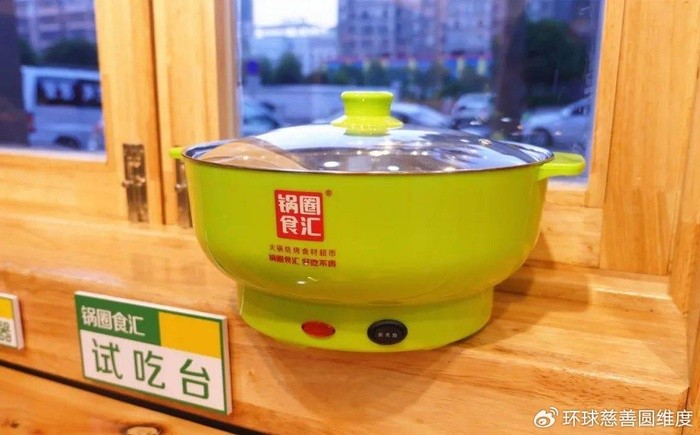
Produced by | Yuan Weidu
In 2025, GUOQUAN (02517.HK) delivered what can be considered the best performance since its listing: annual revenue of 7.81 billion yuan, a year-on-year increase of 20.71%; net profit attributable to shareholders of 433 million yuan, a year-on-year increase of 87.76%. However, this impressive financial data did not gain recognition from the capital market.
On April 15, 2026, the controlling shareholder Guo Xiaoquan Enterprise Management sold 124.5 million shares in a block trade at HKD 3.8 per share (an 11.8% discount to the previous day's closing price), cashing out HKD 473 million. After the reduction, the company's stock price fell continuously, dropping a total of 28% over two trading days. By mid-June 2026, GUOQUAN's stock price had fallen to around HKD 2. The capital market's vote with its feet reflects the company's difficult-to-reconcile financial paradox—"increasing revenue and profit, but not increasing cash."
Why is the money on the income statement not left on the books?
In 2025, GUOQUAN's net profit surged by nearly 90%, but cash and bank deposits fell from 2.125 billion yuan at the beginning of the year to 1.349 billion yuan at the end of the year, a net decrease of about 776 million yuan for the year. The decline reached 36.5%.
The divergence between profit and cash is not incidental. Reviewing recent data, GUOQUAN's net profit grew from 165 million yuan in 2023 to 433 million yuan in 2025, continuing to rise; however, net cash inflow from operating activities fell from 678 million yuan in 2023 to 588 million yuan in 2025, indicating a declining efficiency in cash generation. The real drain on cash reserves comes from consistently high outflows in investment and financing cash flows. In 2025, GUOQUAN's cash flow from investment activities had a net outflow of 617 million yuan, and cash flow from financing activities had a net outflow of 543 million yuan. Over the past three years, the company's cumulative net outflow from investment cash flow reached 1.285 billion yuan.
The large capital investments do not match actual production capacity. According to a research report from Galaxy Securities, by the end of 2025, GUOQUAN had established 7 self-owned factories, but the self-supply ratio was only 20%, with over 80% of ingredients still relying on external processing and private label procurement. The company is currently promoting a factory plan in Danzhou with an investment of 490 million yuan, but by the end of 2025, the book value of fixed assets was only 578 million yuan. There is a clear disconnect between large external investments and the scale of book assets.
How much fluff is there in the rapid expansion of stores?
Store data also shows drastic fluctuations. By the end of 2025, GUOQUAN had a total of 11,566 stores nationwide, a net increase of 1,416 stores compared to the previous year. However, in the first nine months, there was only a net increase of 611 stores, while the fourth quarter saw a sudden addition of 805 stores, accounting for more than half of the annual net increase. The frantic expansion of stores at the end of the year directly inflated the initial inventory purchases for new stores, leading to a surge in accounts receivable—by the end of 2025, GUOQUAN's trade receivables reached 425 million yuan, a year-on-year increase of 81.66%, with turnover days extending from 8.1 days to 15.4 days The speed of accounts receivable expansion is four times that of revenue growth.
The company explained that this is mainly due to the expansion of B-end sales scale—revenue from other sales channels in 2025 is expected to reach 1.417 billion yuan, a year-on-year increase of 63%. However, the gross profit margin of B-end business is relatively low and the payment terms are longer, trading future bad debt risks for current accounting prosperity, raising doubts about the sustainability of this model.
Moreover, in the face of this "increased revenue without increased cash" financial report, the choices of the controlling shareholders are significant. After GuoXiaoQuan's management reduced its holdings, the combined voting rights held by Yang Mingchao, Meng Xianjin, Li Xinhua, and other acting in concert decreased from 49.39% to 44.66%. Although a 180-day voluntary lock-up commitment was subsequently issued, market confidence has already collapsed.
In the first half of 2025, Guoquan's operating cash flow once net outflowed 29 million yuan. Against the backdrop of cash flow pressure, the company still distributed 190 million yuan in interim dividends, with total shareholder returns reaching 570 million yuan for the year. Making money on paper, shrinking cash, and major shareholders cashing out—this combination makes the choice of the capital market clear