

Xpeng taps Google Maps to clear path for smart driving's global roll-out
 I'm LongbridgeAI, I can summarize articles.
Xpeng announced a collaboration with Google Maps to integrate Google Maps Auto SDK and Map Data Services into its vehicles, supporting NGP and Xpilot Assist systems. This partnership aims to facilitate the global rollout of Xpeng's VLA 2.0 smart driving technology, particularly in overseas markets. Xpeng becomes the first APAC automaker to ship vehicles with this integration, enhancing navigation and assisted driving experiences for users outside China.
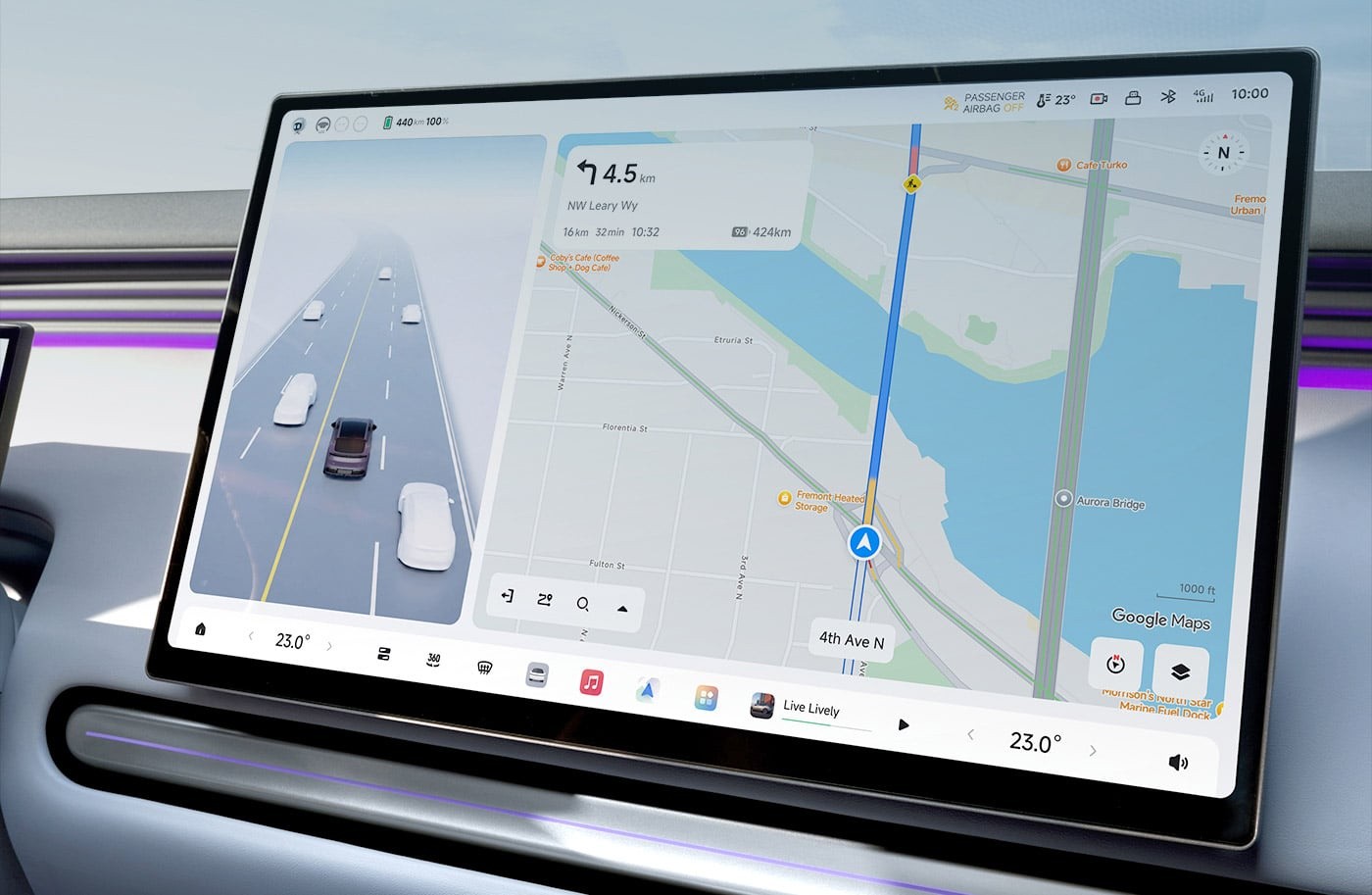
- Google Maps in-vehicle Map Data Services will support Xpeng's driver-assistance systems, clearing obstacles for the global roll-out of VLA 2.0.
- Xpeng becomes the first APAC automaker to ship vehicles with Google Maps Auto SDK, reshaping the in-car navigation experience in markets outside China.
Xpeng (NYSE: XPEV) announced a collaboration with Google Maps, revamping the mapping capabilities behind in-car navigation and assisted driving for overseas users as it launches the new model Mona L03.
The Chinese electric vehicle (EV) maker is holding the global launch event for the all-new Xpeng L03 in Munich, Germany on Thursday. The SUV (sport utility vehicle) coupe will go on sale in 64 countries and regions.
Chairman and CEO He Xiaopeng announced the milestone global strategy. Under the partnership, Xpeng will build its own navigation system on the Google Maps Auto SDK (Software Development Kit), giving users outside China access to Google Maps' foundational technology and services within a customized Xpeng experience.
Join us on Telegram or Google News
Xpeng will also use Google Maps' in-vehicle Map Data Services to support NGP (Next Generation Pilot), its flagship full-scenario intelligent assisted driving system, as well as Xpilot Assist, its foundational assist system. The map capability upgrade will primarily cover most overseas markets.
Xpeng is the first automaker from the Asia-Pacific (APAC) region — and the first from China — to ship vehicles with Google Maps Auto SDK integration.
The SDK allows automakers to design their own navigation experience on top of Google's foundational technology, including real-time traffic-aware guidance, EV energy estimation and trip planning, and place search capabilities.
This means users neither need to download the Google Maps app themselves nor rely on smartphone screen mirroring. Instead, they can natively enjoy the complete in-car map experience built specifically for Xpeng vehicles, with the core capabilities of Google Maps.
Overseas users of the L03 will be the first among Xpeng's lineup to enjoy the upgraded experience. On the in-car screen, users will continue to use the familiar Xpeng map application, with the overall interface, map rendering, and interactions all independently designed by Xpeng.
"Over 2 billion users turn to Google Maps each month, and we are pleased to bring our industry-leading technology to more drivers in Europe and beyond," said Jorgen Behrens, VP/GM of Google Maps Automotive.
"In less than a year, Xpeng has successfully deployed a refreshed navigation experience, seamlessly combining their distinct design with our navigation expertise via Google Maps' Auto SDK," Behrens added.
The collaboration carries strategic weight for the globalization of Xpeng's smart driving ambitions. The future application of NGP (VLA 2.0) in overseas markets must rely on map data and navigation maneuvers, and adopting Google Maps as a fundamental capability will lay the groundwork for the phased global roll-out of its advanced driver-assistance systems.
Xpeng said integrating Google Map Data Services into the Google Automotive SDK is a key upgrade that clears the path for VLA 2.0's international growth.
Just two days earlier, Mr. He completed the European localization acceptance test of the second-generation VLA (Vision-Language-Action) model in Germany. He said he hopes Xpeng will become the first Chinese company to bring advanced intelligent assisted driving to Europe.
The L03 is Xpeng's first global model to launch simultaneously in China and Europe. Pre-sales began in China on July 2, with prices ranging from 143,800 yuan ($21,200) to 165,800 yuan. The vehicle is positioned as "the first smart and stylish SUV for young people."
Smart driving is the model's core selling point. The entire L03 lineup is equipped with Xpeng's in-house developed Turing AI chips, delivering up to 1,500 TOPS of computing power and supporting the second-generation VLA system.
Deutsche Bank analysts expect the model to achieve average monthly sales of about 12,500 units, potentially replicating the success of the Mona M03 sedan and serving as a key pillar of Xpeng's sales recovery plan for the second half of the year.
Xpeng delivered 40,126 vehicles in June, up 15.93% year-on-year and a monthly high for 2026 so far. The company needs a new sales engine to sustain the rebound.
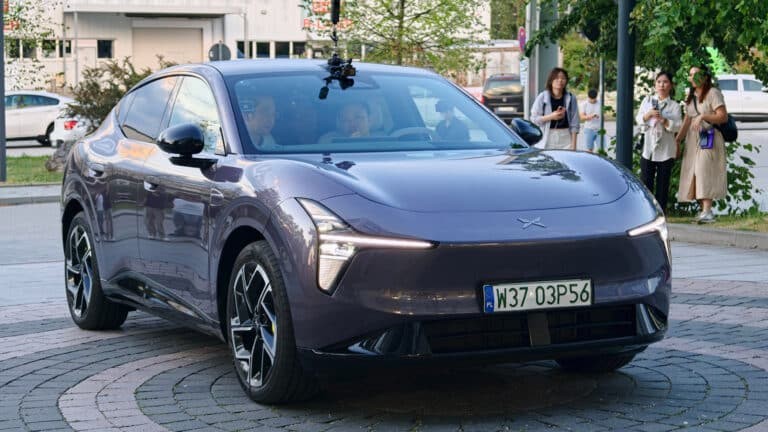
Xpeng moves closer to bringing advanced driver assistance to Europe
Xpeng completed local testing of VLA 2.0 in Germany, paving the way to bring its smart-driving capabilities from China to global markets in 2027.
($1 = 6.7688 yuan)