

The food delivery battle: a trillion-dollar war with no winners
 I'm LongbridgeAI, I can summarize articles.
Source: Dongge's E-commerce Insights
Author: Jin Shan
In 2025, China's food delivery market witnessed a subsidy war of nearly 100 billion yuan. JD.com made a high-profile entry, Alibaba doubled down with heavy investments, and Meituan vowed to defend its turf. The three giants engaged in an unprecedented fierce battle in the instant retail sector. However, as quarterly financial reports were released one after another, the massive losses revealed an overall value erosion and unsustainable business logic behind the industry. What did this war without gunpowder ultimately leave behind?

Q3 Signals a Ceasefire
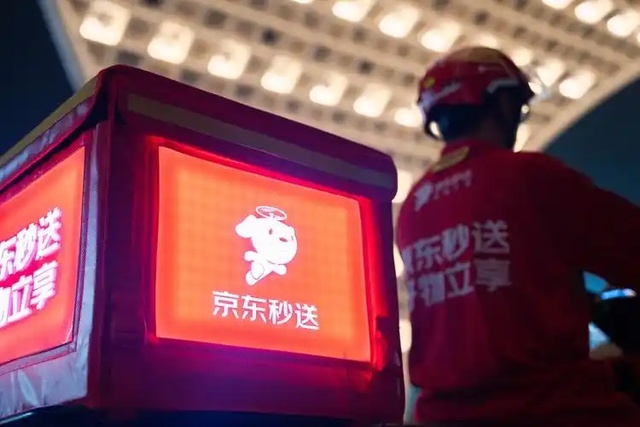
In February this year, JD.com made a high-profile entry into the food delivery business with strategies like zero commissions and providing social insurance for delivery riders. The battle escalated in April when JD.com launched a 10-billion-yuan subsidy campaign, while Alibaba joined the fray with Ele.me and Taobao Flash Sales, officially forming a three-way showdown. By July, the competition intensified further, with JD.com announcing an additional investment of over 10 billion yuan and Taobao Flash Sales pledging 50 billion yuan in subsidies, even leading to "zero-yuan purchases" in the industry. In August, regulatory intervention gradually cooled the market.
According to statistics, the three giants—JD.com, Alibaba, and Meituan—collectively burned nearly 100 billion yuan in this year's food delivery war, making it the most intense battle in the internet industry in recent years. Yet, there is no clear winner so far. Meanwhile, signals of a ceasefire are strong.
Meituan CEO Wang Xing stated during the Q3 earnings call, "We reiterate the stance we’ve articulated over the past two quarters: the food delivery price war is a low-quality, low-price 'involutionary' competition, and we firmly oppose it. The market results over the past six months have fully proven that the price war has created no value for the industry and is unsustainable."
This is akin to Meituan undergoing another stress test. To retain market share, it has exhausted all its profits.
Meituan's Q3 2025 report shows revenue of 95.5 billion yuan, a slight year-on-year increase of 2%, but an adjusted net loss of 16 billion yuan. In contrast, the same period last year saw a net profit of 12.8 billion yuan, meaning Meituan sacrificed 28.8 billion yuan in potential earnings for the food delivery war.
The subtext is that Meituan is willing to defend its market share at all costs, even if it means wiping out all profits, because food delivery is far more critical to Meituan than it is to Alibaba or JD.com, for whom it remains merely a traffic acquisition tool.
Meituan's aggressive stance will undoubtedly force Alibaba and JD.com to rethink their strategies, as they too have suffered heavy losses.
Alibaba's instant retail business reported revenue of 22.9 billion yuan, up 60% year-on-year, but its non-GAAP net profit plummeted 72% to 10.4 billion yuan.
Alibaba has clearly signaled a pullback in subsidies. CFO Toby Xu stated, "Q3 was the peak of investment in flash sales. With significant improvements in overall efficiency and stable scale, we expect a notable reduction in flash sales investment next quarter."
Similarly, JD.com has indicated a shift from pursuing order numbers to focusing on scale effects. CEO Sandy Xu said, "Our goal has always been to build a sustainable business model. While we aim for order growth, we will also gradually unlock the scale effects of our food delivery business to improve our unit economics (UE). Ultimately, we want the food delivery business to stand on its own."
The core reason is that Alibaba and JD.com have also paid a heavy price.

What Did the Three Giants Gain?
What did Alibaba, Meituan, and JD.com each gain?
For Alibaba and JD.com, the food delivery war provided a new growth narrative to alleviate their traffic hunger.
Alibaba noted that Taobao app users grew by double digits year-on-year during Double 11. Another gain was progress in instant retail, with about 3,500 Tmall brands integrating their offline stores into instant retail. Over 75% of orders were non-beverage, and the average purchase price per flash sale order rose by double digits compared to August.
Higher average order values and lower logistics costs reduced flash sale losses by half in October compared to July and August.
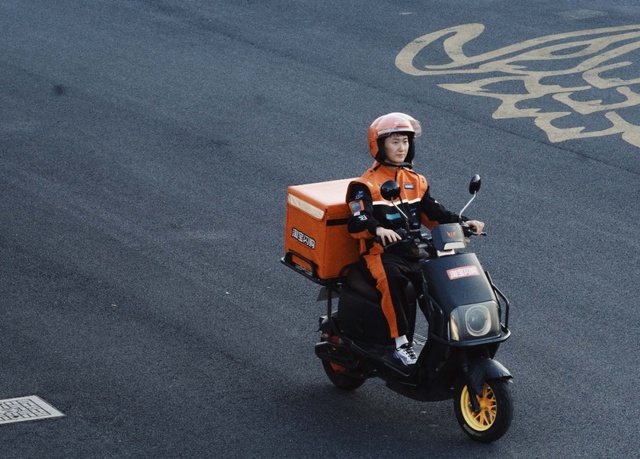
The share of high-value orders increased, lowering average logistics costs below pre-investment levels.
JD.com saw broad growth in users and purchase frequency.
In Q3, JD.com's two key metrics—active users and purchase frequency—both grew over 40% year-on-year. Its annual active users surpassed 700 million, a rare feat in an internet landscape widely seen as a zero-sum game. Nearly 50% of new users attracted by JD.com's food delivery service placed orders on its e-commerce platform.
JD.com's commission and ad revenue grew 23.7% year-on-year, the fastest in 14 quarters. Active merchants surged over 200% in Q3, revitalizing its POP merchant ecosystem.
According to earnings call data, Meituan has retained its mid-to-high-end market share, but it’s clear that JD.com and Alibaba have captured much of the low-end market through subsidies.
From October to November, industry subsidies retreated from summer peaks, especially after Double 11. Recent market share and order volumes have rebounded, with Meituan leading in mid-to-high-value orders. Orders above 15 yuan accounted for over two-thirds of GTV, while those above 30 yuan made up about 70%, with higher average net order values than rivals.
For Meituan, the worst may be over. As the industry returns to rationality, Meituan can gradually regain its edge. Its willingness to sacrifice all profits to defend share will also make Alibaba and JD.com reconsider their strategies.
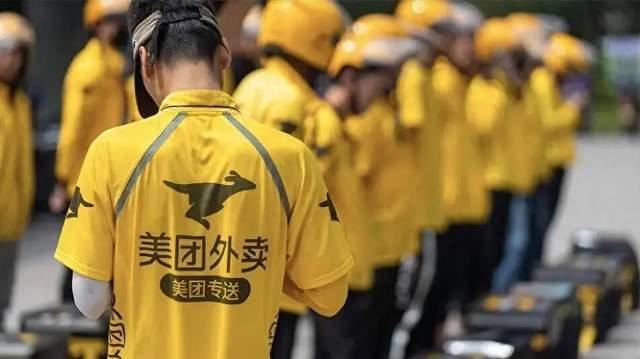
With the industry consensus on the unsustainability of subsidy wars, the second half of the food delivery battle has "shifted tracks." Future competition will no longer be about capital bombardment but will pivot to a more complex and healthier dimension: a comprehensive contest of efficiency, user experience, and ecosystem health.
References:
1. Wang Zhiyuan: Alibaba and Meituan Can't Sustain the Instant Retail Battle
2. Focus One: The Food Delivery War Ends: 100 Billion Burned, No Winners









The copyright of this article belongs to the original author/organization.
The views expressed herein are solely those of the author and do not reflect the stance of the platform. The content is intended for investment reference purposes only and shall not be considered as investment advice. Please contact us if you have any questions or suggestions regarding the content services provided by the platform.