

What Is an AI PC — And Is It Worth Paying Extra For?

On June 1, 2026, Jensen Huang took the COMPUTEX stage in Taipei and unveiled the N1X — Nvidia's first chip aimed at the PC main-processor market, shipping this fall. The moment the news dropped, "AI PC" trended across tech media again.
What the media is debating is "what Nvidia entering PCs means for Intel/AMD" — but few people stop to nail down something more basic: what is an AI PC, exactly?
If you walked into a store today to buy a laptop, the salesperson would probably point at some machine and tell you it's an AI PC, a bit pricier than a regular laptop. Ask them how an AI PC actually differs from a normal PC, and 9 out of 10 can't explain it — most will mumble something like "next-gen laptop for the AI era." That explanation explains nothing.
In reality, AI PC has a very clear hardware standard. It's not a marketing label — it's a hard threshold with specific numbers. Let me break it down for you: what an AI PC is, which "real AI PCs" are on the market, and what it means for an ordinary person buying a computer.
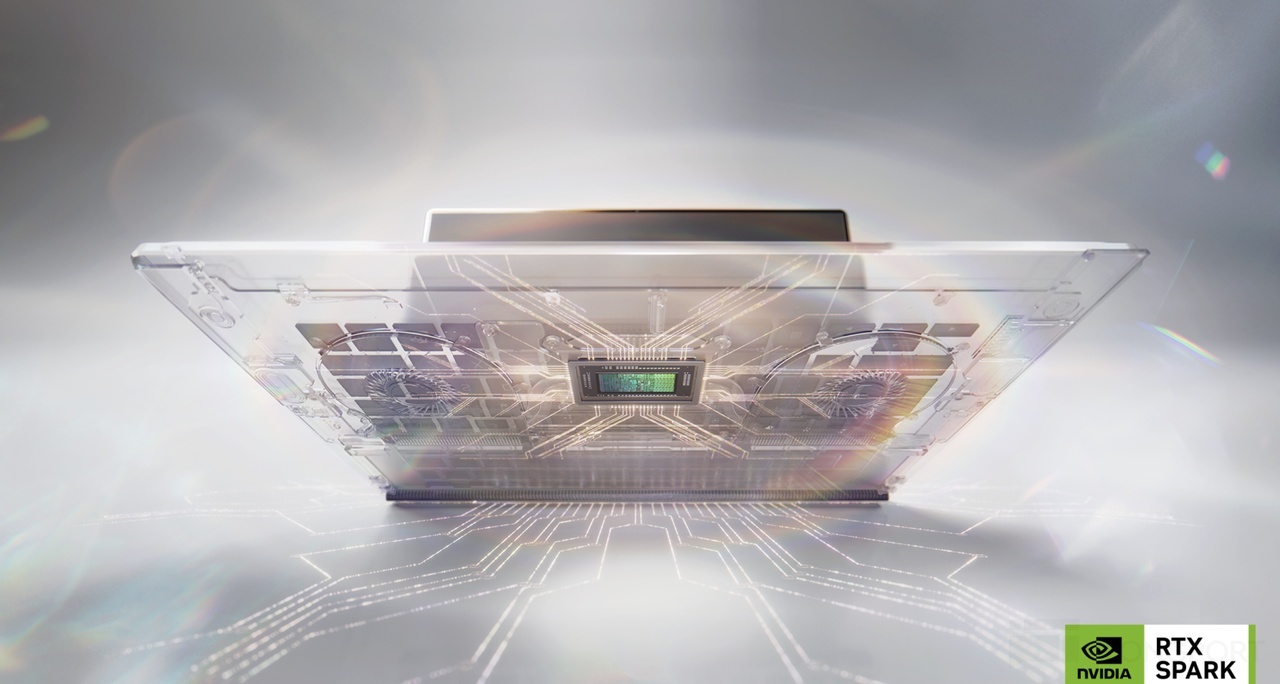
AI PC Isn't a New Word — It's a New Threshold
The term "AI PC" started heating up in 2024.
Its real definition comes from Microsoft — specifically, from the "Copilot+ PC" certification Microsoft launched in May 2024. This was the first time the PC industry had an "AI-ready" threshold with hard numerical standards.
There are 3 specific requirements:
- NPU compute ≥ 40 TOPS
- Memory ≥ 16 GB (DDR5 or LPDDR5)
- Storage ≥ 256 GB
A computer that meets all 3 gets Microsoft's "Copilot+" label and can run Windows' built-in AI features. Miss any one of them and it's not an AI PC — even if the machine is labeled "AI laptop," that's just marketing speak.
Apple has its own AI framework (Apple Intelligence) and doesn't follow Microsoft's standard, so in the strict Windows sense "AI PC" doesn't include Macs. I'll go by Microsoft's standard first, and come back to Apple at the end.
Three Concepts: NPU, TOPS, On-Device Inference
To understand what these 3 standards are actually saying, you first need to get 3 concepts straight —
1️⃣ NPU (Neural Processing Unit)
Laptops used to have two types of chips: the CPU (general computing) and the GPU (graphics + parallel computing). The NPU is a third type — a chip optimized specifically for the matrix operations of AI models.
Why isn't the GPU enough? Because running AI on a GPU eats a lot of power. If a laptop keeps a GPU running AI tasks continuously, battery life drops from 10 hours to 2, and the chassis gets too hot to put on your lap. The NPU runs the same AI at roughly 1/10 the power draw of a GPU.
That's why an "AI PC" must have an NPU — a laptop running AI without one is either short on battery or slow.
2️⃣ TOPS (Trillion Operations Per Second)
The unit for measuring NPU compute. 1 TOPS = 1 trillion INT8 integer operations per second.
Why is 40 TOPS the threshold? Because Microsoft tested it — 40 TOPS is the minimum compute to smoothly run small local LLMs like Phi-3. Below 40 TOPS, AI apps stutter; at 40 TOPS, the experience is smooth; above 45 TOPS, you can do more complex features (real-time AI video enhancement, local image generation).
3️⃣ On-Device Inference
This is the AI PC's most critical selling point — AI tasks run on your own computer, not uploaded to the cloud.
When an ordinary user uses ChatGPT, the text goes to OpenAI's servers, the model runs remotely, and the answer comes back to your computer. The AI PC's ideal is the opposite — the model is installed directly on your laptop and all data is processed locally.
That means: (a) no internet needed, (b) private data never leaves the machine, (c) faster response, (d) no subscription fees.
These 4 benefits together are the AI PC's core promise to consumers.
How Many Real AI PCs Are Actually on the Market Today
By the Copilot+ ≥ 40 TOPS standard, there are only 4 chip families on the 2026 market that count as "real AI PCs" —
| Processor family | NPU compute | Representative products |
|---|---|---|
| Qualcomm Snapdragon X Elite | 45 TOPS | Surface Laptop 7, Dell XPS 13 (Snapdragon), Lenovo Yoga Slim 7x |
| Intel Core Ultra Series 3 (launched at CES 2026) | ~50 TOPS | Dell Latitude 7455, Lenovo ThinkPad X1 Carbon (Gen 13) |
| AMD Ryzen AI 300 series | 50–55 TOPS | ASUS ProArt P16, HP OmniBook Ultra |
| AMD Ryzen AI 400 series | 60 TOPS | New models in H2 2026 (HP / ASUS / Lenovo) |
Back to the news at the top — Nvidia's N1X isn't on this table. The N1X's AI compute, measured at the "whole chip" level, is 1 petaflop (1,000 TOPS), but that figure includes combined GPU + NPU compute. By Copilot+'s "pure NPU TOPS" definition, the N1X's NPU portion is expected to be in the 60–80 TOPS range — its real advantage isn't "an NPU 10x stronger than rivals," it's "GPU + NPU working together to run 100B+ large models." Once the N1X ships this fall it'll join this table, and quite possibly go straight to the top.
The Apple M4 isn't on this table either — but not because the M4 isn't strong enough; it's because Apple runs its own system (Apple Intelligence) and doesn't take part in Copilot+ certification. The M4's NPU (Apple Neural Engine) tests at about 38 TOPS — just under Microsoft's threshold. The M4 Max is stronger, but it's positioned as workstation-grade.
So — the real AI PC camp, right now, is these 4 chipmakers, plus Nvidia about to enter.
Pricey? Worth It?
On price, the mainstream range for 2026 Copilot+ PCs clusters around US$1,100 – US$2,500.
Compared with a non-AI PC of the same spec, the premium is usually 15–30%. That premium comes mainly from 3 places —
- The hardware cost of the NPU chip itself (NPU manufacturing yields aren't as mature as CPU/GPU)
- The 16GB+ memory upgrade (many entry-level laptops are still at 8GB; AI PCs force 16GB minimum)
- The OEM's "AI label premium" — same hardware, slap on a Copilot+ badge and they can charge US$200 more
Is it worth the money? You need to do the math —
If you're a heavy AI-tool user (ChatGPT multiple times a day, editing video locally, running code), an AI PC's on-device inference can save you the ChatGPT Plus subscription (US$20/month × 24 = US$480) plus a lot of cloud API call fees over 2 years. For these users the math usually works out. If you only use AI occasionally (a few ChatGPT questions a week), the AI PC premium is basically wasted — a regular laptop + cloud AI over the internet is the better deal.
That's the AI PC's real positioning at this stage — it's not a "everyone should buy one" product, it's "an optimized solution for specific use cases."
Back to That Salesperson at the Store
Next time you hear "this is an AI PC," you can ask 3 questions —
- "Whose NPU is it? How many TOPS?"
- "Does it have a full 16GB of memory?"
- "Which local AI apps does it support?"
If they answer all 3 clearly, it's a real AI PC; if they can't, it's a marketing label.
An AI PC isn't a next-gen laptop — it's the first time the PC industry has had an "AI compute threshold." That bar will rise year after year. Today's 40 TOPS will be called "entry-level" in 3 years; today's 200 TOPS flagship will be the new standard. If you're buying a computer today, deciding whether to go AI PC matters more than agonizing over which brand.
本文版权归属原作者/机构所有。
当前内容仅代表作者观点,与本平台立场无关。内容仅供投资者参考,亦不构成任何投资建议。如对本平台提供的内容服务有任何疑问或建议,请联系我们。
