

Alan Greenspan, 1926–2026: A Century of Glory and Controversy

On June 22, 2026, former Federal Reserve Chairman Alan Greenspan passed away at the age of 100.
He served as Fed Chairman for 19 years — from 1987 to 2006, across five terms and four presidents. It stands as one of the longest tenures in Federal Reserve history. Over the past few decades, few people have shaped the operating logic of global capital markets as singlehandedly as Greenspan did. He was hailed as the "Maestro" during America's Great Moderation in the 1990s, then vilified as the chief culprit after the 2008 financial crisis.
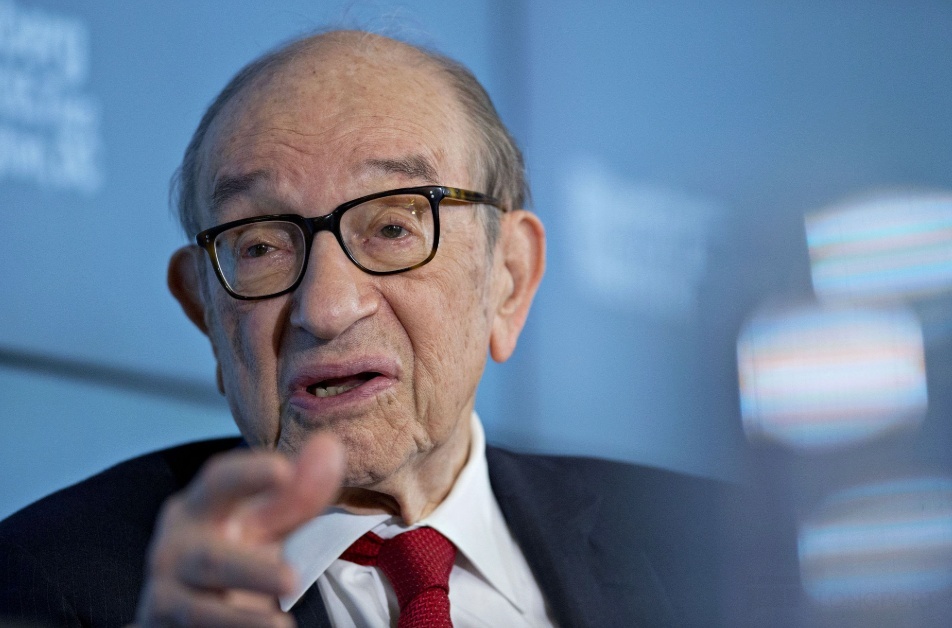
Looking back, what truly shaped the world were four specific decisions. The effects of those four decisions are still running today.
The Origin of Fed Market Rescues
On October 19, 1987, the Dow Jones plunged 22.6% in a single day — the steepest one-day drop in U.S. stock market history, even deeper than the day that triggered the Great Depression in 1929. The next morning at 8:41 a.m. (before the open), the Fed issued a one-sentence statement:
"The Federal Reserve, consistent with its responsibilities as the nation's central bank, affirmed today its readiness to serve as a source of liquidity to support the economic and financial system."
Greenspan, 61 at the time, had been in office for just two months.
After that statement, the Fed began buying repos, buying bonds, and injecting liquidity on a massive scale. The benchmark rate was pushed down from 7.3% to 6.5%. The market did not crash again.
This was the first time in history that the Fed proactively stepped in to "catch" a market crash — a move later given a name: the Greenspan Put. The idea: from then on, whenever the market fell sharply, participants assumed by default that the Fed would intervene. The expectation of a "government backstop" entered the pricing models of capital markets from that point on.
Everything we discuss today — "Fed market rescues," "quantitative easing," "the market pricing in a Fed pivot" — all of these concepts trace their origin back to that single sentence on October 19, 1987.
Irrational Exuberance
By 1996, he had been Fed Chairman for nine years.
On December 5, 1996, he delivered a dinner speech at the American Enterprise Institute (AEI). Speaking about asset prices, he uttered a phrase that would go down in financial history:
"How do we know when irrational exuberance has unduly escalated asset values?"
The next day, global stock markets fell in unison. The Nikkei dropped about 3%, Hong Kong about 3%, London about 4% — one sentence from a Fed Chairman sent a tremor through markets worldwide.
But over the next four years, Greenspan did nothing. Rates barely moved. Regulation was not tightened. From 1997 to 2000, the Nasdaq quadrupled. In March 2000 the bubble burst, and the Nasdaq fell 75% over the following two years. Many would later point to that 1996 footage and ask: if you warned about it back in 1996, why didn't you step in to do something about it?
Greenspan's later explanation, in his memoir, was that a central bank should not use interest rate tools to prick asset bubbles. He believed in rescuing the economy with loose monetary policy after a bubble burst — something the 1987 episode had convinced him of.
This philosophy of "rescue after the problem, don't prevent it" is called "Asymmetric Monetary Policy."
It failed to stop the internet bubble in 1996–2000, and it brewed something even bigger in 2004–2006.
The Era of Ultra-Low Rates
When the internet bubble burst in 2001, the U.S. entered a mild recession.
Greenspan chose aggressive rate cuts — slashing the benchmark rate from 6.5% in 2000 all the way to 1% by June 2003 — the lowest U.S. rate in 45 years at the time. That 1% environment was maintained for a full three years.
The direct result: the lowest cost of borrowing in history. The real estate market was completely ignited by this rate level. From 2002 to 2006, the U.S. home price index rose about 60%. Subprime mortgages went from a fringe product to the mainstream — because rates were so low that banks could only earn interest by lending to people with worse credit.
The derivatives market also exploded. The CDS market grew from $1 trillion to roughly $62 trillion by 2007 — a direct consequence of Greenspan's insistence, throughout his tenure, on the principle that "derivatives can regulate themselves."
On January 31, 2006, Greenspan retired from the Fed. When his successor Bernanke took over, the housing bubble was in its final stage — but had not yet burst.
Nineteen months later, in August 2007, the subprime crisis officially erupted. In September 2008, Lehman collapsed.
The Congressional Testimony
On October 23, 2008, Greenspan had been retired for 32 months.
He was summoned to testify before the House Committee on Oversight and Government Reform. The one questioning him was Congressman Henry Waxman, a longtime critic of his policies.
The image from that hearing is famous — Greenspan in thick-rimmed glasses, his expression grave.
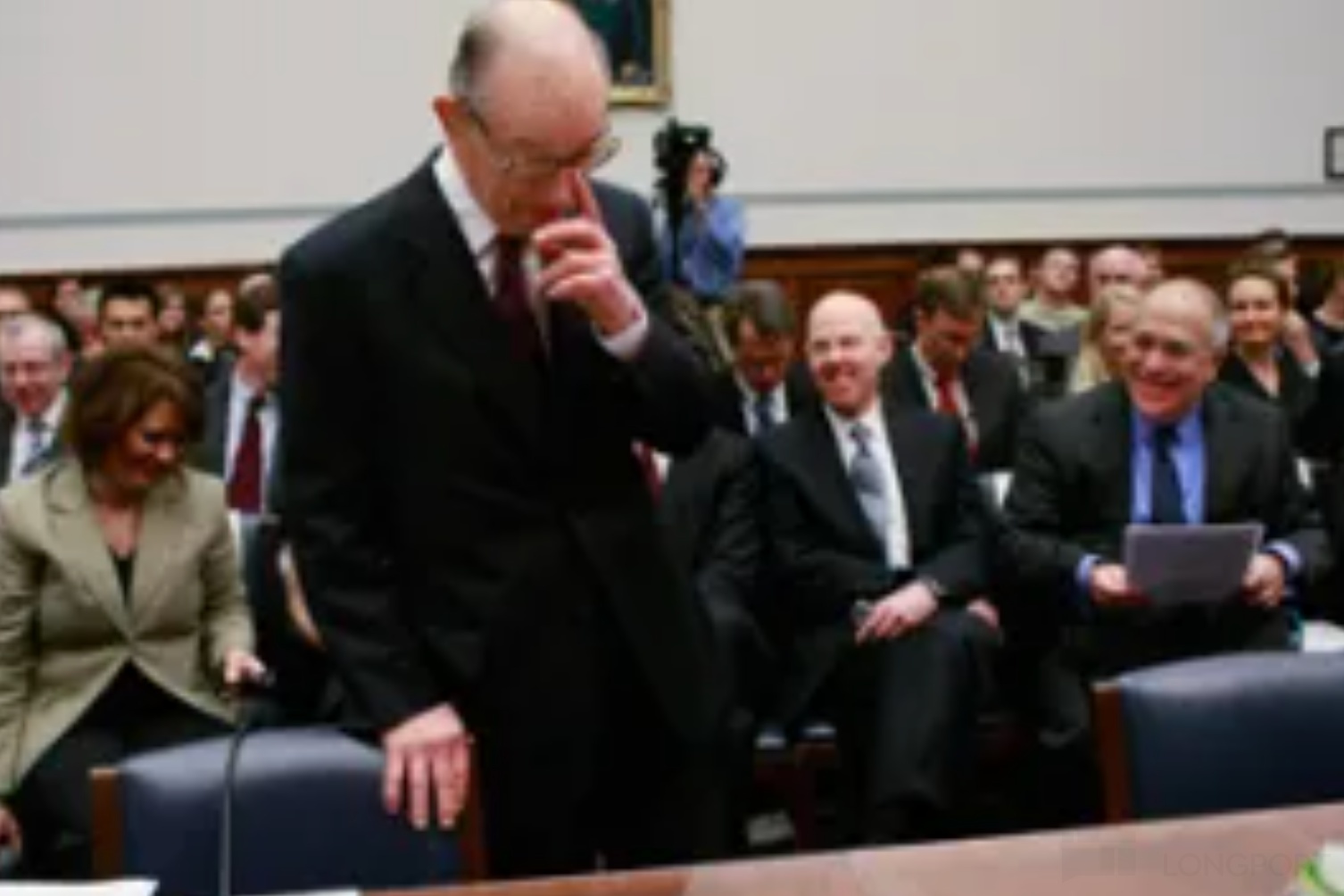
Waxman asked him: had his free-market ideology pushed him toward the wrong decisions?
Greenspan was silent for a few seconds. Then he answered:
"Yes, I found a flaw. I don't know how significant or permanent it is. But I have been very distressed by that fact."
He immediately added:
"I made a mistake in presuming that the self-interests of organizations, specifically banks, are such that they were best capable of protecting their own shareholders and their equity in the firms."
It was the most dramatic public admission of error in the history of global monetary policy over the past 50 years. A man once called the "Maestro," entrusted by four consecutive presidents, publicly conceded at age 82 that the worldview he had spent 40 years building was flawed.
Three years later, the U.S. Financial Crisis Inquiry Commission (FCIC) officially named Greenspan as one of the main parties responsible for the 2008 crisis.
On June 22, Greenspan passed away. But the set of rules he created is still running — "when the market falls, the Fed will rescue it" — a rule that was used to save Wall Street in 2008, to save the economy during the pandemic in 2020, and to save Silicon Valley Bank in 2023.
The greatest contribution of his life was to engrave "the market expects the Fed to backstop it" into global capitalism. The greatest controversy of his life was that the Fed thus became trapped in a position where it "can only ease when things go wrong" — and 19 years on, it still hasn't found its way out.
That era was one he built with his own hands.
He is gone. That era is not yet over.
本文版权归属原作者/机构所有。
当前内容仅代表作者观点,与本平台立场无关。内容仅供投资者参考,亦不构成任何投资建议。如对本平台提供的内容服务有任何疑问或建议,请联系我们。
