
第二例食肉蠅蛆蟲病例引發牛肉供應恐慌,高盛警告疫情 “可能會造成破壞”
 我是 LongbridgeAI,我可以總結文章信息。
美國農業部確認德克薩斯州出現第二例新世界螺螄蟲病例,這引發了對牛肉供應的擔憂,因為美國的牛羣數量已降至 75 年來的最低水平。高盛警告稱,這次疫情可能會對行業造成干擾,可能會壓縮屠宰企業的盈利能力,並影響像 JBS 和 Minerva 這樣的公司。儘管目前病例已得到控制,但人們仍對疫情的更廣泛傳播及其對牛肉價格和需求的影響感到擔憂
The U.S. Department of Agriculture (USDA) confirmed a second New World screwworm (NWS) case in a one-month-old calf in Zavala County, Texas, roughly 5.6 miles from the first confirmed detection.
For now, both cases remain inside what the USDA calls an "established movement control zone and enhanced sterile insect dispersal area." This suggests the outbreak is still contained within the USDA's active response perimeter. Nearby suspect cattle tests have been negative so far, limiting signs of broader spread at this point.
USDA confirmed the second NWS case late Friday. The agency reported the first case on Thursday (read the report).
— New World Screwworm Rapid Response (@Screwworm_RR) June 5, 2026USDA has confirmed a second detection of New World Screwworm in a one-month-old calf in Zavala County, Texas — approximately 5.6 miles from the first case.
With our partners in Texas, we are responding with speed and strength.
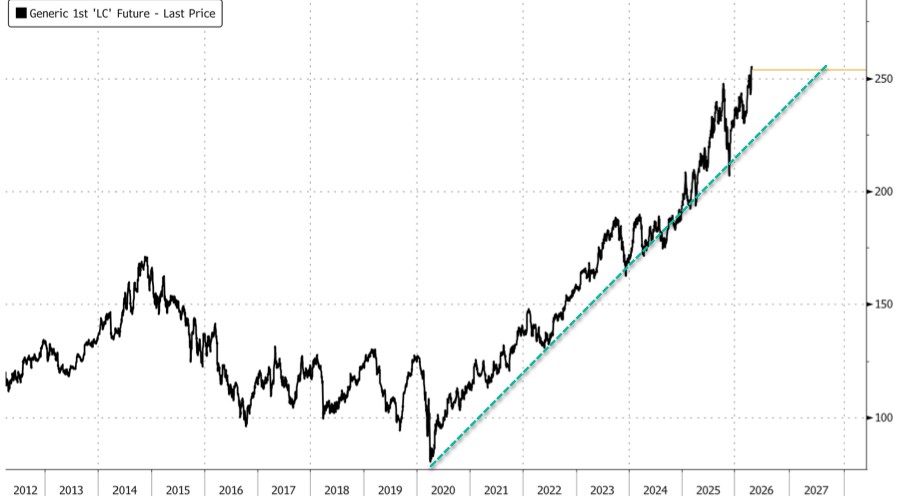
The detection of NWS in the U.S. - once eradicated in the U.S. in the 1960s - has seen an ongoing resurgence across Panama, Central America, a, nd Mexico. NWS burrows into living flesh, causing serious livestock damage and economic losses. This biological threat to the U.S. cattle herd comes as the nation's herd level is already at a 75-year low, beef prices are at record highs, and meatpackers are under pressure from fewer and more expensive animals.
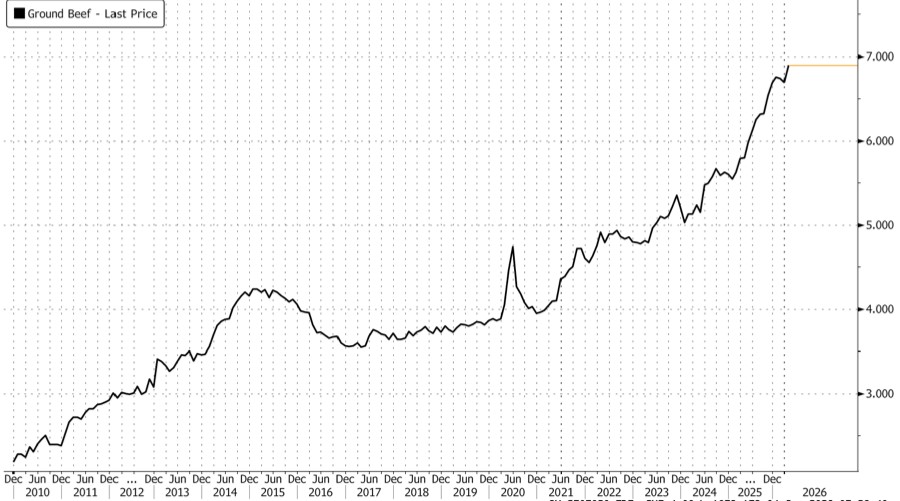
Cattle futures at record highs.
Goldman analyst Thiago Bortoluci lays out the implications if NWS spreads across the US beef industry:
In our view, the potential spread of NWS into Texas could be disruptive: the state holds the largest cattle herd in the country (12.1M head, 14% of the U.S. total), ranks among the top regions for feeder cattle (15%) and cattle on feed (22%), and is one of the most relevant sources of cattle shipped across state lines.
Should the Texas case be confirmed, we would expect:
Further pressure on the U.S. cattle herd, extending what has already been a multi-year downcycle, with elevated cattle costs further squeezing packers' profitability. Potentially weaker consumer demand for beef, ahead of the seasonally high grilling season and the upcoming FIFA World Cup. Some short-term demand substitution effect toward chicken.
Read-across to our coverage JBS currently operates one plant in Texas, but we believe the negative externalities could extend into nearby states and potentially also impact MBRF's National Beef operations (especially Liberal and Dodge City), given inter-state cattle trade. We estimate that each -50bp change in U.S. beef profitability would translate into a -3% impact on MBRF's and JBS's consolidated forward EBITDA.
On the flip side, the scenario could potentially be supportive for South American beef exporters given good cattle availability and no evidence of NWS in the continent till now. If this trend were to persist, Minerva would be the clearest beneficiary across our coverage, as exports to the U.S. account for 11% of its total sales.
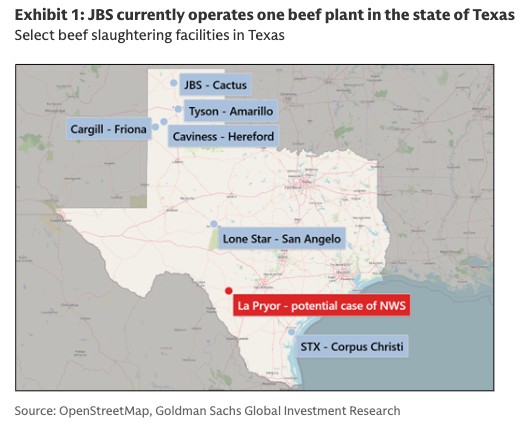
Base case: heightened NWS biosecurity surveillance across Texas and tighter cattle movement controls, not mass culling