What Are Green Bonds? A Comprehensive Look at Their Investment Pros and Cons
Green bonds are fixed-income instruments dedicated to environmental projects and offer a guaranteed minimum interest rate, making them ideal for prudent investors. This article explores their pros, cons, risks, and Hong Kong subscription process.
TL;DR:
Green bonds are fixed income instruments exclusively earmarked for environmental projects, issued by governments or corporations, with proceeds used for initiatives such as renewable energy and energy-efficient buildings. Combining steady returns with environmental responsibility, Hong Kong government retail green bonds have a low entry threshold and a guaranteed minimum interest rate, making them a prime choice for conservative investors.
As sustainability draws increasing focus, "green bonds" have become a crucial tool in Hong Kong’s investment landscape. They are not just another fixed income product, but also represent an investment philosophy that balances financial returns with environmental responsibility. For investors looking to build a resilient portfolio while supporting environmental protection, green bonds are well worth a closer look.
What Are Green Bonds? A Clear Overview of the Basics
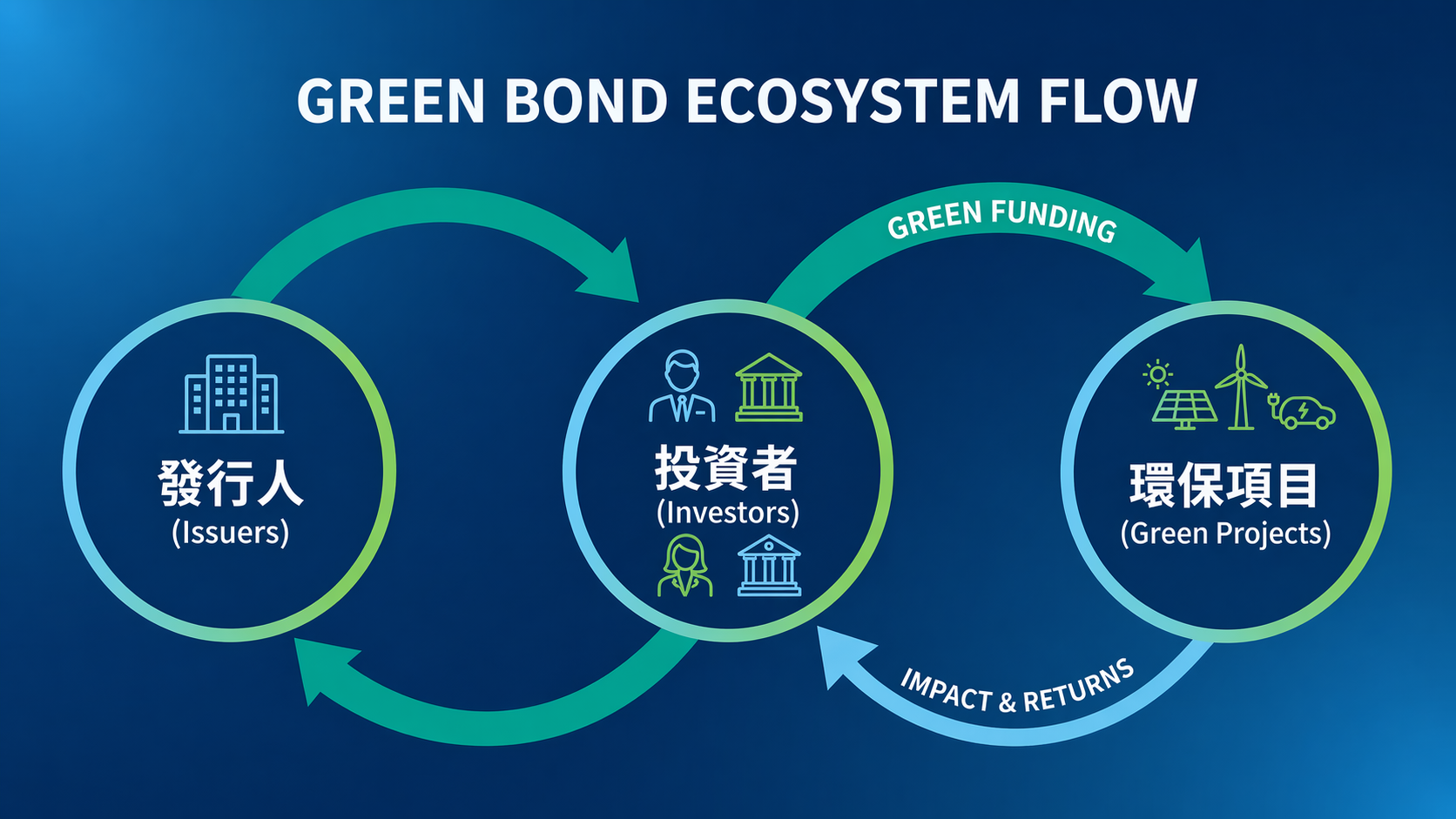
At their core, green bonds are debt securities—i.e., the issuer (such as a government or corporation) borrows funds from investors, promising regular interest payments and full repayment at maturity. The key distinction from ordinary bonds is that all funds raised through green bonds must be strictly allocated to "green projects", and cannot be used for other purposes.
What Kinds of Green Projects Do the Funds Support?
According to the Green Bond Principles developed by the International Capital Market Association (ICMA), eligible green projects span a range of categories, such as:
- Renewable Energy: Development of clean energy sources like solar, wind, and hydropower.
- Energy-efficient Buildings: Improving energy performance in existing buildings or constructing new buildings to certified green standards.
- Pollution Prevention and Control: Waste management, sewage treatment, and air quality improvement projects.
- Sustainable Transport: Infrastructure for electric vehicles and low-carbon public transit systems.
- Water Resource Management: Projects like desalination, rainwater harvesting, and wastewater treatment.
- Biodiversity Conservation: Efforts to maintain and restore both terrestrial and marine ecosystems.
Issuers must manage the funds according to the four pillars of the Green Bond Principles: public disclosure of the use of proceeds, explanation of project evaluation and selection processes, fund tracking through dedicated accounts, and the publication of regular reports on environmental outcomes. This structure ensures transparency and aims to prevent "greenwashing".
The Development of Green Bonds in Hong Kong
Since 2018, the Hong Kong SAR Government has rolled out the Government Green Bond Programme, actively issuing green bonds to seize green finance opportunities brought about by the Greater Bay Area and to help Hong Kong achieve carbon neutrality by 2050. As of November 2025, the Hong Kong government had issued around HKD 250 billion equivalent in green bonds, covering HKD, RMB, USD, and EUR, as well as both institutional and retail tranches—securing an important place in the Asian green bond market (Source: Hong Kong Monetary Authority).
Types of Green Bonds: What’s the Difference Between Retail and Institutional Offerings?
Retail Green Bonds (For Individual Investors)
Retail green bonds are investment products specifically designed by the Hong Kong government for the general public, and are the most widely accessible type for Hong Kong citizens. Key features include:
- Eligibility: Individuals aged 18 or above holding a valid Hong Kong Identity Card.
- Minimum Investment: One lot of HKD 10,000—a relatively low threshold.
- Bond Tenure: Typically three years.
- Interest Payment Frequency: Semiannual (every six months).
- Interest Rate Structure: Pegged to the annual inflation rate based on Hong Kong’s Composite Consumer Price Index (CPI), with a guaranteed minimum interest rate. For example, the 2023 batch offered a minimum rate of 4.75%. This means that regardless of inflation, investors will earn at least 4.75% per year (Source: Official Hong Kong Green Bond Programme website).
Institutional Green Bonds (For Professional Investors)
Institutional green bonds are aimed primarily at fund managers, insurance companies, banks, and other professional institutional investors. The investment threshold is much higher than that for retail bonds, so ordinary citizens typically cannot subscribe directly. However, individuals can still gain exposure by purchasing related bond funds or green bond ETFs.
Tip: To discover more fixed income and other investment choices, visit the Longbridge Securities Investment Products page to browse a wide range of options.
Advantages of Investing in Green Bonds
Green bonds have gained popularity among fixed-income-focused investors thanks to several key advantages:
Advantage 1: High Credit Ratings and Low Default Risk
The Hong Kong SAR Government enjoys a consistently high investment-grade credit rating from international agencies. Government-issued retail green bonds carry relatively low default risk and offer high principal security.
Advantage 2: Guaranteed Minimum Interest Rate and Predictable Returns
Retail green bonds include a minimum interest rate mechanism, ensuring investors receive at least the preset minimum yield throughout different economic cycles. This stable return structure is helpful for mid- to long-term financial and cash flow planning.
Advantage 3: Inflation-linked Return Design
Since coupon rates are pegged to local inflation, a rise in inflation will increase investors’ interest income, helping preserve purchasing power. This makes green bonds an inflation-hedged fixed income instrument.
Advantage 4: Listed on the HKEX, Superior Liquidity
Retail green bonds are listed on the Hong Kong Stock Exchange (HKEX), allowing investors to buy or sell them on the secondary market at prevailing market prices—offering greater flexibility than traditional time deposits.
Advantage 5: Alignment with ESG Investment Principles
When you invest in green bonds, your funds are directly supporting local environmental infrastructure and sustainable development projects, aligning with Environmental, Social, and Governance (ESG) investment principles and contributing social value beyond financial returns.
Disadvantages and Risks of Investing in Green Bonds
All investments come with risks, and green bonds are no exception. It's important to carefully consider the following before investing:
Disadvantage 1: Interest Rate Risk
When overall market interest rates rise, the fixed or capped returns of bonds become less attractive, which may cause green bond prices in the secondary market to fall below their issue price. If you sell before maturity, you could face a capital loss.
Disadvantage 2: Liquidity Risk
Although retail green bonds are traded on the HKEX, secondary market trading volume may be less active than popular stocks. In a market downturn, selling quickly may mean accepting a less favorable price.
Disadvantage 3: Greenwashing Risk
"Greenwashing" refers to some issuers marketing green bonds in name only, with funds not fully used for genuine environmental projects, or overstating their "environmental benefits". While official Hong Kong government retail green bonds are highly transparent, investors should be especially vigilant about this risk when considering green bonds issued by corporations.
Disadvantage 4: Conservative Return Ceiling
Compared to equities or other growth-focused assets, the potential returns of green bonds are more limited. For investors pursuing significant capital growth, green bond returns may not meet expectations.
Disadvantage 5: Not Open to All
Even though the threshold for Hong Kong government retail green bonds is relatively low, they are only available to individuals aged 18 or above with a valid Hong Kong Identity Card, and not to non-residents.
Note: The above analysis is for reference only and does not constitute investment advice. Please read the official prospectus carefully to fully understand the terms and associated risks before investing.
How Can You Invest in Green Bonds in Hong Kong?
Hong Kong investors have three main channels to access green bonds, each with distinct features:
Channel 1: Direct Subscription of Retail Green Bonds
When the government launches retail green bonds, the subscription period, application methods, and allocation arrangements are announced. Investors can subscribe via:
- Placing Banks: Visit the branch or use online services of an approved placing bank.
- Securities Brokers: Apply through a securities account opened with Hong Kong Securities Clearing Company Limited (HKSCC).
After subscription, the bonds are credited to your account, with interest paid automatically every six months and principal repaid at maturity.
Channel 2: Buying and Selling on the Secondary Market
Once green bonds are listed on the HKEX, they can be bought or sold on the secondary market at any time, without waiting for a new government issuance. Prices fluctuate with market supply, demand, and interest rate conditions. Buyers will also receive accrued interest since the last coupon date.
Channel 3: Indirect Investment via Bond Funds or ETFs
For broader diversification, investors may choose to purchase ETFs tracking green bond indices or invest in funds holding green bonds. Such products are often more liquid and provide wider diversification.
For the latest market news and analysis, refer to Longbridge Market News for up-to-date information on green finance.
Tax Exemption Arrangements for Green Bonds
Under Hong Kong’s current tax regime, interest income from government-issued retail green bonds is generally tax-exempt for Hong Kong residents, with no profits tax payable. This is an additional advantage over some other fixed income products. However, individual circumstances may vary, so it is advisable to consult your tax advisor for your specific situation.
Frequently Asked Questions
What Is the Minimum Investment for Green Bonds?
The minimum subscription amount for government retail green bonds is one lot of HKD 10,000, making it accessible for the general public.
Can I Sell Before Maturity?
Yes. Once listed on the HKEX, retail green bonds can be sold at any time on the secondary market at prevailing market prices. However, actual returns will depend on market price at the time of sale, which may be higher or lower than your original subscription price.
Do Government-issued Green Bonds Carry Greenwashing Risk?
Government-issued retail green bonds are managed under an official green bond framework, with fund usage regulated and publicly disclosed—so the risk of greenwashing is relatively low. However, transparency varies widely for corporate green bonds, so investors should independently verify certifications and fund use disclosures.
How Often Does the Hong Kong Government Issue Retail Green Bonds?
There is no set schedule; typically, they are issued once a year or every two years, depending on market conditions. It’s recommended to follow Longbridge News or the official Government Green Bond Programme website to stay updated on issuance news.
Conclusion: Are Green Bonds Right for You?
Green bonds offer fixed-income investors a way to combine bond yields with environmental responsibility. For those interested in adding fixed income components to their portfolio while supporting Hong Kong’s sustainable development, government retail green bonds are worth considering.
However, as with any investment, suitability depends on your individual objectives, risk tolerance, and overall portfolio allocation. The relatively conservative return profile of green bonds may not meet every investor’s needs.
Your choice of investment tool should be based on your goals, risk appetite, market outlook, and experience. No matter which instrument you pick, be sure to fully understand its mechanism, risks, and trading rules, and establish a robust risk management plan. You can learn more via Longbridge Academy or by downloading Longbridge Securities for further investment knowledge.