What Is Crypto Mining? A Complete Guide—from Hardware Rigs to Cloud Mining
From blockchain proof-of-work to cloud mining contracts, this article delivers a comprehensive analysis of cryptocurrency mining fundamentals, hardware selection, and the costs and risks investors must assess before participating.
TL;DR: Crypto mining is the process of validating blockchain transactions through computer computation and earning cryptocurrency rewards. Mining methods generally fall into three main categories—ASIC miners, GPU mining, and cloud mining—each with different cost structures and risk characteristics. Before investing, you must fully understand mining principles, equipment costs, electricity expenses, and risks such as market volatility.
In recent years, cryptocurrencies have become a hot topic among investors worldwide, and crypto mining is the core mechanism that keeps decentralized networks running. Whether you are a beginner just getting into blockchain or an investor looking to better understand how digital assets work under the hood, grasping what mining really is is an important first step into the world of crypto. This article will guide you from the fundamentals of mining, to the characteristics of different types of hardware, and then to the increasingly popular cloud mining model—helping you build a comprehensive understanding of the key concepts in this space so you can make clearer judgments before participating.
What Is Crypto Mining? The Basics of How Mining Works
Cryptocurrency mining (Crypto Mining) is the process of maintaining the blockchain network, validating transactions, and earning cryptocurrency rewards through computer computation. To understand mining, you first need to understand how blockchain works.
Blockchain and Proof of Work
A blockchain (Blockchain) is a decentralized public ledger that records every transaction on the network. About every ten minutes, transactions from around the world are bundled into a “block.” Miners then race to solve a complex mathematical problem; whoever solves it first can add the block to the chain and receive a certain amount of cryptocurrency as a reward. This mechanism is called “Proof of Work” (Proof of Work, or PoW).
The answer to the mathematical problem is called a “hash” (Hash). Essentially, it is a 64-digit hexadecimal number. Miners’ computers keep trying different inputs until they generate a hash that meets the network’s difficulty requirement. The faster the computation, the higher the chance of earning the reward.
Mining Rewards and the Halving Mechanism
Using Bitcoin as an example, each time a miner successfully adds a new block, they receive a set amount of bitcoin as a reward. Under the Bitcoin protocol, this reward is cut in half roughly every four years, known as a “halving” (Halving). After the 2024 halving, the reward per block has fallen to 3.125 BTC. The next halving is expected to occur in 2028. The halving mechanism fixes Bitcoin’s total supply cap at 21 million coins, which is one of the key sources of its scarcity.
Important reminder: Mining returns are directly affected by volatility in cryptocurrency market prices, and past performance does not indicate future returns. Before participating in mining, be sure to thoroughly assess your own risk tolerance.
A Complete Breakdown of Mining Hardware: ASIC, GPU, or CPU?
Mining technology has evolved from something you could do with a home computer into a highly specialized competition of hardware. Understanding the characteristics of different devices is key to evaluating the cost of entry.
ASIC Miners: Built for a Single Algorithm
ASIC (Application-Specific Integrated Circuit) miners are devices designed specifically to mine particular cryptocurrencies such as Bitcoin. They are optimized for a specific cryptographic algorithm and are more computationally efficient than general-purpose hardware. Using mainstream models on the market as an example, a new-generation ASIC miner can process hundreds of TH/s (terahashes per second—trillions of hash calculations) while keeping power consumption relatively under control.
However, ASIC miners also have clear limitations: they can only mine cryptocurrencies that use the specific algorithm they were built for and cannot be repurposed. The purchase cost of a single unit ranges from several thousand to tens of thousands of U.S. dollars. When you add operating expenses such as electricity, cooling, and space, the overall capital threshold is quite high.
GPU Mining: More Flexibility
GPU (graphics processing unit) mining was one of the earliest and most common approaches. A graphics card’s parallel computing capability makes it suitable for mining cryptocurrencies that use various algorithms, offering greater flexibility than ASICs. When mining profitability for one coin drops, miners can switch to other algorithms and continue operating.
However, after Ethereum transitioned to Proof of Stake (PoS) in 2022, the mainstream market for GPU mining narrowed significantly. Today, GPUs are mainly used to mine smaller and mid-cap PoW coins, where the competitive landscape and profit potential generally lag behind ASIC mining.
CPU Mining: No Longer Competitive
In Bitcoin’s early days, mining with a regular computer CPU was feasible. But as total network hashrate has continued to rise, CPU mining efficiency has fallen far behind and offers virtually no profit potential for mainstream coins. It has largely exited the market.
Tip: Mining hardware efficiency is usually measured in joules per terahash (J/TH). The lower the number, the higher the efficiency. When evaluating equipment, the relationship between electricity cost and hashrate efficiency is a core consideration.
The Evolution of Mining Participation: Pools, Solo Mining, and Other Forms
In addition to choosing hardware, miners also need to decide how to participate in the mining network.
Solo Mining
Solo mining refers to miners using their own equipment to compete independently for block rewards, without sharing revenue with others. However, in today’s environment of extremely high network hashrate, the probability of a single machine—or even a small number of machines—successfully finding a block is extremely low. Returns can be highly volatile, so it is generally not suitable for individual investors.
Pool Mining
Mining pools are currently the most mainstream method. Multiple miners combine their hashrate into the same pool, compete for blocks together, and distribute rewards based on each participant’s contributed hashrate. While each payout is smaller, returns are relatively more stable, making this suitable for miners who want to reduce income volatility.
PoS Staking
Since Ethereum moved to PoS, the concept of “mining” has extended to staking. Token holders lock their cryptocurrency in the network to serve as validators and earn staking rewards without consuming large amounts of electricity. This differs fundamentally from traditional PoW mining in mechanism and carries different risk characteristics.
Liquidity Mining
Liquidity mining is part of decentralized finance (DeFi). Participants provide liquidity to decentralized exchanges and, in return, receive a share of trading fees or platform tokens as rewards. This approach involves smart contract risks and token price volatility and represents a different type of high-risk activity.
What Is Cloud Mining? Mining With Zero Hardware
Cloud mining allows people who are interested in mining but do not want to manage hardware themselves to participate remotely by renting hashrate.
How Cloud Mining Works
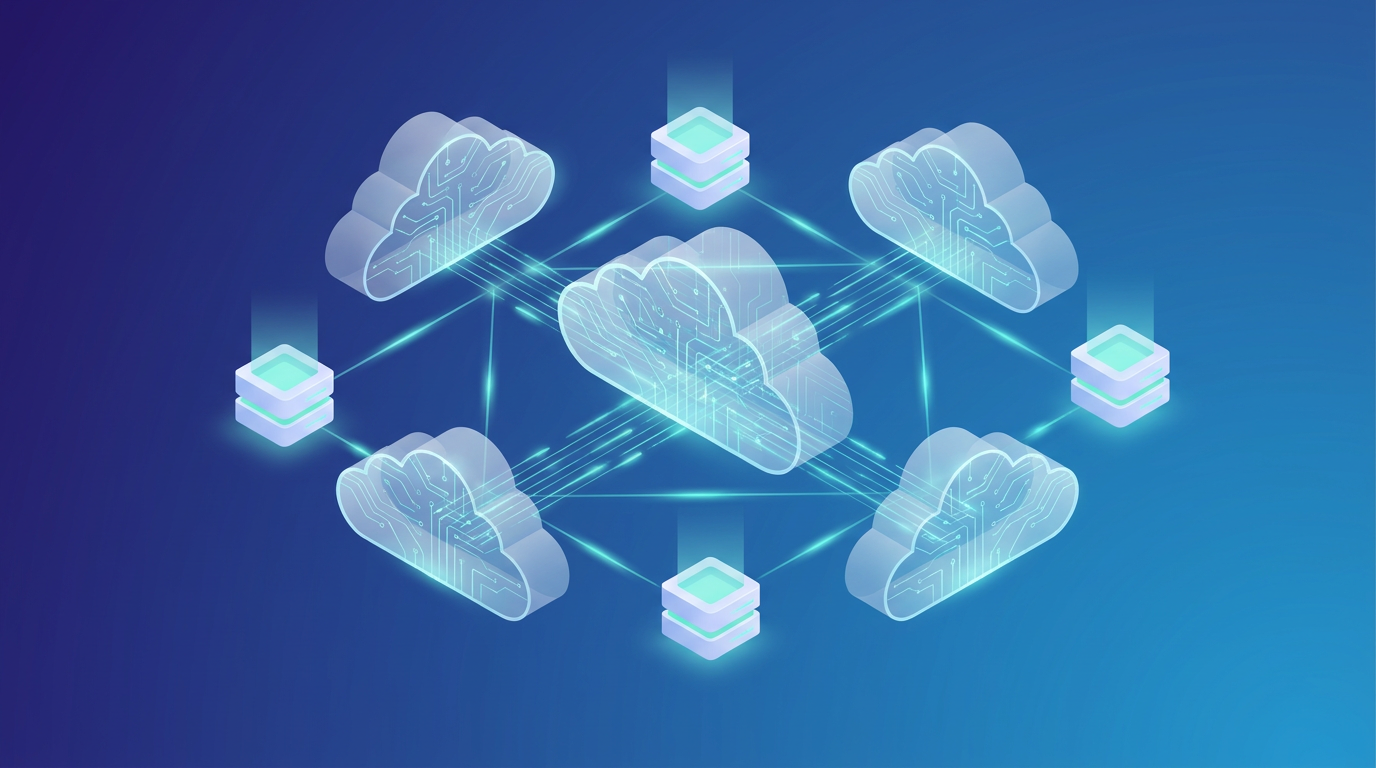
Cloud mining service providers build and operate large data centers around the world, equipped with professional ASIC miners. Users simply purchase a hashrate contract online for a specified period and share the mining proceeds generated by the data center in proportion to their purchased hashrate. After deducting service fees and electricity costs, the remaining portion is paid out to users in cryptocurrency.
Pros and Cons of Cloud Mining
Key features:
- No need to buy hardware yourself: Saves the upfront investment of tens of thousands of U.S. dollars for ASIC miners
- No equipment management required: Cooling, noise, maintenance, and other issues are handled by the provider
- Relatively low barrier to entry: Users can start with a smaller amount
Potential limitations:
- No ownership of physical assets: When the contract ends, there is no hardware to sell, limiting ways to recover costs
- Returns depend on multiple factors: After service fees and electricity costs, actual returns may be far below expectations
- Lack of transparency: Users cannot directly verify whether the provider is truly operating mining farms
- Higher fraud risk: Many scam platforms operate under the name of cloud mining, some using Ponzi-style structures
Important warning: According to market research, crypto-mining-related scams continue to appear. Before participating, verify the provider’s authenticity, including whether it offers publicly verifiable mining site information and compliant credentials. Be especially cautious of any service that promises fixed returns.
Costs and Profitability Considerations in Mining
Before deciding whether to participate in mining, you need a clear understanding of the following cost factors.
Main Cost Factors
Hardware costs: The market price of ASIC miners varies by model and market conditions, generally ranging from several thousand to tens of thousands of U.S. dollars. Equipment values also fluctuate significantly with market trends.
Electricity: Mining is highly power-intensive, and electricity is often the largest variable cost in long-term operations. For modern mainstream ASIC miners, power consumption is typically above 3,000 watts, making daily electricity expenses non-trivial. Bitcoin’s total network hashrate has remained at a high level in recent years, reflecting intense competition.
Network difficulty adjustment: Bitcoin’s mining difficulty is adjusted roughly every 2,016 blocks. As total network hashrate increases, the probability of individual miners earning rewards continues to decline.
Uncertainty in Profitability
Mining profitability is jointly determined by multiple factors: cryptocurrency market prices, total network hashrate levels, electricity costs, and hardware efficiency. All of these factors are influenced by market volatility and cannot be predicted. Some analysts point out that a sharp drop in cryptocurrency prices may cause mining activities to become loss-making even before electricity costs are covered.
Tip: When assessing a mining investment, it is recommended to model the break-even point under different hypothetical market scenarios rather than simply extrapolating potential returns from the current spot price.
Legal and Regulatory Considerations for Mining
The legal status of cryptocurrency mining varies by region, and investors must understand the regulatory environment where they are located.
In Hong Kong, crypto-related activities are governed by an evolving regulatory framework. The Hong Kong Securities and Futures Commission (SFC) operates a licensing regime for virtual asset service providers. Before using any crypto-related service, investors should confirm whether the relevant provider holds the appropriate license. For information on Hong Kong’s licensing regime for virtual asset trading platforms, please refer to the SFC’s Virtual Asset Trading Platforms Operators page.
It is also worth noting that in some jurisdictions, cryptocurrency earned from mining may be treated as taxable income. Specific tax treatment depends on local laws, and it is recommended to consult a professional tax advisor.
Frequently Asked Questions
Is Crypto Mining legal?
Hong Kong currently does not explicitly prohibit cryptocurrency mining activities, but the relevant legal framework is still developing. Regulatory approaches to mining vary across countries and regions, and some jurisdictions have already imposed outright bans. If engaging in any crypto-related activity in Hong Kong, it is recommended to follow the SFC’s latest guidance.
Can ordinary people mine on their own?
In theory, yes, but in practice it is quite difficult. Using Bitcoin as an example, network competition is intense; without substantial hashrate, an individual miner’s chance of earning rewards is extremely low. Some people choose to mine smaller and mid-cap coins with less competition, or join mining pools to improve stability, but overall profitability still comes with significant uncertainty.
Is cloud mining safe and reliable?
Cloud mining is a commercial model in itself, but scam platforms are widespread. When choosing a provider, you should verify whether it has publicly available mining site information, transparent contract terms, and a verifiable operating history. Any service that promises capital protection or fixed returns is high risk and requires extra caution.
What’s the difference between mining and buying cryptocurrency directly?
Buying cryptocurrency directly means acquiring the asset at the current market price. Mining, by contrast, exchanges computing power (hashrate) for cryptocurrency and involves hardware investment, electricity costs, and time costs. The risk profiles differ: buying mainly carries market price risk, while mining involves market price risk plus the risk that equipment and operating costs may not be recoverable.
What is the environmental impact of mining?
Cryptocurrency mining consumes a large amount of electricity. According to estimates from some research institutions, Bitcoin’s annual electricity consumption is comparable to that of some mid-sized countries. However, in recent years, more and more mining operations have shifted to renewable energy to reduce carbon emissions. Some industry estimates suggest that the share of renewables in mining power sources has increased, but the actual figures remain disputed.
Conclusion
Crypto Mining is an important part of the cryptocurrency ecosystem. From the fundamental Proof-of-Work mechanism, to the evolution of mining hardware, to the rise of cloud mining, the entire industry continues to change. For investors who are considering participation, fully understanding mining mechanics, cost structures, and potential risks is more important than chasing short-term returns. Regardless of the approach you choose, electricity costs, equipment depreciation, and market volatility are real risks that cannot be ignored.
Which tool you choose depends on your investment goals, risk tolerance, market views, and level of experience. No matter which investment tool you choose, you must fully understand how it works, its risk characteristics, and its trading rules, and establish a sound risk management plan. You can learn more investment knowledge through Longbridge Academy or Download the Longbridge App.