Inverse ETFs: Profiting When Markets Fall
Inverse ETFs offer a way to profit from market declines without short-selling. This guide explains how they work, their risks, and strategic uses for portfolio protection.
TL;DR: Inverse ETFs (exchange-traded funds) are designed to deliver the opposite performance of a specific benchmark index—when the market falls, they rise. These specialized investment products use derivatives like swaps and futures to achieve inverse returns, making them a tool for short-term hedging or tactical trading. However, they come with significant risks, including daily rebalancing effects and volatility decay, making them unsuitable for long-term holding.
When markets experience turbulence, most investors watch their portfolios decline in value. But what if there was a way to potentially profit from falling markets without the complexity of short-selling? This is where inverse ETFs come into play—specialized investment products designed to move in the opposite direction of their underlying benchmark.
For Singapore investors, understanding inverse ETFs might add a valuable dimension to your trading toolkit. Whether hedging existing positions during uncertain times or capitalizing on short-term market declines, these instruments may offer accessible alternatives to traditional short-selling strategies—but they carry unique risks that demand careful consideration.
This guide covers how inverse ETFs work, when to use them, and critical factors to evaluate before incorporating them into your investment strategy.
What Are Inverse ETFs?
An inverse ETF, also known as a "short ETF" or "bear ETF," is an exchange-traded fund that aims to deliver the opposite daily performance of a specific index or benchmark. For example, if the S&P 500 index declines by 1% on a given trading day, an inverse S&P 500 ETF is designed to rise by approximately 1% that same day.
These funds are traded on public stock exchanges just like regular ETFs, making them accessible to retail investors without requiring a margin account or the need to borrow securities—requirements typically associated with traditional short-selling.
The Key Distinction
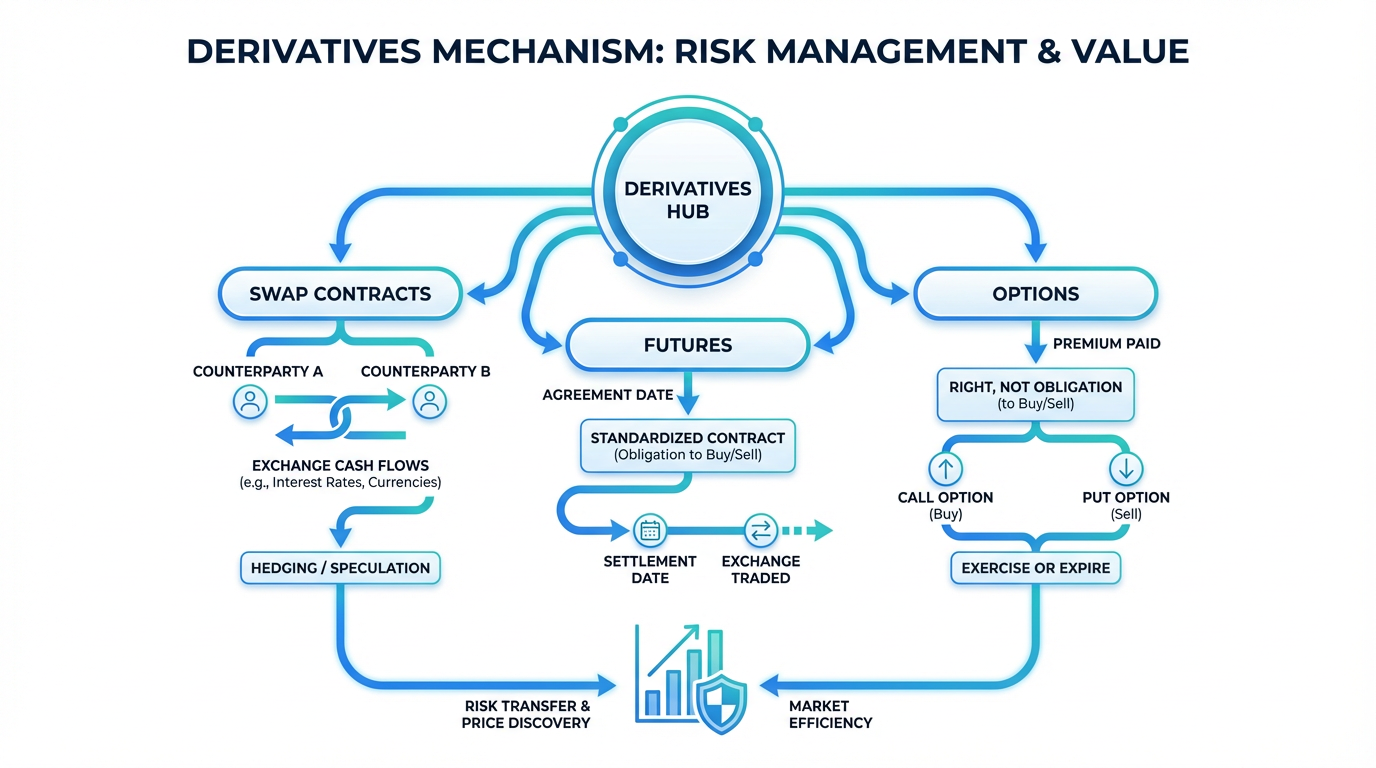
Unlike traditional ETFs that hold actual stocks or assets, inverse ETFs use financial derivatives—primarily swaps, futures contracts, and options—to create synthetic exposure that moves opposite to the index. This fundamental difference enables their inverse performance characteristics.
Standard vs. Leveraged Inverse ETFs
Inverse ETFs come in two main varieties:
Standard Inverse ETFs (1x): These funds aim to deliver exactly the opposite return of their benchmark. If the index falls 2%, the inverse ETF seeks to gain 2%.
Leveraged Inverse ETFs (2x or 3x): These amplify the inverse return by a multiple. A 2x leveraged inverse ETF aims to return twice the opposite performance—so if the index drops 1%, the ETF targets a 2% gain. Similarly, a 3x leveraged version would aim for a 3% gain on that same 1% index decline.
While leverage can magnify gains during favorable market movements, it equally amplifies losses when the market moves against your position. This makes leveraged inverse ETFs even more volatile and risky than their standard counterparts.
How Inverse ETFs Work
Understanding the mechanics behind inverse ETFs is essential for using them effectively and managing their inherent risks.
Derivative Instruments
Inverse ETFs achieve their opposite performance primarily through derivative contracts. According to Fidelity, these funds typically use:
Swap Agreements: Contracts with financial institutions (counterparties) that exchange the return of the underlying index for the inverse return
Futures Contracts: Agreements to sell index futures at predetermined prices
Options Contracts: Put options or combinations of options that profit from declining prices
These derivatives allow fund managers to create synthetic short positions without actually borrowing and selling the underlying securities.
Daily Rebalancing
One critical feature of inverse ETFs is their daily rebalancing mechanism. These funds achieve their inverse performance on a daily basis only. At each trading day's end, the fund rebalances its derivative positions to maintain proper inverse exposure.
This daily reset has significant implications:
Performance tracks the inverse accurately over single-day periods
Over multiple days, compounding effects can cause substantial divergence from the simple inverse of the index's cumulative return
In volatile markets, this compounding can erode returns even if the index ends where it started
Strategic Uses for Inverse ETFs
Despite their complexity and risks, inverse ETFs serve several legitimate purposes in investment strategies when used appropriately, though traders should remain mindful of the risks involved.
Short-Term Hedging
One of the primary applications of inverse ETFs is hedging against short-term market declines. If you hold a portfolio of Singapore, US, or Hong Kong stocks and anticipate brief market weakness—due to economic data releases, earnings reports, or geopolitical events—an inverse ETF might be able to provide temporary downside protection.
For example, if you hold US technology stocks and expect volatility around a Federal Reserve announcement, purchasing a small inverse Nasdaq ETF position could offset potential losses. This approach protects portfolios without selling positions that may trigger capital gains taxes or disrupt long-term strategies.
Tactical Trading Opportunities
Experienced traders use inverse ETFs to capitalize on anticipated short-term market declines. According to research from NerdWallet, common scenarios include when technical indicators suggest a correction, sector-specific weakness appears imminent, or overvalued conditions warrant defensive positioning. This tactical approach requires active monitoring, strong market analysis skills, and discipline to exit quickly as conditions change.
Key Risks and Limitations
While inverse ETFs can be useful tools, they come with substantial risks that every investor must understand before trading.
Compounding and Volatility Decay
The most significant risk stems from daily rebalancing and compounding effects. In volatile markets where the index moves up and down repeatedly, inverse ETFs can lose value even if the index ends relatively unchanged.
Example scenario: An index starts at 100, drops to 90 (down 10%), then rises back to 100 (up 11.1%). The index ends flat. However, a standard inverse ETF would gain 10% on Day 1 (100 to 110), then lose 11.1% on Day 2 (110 to 97.8). Despite the index returning to its starting point, the inverse ETF ends down 2.2%. This volatility decay becomes more pronounced in choppy markets and with leveraged inverse ETFs.
Not Suitable for Long-Term Holding
Due to volatility decay and compounding effects, inverse ETFs are designed for short-term use—typically one day to a few weeks at most. The US Securities and Exchange Commission (SEC) warns that these are "specialized products with extra risks for buy-and-hold investors." The longer an inverse ETF is held, the more its performance deviates from expectations, making them inappropriate for long-term portfolios or retirement accounts.
Amplified Risk with Leverage
Leveraged inverse ETFs (2x or 3x) multiply all the risks associated with standard inverse ETFs. They expose investors to larger losses, more severe volatility decay, and higher expense ratios. For most retail investors, leveraged inverse ETFs should be approached with extreme caution.
Market Timing Challenges
Successfully profiting from inverse ETFs requires accurate market timing—predicting when markets will decline and recover. Market timing is notoriously difficult, even for professional fund managers. Mistimed entries can quickly result in losses if markets continue rising, while holding too long can erode gains when markets reverse.
Key Considerations Before Trading
Before incorporating inverse ETFs into your investment approach, carefully evaluate these important factors.
Expense Ratios and Trading Costs
Inverse ETFs typically carry higher expense ratios than traditional ETFs—ranging from 0.75% to over 1% annually compared to 0.03% to 0.20% for standard index ETFs—due to costs associated with maintaining derivative positions and daily rebalancing. While this may seem less important for short-term positions, these costs impact returns, especially for frequent traders.
Also one might consider bid-ask spreads, which can be wider for less popular funds, and trading volume, which affects execution prices. Singapore investors using platforms like Longbridge can track market performance in real-time across multiple markets for informed decision-making.
Regulatory and Tax Considerations
In Singapore, the Monetary Authority of Singapore (MAS) regulates securities trading. Investors should trade through MAS-licensed brokers like Longbridge to ensure proper investor protections. Regarding taxes, while capital gains are generally not taxed in Singapore, frequent trading may be considered trading income, potentially triggering tax obligations. Consult with a qualified tax professional to understand how inverse ETF trading might impact your specific situation.
Frequently Asked Questions
Are inverse ETFs good for long-term investing?
No, inverse ETFs are not suitable for long-term investing. These funds are designed for short-term use—typically one day to a few weeks. Due to daily rebalancing and compounding effects, their performance over longer periods can deviate significantly from expectations. Volatility decay can erode returns even when the index moves in your favor. For long-term strategies, traditional diversification approaches are more appropriate.
Can I lose more than I invest in an inverse ETF?
With standard inverse ETFs, your maximum loss is limited to your initial investment—you cannot lose more than 100%. However, with leveraged inverse ETFs (2x or 3x), losses can accumulate quickly. Unlike short-selling stocks, where potential losses are theoretically unlimited, inverse ETFs cap losses at your initial investment amount.
How do inverse ETFs differ from short-selling stocks?
Inverse ETFs do not require a margin account or borrowing securities, making them more accessible to retail investors. Your maximum loss is limited to your investment amount, whereas short-selling carries unlimited loss potential. Inverse ETFs also provide exposure to broad market indices rather than individual stocks. However, they carry unique risks like volatility decay and daily compounding effects that traditional short positions do not have.
What is the best time to use an inverse ETF?
Inverse ETFs are typically most appropriate when you anticipate a short-term market decline. Common scenarios include hedging during periods of expected volatility (such as economic data releases or earnings seasons) or taking tactical positions based on technical analysis. The key is having a clear thesis for the decline, a defined time horizon (days or weeks, not months), and a predetermined exit strategy.
Conclusion
Inverse ETFs are specialized tools for short-term hedging and tactical trading. By delivering opposite daily performance of benchmark indices, they offer accessible alternatives to traditional short-selling without margin accounts or unlimited loss potential.
However, the risks are substantial. Daily rebalancing, compounding effects, volatility decay, and market timing challenges make them unsuitable for long-term strategies or inexperienced investors. Success requires thorough understanding, active monitoring, and disciplined risk management.
For Singapore investors, trading through MAS-licensed platforms like Longbridge ensures proper investor protections. Before using inverse ETFs, understand their mechanics, assess alignment with your objectives and risk tolerance, and consider consulting financial professionals for personalized guidance.
Explore the Longbridge app to access ETFs across multiple markets. Learn more about investment strategies through our educational resources.