Investing in Hong Kong Stocks from Singapore: A Complete Guide
A practical guide for Singapore investors on how to access Hong Kong stocks, covering HKEX market structure, trading mechanics, costs, taxes, and risks.
TL;DR: Singapore investors can access Hong Kong stocks through an online brokerage licensed by the Monetary Authority of Singapore (MAS), trading on the Hong Kong Exchanges and Clearing (HKEX) — one of Asia's largest financial markets. This guide covers everything you need to know: market structure, trading rules, costs, and how to get started.
For Singapore-based investors looking to broaden their portfolios, Hong Kong stocks offer an additional avenue for diversification. The Hong Kong Exchanges and Clearing (HKEX) is a major global exchange ranked among the world's top ten by market capitalisation, serving as a key gateway to some of Asia's largest technology, financial, and consumer companies. Investing in Hong Kong stocks from Singapore is more accessible than many investors realise.
This guide covers the essentials: what HKEX is, how to start trading, key costs, and important risks to keep in mind.
Understanding the Hong Kong Stock Exchange
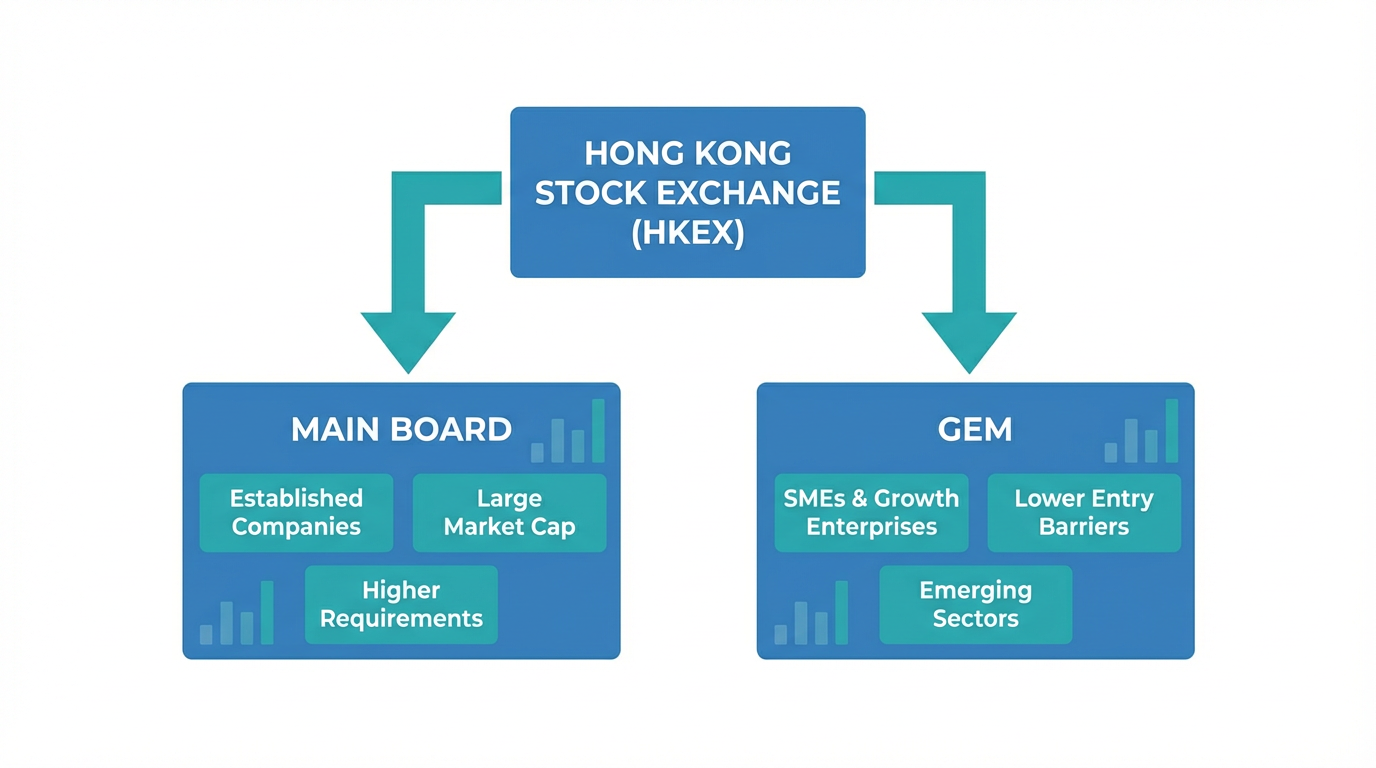
The Hong Kong Exchanges and Clearing (HKEX) is one of Asia's most prominent financial markets. As of early 2026, it hosts approximately 2,673 listed companies with a total market capitalisation of around HKD 48.5 trillion, according to HKEX market data. The exchange operates two main trading boards.
Main Board vs Growth Enterprise Market (GEM)
The Main Board lists established, large-cap companies that meet stringent financial and governance requirements. This includes major financial institutions, property developers, and technology conglomerates.
The Growth Enterprise Market (GEM) caters to smaller, high-growth companies that may not yet meet Main Board thresholds. GEM listings generally carry higher risk, as these companies are at earlier stages of development.
The Hang Seng Index and Stock Types
The Hang Seng Index (HSI) is the benchmark index for HKEX, tracking the performance of the exchange's largest and most liquid companies. It covers companies across finance, property, utilities, commerce, and technology sectors.
Several categories exists of stocks on HKEX:
-
H-Shares: Mainland Chinese companies incorporated in China and listed in Hong Kong
-
Red Chips: State-owned mainland enterprises incorporated outside China but listed in Hong Kong
-
P-Chips: Privately owned mainland companies listed in Hong Kong
-
Hong Kong-incorporated companies: Local businesses spanning finance, real estate, and retail
This mix gives Singapore investors exposure to both Hong Kong's own economy and a wide range of mainland Chinese businesses.
Why Singapore Investors Consider Hong Kong Stocks
Time Zone Alignment
HKEX trading hours run from 9:30 AM to 12:00 PM and 1:00 PM to 4:00 PM, Hong Kong Time — which matches Singapore Standard Time (SGT). This convenience means you can monitor and manage your Hong Kong portfolio during regular business hours, without the need to stay up for overnight sessions as you might with US markets.
Diversification Into Asian Markets
Hong Kong provides access to companies and sectors not readily available on the Singapore Exchange (SGX). Many of Asia's largest internet, electric vehicle, and consumer technology businesses are listed on HKEX. For investors who want broader Asian exposure, adding Hong Kong stocks can complement an existing portfolio of Singapore-listed equities.
Access via Stock Connect
The Shanghai-Hong Kong Stock Connect and Shenzhen-Hong Kong Stock Connect programmes allow international investors to access a broader range of mainland Chinese-listed companies (known as A-shares) through their existing Hong Kong brokerage accounts, extending the investment universe beyond HKEX-listed stocks alone.
Note: Investing in Hong Kong stocks involves exposure to market, currency, and geopolitical risks. Diversification does not guarantee profits or protect against losses.
Key Trading Rules and Market Mechanics
Before you begin trading Hong Kong stocks from Singapore, it is important to understand how the market operates.
T+0 Trading and T+2 Settlement
HKEX uses a T+0 trading model — you can buy and sell the same stock on the same day with no restriction on same-day trade frequency. However, actual settlement of funds and securities occurs on T+2, two working days after the trade date.
Lot Sizes
Unlike Singapore's standard 100-share board lots, HKEX lot sizes vary by company and can range from 100 to 2,000 shares. Always check the minimum lot size for a stock before placing your order.
Margin Trading and Short Selling
Margin trading and short selling are available for eligible Hong Kong stocks, though both carry elevated risk and require a solid understanding before use.
Costs and Taxes to Know
Understanding the full cost of trading Hong Kong stocks from Singapore helps you make more informed decisions.
Hong Kong Stamp Duty
The Hong Kong government imposes stamp duty on every share transaction. This is currently charged at 0.1% per side (buyer and seller each), amounting to 0.2% for a round trip. Exchange Traded Funds (ETFs) listed on HKEX are exempt from stamp duty, according to the Hong Kong government's official guidelines.
Other Transaction Fees
Additional transaction-level fees include:
-
Securities and Futures Commission (SFC) levy: 0.0027% per side
-
HKEX exchange fee: 0.005% per side
-
Settlement fee: 0.0042% of gross per side (subject to minimum and maximum caps)
Your brokerage may also charge its own commission or platform fees on top of these regulatory costs.
Currency Exchange
Hong Kong stocks are priced in Hong Kong dollars (HKD). Singapore investors will need to convert Singapore dollars (SGD) to HKD, which typically involves a currency conversion fee or spread.
Dividends and Capital Gains
Hong Kong does not impose a capital gains tax. For dividends, Hong Kong-incorporated companies generally do not withhold tax for foreign investors; however, H-share companies (incorporated in mainland China) are subject to a 10% dividend withholding tax imposed by the PRC. Singapore's Inland Revenue Authority of Singapore (IRAS) also does not tax capital gains for individual investors. That said, tax rules can change, so consult a qualified tax adviser for guidance specific to your circumstances.
Tip: Always factor in the full round-trip cost — stamp duty, brokerage commission, currency conversion, and settlement fees — when evaluating a trade's potential return.
How to Start Investing in Hong Kong Stocks from Singapore
Getting started involves a few clear steps.
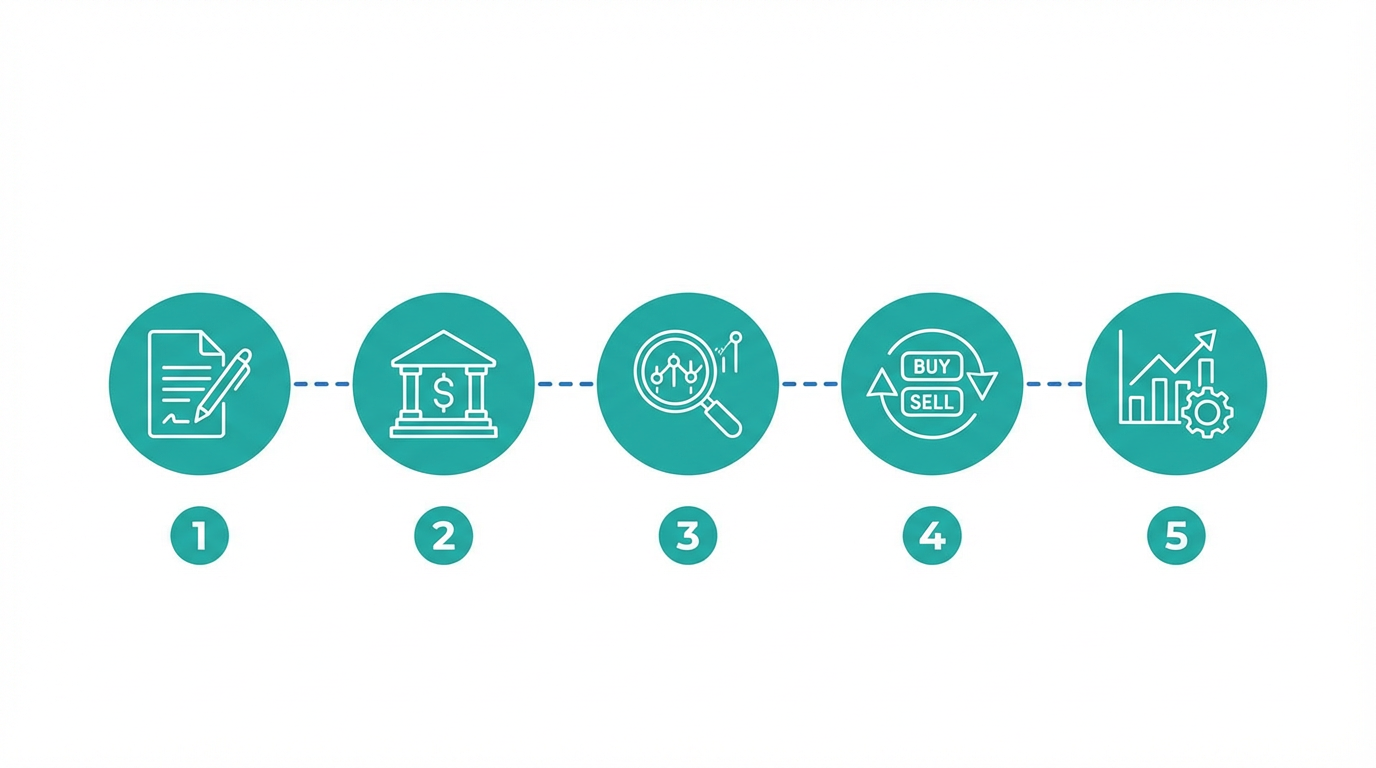
Step 1: Choose an MAS-Licensed Broker
Select a brokerage regulated by the Monetary Authority of Singapore (MAS) that offers access to HKEX. Look for seamless multi-market trading, transparent pricing, and strong security features.
Longbridge is an MAS-licensed digital brokerage that gives Singapore investors access to Hong Kong stocks, Exchange Traded Funds (ETFs), warrants, and Callable Bull/Bear Contracts (CBBCs) on HKEX, plus Singapore and US markets. Explore the full range of products on the Longbridge products page.
Step 2: Open and Fund Your Account
Most MAS-regulated brokers allow digital account opening. With Longbridge, you can verify your identity via SingPass and MyInfo. For step-by-step guidance, visit Longbridge's account opening support page. Once approved, fund your account in SGD or HKD via bank transfer.
Step 3: Research Before You Trade
Before placing any trade, research the companies or funds you are considering. Use data tools and market insights to understand a stock's financials, sector context, and fit within your portfolio.
Longbridge's market data and stock quote tracker lets you monitor Hong Kong stock prices in real time. Dolphin Research provides in-depth analysis on regional businesses, and the Longbridge stock screener helps filter stocks by sector, index, and other criteria.
Step 4: Place Your Trade
Once you have selected a stock, enter the stock code, quantity (in lots), and your desired price. Market orders execute at the current available price; limit orders execute only at the price you set.
Step 5: Monitor Your Portfolio and Stay Informed
After investing, keep track of your holdings and stay updated on relevant news. Longbridge's news section aggregates market updates, while live stream sessions cover earnings calls, trading guides, and industry discussions.
Risks to Consider
Investing in Hong Kong stocks carries specific risks Singapore investors should understand clearly.
Market volatility: HKEX can experience significant price swings due to shifts in global sentiment, interest rate changes, or sector-specific news.
Regulatory and geopolitical risk: Companies with mainland China operations may be affected by policy changes or regulatory shifts in mainland China.
Currency risk: HKD/SGD exchange rate fluctuations can affect the value of your investments in Singapore dollar terms.
Liquidity risk: Smaller-cap stocks on the GEM board may have lower trading volumes, making it harder to transact at your desired price.
Concentration risk: Heavy exposure to a single sector or region can amplify losses if conditions in that area deteriorate.
Investors should ensure they understand the risks involved and consider whether the investment aligns with their financial situation and risk tolerance.
Frequently Asked Questions
Can Singapore residents invest in Hong Kong stocks directly?
Yes. Singapore residents can invest in Hong Kong stocks by opening a brokerage account with an MAS-licensed broker that provides access to the HKEX. There is no restriction on Singapore investors holding HKEX-listed stocks.
Do I need a separate account for Hong Kong stocks?
Not necessarily. Several MAS-regulated platforms offer multi-market access through a single account, allowing you to trade Singapore, Hong Kong, and US stocks without switching between platforms.
Are dividends from Hong Kong stocks taxable in Singapore?
Hong Kong does not withhold tax on dividends paid to foreign investors, and Singapore's IRAS does not impose income tax on such dividends for individual investors. As tax rules can change, consult a tax professional for personalised guidance.
What is the minimum amount to start investing in Hong Kong stocks?
There is no universal minimum set by regulators. The entry cost depends on the lot size and share price of the stock you choose, plus transaction fees. Always account for stamp duty and brokerage charges in your calculations.
What is the difference between HKEX H-shares and Red Chips?
H-shares are shares of Chinese companies incorporated in mainland China and listed on HKEX. Red Chips are shares of companies controlled by mainland Chinese state-owned entities but incorporated outside mainland China. Both provide exposure to China's economy, but with different corporate structures.
Conclusion
Investing in Hong Kong stocks is accessible and practical to Singapore investors through brokerage platforms. HKEX's alignment with Singapore time, the absence of dividend withholding tax for foreign investors, and the availability of MAS-regulated platforms makes it one of several markets that investors may consider when looking to access regional equity exposure. That said, approach this market with a clear understanding of its mechanics, costs, and risks — from regulatory shifts to currency fluctuations. Research, preparation, and sound risk management remain essential.
The choice of financial instruments depends on your investment objectives, risk tolerance, market outlook, and experience level. Regardless of the method selected, it is essential to fully understand its mechanics, risk characteristics, and execution rules, while maintaining a robust risk management plan. You can learn more about investment strategies through the Longbridge Academy or by downloading the Longbridge App.