IPO Subscription: How to Apply for New Listings
Understand the IPO subscription process in Singapore, including CDP account requirements, application methods, ballot mechanics, and what subscription data signals.
TL;DR: IPO subscription is the process by which investors apply for shares in a company before it lists on a stock exchange. In Singapore, you need a Central Depository (CDP) account, and can apply via internet banking, ATM, or a licensed brokerage platform. Your application enters a ballot if the IPO is oversubscribed, and allotted shares are credited to your CDP account before the listing date.
When a company decides to go public, it opens a window for everyday investors to purchase shares before they begin trading on a stock exchange. This window is the IPO subscription period, and it represents one of the few moments where retail investors can access shares at the initial offering price. For Singapore investors, understanding how the IPO subscription process works, what requirements apply, and how to interpret subscription data can make a meaningful difference when evaluating new listings on the Singapore Exchange (SGX). This guide walks through each stage, from opening the right accounts to reading allotment outcomes.
What Is an IPO Subscription?
An Initial Public Offering (IPO) is when a privately held company offers its shares to the public for the first time. IPO subscription refers to the act of applying for those shares during the designated subscription period. Investors submit their applications, funds are either blocked or deducted depending on the method used, and once the period closes, the total demand is tallied and shares are allocated accordingly.
How the Subscription Rate Is Calculated
The subscription rate, sometimes called the subscription multiple, measures how many times the available shares have been applied for:
Subscription Multiple = Total Shares Applied For ÷ Total Shares Offered
For example, if a company offers 10 million shares but receives applications for 50 million, the IPO is five times (5x) subscribed. This figure is broken down by investor category and published daily during the subscription window.
What the Subscription Rate Signals
A high subscription rate reflects strong investor interest and may indicate positive market sentiment. However, it also means competition for shares is intense, and retail applicants may receive fewer shares than applied for, or none at all. A low subscription rate (below 1x, meaning undersubscribed) is generally considered a cautionary signal, though it does not automatically predict post-listing performance.
Note: Past subscription rates and listing performance are historical data only. They do not guarantee future outcomes. All investments carry risk, including the possibility that share prices may fall below the issue price on the first trading day.
Key Requirements Before You Apply
Before participating in an SGX IPO, two prerequisites must be in place.
Opening a CDP Account
A Central Depository (CDP) account is required to hold shares listed on the SGX in your name. Operated by SGX, the CDP provides clearing, settlement, and depository services for Singapore-listed securities.
According to SGX, applicants must be at least 18 years of age, free from bankruptcy constraints, and hold an active bank account with a participating local bank such as DBS/POSB, OCBC, or UOB (source: SGX CDP). Singapore Citizens and Permanent Residents can apply digitally via Singpass, with MyInfo auto-filling most fields. Processing typically takes up to five business days. Foreigners residing in Singapore can also apply online, though additional documentation may be required.
Choosing a Brokerage
You will also need a brokerage account linked to your CDP account. When selecting a platform, consider market access, fee structures, and application methods. Longbridge is a Monetary Authority of Singapore (MAS)-licensed brokerage offering access to Singapore, US, and Hong Kong markets through a seamless digital platform.
How to Apply for an IPO Subscription in Singapore
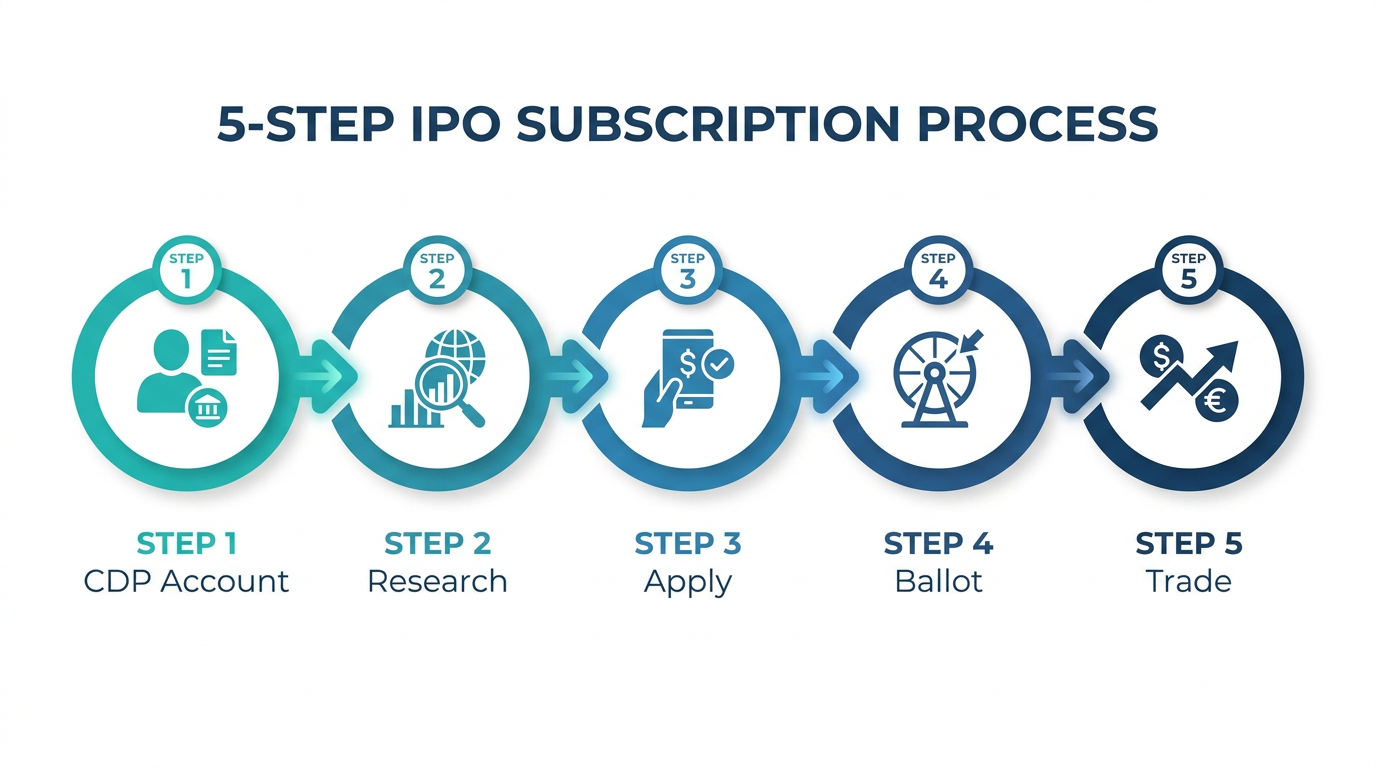
Once your CDP and brokerage accounts are in order, the application process is straightforward. Here is a step-by-step overview.
Step 1: Read the Prospectus
The prospectus is the official document published by the company seeking to list. It contains essential information about the business model, financial history, management team, risk factors, and the intended use of proceeds. Prospectuses are available on the SGX website, the MAS OPERA system, and directly from the issuing company. Pay particular attention to the risk factors section before making any decision.
Step 2: Submit Your Application
Applications can be submitted through several channels:
- Internet banking: DBS/POSB, OCBC, and UOB offer IPO application services through their online banking portals.
- ATM: Most major bank ATMs in Singapore allow IPO applications during the subscription window.
- Brokerage platform: Many licensed brokerages, including digital platforms, provide IPO application features directly within their apps or web portals.
When applying, specify the number of shares in board lots of 100 shares each. For book-building IPOs with a price range, you also indicate a price. For fixed-price offerings, you simply apply for the number of lots at the stated price. The minimum subscription per investor is commonly SGD 500 for Mainboard listings and SGD 200 for Catalist listings; the applicable minimum for any given offer is set out in that issue's prospectus.
Step 3: Wait for the Ballot Results
If an IPO is oversubscribed, a computerised ballot allocates shares fairly among applicants. According to SIAS, retail investors receive their allotments via this ballot system when demand exceeds supply (source: SIAS). If you are not allotted shares, your funds are released back to your bank account within one business day. If you receive a partial allotment, the remainder is refunded.
Tip: Track your allotment results through your brokerage app or the share registrar's website. Allotment results are usually announced a few days before the listing date. Learn more about how IPO allotments are calculated in Singapore.
Understanding IPO Subscription Data

Subscription data is published during and after the subscription window. Here is how to interpret it.
Categories of Subscription
SGX IPO subscription data is typically broken down by investor type:
- Retail investors: Individual members of the public applying through standard channels.
- Institutional investors: Banks, fund managers, and other professional entities participating in a separate placement tranche.
- Cornerstone investors: Strategic investors who commit to specific allocations ahead of the public offer, often subject to a lock-up period.
Oversubscribed vs. Undersubscribed
| Subscription Level | What It Means |
|---|---|
| Below 1x (Undersubscribed) | Demand has not met supply; may indicate lower market confidence |
| 1x (Fully subscribed) | Demand matches supply exactly |
| 2x–10x (Moderately oversubscribed) | Healthy demand; allotment likely but not guaranteed |
| 10x+ (Heavily oversubscribed) | Strong demand; ballot highly competitive for retail investors |
High subscription rates reflect demand at application time. They do not reliably predict post-listing price performance, and heavily oversubscribed IPOs can still list below the offer price depending on broader market conditions.
The Grey Market and Pre-Listing Signals
Some investors track the grey market, an informal environment where IPO shares trade before the official listing date, to gauge pre-listing demand. Grey market prices can signal sentiment but are unregulated. For more context, read about understanding pre-listing price indicators, and treat them as one signal among many rather than a reliable forecast.
What Happens After the Subscription Period?
Once the subscription window closes, the post-IPO timeline moves quickly. Shares are allocated via ballot or proportional allotment within a few business days. Unsuccessful applicants receive refunds, typically within one business day of the allotment date. On the listing date, allotted shares appear in your CDP account, and trading begins on the SGX during regular market hours.
Keep in mind that the listing price is determined by market supply and demand and may be above or below the IPO price.
Things to Consider Before Subscribing
Participating in an IPO is an investment decision like any other. Before applying, keep the following in mind:
- Read the full prospectus. Do not rely solely on news summaries or analyst previews.
- Assess your investment objectives. IPOs can be volatile in the days following listing; consider how this fits within your portfolio.
- Understand the lock-up periods. Founders and early investors are often restricted from selling shares for a set period after listing. When this expires, it can affect supply and price.
- Evaluate the valuation. Comparing the IPO price to earnings and comparable listed companies provides useful context. The P/E ratio explained guide is a helpful starting point.
- Diversify your approach. Concentrating capital in one IPO application increases exposure risk.
Frequently Asked Questions
Do I need a CDP account to apply for Singapore IPOs?
Yes. A CDP account is required to hold shares listed on the SGX in your name. You can open one digitally via the SGX website using Singpass. Without a CDP account, you cannot receive an allotment of SGX-listed IPO shares.
Can I apply for an IPO through a brokerage app?
Many MAS-licensed brokerage platforms allow you to apply for SGX IPOs directly through their apps or web portals. Check with your specific broker whether they support IPO applications and what fees may apply.
What happens if the IPO is oversubscribed?
A computerised ballot allocates shares fairly among retail applicants when demand exceeds supply. Not everyone who applies will receive shares. Funds for unsuccessful applications are returned to your bank account.
Is there a minimum amount required to apply?
The minimum subscription value is commonly SGD 500 for Mainboard listings and SGD 200 for Catalist listings, with a standard board lot size of 100 shares. The exact minimum for any given offer is stated in that issue's prospectus.
What risks should I be aware of?
IPO investments carry risks including the possibility that the share price may fall below the issue price after listing, that financial projections may not be achieved, and that market conditions may change between application and listing. Read the prospectus carefully and consider your own risk tolerance before applying.
Conclusion
Understanding the IPO subscription process is an important part of participating in new listings on the Singapore Exchange. From setting up a CDP account and reading the prospectus to interpreting subscription data and managing allotment expectations, each step contributes to a more informed approach to IPO investing.
Treat every IPO application as you would any other investment: conduct your research, evaluate the fundamentals, and make decisions that align with your financial goals and risk tolerance. High subscription rates reflect market enthusiasm at a point in time, but they are one data point among many.
The choice of financial instruments depends on your investment objectives, risk tolerance, market outlook, and experience level. Regardless of the method selected, it is essential to fully understand its mechanics, risk characteristics, and execution rules, while maintaining a robust risk management plan. You can learn more about investment strategies through the Longbridge Academy or by downloading the Longbridge App.