Covered Put Strategy: Combining Short Stock and Short Put
The covered put strategy combines short stock positions with short put options to generate income in bearish markets, but comes with unlimited upside risk and capped profit potential.
TL;DR: The covered put option is a bearish options strategy that combines selling short stock with selling a put option to generate premium income. While it offers income potential, this strategy carries unlimited upside risk and limited profit potential, requiring a moderately bearish market outlook and robust risk management practices.
Options trading offers various strategies for traders looking to profit from different market conditions. While covered calls are well-known among bullish investors, the covered put strategy serves as the bearish counterpart. This approach combines a short stock position with a short put option, creating an income-generating strategy for traders anticipating price declines.
Understanding how the covered put option works, along with its risk characteristics and profit limitations, is essential before implementing this advanced strategy. This guide breaks down the mechanics, examines when it makes sense, and highlights the important considerations every trader should know.
What is a Covered Put Option?
A covered put option is a bearish options strategy that involves two simultaneous positions: selling short 100 shares of an underlying stock or Exchange Traded Fund (ETF) while also selling one out-of-the-money (OTM) put option on the same security. The term "covered" refers to the fact that the short stock position provides coverage for the obligation created by selling the put.
This strategy generates income through the premium collected from selling the put option while potentially profiting from a decline in the stock price. However, the profit potential becomes capped once the stock falls below the strike price of the sold put, since losses on the short put begin to offset gains from the short stock position.
The Two Components Explained
The strategy requires two distinct positions working in tandem:
Short Stock Position: This involves borrowing and selling shares you do not own, with the obligation to buy them back later. If the stock price falls, you profit from the difference. Each options contract represents 100 shares, so a covered put requires shorting at least 100 shares.
Short Put Option: Simultaneously, you sell an OTM put option, collecting the premium upfront. This creates an obligation to purchase shares at the strike price if exercised. The premium received provides additional income and improves your breakeven point.

How the Covered Put Strategy Works
To implement a covered put strategy, a trader establishes a short position by borrowing and selling shares from their broker. Then, they sell a put option with a strike price below the current market price, selecting a strike that reflects their bearish outlook.
The premium collected from selling the put generates immediate income, reduces the overall cost basis, and raises the breakeven point above where the shares were initially sold short.
Calculating Your Breakeven Point
The breakeven calculation for a covered put is straightforward: take the price at which you sold the stock short and add the premium received from selling the put option.
For example, if you short Stock A at USD 50 per share and collect USD 1.50 in premium from selling the put, your breakeven price becomes USD 51.50. This means the stock can rise to USD 51.50 before you begin to lose money on the overall position.
Market Conditions That Favor This Strategy
The covered put works under neutral to moderately bearish conditions. Traders deploy this strategy when expecting the stock to drift lower or remain flat, but not experience a sharp rally. The typical scenario involves a gradual decline that keeps the stock above the put strike price through expiration.
Understanding the Risk-Reward Profile
Every options strategy presents a unique balance between potential profits and possible losses. The covered put option carries a specific risk-reward profile that traders must fully understand before implementation.
Maximum Profit Potential
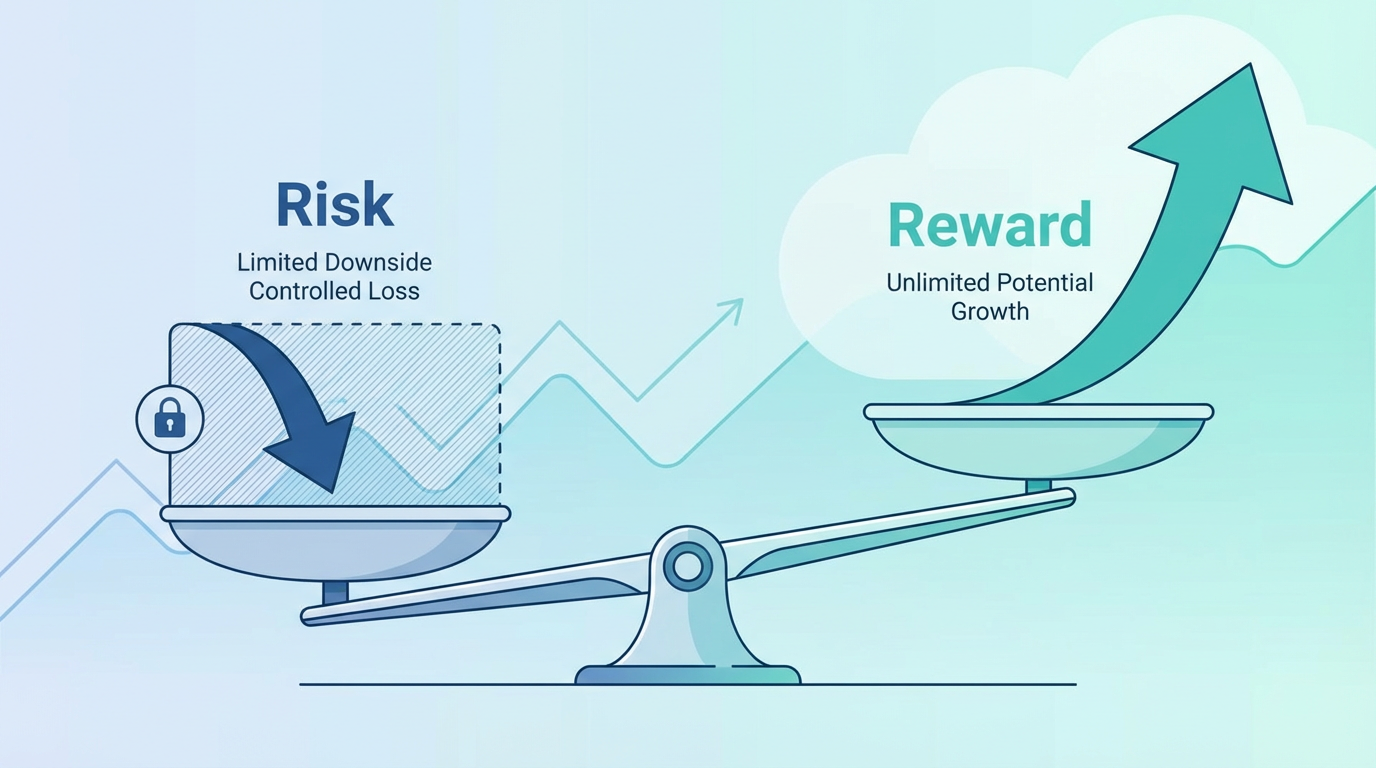
The covered put strategy has capped profit potential. Your maximum gain occurs when the stock price falls to the strike price of the sold put option at expiration. You earn the difference between your short stock entry price and the put strike price, plus the premium received.
Profit becomes limited because once the stock drops below the put strike, any additional decline creates losses on the short put that offset gains from the short stock position.
Unlimited Upside Risk
The primary risk factor is the unlimited loss potential from the short stock position. Since there is no limit to how high a stock price can rise, your potential losses are unlimited. The premium collected provides only minimal protection, reducing your loss by the premium amount but not eliminating the fundamental risk.
This unlimited risk characteristic makes the covered put generally used by experienced traders or those with proper risk management systems.
Time Decay Considerations
Time decay (theta) works in favor of the covered put trader. As expiration approaches, the extrinsic value of the short put option erodes, assuming the stock price and implied volatility remain stable. However, significant adverse price movements can overwhelm the benefits of theta decay, leading to substantial losses.
When to Consider Using a Covered Put
The covered put option strategy is not appropriate for all market environments or trader profiles. Understanding when this approach makes sense helps traders deploy it effectively.
Ideal Market Outlook
The covered put is typically associated with moderately bearish market views. This strategy works when you expect gradual downward price movement rather than dramatic crashes or sharp rallies. If your outlook is aggressively bearish, alternative strategies such as buying put options may offer better risk-reward characteristics.
Account Requirements and Margin
Implementing a covered put requires margin approval since short selling demands borrowing shares. The margin requirement primarily comes from the short stock position. Traders must maintain sufficient account equity to meet ongoing margin calls if the stock price rises.
Singapore traders exploring options trading on US markets should ensure their brokerage account has appropriate permissions and margin capacity before attempting this strategy.
Comparing to Alternative Strategies
The covered put shares similarities with other bearish strategies but carries distinct characteristics:
Covered Put versus Straight Short Stock: A pure short stock position offers unlimited profit potential. The covered put caps this profit in exchange for premium income, making it more suitable for moderate rather than extreme declines.
Covered Put versus Covered Call: The covered call is the bullish mirror image, combining long stock with a short call option. Both generate premium income but operate in opposite market directions.
Managing and Exiting Covered Put Positions
Active position management is critical when trading covered puts due to the unlimited risk potential. Traders need clear exit plans and adjustment strategies before entering the trade.
Exit Strategies
Several scenarios may prompt you to exit a covered put position:
Target Profit Reached: Some traders close both positions simultaneously when profit targets are achieved.
Stop Loss Triggered: Given the unlimited risk, set a stop loss level. Traders may exit positions if the stock rises above a threshold to limit losses.
Near Expiration Management: Decide whether to let the put expire worthless, close the position, or roll the option to a future expiration date. Early assignment risk increases near expiration.
Rolling or Closing: If market conditions change, you can roll the put to a later expiration for additional premium, or close early to prevent larger losses from developing.
Important Risk Factors to Consider
Before implementing a covered put strategy, traders must evaluate several critical risk factors:
Assignment Risk: American-style options can be exercised at any time before expiration. If assigned, you must purchase shares at the strike price, closing your short stock position at potentially inopportune times.
Volatility Impact: Changes in implied volatility affect options prices. An increase in IV typically raises the value of the put option you sold, creating a mark-to-market loss on that position.
Margin Call Risk: If the stock price rises sharply, your broker may issue a margin call requiring additional capital. Failure to meet margin calls can result in forced liquidation at unfavorable prices.
Liquidity Considerations: Implementing covered puts in illiquid markets can lead to wider bid-ask spreads, making entry and exit more costly. Select underlying securities with robust trading volume.
Frequently Asked Questions
What is the difference between a covered put and a cash-secured put?
A covered put combines a short stock position with a short put option, creating a bearish strategy with unlimited upside risk. A cash-secured put involves only selling a put option while holding cash to purchase shares if assigned. The cash-secured put has limited risk while the covered put carries unlimited risk from short stock.
Can I use a covered put in a declining market?
Yes, this strategy is designed for bearish markets. However, it generally performs under moderate declines rather than extreme price moves. Profit becomes capped once the stock falls below the put strike, so dramatic downward moves do not provide additional gains.
What happens if my short put is assigned early?
If assigned, you must purchase shares at the strike price, closing your short stock position. Early assignment is more likely near dividend dates or when the put trades deep in the money.
How much margin do I need for a covered put?
Margin requirements vary by broker; traders should review their broker’s guidelines but it typically is in the range between 30 and 50 percent of the short stock value.
Is the covered put strategy suitable for beginners?
The covered put strategy carries significant risk due to unlimited loss potential from short selling. It is not recommended for beginners or traders without substantial options experience and robust risk management systems.
Conclusion
The covered put option strategy offers traders a method to generate income in bearish markets by combining short stock positions with short put options. While the premium collected improves the breakeven point and provides immediate income, the strategy carries unlimited upside risk and capped profit potential.
This approach is generally used by traders with experience and a moderately bearish market outlook, understand margin requirements, and maintain disciplined risk management practices. The complexity of managing two simultaneous positions, coupled with unlimited loss potential, requires careful consideration before implementation.
The choice of financial instruments depends on your investment objectives, risk tolerance, market outlook, and experience level. Regardless of the method selected, it is essential to fully understand its mechanics, risk characteristics, and execution rules, while maintaining a robust risk management plan. You can learn more about investment strategies through the Longbridge Academy or by downloading the Longbridge App.