What Is an In-the-Money Option? Exercise and Assignments
Explore in-the-money options, including when automatic exercise occurs, how assignment works, and the fees involved. Essential knowledge for options traders.
TL;DR: An in-the-money (ITM) option has intrinsic value because its strike price is favorable compared to the current stock price. Call options are ITM when the stock trades above the strike, while put options are ITM when the stock trades below the strike. ITM options are typically exercised automatically at expiration if they're at least USD 0.01 in the money, triggering stock delivery and potential fees.
Understanding when an option is "in the money" and what happens at expiration can mean the difference between capturing profit and facing unexpected costs or obligations.
This guide explains what makes an option in the money, how automatic exercise works, the assignment process for option sellers, and the fees you might encounter. Whether you're buying calls, selling puts, or managing positions near expiration, you'll gain practical knowledge to navigate these critical aspects of options trading.
Understanding In-the-Money Options
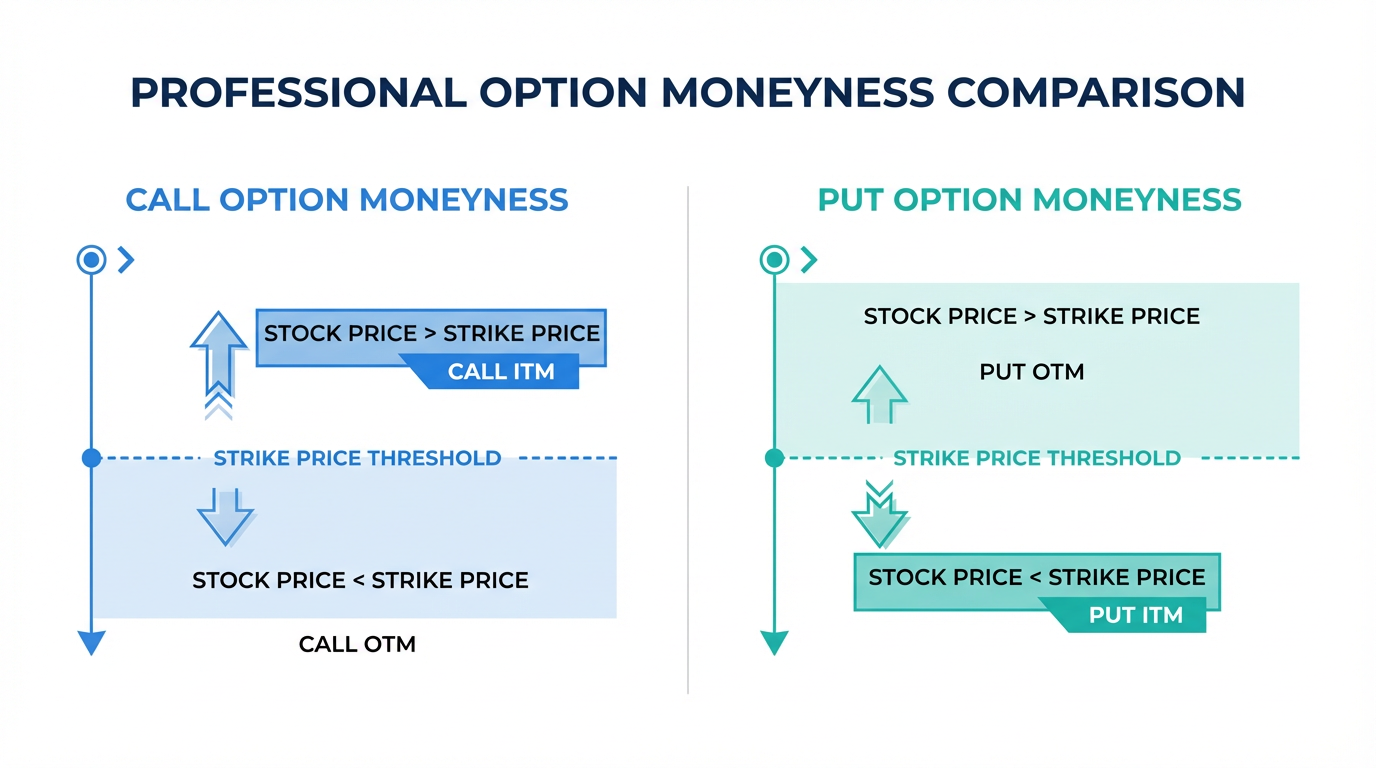
An in-the-money option describes any options contract that possesses intrinsic value, which is the amount by which an option is profitable if exercised immediately. Whether an option is in the money depends on the relationship between the strike price and the current market price of the underlying stock.
Call Options: In the Money When Stock Price Exceeds Strike
A call option grants you the right to purchase shares at the strike price. This right becomes valuable when the market price rises above your strike price.
For example, if you hold a call option with a USD 50 strike price and the stock currently trades at USD 60, your option is USD 10 in the money. You could exercise this option to buy shares at USD 50 and immediately sell them at the USD 60 market price, capturing the USD 10 difference per share (before accounting for the premium you paid and any transaction fees).
Put Options: In the Money When Stock Price Falls Below Strike
A put option gives you the right to sell shares at the strike price. This becomes valuable when the market price drops below your strike price.
If you own a put option with a USD 40 strike price and the stock falls to USD 30, your put is USD 10 in the money. You could buy shares at the current USD 30 market price and immediately exercise your right to sell them at USD 40, realizing the USD 10 difference per share.
Intrinsic Value vs. Total Value
While an ITM option has intrinsic value, this doesn't guarantee profitability. Options trade at premiums including both intrinsic value and time value. A call with a USD 45 strike when stock trades at USD 50 has USD 5 intrinsic value, but if you paid USD 7 premium, you're at a USD 2 loss despite being ITM.
Tip: Calculate your break-even by adding the premium paid to your strike (calls) or subtracting it (puts). Being ITM is necessary for profit, but not sufficient alone.
How Option Exercise Works
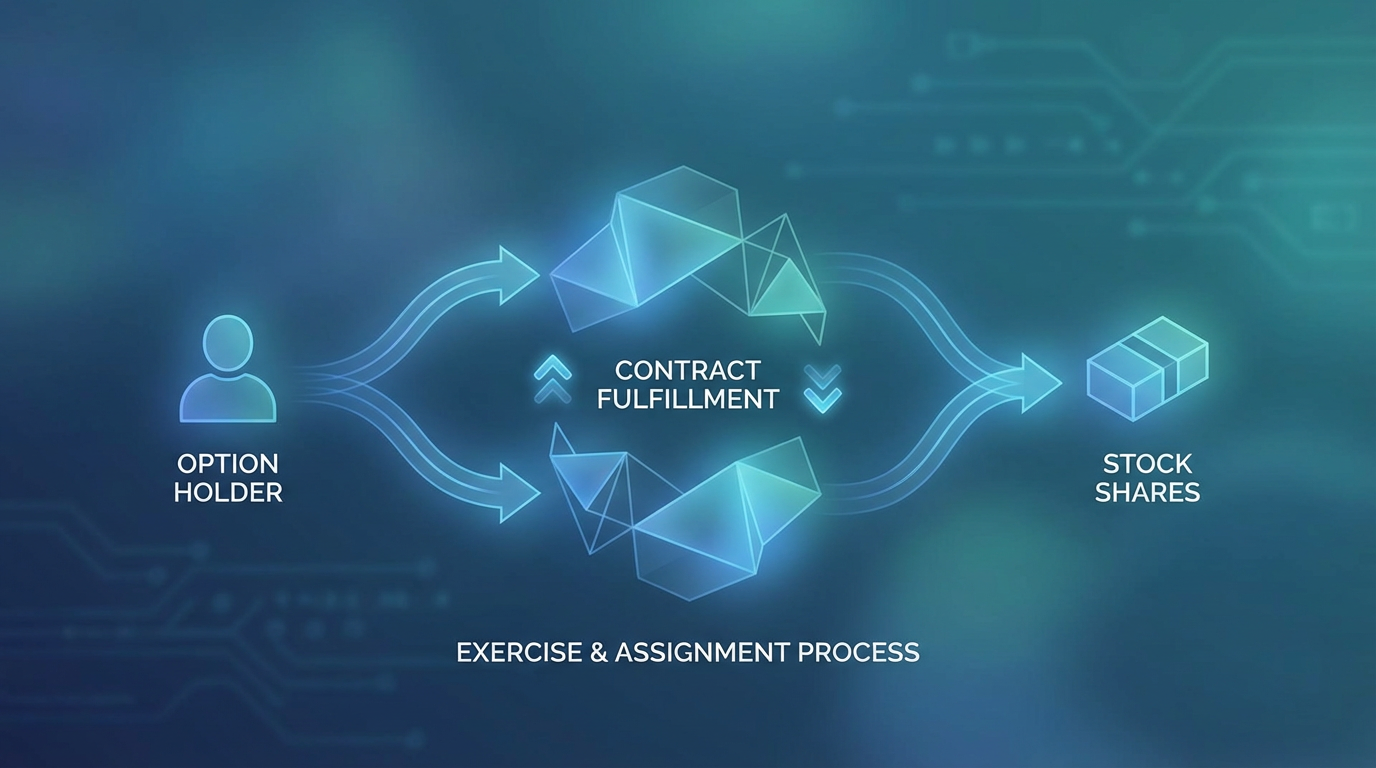
Option exercise is the process of invoking your contractual right to buy (for calls) or sell (for puts) the underlying shares at the strike price. Each standard equity option contract represents 100 shares of the underlying stock.
Automatic Exercise at Expiration
According to the Options Clearing Corporation (OCC), which handles clearing and settlement for exchange-traded options in the United States, options that are in the money by USD 0.01 or more at expiration are automatically exercised.
This automatic exercise provision protects option holders from accidentally forfeiting intrinsic value. If you take no action on an expiring ITM option, your brokerage will exercise it on your behalf, and you'll find yourself owning (for calls) or having sold (for puts) 100 shares per contract the next trading day.
Early Exercise Considerations
American-style options, which include most equity options traded in the United States, can be exercised any time before expiration. However, early exercise typically doesn't make economic sense because it forfeits remaining time value. Early exercise becomes relevant when a stock pays a substantial dividend or when an option is so deep in the money that it trades with minimal time value.
Capital Requirements for Exercise
Exercising a call option requires sufficient capital to purchase 100 shares at the strike price. For example, exercising a USD 50 strike call needs USD 5,000 per contract available. Put exercise requires owning shares or having margin approval. Many traders close positions before expiration to avoid these capital requirements.
Understanding Option Assignment
While exercise is the right of the option buyer, assignment is the obligation of the option seller (also called the option writer). When you sell an option, you accept the obligation to fulfill the contract terms if the buyer exercises their right.
The Assignment Process
Assignment occurs through a random selection process managed by the OCC. When option holders exercise their contracts, the OCC randomly selects option sellers who have open short positions in that same contract to fulfill the obligation. Your brokerage then receives the assignment notice and assigns the obligation to specific client accounts.
When Assignment Typically Occurs
Assignment most commonly happens at expiration for in-the-money options when time value has largely decayed. Before expiration, assignment on American-style options is possible but less common. However, you face higher assignment risk on deep ITM options, particularly if the underlying stock pays a dividend soon.
Assignment Obligations and Consequences
When your short call is assigned, you're obligated to sell 100 shares per contract at the strike price. If you don't own these shares, your account shows a short stock position with unlimited risk potential.
When your short put is assigned, you must purchase 100 shares per contract at the strike price, requiring sufficient capital or margin capacity. This means buying shares at above-market prices if the stock has declined below the strike.
Tip: Many traders who sell options don't intend to accept assignment. They manage their positions by closing them before expiration or rolling them to later dates, thereby avoiding the stock delivery process entirely.
Exercise and Assignment Fees
Brokerage firms typically charge fees when options are exercised or assigned. These costs can impact your overall profitability, particularly for strategies involving frequent exercise or assignment.
Typical Fee Structures
Exercise and assignment fees vary significantly across brokerages. Some firms charge USD 5 to USD 15 per event, while others structure fees per contract. Certain digital brokerages have eliminated these fees entirely as part of their competitive pricing strategies.
When Fees Apply
Exercise fees apply when the option holder invokes their right to buy or sell shares, whether manually or automatically at expiration. Assignment fees are charged to the option seller when their short position is assigned, reducing net profit from strategies like covered calls or cash-secured puts.
Avoiding Unnecessary Fees
Investors may manage positions prior to expiration to potentially reduce exercise or assignment costs, depending on their brokerage policies. Selling your long option or buying back your short option captures remaining value without triggering fees. For example, if your long call is USD 3 ITM but trades at USD 3.20, selling captures that extra USD 0.20 per share that would be lost through exercise.
Managing ITM Positions Near Expiration
As expiration approaches, option holders and sellers face decisions affecting capital, risk, and costs.
For ITM long positions, you can sell to close and realize profit without stock delivery, exercise if you want to own the shares, or allow automatic exercise if prepared for capital requirements.
For ITM short positions, buying back the option eliminates assignment risk. If accepting assignment, account holders should consider capital and margin requirements before holding ITM positions.
Tip: Options expiring Friday are exercised over the weekend, with stock positions appearing Monday morning. This "weekend risk" means your account could face unexpected exposure if market conditions change over the weekend.
Deep ITM Options: Special Considerations
Options significantly in the money (more than 10% beyond the strike) carry substantially higher assignment risk before expiration because they trade with minimal time value. These options often have wider bid-ask spreads and lower trading volume, making exits more difficult. Deep ITM options have high deltas (often 0.80 or higher), responding to stock price movements almost one-to-one, behaving similarly to owning stock but with less capital required.
Options Trading with Longbridge
Longbridge provides options trading in US markets through comprehensive platforms on iOS, Android, Windows, and macOS. Singapore investors can access US options markets through Longbridge's MAS-licensed brokerage services, benefiting from advanced data visualization tools to monitor option moneyness and track positions approaching expiration.
Frequently Asked Questions
What happens if I don't have enough money to exercise my call option?
Most brokerages will automatically sell your ITM long call before expiration or perform an "exercise-and-sell" transaction to avoid a margin deficit. Check your broker's specific policies on this situation.
Can I prevent my short option from being assigned?
The only way to eliminate assignment risk is to close your short option position by buying it back before expiration. Assignment is less likely if your option is out of the money or has substantial remaining time value.
Do all brokers charge exercise and assignment fees?
Fee structures vary significantly. Some brokers charge USD 10-20 per event, while many digital brokerages have eliminated these fees entirely. Always review your broker's fee schedule before holding options through expiration.
Is being in the money the same as being profitable?
Not necessarily. An option can be ITM but still represent a loss if you paid a higher premium than the current intrinsic value. For example, if you bought a call for USD 8 premium and it's now USD 5 in the money, you have a USD 3 loss despite being ITM.
Conclusion
Understanding in-the-money options and exercise/assignment mechanics supports knowledge of options trading principles. Recognizing when your calls and puts have intrinsic value helps you make informed decisions about whether to close positions, exercise your rights, or prepare for assignment obligations.
The automatic exercise provisions for ITM options protect buyers from forfeiting value, but they also require sellers to maintain adequate capital and risk awareness as expiration approaches. Knowing the fee structures at your brokerage and understanding when to close positions rather than accept exercise or assignment can significantly impact your overall trading profitability.
The choice of financial instruments depends on your investment objectives, risk tolerance, market outlook, and experience level. Regardless of the method selected, it is essential to fully understand its mechanics, risk characteristics, and execution rules, while maintaining a robust risk management plan. You can learn more about investment strategies through the Longbridge Academy or by downloading the Longbridge App.