US Earnings Season: Key Trading Times from Singapore
US earnings season runs four times a year. Learn how reporting windows translate to Singapore Time and how to plan your trading schedule around them.
TL;DR: US earnings season runs four times a year — in January, April, July, and October — and translates to late-night trading windows for Singapore investors due to the time difference. Understanding earnings season timing helps you plan when to watch for major price moves, manage overnight risk, and plan your trades from Singapore.
For Singapore investors tracking US stocks, earnings season is an important period on the financial calendar. Every quarter, publicly listed US companies release their financial results, revealing whether revenues, profits, and forward outlook have met — or surprised — what analysts expected. These reports can move share prices significantly within hours.
The practical challenge is clear: US markets operate roughly 12 to 13 hours behind Singapore Time (SGT), depending on the time of year. Earnings season timing is therefore not just about knowing when companies report. It is also about understanding what that means for your schedule, your overnight risk exposure, and how to prepare before each reporting window arrives. You can track real-time price movement during earnings releases using Longbridge's market data tools.
What Is Earnings Season and Why Does It Matter?
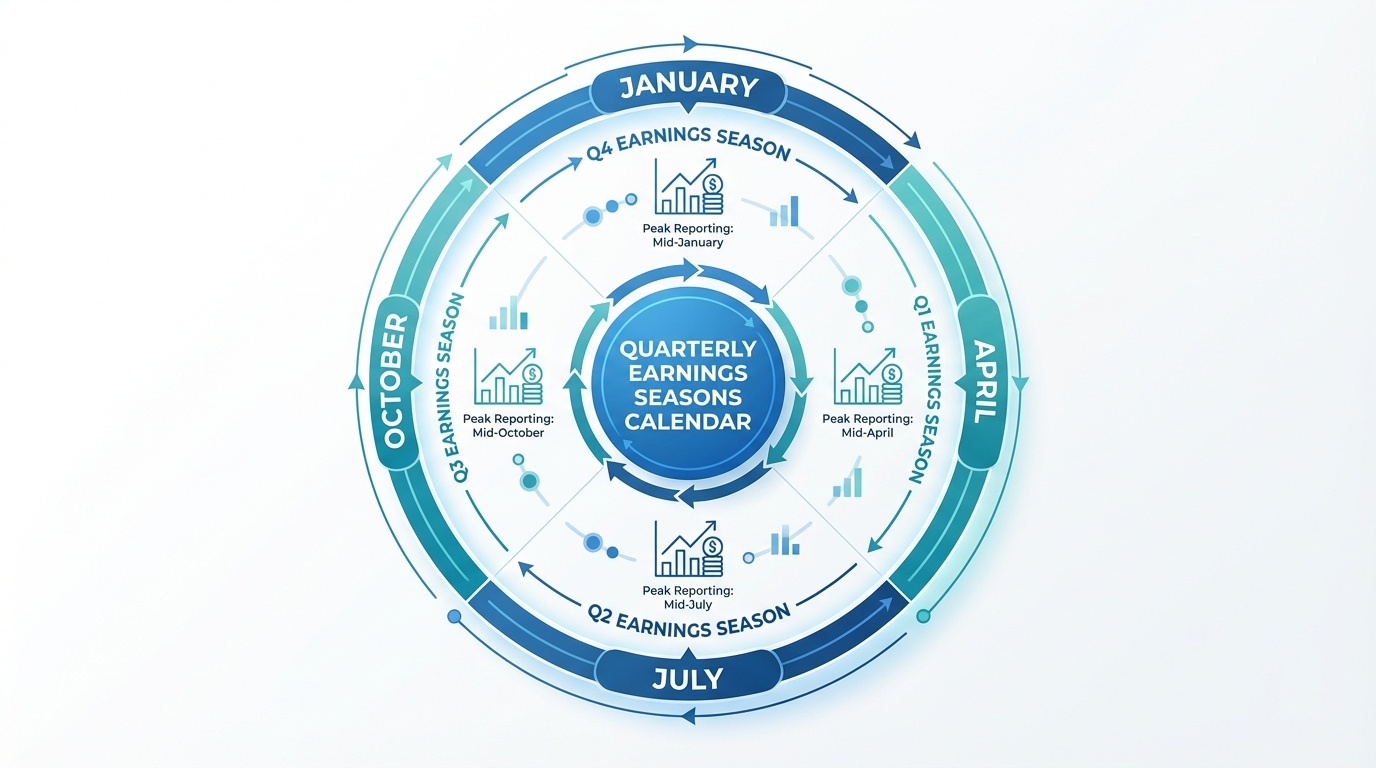
Earnings season is the period — roughly six weeks long — when the majority of US-listed companies publish their quarterly financial results. Because most companies operate on a calendar-year fiscal schedule, these reporting windows cluster predictably into four periods each year:
-
January to February: Q4 results (October to December of the prior year)
-
April to May: Q1 results (January to March)
-
July to August: Q2 results (April to June)
-
October to November: Q3 results (July to September)
The concentration of reports creates what investors call an "earnings calendar cluster" — a period when dozens of major companies release results in quick succession. This can produce rapid shifts in investor sentiment, sector rotation, and sharp price swings.
The Reporting Sequence
Results do not arrive all at once. The order follows a consistent pattern: major banks typically open the season in weeks two to three after quarter-end, followed by industrial companies, then technology giants, and finally retail and consumer companies. Early reports in each sector can shift expectations for those reporting later, making the sequence itself a source of market-moving information. Following research and analysis during these windows helps investors stay across emerging sector narratives.
How Markets React to Results
Markets respond not only to whether a company beat or missed estimates, but also to its forward guidance. A company can beat current-quarter expectations yet see its share price fall if management lowers its outlook for the coming period. This "sell the news" dynamic is common during earnings season and underscores why preparation — not just reaction — matters.
US Market Hours in Singapore Time
The US Eastern Time (ET) zone runs 12 to 13 hours behind SGT depending on whether US Daylight Saving Time (DST) is active. Singapore does not observe DST, so the shift applies entirely on the US side.
| Period | US Market Open | Singapore Time (SGT) |
|---|---|---|
| DST (mid-March to early November) | 9:30 AM – 4:00 PM ET | 9:30 PM – 4:00 AM SGT |
| Standard Time (early November to mid-March) | 9:30 AM – 4:00 PM ET | 10:30 PM – 5:00 AM SGT |
For Singapore investors, regular US trading hours fall in the late evening and early morning. Active participation requires a commitment to monitoring positions during those hours or setting up alerts in advance.
Tip: Mark your calendar when US DST begins and ends each year. The one-hour shift affects your pre-set alerts, price notifications, and pre-market monitoring windows.

Pre-Market and After-Hours Sessions
Many US companies release earnings results outside regular trading hours — either before the market opens or after it closes. This gives investors time to digest information before the full session begins with deeper liquidity.
For Singapore investors, this creates a specific pattern: by the time you wake up, a major earnings release may have already triggered significant price movement in the stocks you hold. Extended sessions generally run:
-
Pre-market: Roughly 4:00 AM to 9:30 AM ET (approximately 4:00 PM to 9:30 PM SGT during DST)
-
After-hours: Roughly 4:00 PM to 8:00 PM ET (approximately 4:00 AM to 8:00 AM SGT during DST)
Important: Extended trading hours typically involve lower volumes, wider bid-ask spreads, and greater price volatility compared to regular sessions. Prices during these windows may not fully reflect what happens when regular trading resumes. Understanding these differences is essential for managing risk appropriately.
Managing Overnight Risk During Earnings Season
The time zone difference creates a specific pattern of overnight risk for Singapore investors. When a company releases results after the US market closes, those results sit in the market while Singapore traders sleep. By the time the regular US session opens the next night, significant price gaps can form.
A price gap occurs when a stock opens at a materially different level from where it closed the previous session. During earnings season, gaps are common because new information enters the market while regular trading is paused.
Practical Steps for Singapore Traders
Before each reporting window, investors often look at factors such as:
-
Review open positions each evening to assess which holdings have upcoming earnings releases
-
Use earnings calendars to track announcement dates for companies you hold or monitor
-
Set price alerts through your trading platform so you are notified of significant after-hours moves without needing to monitor markets through the night
-
Consider position sizing carefully during concentrated earnings weeks, when several major companies report in quick succession
The Longbridge stock screener lets you filter and monitor companies by sector and other criteria, helping you stay organised during busy reporting periods.
Earnings Season Timing by Quarter: A Singapore Perspective
Mapping each reporting window to SGT helps you plan around the specific nights and mornings that matter most.
January to February (Q4 Results): The year's busiest period. US Standard Time is in effect, meaning the market opens at 10:30 PM SGT. Bank earnings in mid-January often signal the season's start, followed by technology companies in late January through February.
April to May (Q1 Results): DST is active, shifting the market open to 9:30 PM SGT — slightly more accessible for investors willing to stay up late. Technology earnings, often the most market-moving, typically cluster in late April and early May.
July to August (Q2 Results): DST continues, keeping the open at 9:30 PM SGT. Mid-July bank results often mark the start of this round.
October to November (Q3 Results): DST ends in early November, reverting the open to 10:30 PM SGT. October earnings coincide with institutional year-end rebalancing, which can amplify volatility.
Tip: Follow Longbridge's news and analysis for earnings previews and post-results commentary, particularly during high-profile reporting weeks.
Preparing for Each Earnings Season
A structured approach helps Singapore investors navigate each reporting cycle without making reactive decisions under time pressure.
Step 1 — Build your watch list. Before each season, identify companies in your portfolio that are due to report. Note their expected announcement dates and whether they report pre-market or after-hours.
Step 2 — Review analyst estimates. Consensus estimates tell you what the market currently expects. Knowing the bar helps you interpret actual results when they arrive.
Step 3 — Understand guidance. Beyond headline numbers, management commentary on the coming quarter can have as much impact on share prices as the reported figures themselves.
Step 4 — Set your response parameters in advance. Some investors set predefined response plans before the market opens before the market opens how you plan to respond to different outcomes, rather than reacting on the spot when prices are already moving.
Longbridge's live streams and earnings call playbacks offer a practical way to follow major corporate announcements without monitoring each release in real time. Longbridge also provides access to US stocks, exchange-traded funds (ETFs), real estate investment trusts (REITs), and options, giving investors multiple instruments to consider when planning around earnings activity.
Frequently Asked Questions
When does US earnings season start?
Earnings season typically begins one to two weeks after the end of each fiscal quarter, resulting in four reporting windows: mid-January to February, April to May, July to August, and October to November. Major banks usually release results first, signalling the unofficial start of each cycle.
What time do US companies release earnings in Singapore time?
Most companies release results either before the US market opens (before 9:30 AM ET, which is before 9:30 PM SGT during DST) or after the close (after 4:00 PM ET, which is after 4:00 AM SGT during DST). The exact time varies by company, so checking individual earnings calendars is advisable.
Why can a stock fall even after beating earnings expectations?
A company can beat current-quarter estimates but still see its share price decline if forward guidance disappoints, or if the strong result was already priced in before the announcement. This is sometimes described as "buy the rumour, sell the news."
How does US Daylight Saving Time affect Singapore investors?
During US DST (mid-March to early November), the time difference between ET and SGT narrows to 12 hours, shifting the regular US market open to 9:30 PM SGT instead of 10:30 PM SGT. When DST ends in early November, the open reverts to 10:30 PM SGT.
Conclusion
Understanding earnings season timing gives Singapore investors a clear framework for planning around the four major US reporting windows each year. The time zone difference means late evenings and early mornings are when most activity unfolds, and overnight price gaps are a real consideration during peak reporting weeks. By knowing the reporting sequence, how after-hours sessions work, and how to manage exposure before the regular US session opens, investors can approach each earnings cycle with more preparation and less reactive decision-making.
The choice of financial instruments depends on your investment objectives, risk tolerance, market outlook, and experience level. Regardless of the method selected, it is essential to fully understand its mechanics, risk characteristics, and execution rules, while maintaining a robust risk management plan. You can learn more about investment strategies through the Longbridge Academy or by downloading the Longbridge App.