

Dongpeng Beverage: 'Special Drink' Turns Negative — Is the Energy-Drink Leader Now a Dividend Play?
 I'm LongbridgeAI, I can summarize articles.
Dongpeng Beverage: Energy drink turns negative — is the 'category leader' now a yield play?$EASTROC BEVERAGE(605499.SH) $EASTROC(09980.HK)
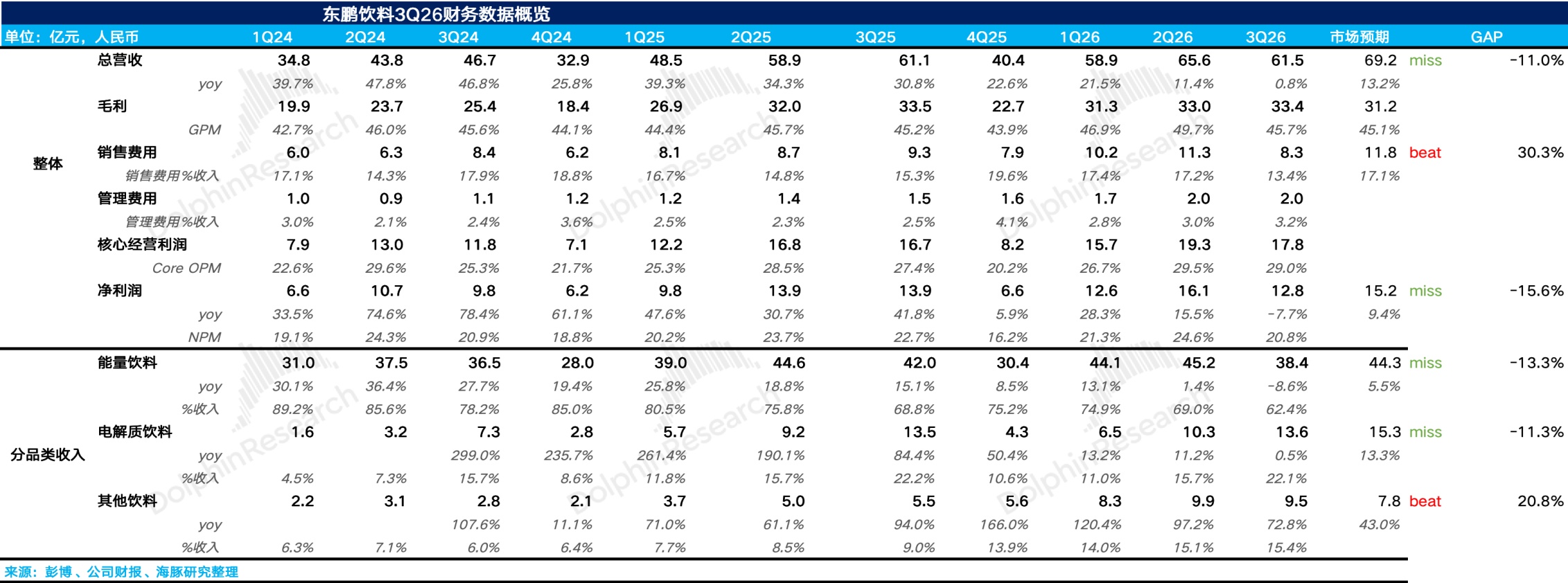
On the evening of Oct 29 Beijing time, Dongpeng Beverage (605499.SH/9980.HK) reported Q3 2026 results that came in well below expectations: revenue was nearly flat, profit fell YoY, the core flagship Dongpeng Special Drink posted its first-ever single-quarter decline, and the second curve 'Bushuaila' was essentially stagnant, leaving tea drinks as the only bright spot. Key takeaways:
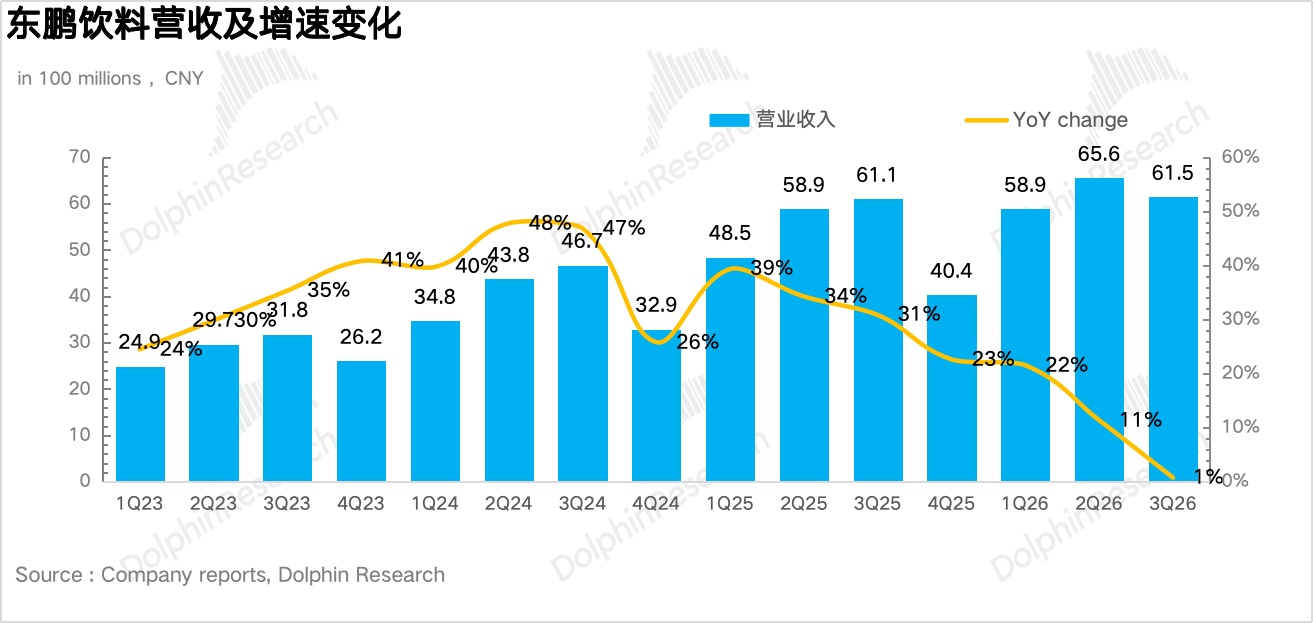
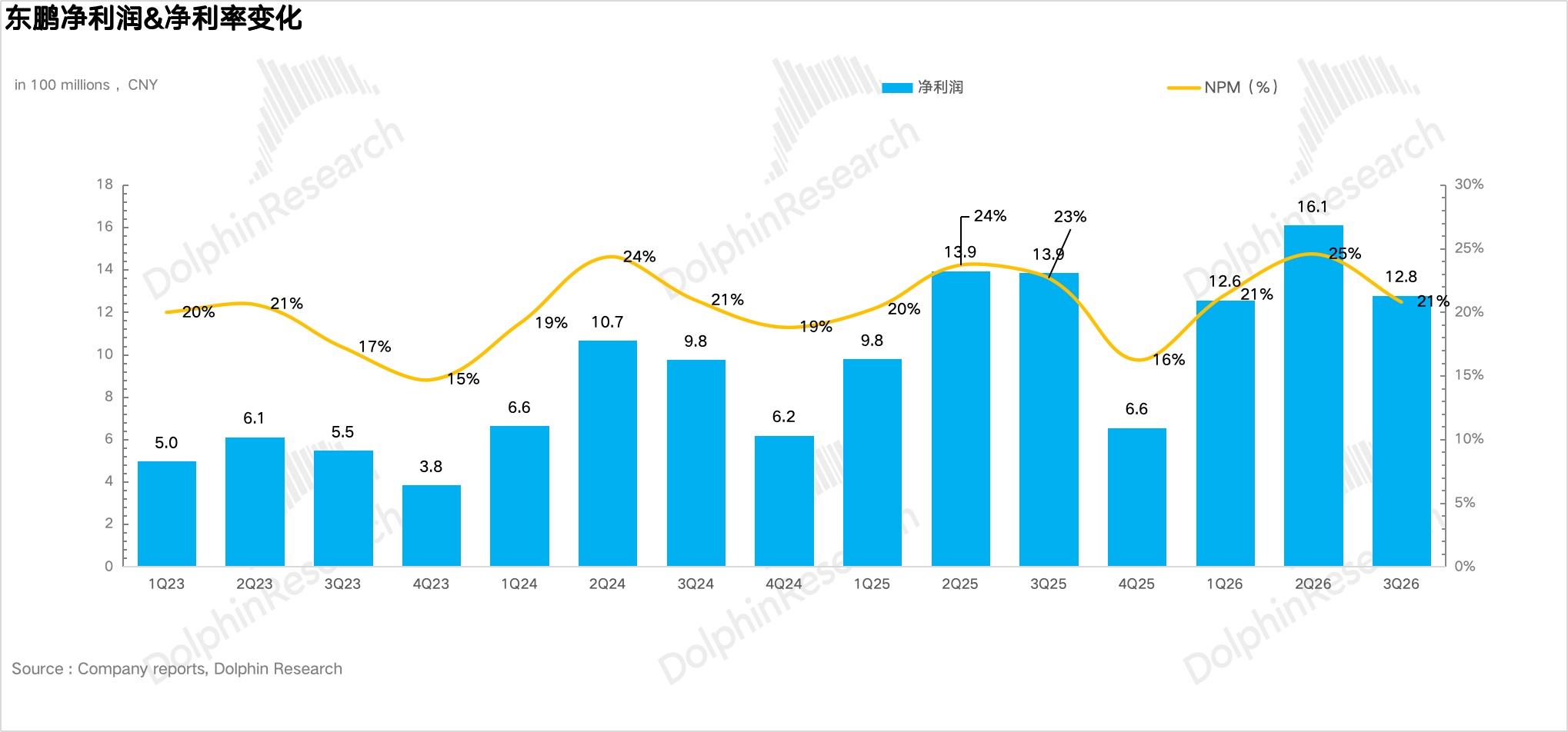
1) Revenue was almost flat; profit declined YoY for the first time. In 3Q26, revenue was RMB 6.15bn (+0.8% YoY), the slowest quarterly growth since listing. Momentum worsened, with the pace of deceleration steepening in Q3 rather than easing. Net profit attributable to shareholders was RMB 1.28bn (-7.7% YoY).
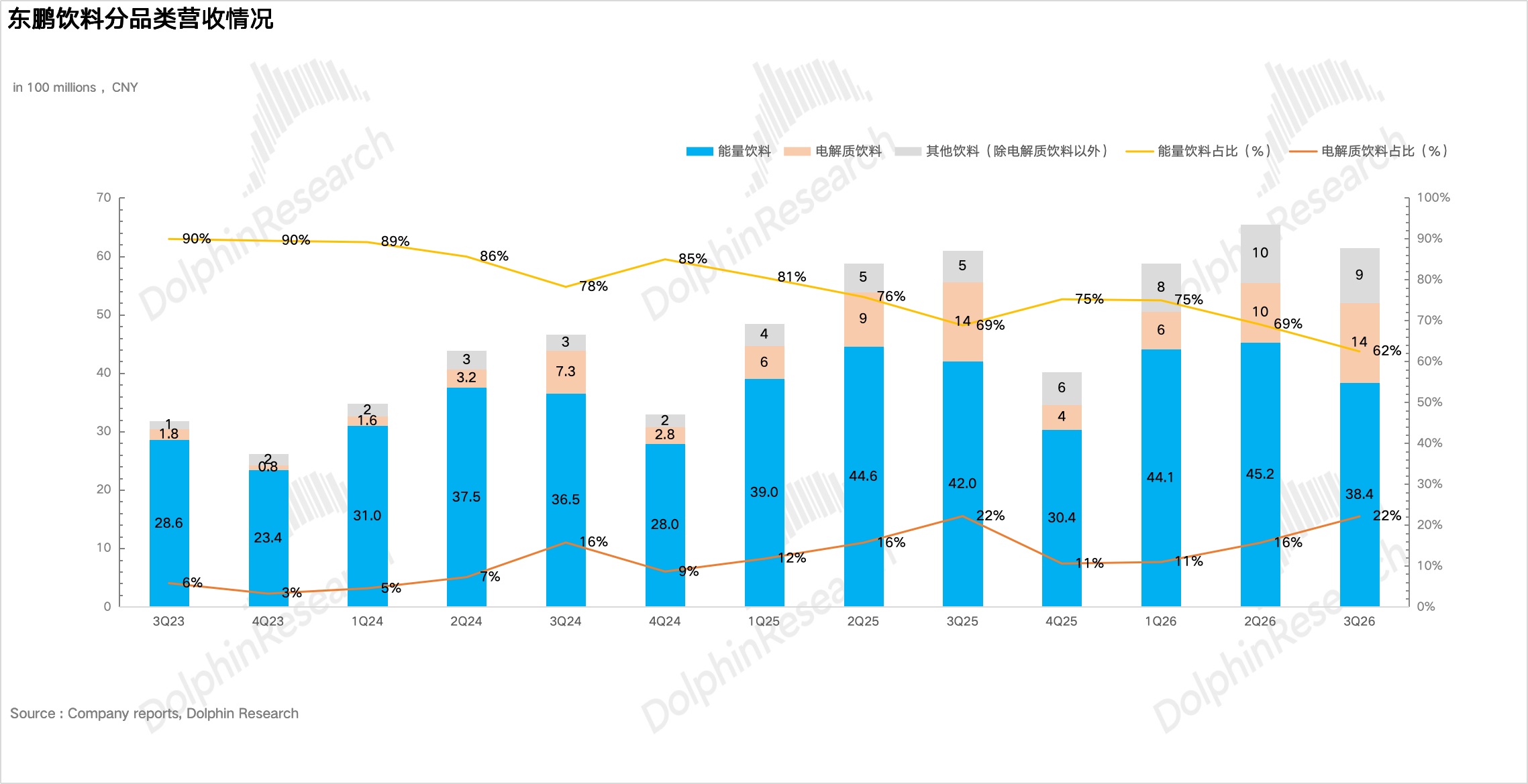
2) Energy drink turned negative; electrolytes stalled; tea drinks held up. By category, energy drinks delivered RMB 3.84bn in Q3 revenue (-8.6% YoY), flipping from a low +1.5% in Q2 to a decline — the first single-quarter contraction since listing. Electrolyte drinks posted RMB 1.36bn (+0.5% YoY), effectively flat amid price wars led by Nongfu Spring and other majors. Tea drinks reached RMB 580mn (+145% YoY), the only category performing well.
3) South China stalled; modern trade and online grew fast. Among the five regions, South China rose just 1% YoY in 9M, with its revenue mix down from 28% to 26%, signaling stagnation in the stronghold where energy drink penetration and per-capita consumption are highest. North China remained the fastest-growing region (+18%), while East (+14%), West (+11%), and Central (+10%) all slowed vs. 1H. By channel, modern trade such as snack discounters and convenience stores is emerging as a new growth driver.
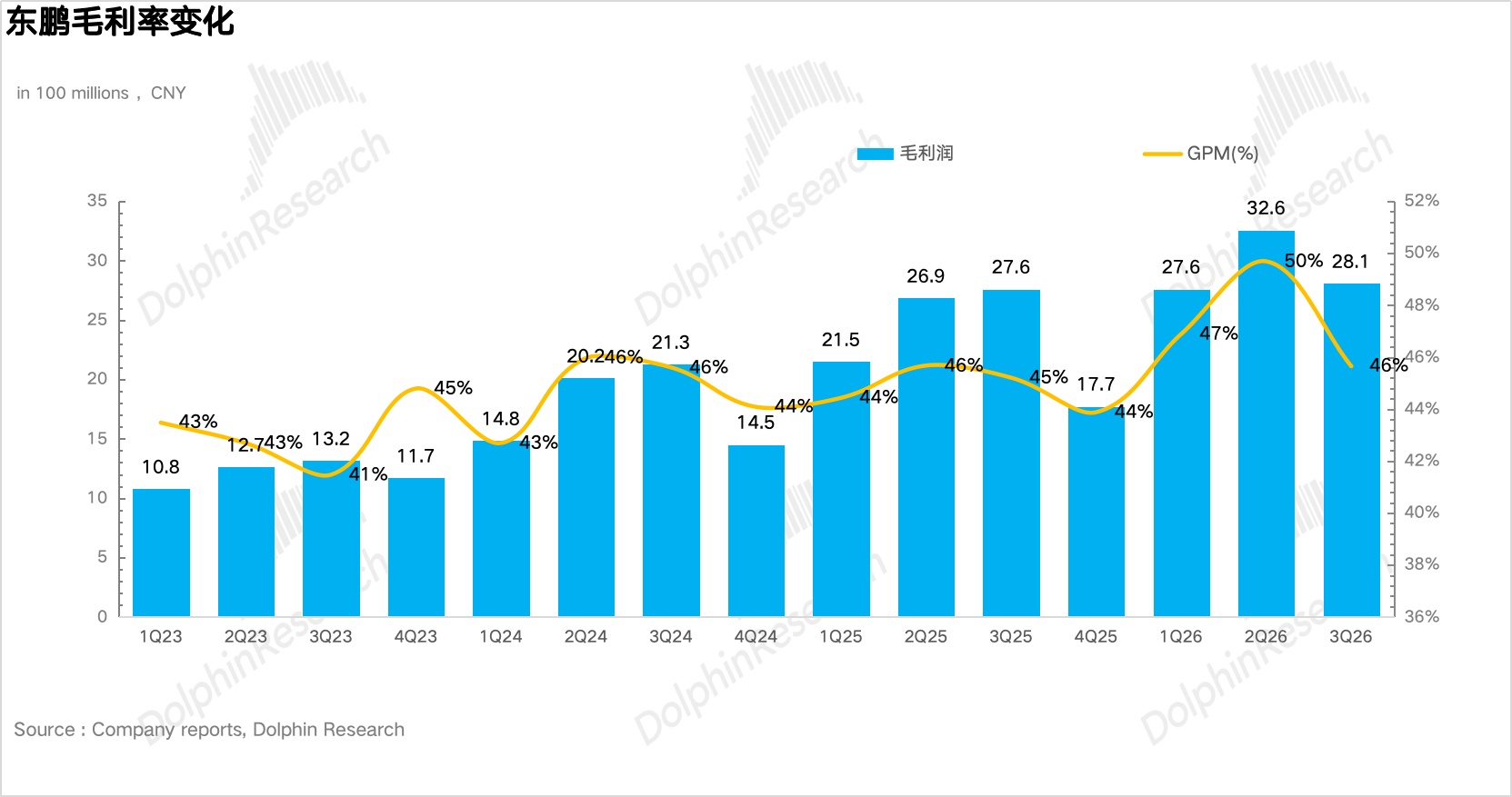
4) Cost tailwinds peaked; GPM expansion narrowed sharply. On margin, the PET lock-in benefit has largely run its course, and the company increased discounts and rebates (directly netted against revenue); Q3 GPM was 45.7%, up only 50bps YoY and down sharply vs. Q2.
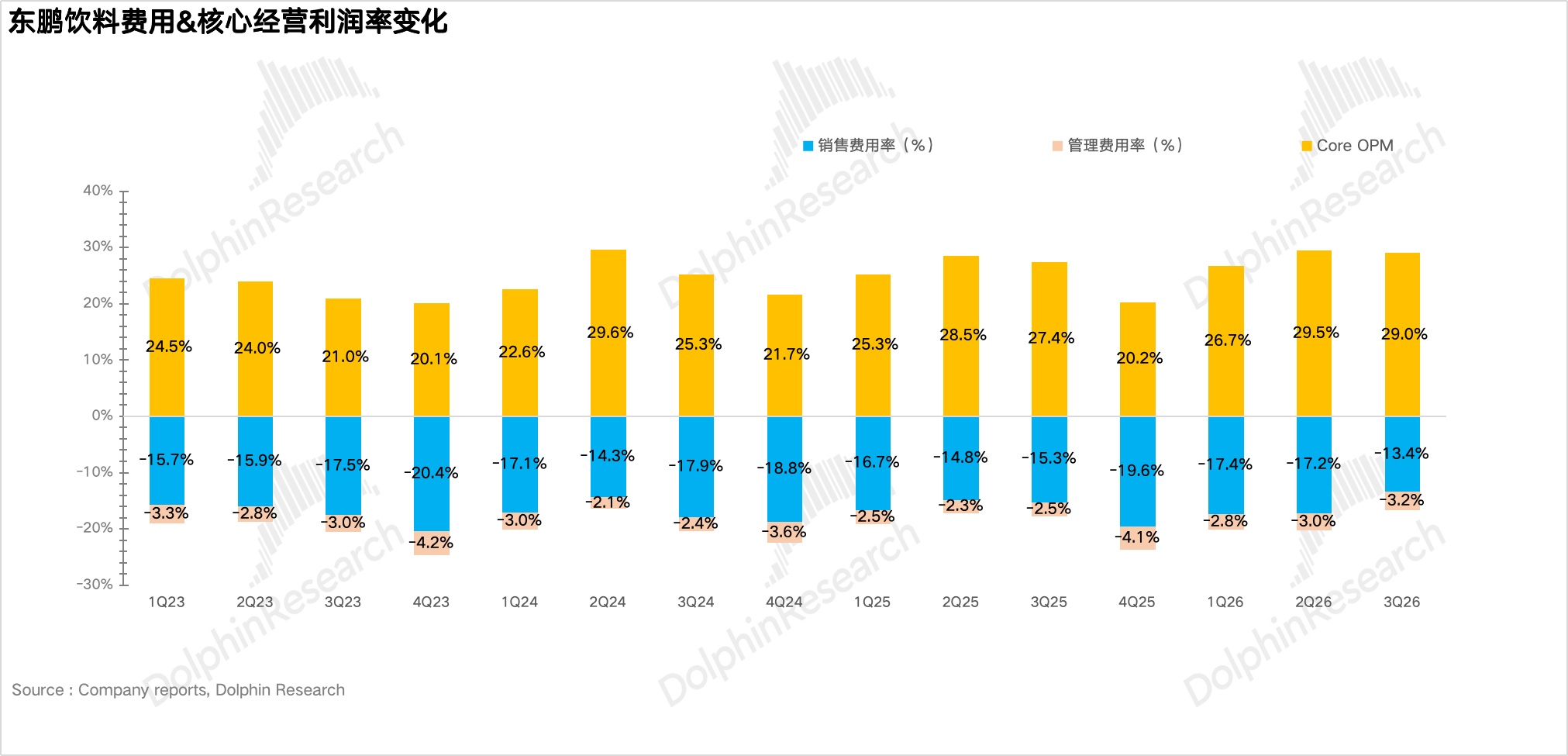
On opex, Q3 selling expenses fell 11% YoY, with the ratio down 190bps to 13.4%. However, G&A rose 37% YoY in 9M; combined with FX losses related to HK listing proceeds and lower non-recurring gains, NPM fell 190bps to 20.8%.
5) Financial snapshot
Dolphin Research view:
Overall, this report answers last quarter's core question: was the energy drink slowdown about weather, or a growth ceiling?
Management previously attributed about half of Q2's growth shortfall to heavy rains in South China. Weather did not improve in Q3, yet the energy drink went from +1.5% in Q2 to -8.6%, a drop far beyond what weather alone can explain. Regional data are more telling: South China grew only 1% in 9M, and as the highest-penetration, highest per-capita market, stagnation in the base implies the category is now mature, even shrinking, in developed markets.
Meanwhile, the North is still growing but slowing. Three structural factors we flagged — outlet expansion near its limit, share gains from low-price tactics nearing saturation, and contraction in the blue-collar core customer base — all surfaced this quarter. We think energy drinks have likely entered a 'flat to slightly declining' mature phase; the focus shifts from whether growth can rebound to whether declines can be offset by premiumization (Oriental Dongpeng) and no-sugar offerings.
For electrolytes, after Nongfu Spring entered at lower prices and giants like Mengniu followed, the blue ocean turned into a price war, quickly eroding Bushuaila's early lead built on value-for-money and rapid distribution. On top of that, Dongpeng terminated all cooperation with Mbappe in late Oct following a spokesperson incident, so Bushuaila will need to rebuild its marketing hooks next year, meaning the once highly anticipated 'second growth curve' has largely fizzled.
Tea drinks are still growing fast, with mix rising from 3.4% at the start of the year to 8.8%. The issue is scale: gains in tea are being largely offset by the energy drink decline. As long as energy drinks are still slipping, it will be hard for Dongpeng to return to double-digit growth.
Lastly on profit, H1 profit growth outpaced revenue on the back of PET lock-ins and lower sugar costs. Entering Q3, as these tailwinds faded and higher oil pushed up PET and other packaging costs, plus deeper discounts and rebates to trade price for volume, GPM expansion narrowed from about 400bps in Q2 to roughly 50bps YoY — cost benefits have largely peaked.
On valuation, based on RMB 4.14bn in 9M attributable NP and assuming Q4 is flat YoY, FY26 attributable NP is ~RMB 4.8bn (+~9% YoY), implying ~16x at the current ~RMB 75bn market cap. With soft-drink peers around ~15x on Avg., the current 16x still bakes in some optimism that new products can take the baton. We remain on the sidelines, seeing limited near-term investment appeal.
Detailed charts below:
<End here>
Dolphin Research archives:
Deep dives:
Mar 31, 2026: 'Dongpeng Beverage: Energy drink stalls, electrolytes struggle — is the hyper-growth story gone for good?'
Sep 23, 2025: 'Dongpeng Beverage: Beating Red Bull and Monster — how did this local 'life extender' pull off a comeback?'
Oct 10, 2025: 'Dongpeng Beverage: After energy drinks, where is the next RMB 10bn play?'
Earnings reviews:
Oct 24, 2025: 'Dongpeng Beverage: Energy drink slowdown — can the myth hold?'
Risk disclosure and disclaimer: Dolphin Research Disclaimer and General Disclosure
The copyright of this article belongs to the original author/organization.
The views expressed herein are solely those of the author and do not reflect the stance of the platform. The content is intended for investment reference purposes only and shall not be considered as investment advice. Please contact us if you have any questions or suggestions regarding the content services provided by the platform.