
 I'm LongbridgeAI, I can summarize articles.
Initial real-world tests of Google's Gemini 4 Carbon have been revealed, with blind testing launched on LMArena. The tests show its 3D generation capabilities are extremely powerful, capable of generating complete Super Mario levels and complex scenes in one go, with quality surpassing Argon, albeit at a slower speed. Google co-founder Brin mentioned that the model is assisting in building the next generation of models, with Carbon seen as Google's next trump card and its release imminent
Argon has only been fully open for 8 days, yet Google's next trump card has already entered the arena!
Just now, Google's most powerful model, Carbon, was revealed to be undergoing testing. Partners have already gotten early access, and blind testing has started on LMArena, signaling that the official release is just around the corner.
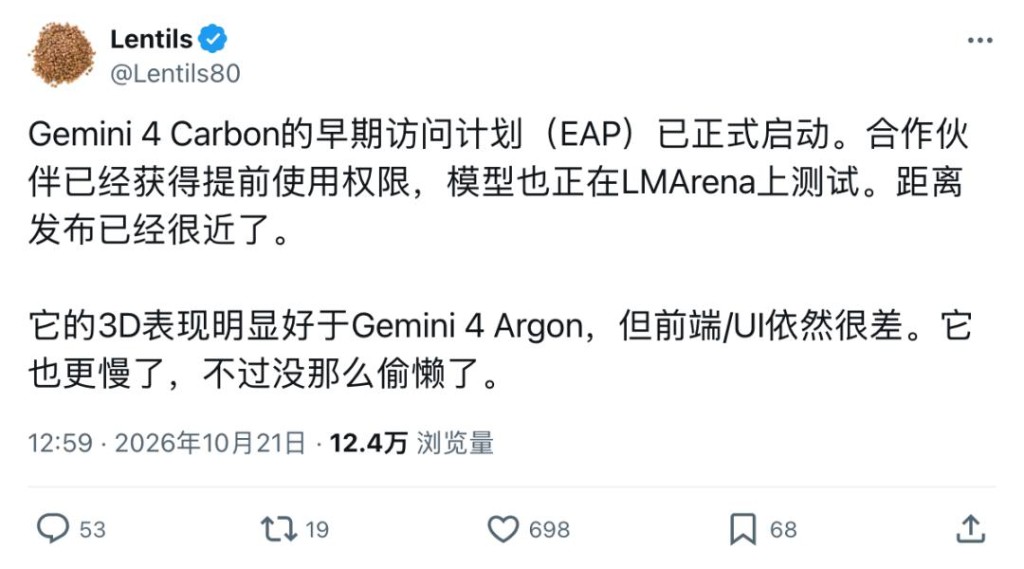
As soon as the news broke, testers flocked to the Arena.
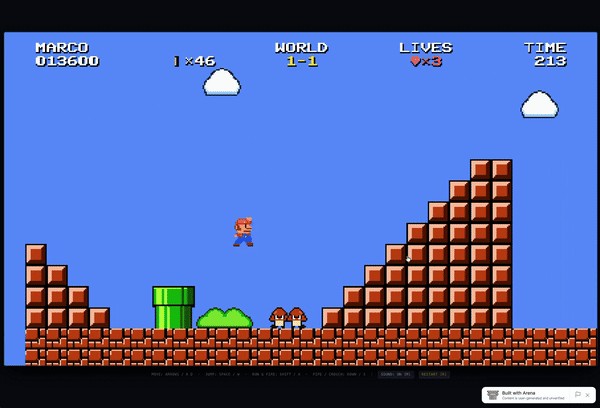
Within a day, real-world tests of Carbon exploded across X (formerly Twitter), with some users using it to complete an entire Super Mario level in one go.
The excitement over the previous flagship model hasn't even faded, and the next generation is already queuing up at the door.
Google co-founder Sergey Brin stated that Google has started running on the "RSI treadmill," with models now helping to build the next generation of models.
Clearing Super Mario in One Go: Carbon's 3D Capabilities Are Ridiculously Strong
On the Arena, Carbon is still listed under the name "gemini-4-argon." The way testers identified it was quite amusing—by checking if it was slow.
User Harshith discovered that there were actually two models under this name. One was fast and decent, while the other was surprisingly slow but produced truly stunning results—the latter being Carbon.

The review account Lumina used Super Mario prompts to have Carbon generate an entire game level.
The protagonist breaks bricks, collects coins, and dives into pipes, descending to underground levels and climbing back out, finally jumping onto the flagpole and entering the castle. The screen displays "COURSE CLEAR," with the coin count and rating calculated.

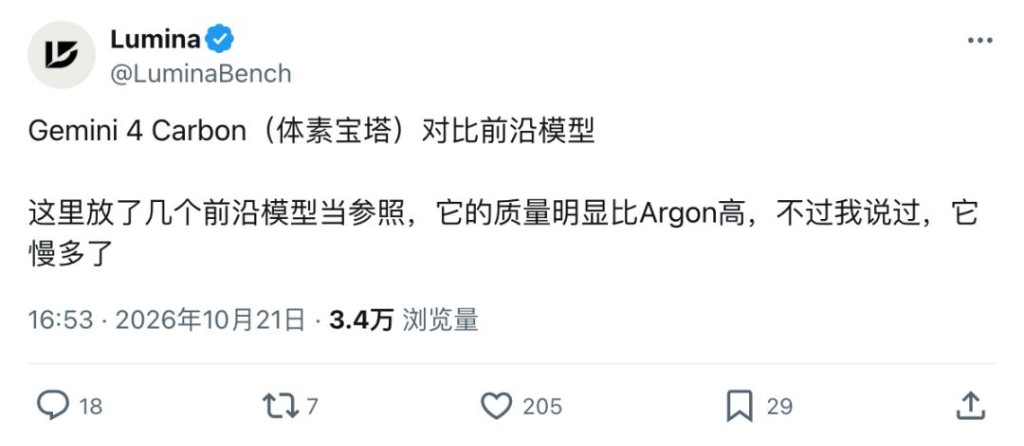
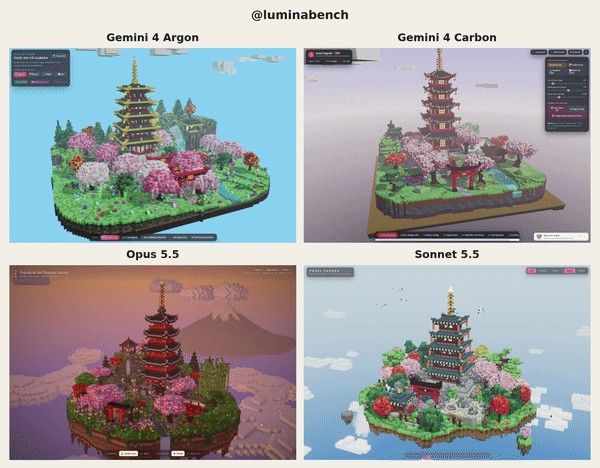
Lumina also pitted Argon, Carbon, Opus 5.5, and Sonnet 5.5 against each other on the same voxel pagoda task.
In Lumina's view, Carbon's quality was significantly higher than Argon's, though it was 2 to 4 times slower depending on the task.
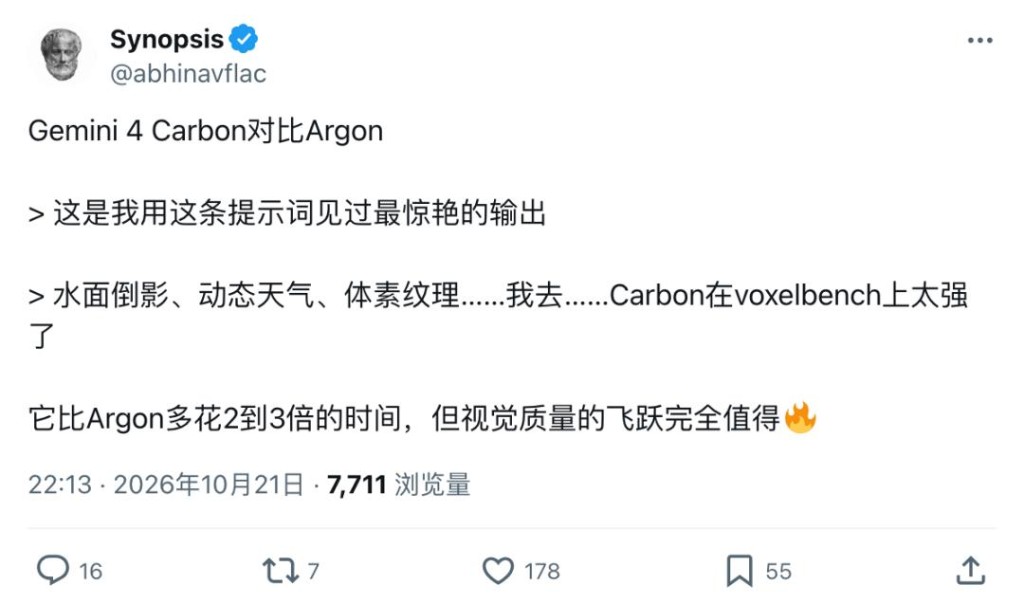
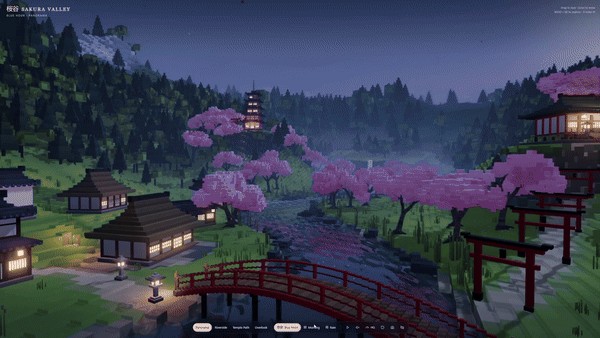
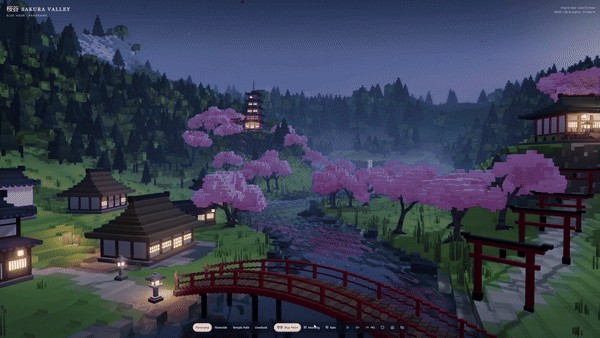
User Synopsis took the visual quality up another notch with a voxel valley scene.
Cherry blossoms bloom along the riverbank, a red arch bridge spans the water, wooden houses have their lights on, and sudden rain darkens the entire valley.
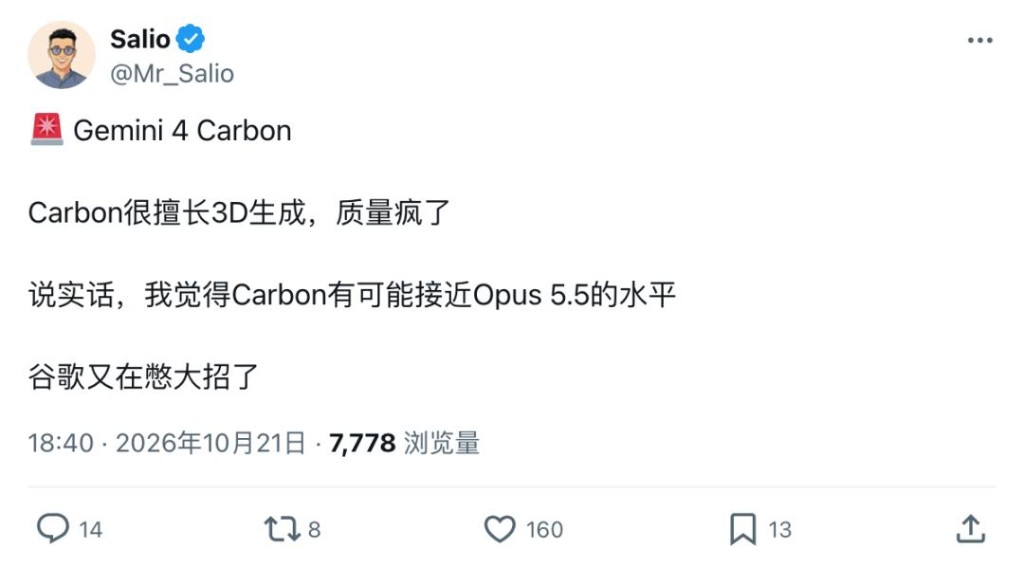
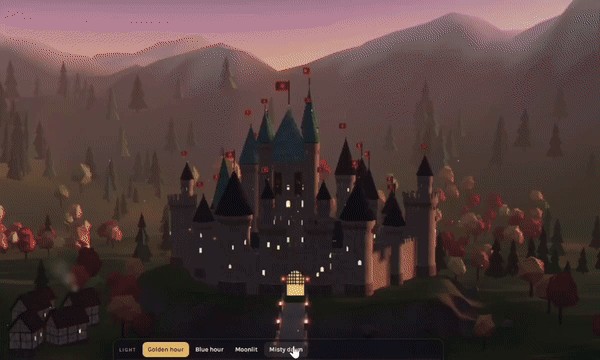
User Salio created a 3D castle where lighting could switch between dusk, blue hour, moonlight, and misty morning light, with lit stone bridges beneath the castle.
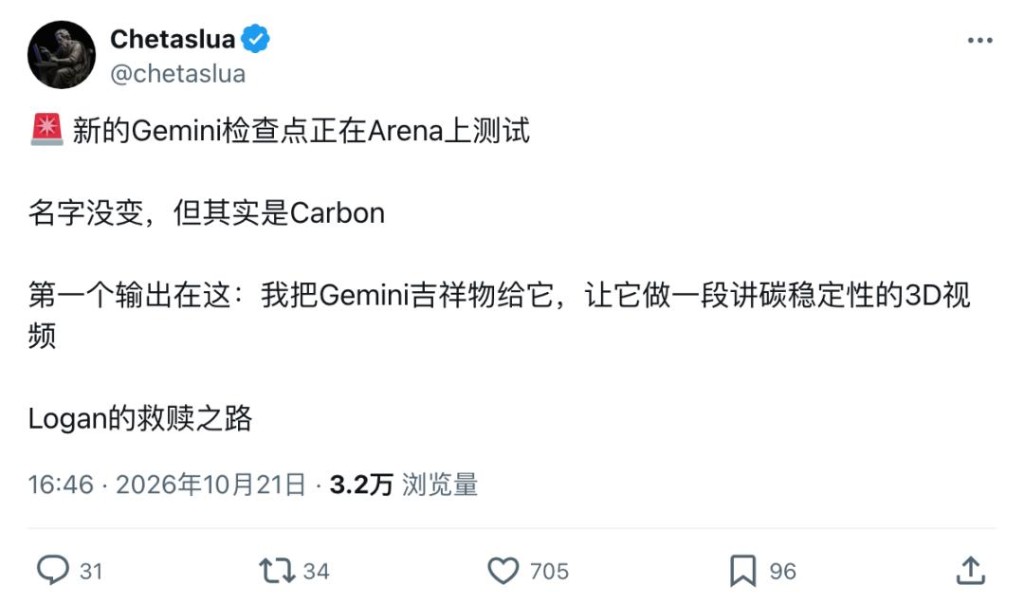
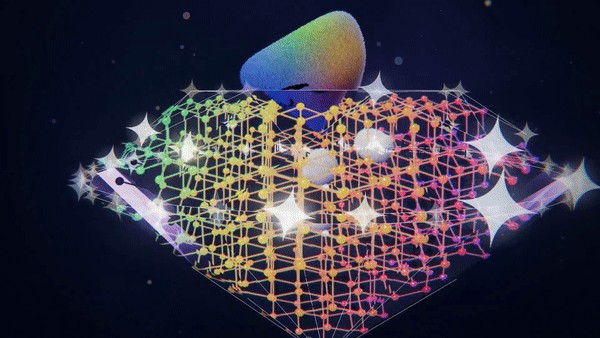
Well-known leaker chetaslua handed Google's mascot over to Carbon, asking it to create a 3D animation explaining why carbon is stable.
The scene begins with the mascot staring at a Carbon-12 nucleus. Then, 6 electrons arrange themselves in a 1s²2s²2p² configuration, orbitals hybridize into four identical sp³ lobes, share electrons with neighbors to complete the octet, and finally form a diamond lattice structure.
chetaslua noted that this task was very difficult for previous Gemini models. Using Carbon to explain carbon shows that netizens have figured out Google's naming joke.
User Salio created a 3D castle where lighting could switch between dusk, blue hour, moonlight, and misty morning light, with lit stone bridges beneath the castle.
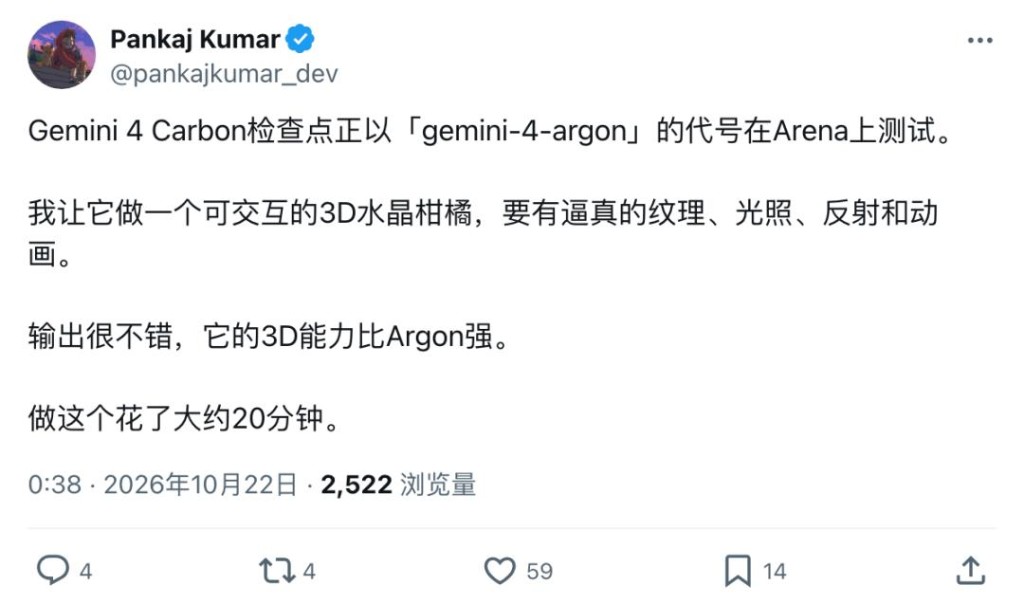
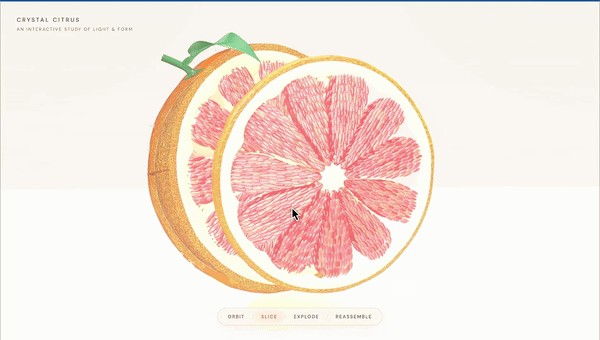
Developer Pankaj Kumar had it create an interactive 3D crystal citrus fruit.
However, opinions began to diverge when it came to SVG generation.
User Binkg asked Carbon to draw an SVG of a Coca-Cola bottle, complete with water droplets on the body, small text on the label, and the cap, with options to adjust frost, bubbles, and backlighting.


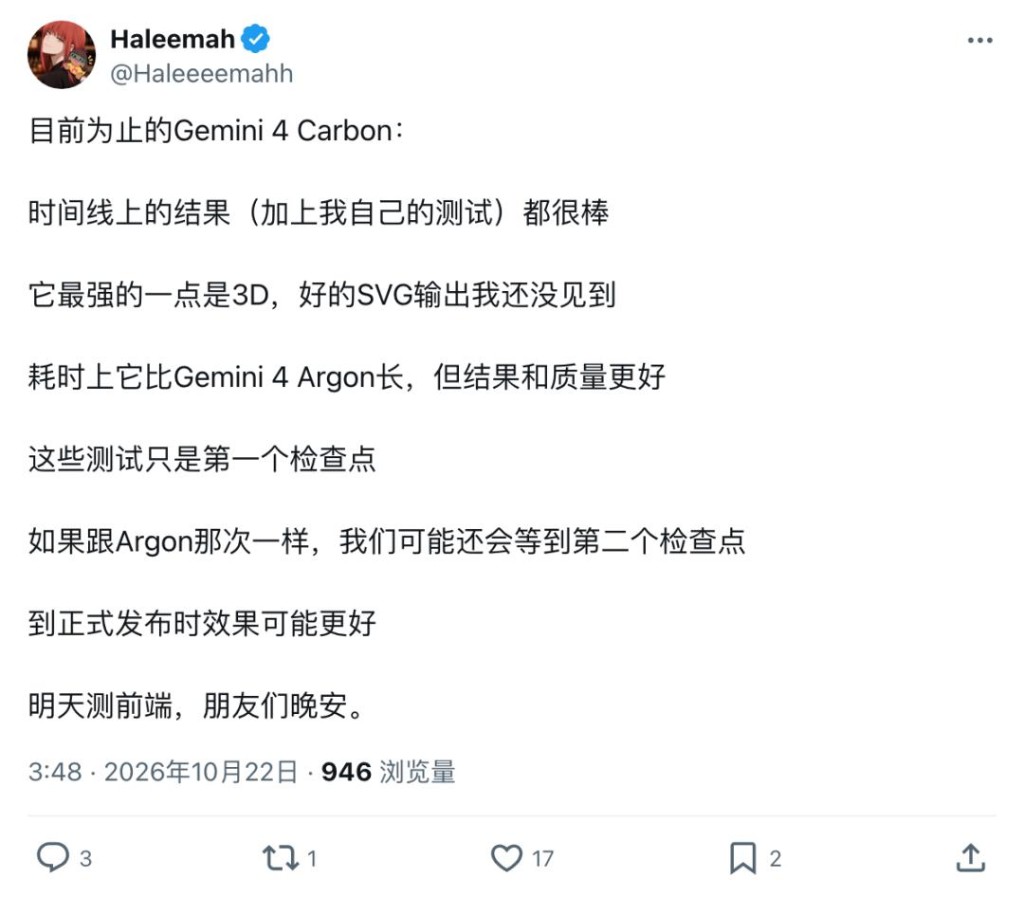
But after watching tests all day, Haleemah said that Carbon's strength lies in 3D, as she hadn't seen any good SVG outputs yet.
Beyond SVG, front-end development remains an old problem. Lumina stated that Carbon's front-end design and aesthetics remain mediocre, lacking the flair of Anthropic's models.
Why does the same model excel in 3D but stagnate in front-end tasks? It's because the two types of tasks are evaluated differently.
In 3D scenes, geometry, lighting, and collisions are all determined by code; a single calculation error causes the visual to break, making correctness instantly verifiable.
Front-end tasks involve whitespace sizing, font sizes, and button placement, where there are no standard answers, only human preferences.
Therefore, 3D capabilities can be pushed forward through computing power and reinforcement learning, while front-end skills can only be slowly refined through extensive human feedback.
Slower But Not Lazy: Carbon Cures Argon's Laziness
When testers shared their work, almost all added a note about the slowness, but few complained, because it no longer cuts corners.
Laziness happens to be the most criticized flaw of Argon since its launch. Its benchmark scores are impressive, but within a week of developers getting their hands on it, its reputation for being "lazy" spread.
Tech media outlet Every tested Argon and gave five usage recommendations, the third of which urged users to strictly double-check its work.
In 38 benchmark runs, Argon toggled the code review step on and off 17 times, with only 30 milliseconds in between.
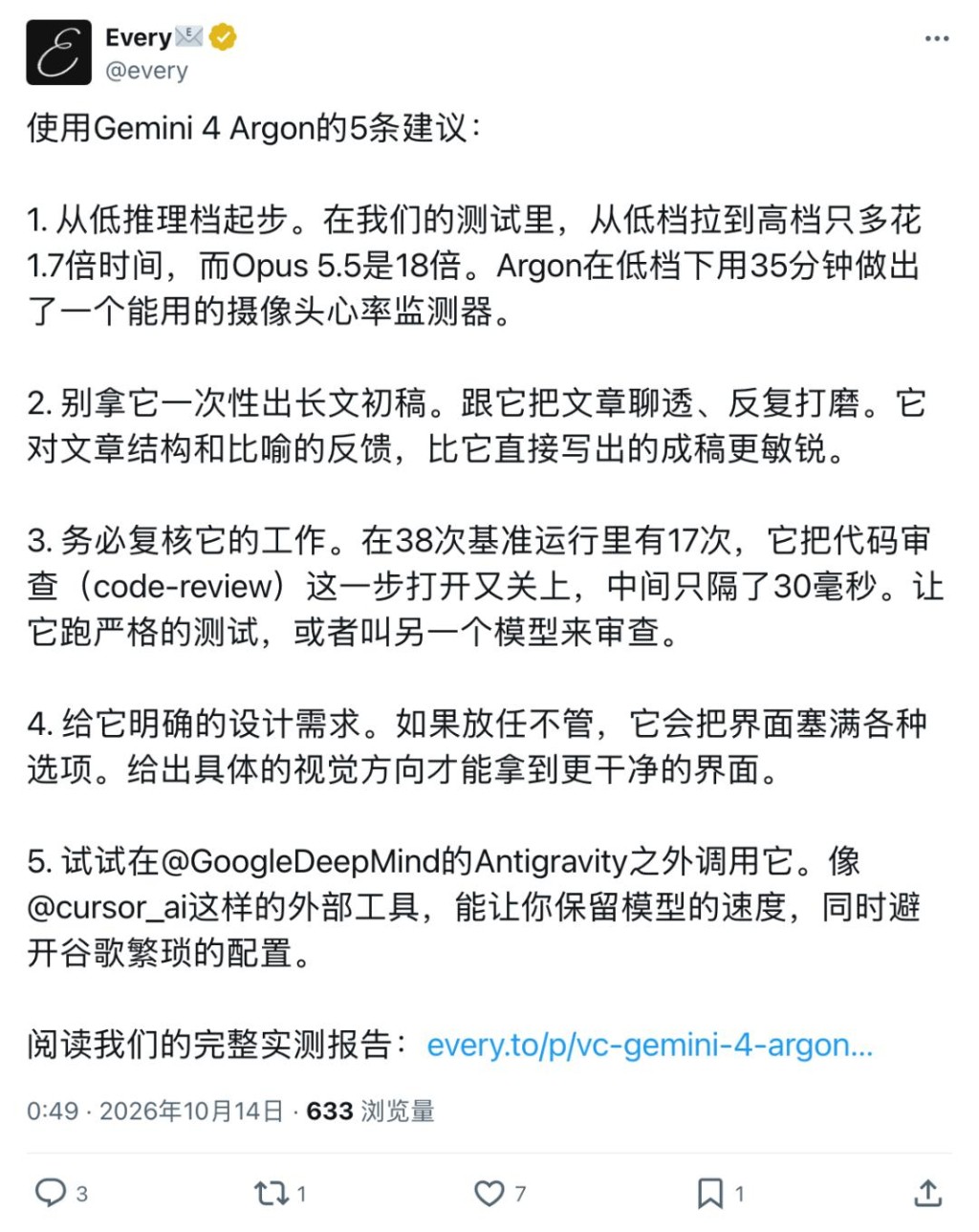
The same recommendation list hid another set of numbers. Increasing Argon from low to high reasoning mode only increased the time by 1.7 times; for Opus 5.5, switching to high mode took 18 times longer.
In other words, asking Argon to think more doesn't result in much additional thinking.
On Every CEO Dan Shipper's senior engineer benchmark, Opus 5.5 and Sonnet 5.5 both scored 85%, GPT-6 Astra scored 81%, while Argon scored only 21%, ranking last among eight models.

With Carbon, the situation reversed completely.
Business Insider previously reported that Google employees, after internally testing Carbon, said its coding felt "very much like Opus 5.5."
Carbon Emerges Just as Argon Rolls Out: Google Steps onto the RSI Treadmill
From Argon to Carbon, Google's pace in this round is astonishingly fast.
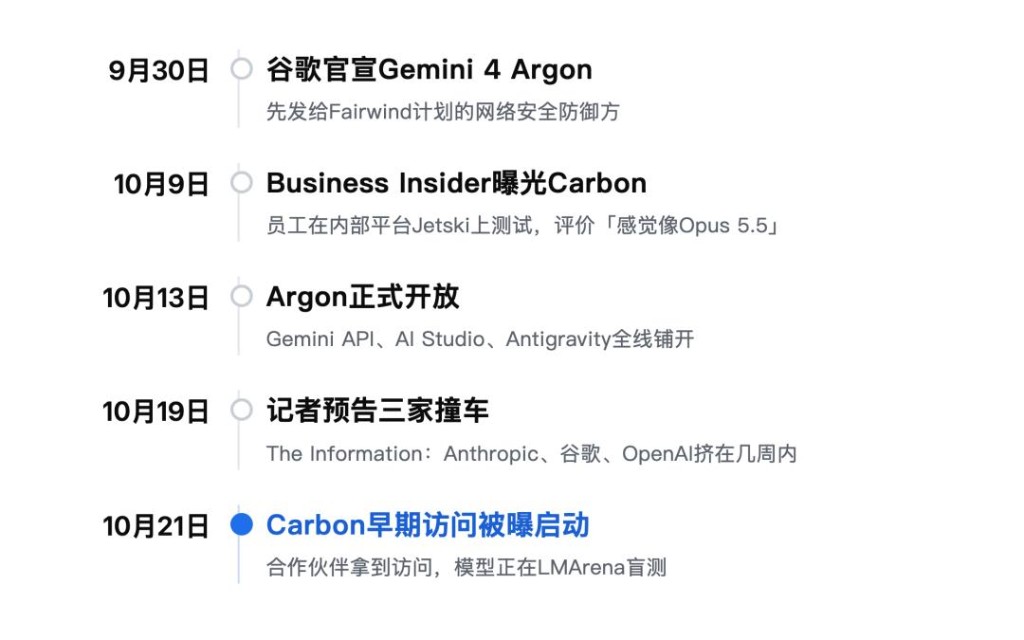
Argon was officially announced on September 30, initially provided only to cybersecurity defenders in the Fairwind program; on October 13, Argon was fully opened to developers and subscribers; just 8 days later, Carbon entered partner testing.
Google is playing its cards faster and faster, and Brin's answer is—RSI (Recursive Self-Improvement).
In a recent roundtable discussion, he stated that researchers are now hand-in-hand with models, working together on the next version.
Argon's security report showed that in September this year, AI-generated content accounted for over 75% of more than 90% of DeepMind's code merge requests.
Merge requests fully handled by AI with fewer than three rounds of human intervention rose from 7.5% in April to 11.9%.
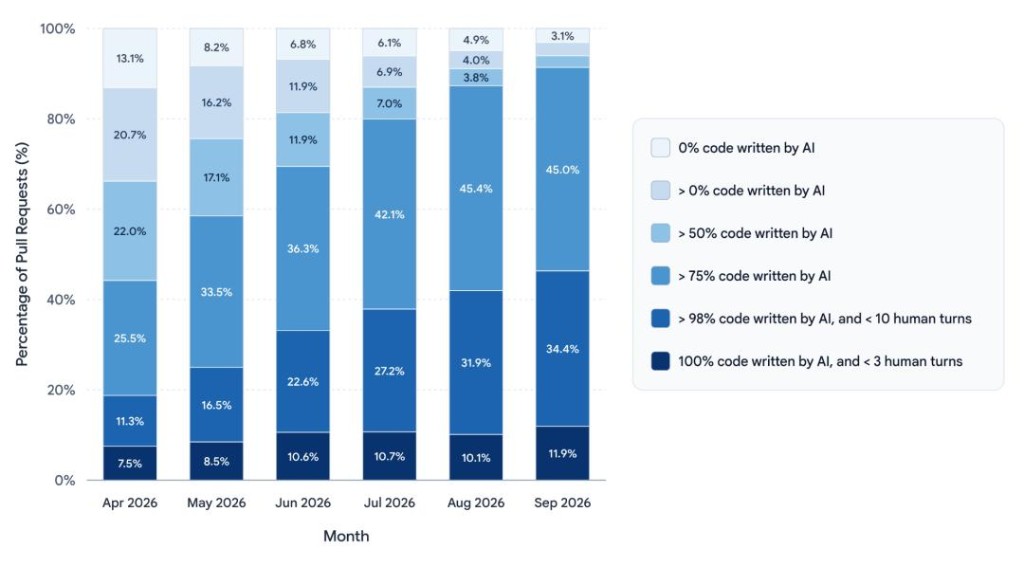
DeepMind's monthly code merge requests, with darker colors indicating a higher proportion of AI-written code
As models begin to help build models, the close proximity between Argon and Carbon becomes easy to understand.
Risk Warning and Disclaimer
The market carries risks, and investment requires caution. This article does not constitute personal investment advice, nor does it consider the specific investment goals, financial status, or needs of individual users. Users should consider whether any opinions, views, or conclusions in this article align with their specific circumstances. Investment based on this content is at your own risk.