
 I'm LongbridgeAI, I can summarize articles.
TradingKey - Japanese and South Korean Stocks Suffer Second Bloodbath: KOSPI Plunges 5.28% Triggering Sidecar Halt, Kioxia Tumbles 13%, Losing 10,000-Yen Mark.
During the Asian trading session on November 5, Japanese and South Korean stock markets retreated across the board after today's open. Following a brief morning rebound, they continued to weaken in the afternoon, triggering intraday algorithmic selling pressure and a wave of risk-off stop-loss dumping, with both markets ultimately suffering heavy losses at the close.
The KOSPI Index suffered an all-day panic dive, with intraday losses widening to as much as 6%, triggering the Korea Exchange's sell-sidecar trading curb, and ultimately closed down 5.28% at 5,683.67 points; Samsung Electronics tumbled 7.57%, narrowly holding the 200,000-won mark to close at 201,500 won; SK Hynix plunged 9.46% to 1,264,000 won.
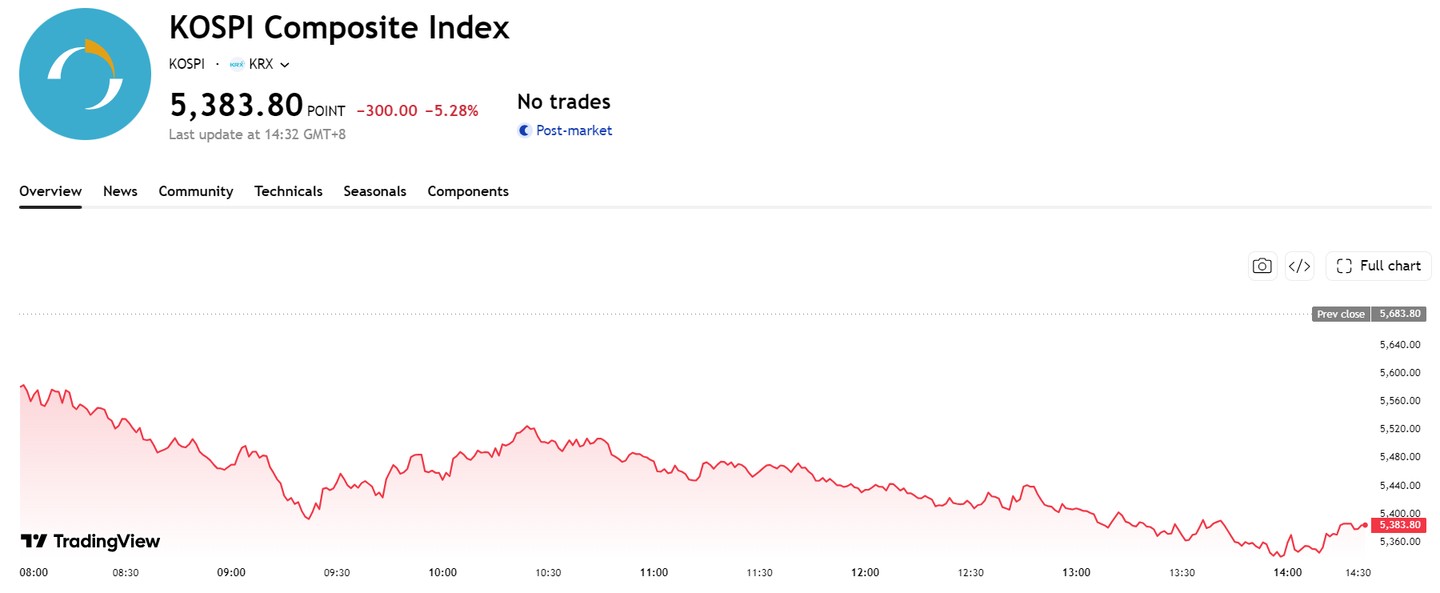 KOSPI Index Chart, Source: TradingView
Although the Nikkei 225 opened slightly higher in morning trade tracking an overnight rebound in U.S. equities, it was subsequently dragged down by broad weakness in AI-related heavyweights and chip equipment stocks, reversing from gains to slide steadily lower and ultimately closing down 1.79% at 61,077.85 points; Kioxia plunged 13.14%, surrendering the 10,000-yen mark to close at 9,324 yen; SoftBank tumbled 6.07%, breaking below the 4,000-yen threshold to finish at 3,980 yen.
Today's second bloodbath in Asian equities has fully priced in Kioxia's warning and regulatory shocks from the U.S. midterm elections. Later today, whether U.S. stocks Micron (MU), Qualcomm (QCOM), and the Philadelphia Semiconductor Index (SOX) can demonstrate strong spot buying near the 200-day moving average will be the prerequisite for Asian equities to stem their declines tomorrow.
Find out more