
 I'm LongbridgeAI. Here is the key information I extracted
- Reports indicate supporters are lobbying for Jensen Huang's return following his recent resignation, but US Treasury Secretary Scott Bessent has called for external leadership and compliance reviews.…
TradingKey - Nvidia (NVDA) fell more than 3% in US premarket trading on Monday, extending the weakness seen after Jensen Huang's abrupt departure.
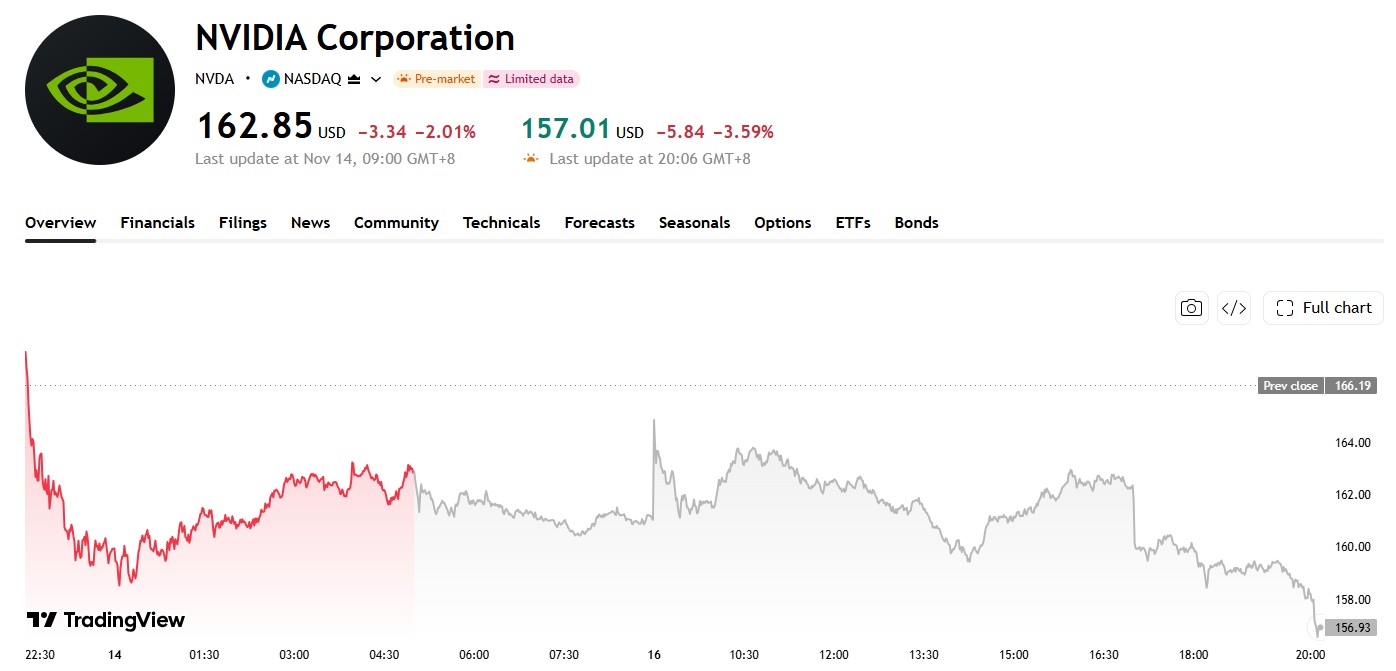
Source: TradingView
According to a Financial Times report citing people familiar with the matter, some of Jensen Huang's supporters are planning to assemble a "war room" of Silicon Valley tech figures to lobby Nvidia's board to reconsider bringing him back, while also seeking support from the White House. A person close to the effort said the push has Huang's backing. The news briefly lifted market expectations for his return, but there is currently no indication that the board has altered its succession plans, and Nvidia has not officially responded to the report.
Huang announced his resignation as Nvidia's president, chief executive officer, and director on November 12, ending his long tenure leading the company since co-founding it in 1993. The company subsequently appointed Chief Financial Officer Colette Kress as interim CEO and longtime director Harvey Jones as its first board chair, while initiating a search for a permanent successor. The board previously stated that both internal and external candidates are under consideration.
In addition to some employees and tech industry figures, certain key shareholders have also called on the board to keep all options open. However, Huang does not hold a controlling stake in the company, leaving the final decision in the hands of the board. Meanwhile, the board must also weigh internal governance against external regulatory risks; even if a return plan wins industry support, that does not mean it can be implemented in the near term.
Pressure from Washington has further weakened the likelihood of Huang's return in the short term. US Treasury Secretary Scott Bessent said Sunday that Nvidia needs a "major shakeup" and that the board should look outside the company for its next chief executive. He also demanded that the company explain its export control compliance culture within the next 10 days and review whether management has adequately prevented advanced AI chips from flowing to China via third parties.
Meanwhile, Wall Street has begun broadly adjusting Nvidia's valuation. UBS lowered its price target from $300 to $240, citing potential export curbs that could depress 2028 revenue expectations, while maintaining a "Buy" rating. The firm cut its 2028 revenue forecast from $985 billion to $885 billion and noted that in an extreme scenario, scrutiny of markets such as Singapore and Malaysia could reduce revenue by about 10%.
Mizuho Securities further lowered its price target on Nvidia from $250 to $220 while maintaining an "Outperform" rating. The firm believes that management turnover, China-related business risks, and pricing pressure on high-end AI chips could erode the valuation premium the company previously enjoyed, though $220 still implies roughly 38% potential upside from premarket levels.
HSBC made a more aggressive adjustment, not only downgrading its rating from "Buy" to "Hold" but also slashing its price target from $365 to $170. The new target is only slightly above the current share price, reflecting HSBC's concerns over an unclear succession plan, tightening export regulations, and downside risks to earnings estimates.
Other institutions have also taken a cautious stance. Citi lowered its price target to $225, RBC cut its target to $230, and Bernstein downgraded the stock to "Market Perform" while halving its price target from $400 to $200; BofA, Stifel, and Baird also lowered their valuations. These changes indicate that while analysts are not entirely discounting Nvidia's competitive edge in AI chips, management turmoil and regulatory risks have begun to factor into valuation models.
As Nvidia prepares to report its quarterly earnings, investors will closely watch AI chip demand, the delivery pace of next-generation products, and whether the interim management team can maintain customer confidence. If results and guidance continue to beat expectations, the current valuation compression could attract capital back into the stock.
Find out more