
 I'm LongbridgeAI. Here is the key information I extracted
- Despite temporary government subsidies and a sharp drop in rice prices dampening the headline figure, persistent external pressures and wage growth continue to reinforce expectations of a potential rate hike by the Bank of Japan in December.…
Japan's latest inflation data shows an acceleration in price growth, further solidifying the rationale for the Bank of Japan (BOJ) to raise interest rates next month.
Data released by Japan's Ministry of Internal Affairs and Communications on Friday (November 20) showed that the core CPI, excluding fresh food, rose 2.2% year-on-year in October, accelerating for the second consecutive month to its fastest pace this year, though slightly below the median economist forecast of 2.3%. Meanwhile, the headline CPI rose 2.3% year-on-year. Following the data release, swap contracts implied an approximately 86% probability of a BOJ rate hike on December 18.
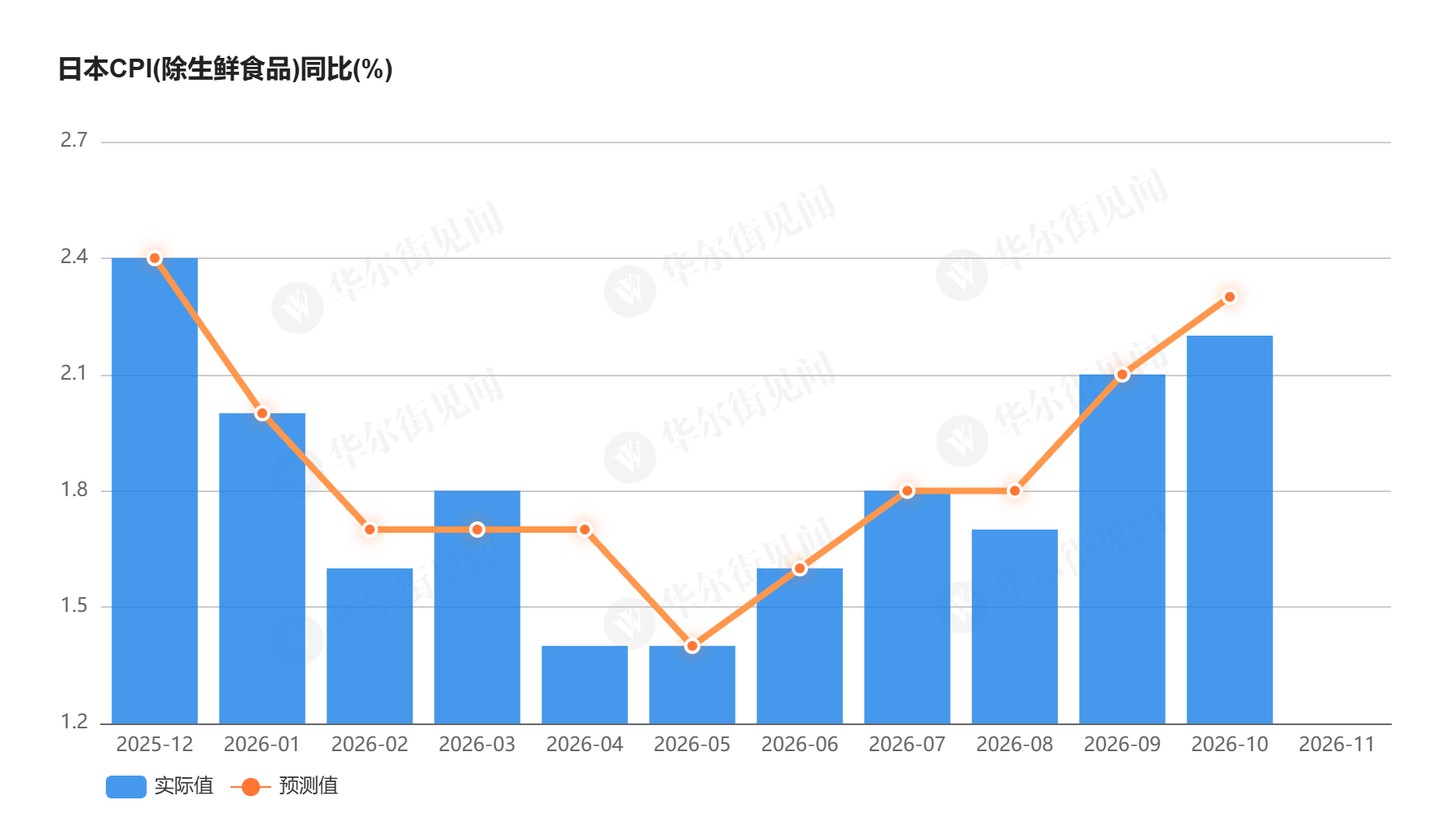
Masato Koike, Senior Economist at Sompo Institute Plus, stated that the reading was weaker than expected due to several temporary factors, including government measures and a sharp drop in rice prices. He also predicted that Japan's inflation would further accelerate toward 3%, primarily influenced by conflicts in the Middle East, suggesting the BOJ may remain vigilant against upside price risks.
Energy and Mobile Communication Fees Drive Overall Prices Higher
Breakdown data indicates that energy was the primary driver of inflation in October. Overall energy prices rose 2.2% year-on-year, reversing the decline seen in September. Increases in mobile communication-related costs also accelerated significantly, jumping from 10.9% in September to 17.2%, providing further support to the overall index.
Meanwhile, fiscal measures implemented by the government to curb utility costs continue to suppress inflation readings. The Ministry of Internal Affairs and Communications stated that these measures reduced the headline CPI by approximately 1 percentage point.
The increase in food prices, excluding fresh food, slowed to 2.2%, with rice prices falling nearly 30% year-on-year, marking the largest single-month decline since records began in 1971. A year ago, rice prices were one of the main factors driving overall inflation.
Service prices rose 1.4% year-on-year, a key indicator for measuring the sustainability of inflation, whose trend is closely watched by the market. The core metric monitored by the BOJ, which excludes both fresh food and energy, also recorded a 2.2% increase.
Intensive Corporate Price Adjustments and Persistent External Pressure
On the cost side, rising prices for energy, transportation, and packaging—partly stemming from the situation in the Middle East and the continued weakness of the yen—combined with labor shortages driving wage hikes, have prompted companies to accelerate their pricing strategy adjustments.
According to data from Teikoku Databank, major Japanese food and beverage companies plan to raise prices on 1,477 items this month, approximately ten times the number from a year ago.
Koike pointed out that current upward price pressure mainly stems from external factors. “Consumer spending is weak, and domestic endogenous inflationary pressure is not strong. Companies are simultaneously monitoring weak demand and price pressures arising from the situation in the Middle East.”
Expectations for a December Rate Hike Further Strengthened
Bloomberg economist Taro Kimura stated that rising energy costs and a weak yen have kept inflation consistently above the 2% target. This report is unlikely to change the BOJ's assessment that underlying inflation has reached 2%, nor will it diminish its vigilance regarding upside price risks.
“We maintain our expectation of a 25 basis point rate hike in December.”
The BOJ has previously clarified that its policy objective has shifted from pushing underlying inflation toward 2% to anchoring it around that level, stating last month that underlying inflation had met the target for the first time since it was established in 2013. Friday's data will provide further support for the rate hike decision at the BOJ's December meeting.