
 I'm LongbridgeAI, I can summarize articles.
International gold prices continued their sharp decline, with spot gold falling below $3,600 per ounce on Friday (November 20). In just eight trading days, it lost five $100 milestones. Domestic gold prices in mainland China fell in tandem, triggering a gold-buying frenzy among Beijing residents who bought "more as prices fell."
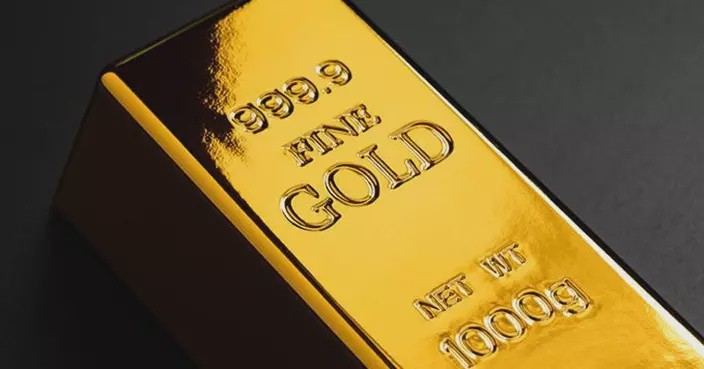
File photo
According to a report by the mainland media outlet Huaxia Times, as domestic gold prices dropped in line with external markets to RMB 760 per gram, a large number of buyers flocked to the Caibai Jewelry flagship store in Xicheng District, Beijing, early in the morning. By noon, all investment gold bars had been sold out. Due to the store's policy requiring full payment for pre-sale orders within one hour, some "abandoned gold bars" released back into inventory due to unpaid orders were instantly snapped up by customers on site as bargains. One large investor even spent over RMB 850,000 to purchase eleven 100-gram gold bars in one go.
Large Investor Spends RMB 850,000 on Gold; Buyers Expect RMB 650 per Gram to be the "Iron Bottom"
The buying frenzy did not cool down even after spot inventory was sold out. Although the store added temporary cashier counters to manage the crowd and announced at 12:25 PM that all stock for the day had been cleared, a large number of investors refused to leave. They preferred to wait painfully at the counters for restocking, with some buyers expecting that RMB 650 per gram would be the "iron bottom" for this round of declines.
However, in stark contrast to the enthusiasm of mainland retail investors for bottom-fishing, the external precious metals market faced comprehensive pressure. As of around 11:40 AM on November 20, spot gold fell about 3% for the day, and spot silver dropped nearly 4%; New York gold futures fell more than 4.5%, and New York silver futures dropped over 7%.
International gold prices down $2,000 from early-year highs
Thus, spot gold successively breached the $4,000, $3,900, $3,800, $3,700, and $3,600 levels within eight trading days. Calculated based on New York gold futures prices, the cumulative decline from the historical high of $5,598.75 reached over $2,000 compared to the beginning of the year, with the drop expanding to approximately 37%.
The sharp drop in gold prices caught many retail investors who had accumulated gold at higher levels off guard. One investor admitted that they were reluctant to cut losses when gold prices fell to RMB 810 per gram, and now at the RMB 760 level, they have incurred significant paper losses and are forced to "hold on." The jewelry gold market is also under pressure, with mainstream brands' pure gold jewelry prices falling below RMB 1,100 per gram, a cumulative drop of over RMB 600 from the high of RMB 1,700 per gram in January this year.
Market attention is focused on the causes of this sharp decline in gold prices. CITIC Securities analysts pointed out that this year's decline in gold prices stems from dual unfavorable factors in fundamentals and capital flows. Expectations for US dollar interest rates shifted from rate cuts at the beginning of the year to rate hikes, pushing real interest rates to yearly highs and continuously increasing the opportunity cost of holding gold. Meanwhile, capital has been siphoned away by the US stock market's artificial intelligence (AI) sector and the crude oil market. The AI rally has shown little reaction to macroeconomic factors, while crude oil has been supported by geopolitical conflicts and supply constraints. Both have provided returns that gold could not match, dragging the net long positions in COMEX gold down to approximately a 20-week low in October.
With macroeconomic headwinds yet to dissipate, brokerages remain cautious about the short-term trend of gold prices. CITIC Futures reminded investors that gold will likely remain volatile in the short term, with the US dollar's performance and rising expectations of Federal Reserve rate hikes remaining the main pressures. Although the current decline is substantial, a bottoming pattern has not technically formed yet, so investors should still guard against the risk of further declines and are advised to prioritize caution and avoidance.