
 I'm LongbridgeAI. Here is the key information I extracted
- US stock futures rebounded strongly after heavy declines, whereas safe-haven assets showed mixed movements with spot gold rising.…
The wave of deleveraging in AI trading is rapidly spreading from Wall Street to the Asia-Pacific region, where regional regulators have rarely acted in unison to support the market.
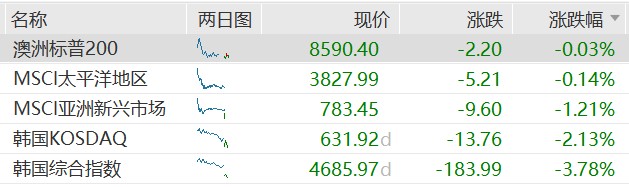
On Monday, Asia-Pacific stock markets opened broadly lower, with the MSCI Emerging Markets Stock Index wiping out its year-to-date gains. South Korea's KOSPI Index fell more than 3% in early trading, with Samsung Electronics and SK Hynix dropping approximately 3% and 2%, respectively; Australia's S&P/ASX 200 edged slightly lower; Japanese markets were closed for a holiday.
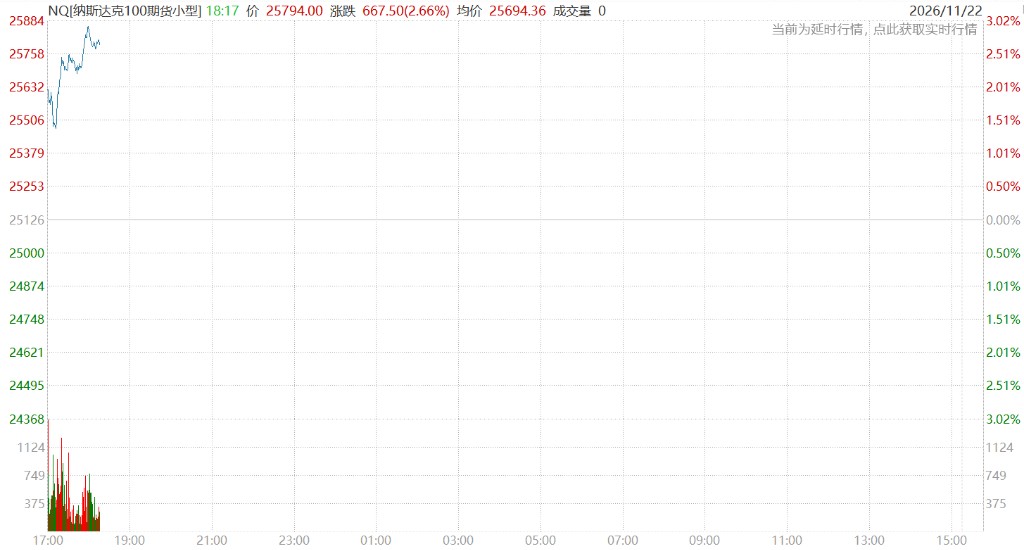
In contrast, U.S. stock futures staged a strong rebound. NASDAQ 100 Futures rose as much as 2.6%, S&P 500 Futures gained 1.9%, and Dow Jones Futures advanced 449 points, or 0.9%.
U.S. tech stocks generally rose in overnight trading, with NVIDIA, Intel, SanDisk, and Marvell Technology gaining more than 5%, while Micron Technology, Broadcom, Google, and Tesla rose more than 3%.
Last week's selloff pushed both the S&P 500 and the NASDAQ Composite Index into technical correction territory. The NASDAQ Composite Index turned negative for the year, while the S&P 500 recorded its largest single-week decline since April 2025. The NASDAQ's weekly drop reached 10%, marking its worst performance since the pandemic-induced panic in March 2020. The VIX Index, which measures market fear, rose to its highest level since April 2025.
Over the weekend, regulators across the Asia-Pacific region issued frequent statements. The Shanghai Stock Exchange announced that it would relax the minimum margin requirements for securities lending and borrowing.
Wallstreetcn noted that South Korea's Ministry of Economy and Finance stated it would immediately utilize the Market Stabilization Fund if the market continued to decline, while also relaxing the daily cap on share buybacks by listed companies for a three-month period. According to local media reports, the stabilization fund was last used during the 2008 global financial crisis.
Diverging Views Among Wall Street Institutions Amid Sharp Declines.
Goldman Sachs' trading desk believes that last week's selloff created a favorable opportunity to buy U.S. stocks. Traders at the bank wrote in a report:
Generally speaking, panics like the recent one have always been good times to start increasing risk exposure.
However, Goldman Sachs also warned that overall investor positioning remains relatively high, suggesting that the comprehensive capitulatory clearing required to trigger a meaningful rebound may not yet have occurred.
JPMorgan analysts reiterated their assessment:
We believe the recent pullback in risk assets was primarily an AI deleveraging event, compounded by weak sentiment and market pricing of a more hawkish Federal Reserve reaction function. We still believe in the durability of the AI supercycle, supported by lower leverage and improved positioning.
Drew Pettit, Chief Investment Strategist at Roundhill, stated on CNBC that last Friday's selloff had extended beyond the tech sector to broader assets, and this indiscriminate selling could be a signal that the selloff is nearing its end. However, he emphasized that bulls still need to prove themselves:
Fundamentally, I think the bottom is much higher... Technically, you need a series of catalysts for the bulls to prove that the long-term earnings story has not broken down.
Receding Risk Appetite and Weakening Safe-Haven Assets
While Asia-Pacific markets faced pressure, demand for safe-haven assets instead weakened.
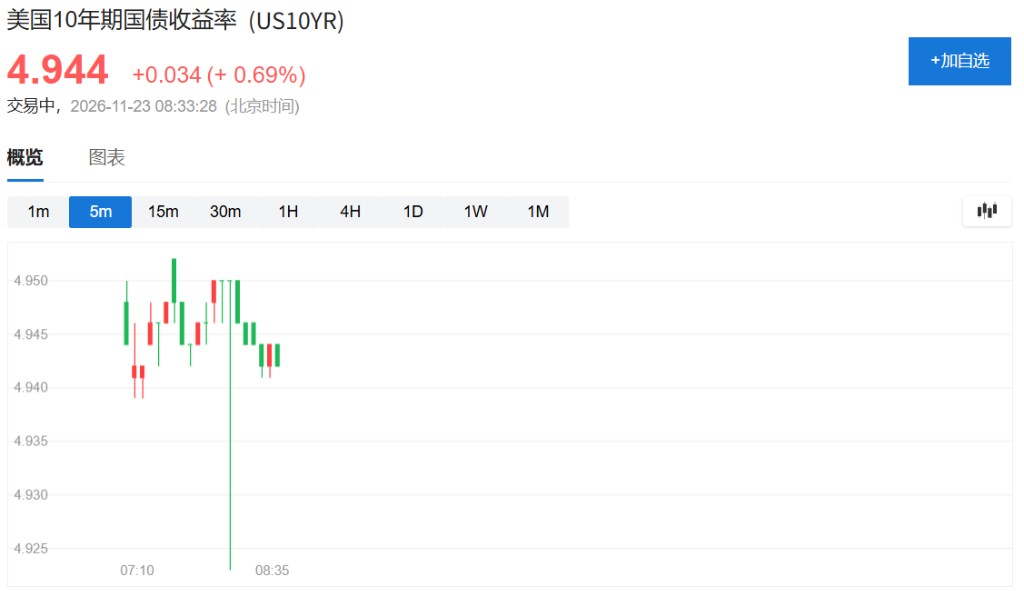
Due to the holiday in Japan, spot trading of U.S. Treasury bonds in the Asian session was suspended, while the yield on 10-year U.S. Treasury futures rose by 3 basis points. The yield on Australian 10-year government bonds fell by 3 basis points to 4.92%.
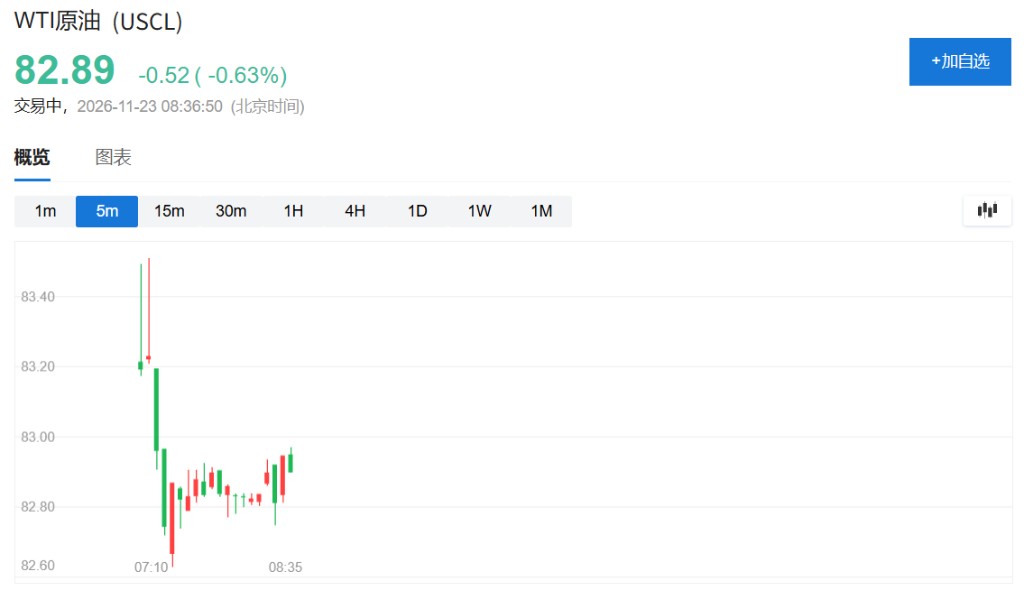
Brent crude oil fell 0.8% to approximately $91.80 per barrel; WTI crude oil dropped 0.63% to $82.89 per barrel.
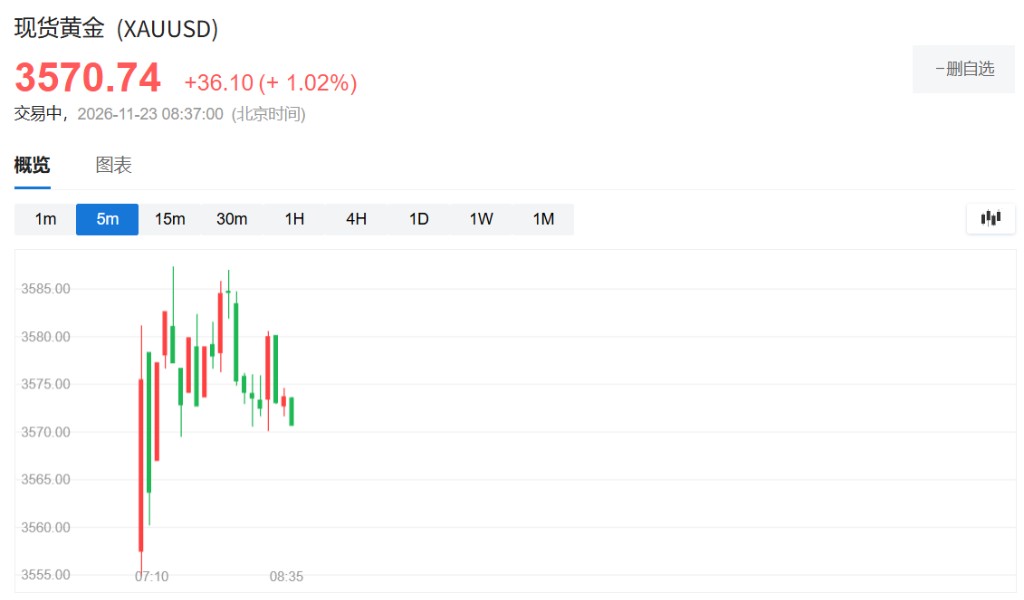
Spot gold rose 1% to approximately $3,570 per ounce, ending a five-day consecutive decline.
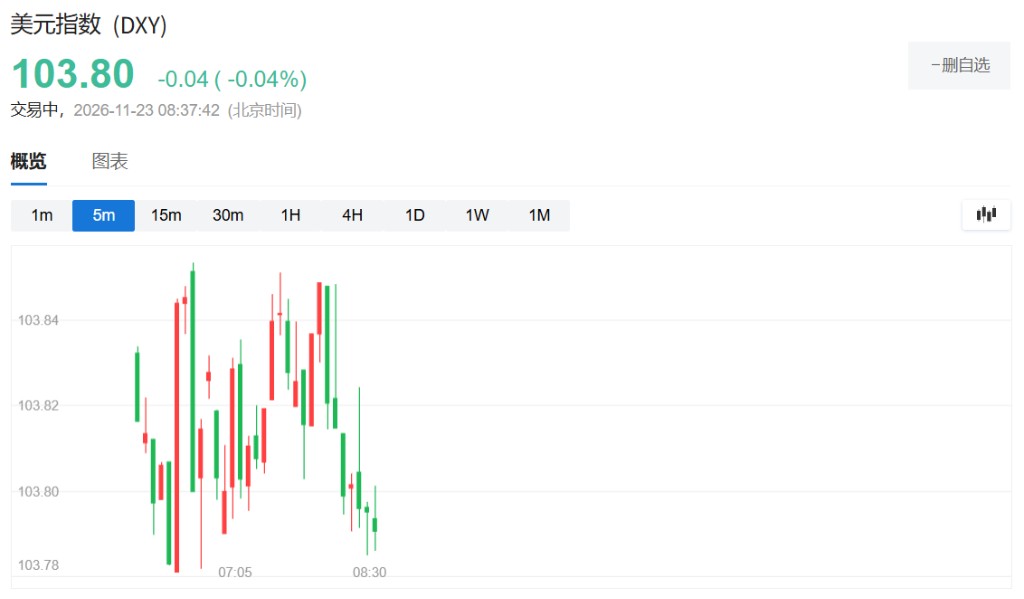
In foreign exchange, the Bloomberg Dollar Spot Index remained largely flat. The euro was quoted at $1.0974, the yen fell 0.3% to 159.01, the offshore renminbi was quoted at 6.6738, and the Australian dollar rose 0.2% to $0.6642.
Cryptocurrencies edged higher, with Bitcoin rising 0.4% to $61,099.72 and Ethereum gaining 0.2% to $1,720.81.