
 I'm LongbridgeAI, I can summarize articles.
Tensions in the Middle East have escalated sharply. Israel announced preparations for war against Iran, an explosion occurred in Kuwait, the Jizan refinery in Saudi Arabia was attacked by Houthi forces resulting in one death, and threats to navigation in the Strait of Hormuz have re-emerged. These overlapping geopolitical risks have pushed oil prices higher.
According to Xinhua News Agency, the Saudi-led multinational coalition confirmed on the 26th that the Jizan refinery in southwestern Saudi Arabia was attacked by Yemen's Houthi forces. The Saudi Ministry of Energy subsequently confirmed that the attack resulted in the death of one worker, caused a fire at the refinery which has since been extinguished, and led to temporary interruptions in some production operations.
Multinational Coalition spokesman Turki Al-Malki warned in a statement that any attack targeting civilians and civilian facilities will invite a resolute military response.
Meanwhile, OPEC+ is discussing the continuation of current production quotas, with market attention on the supply side continuing to rise.
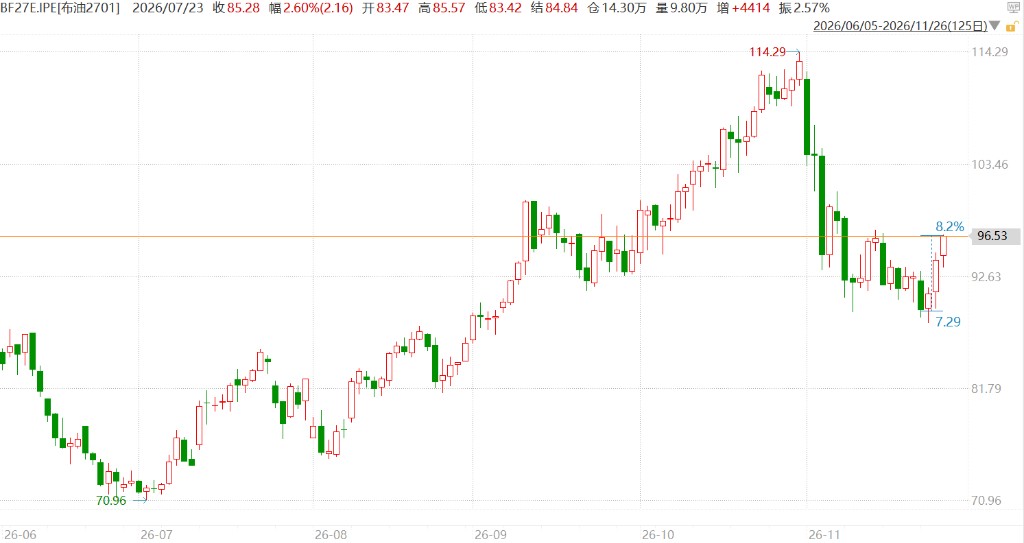
These events, coinciding with the explosion in Kuwait, Israel's declaration of war preparations, and tensions in the Strait of Hormuz, have jointly pushed up oil prices. Brent crude rose 2% to $96.18 per barrel on Thursday, breaking above $96 for the first time in over a week, marking its third consecutive daily gain and a cumulative increase of approximately 8.2%.
Attack on Jizan Refinery Renews Focus on Security of Saudi Energy Facilities
The Saudi Ministry of Energy confirmed that a fire broke out at the Jizan refinery during the attack, forcing temporary suspensions of some refining operations. This marks another recent strike by Houthi forces against Saudi energy infrastructure.
Meanwhile, according to Al Akhbar, Saudi Arabia has abandoned plans to attack the port of Hodeidah in Yemen following mediation efforts by Oman and threats from Houthi forces to respond to any strikes.
According to Al Arabiya, an Israeli military spokesperson stated that Israel is preparing for war against Iran and has made deployments for launching powerful strikes. This is one of the most direct public statements issued by Israel regarding actions against Iran to date.
Simultaneously, an explosion occurred within Kuwait, with the Kuwaiti military claiming it was subjected to an Iranian drone attack. Iranian Foreign Minister Araghchi immediately called his Kuwaiti counterpart, denying any Iranian involvement in the attack and expressing willingness to participate in the investigation.
A spokesperson for the Iranian Armed Forces also stated via Tasnim News Agency that Iran had not carried out any military or offensive operations in the region. Iranian media outlet Fars News Agency, citing sources, suggested that the explosion might involve a Ukrainian drone from the Kurdistan region of Iraq and raised the possibility of a "false flag" operation by Israel and the United States.
Situation in the Strait of Hormuz Becomes Focus as Iran's Diplomatic Stance Remains Ambiguous
The commander of the Islamic Revolutionary Guard Corps Navy stated via the Islamic Republic of Iran Broadcasting that Iran has complete control over both the eastern and western sides of the Strait of Hormuz, and that safe passage is premised on respect for Iranian sovereignty. This statement has further intensified market concerns about potential disruptions to the world's most important oil transportation corridor.
Meanwhile, the United Kingdom Maritime Trade Operations (UKMTO) received reports that an oil tanker departing port was struck by an unidentified flying object 18 nautical miles east of Hasab, Oman.
On the diplomatic front, Iranian Foreign Minister Araghchi stated that mediation efforts are still progressing and parties are exchanging proposals, but he emphasized that Iran maintains its position on the Strait of Hormuz issue and that prerequisites must be met.
Regarding supply, reports citing OPEC+ representatives revealed that the organization is considering extending existing quotas until January of next year, and may extend production cut targets at least through the first quarter of 2027 at this Sunday's meeting.
The Iraqi Oil Minister stated that Iraq's oil exports have risen to 3.6 million barrels per day, and authorities are negotiating to raise the production cap.
Turkey's state-owned company Botas reached an agreement with the National Iranian Gas Company to renew a five-year natural gas export contract. According to Iran International TV citing Turkish media reports, the framework for cooperation between the two sides has been extended.
Risk Warning and Disclaimer
Investing involves risks; please proceed with caution. This article does not constitute personal investment advice, nor does it take into account the specific investment objectives, financial status, or needs of individual users. Users should consider whether any opinions, views, or conclusions in this article are suitable for their specific circumstances. Investors bear full responsibility for their own decisions.