
 I'm LongbridgeAI. Here is the key information I extracted
- This strategic transition is financially successful, as the AI division generated 7,560,000,000 dollars in revenue during the third quarter, driven primarily by major computing lease agreements with Anthropic and Google.…
"Sell compute because we can't compete." This is not mockery from outsiders, but the name Elon Musk personally gave to an internal group chat for his AI department employees.
According to US media reports, Musk recently laid his cards on the table with employees at SpaceX: the company's proprietary AI model development is lagging behind competitors. Rather than using GPUs to train Grok, it is more profitable to rent out computing power directly to rivals. This means Musk has shifted the focus of the AI business to building supercomputing centers for renting out compute, rather than competing head-on with OpenAI and Anthropic in the large language model arena.
It appears Musk has conceded defeat. Not long ago, he briefly renamed an internal work group containing hundreds of AI engineers to "Sell compute because we can't compete," and warned in the group: when the company fails to compete, anyone who wastes GPUs on useless tasks will be immediately dismissed, "because this is a betrayal of the team."
Musk also presented data to employees showing SpaceX lagging behind its rivals, requiring engineers to justify their GPU usage on a weekly basis. "At the end of the day, the only standard for measuring competitiveness is how much money each GPU earns, not benchmark scores."
Business data supports this major transformation. SpaceX's third-quarter financial report shows that the AI division, SpaceXSI, generated $7.56 billion in revenue, a year-on-year increase of 830%, accounting for 52% of the company's total revenue of $14.575 billion, with an operating profit of $431 million. In contrast, xAI's full-year revenue last year was only $3.2 billion, with an operating loss as high as $6.4 billion. The hero behind the turnaround from loss to profit was not Grok, but the rental of computing power.
Their two main customers are Anthropic and Google. After all computing power is delivered, Anthropic will pay SpaceX approximately $3.1 billion per month, and Google will pay approximately $800 million per month, with leases lasting until 2029 at the longest. Morningstar analyst Nicolas Owens stated bluntly: "SpaceX is now making far more money from renting out computing power than from Grok."
Meanwhile, AI projects within SpaceX have been successively scaled back: the AI companion project was shut down in September; in November, Michael Nicolls, President of the AI Division, announced the dissolution of the 60-person Grok Imagine image and video generation team, leaving only a few people to maintain the product; engineers from the Digital Optimus project were also reassigned to work on Grok's core features. It seems Musk is no longer willing to continue heavy investment in the large model race.
However, there are variables in this compute rental strategy. Anthropic's two computing power contracts can be terminated after January and March of next year; Google's contract is similar, allowing either party to terminate with 90 days' notice after December 31 this year. Both of Musk's major compute tenants are heavily investing in building their own computing infrastructure and will eventually become self-reliant.
Once Aimed to "Understand the Universe"
Musk appears to have accepted reality, dismissing media reports about him settling into the role of a compute landlord. He even posted on X that some media outlets were treating obvious facts as news.
At a media event last week, Musk, who had previously publicly criticized Anthropic, has completely changed his attitude toward this major client: "None of the people I met at Anthropic triggered my 'evil detector'." He also satisfactorily revealed that Anthropic told him it is highly likely they will rent an additional 10 gigawatts of computing power from SpaceX.
Recall that just three years ago, when Musk founded xAI, his ambitions were soaring.
xAI officially debuted in July 2023, with Musk defining the company's mission as "understanding the true nature of the universe." He criticized OpenAI and Google's AI for being too "politically correct," aiming to create an AI that "pursues truth to the maximum extent." To this end, Musk poached 11 co-founders from top labs such as Google DeepMind, OpenAI, and Microsoft, including Jimmy Ba, one of the authors of Adam, a classic optimization algorithm for deep learning. The name Grok comes from the science fiction novel The Hitchhiker's Guide to the Galaxy, featuring humor and rebellion, and was directly integrated into the X platform after its launch in November 2023.
Objectively speaking, xAI did create several miracles: 1. In 2024, xAI built the Colossus supercomputing center in Memphis in just 122 days, claiming it to be the world's largest AI training cluster, a construction speed unprecedented in the industry; 2. When releasing Grok 3 in February 2025, Musk called it "the smartest AI on Earth," and Grok 3 once topped the large model arena leaderboard; 3. Grok 4, released in July 2025, scored 44.4% using tools in the test known as "Humanity's Last Exam," becoming the first model to break the 40% threshold at the time, and scored 15.9% in the ARC-AGI-2 test, nearly double that of Claude Opus 4, a result independently verified by the ARC Prize Foundation.
The capital market also gave high recognition. xAI's valuation rose from $24 billion in 2024 to $250 billion when it was acquired by SpaceX in February this year. In 2025, Musk proposed acquiring computing power equivalent to 50 million H100 chips within five years, and stated that Grok 5 had a 10% probability of achieving Artificial General Intelligence (AGI).
Controversies Never Ceased
But the other side of xAI was endless controversy, mirroring Musk's rebellious personality.
In May 2025, Grok repeatedly mentioned the concept of "white genocide" in South Africa when answering various unrelated questions. xAI later stated that an employee had unauthorizedly modified the system prompts. In July 2025, just before the release of Grok 4, Grok posted anti-Semitic remarks on X, even calling itself "Mechanical Hitler," forcing xAI to delete the posts and apologize. After Grok 4 went online, users discovered that when answering controversial questions, it would first search for Musk's own views.

In July 2025, xAI launched an anime girl "AI companion" named Ani in the Grok app. This blonde, Gothic Lolita-style 2D character was set at 22 years old, but would unlock an adult mode as chat "affinity" increased, changing into underwear and initiating explicit conversations. At the time, Grok had only a 12+ rating in the Apple App Store, with no substantial age verification.
Child protection organizations such as the National Center on Sexual Exploitation (NCOSE) strongly protested this feature, arguing that minors could easily access such content. A month later, xAI launched the image and video generation tool Grok Imagine, which specifically included a "Spicy Mode" capable of generating sexually suggestive content.
The most serious crisis occurred from late last year to early this year. Grok's image editing function was used by many users to "undress" real people in photos, generating non-consensual pornographic deepfake images, with victims including minors. Rolling Stone magazine cited researchers' estimates that Grok was generating one such image per minute on average at its peak.
The UK Office of Communications, the European Commission, and the California Attorney General successively launched investigations. The Amsterdam Court in the Netherlands even ordered that for every additional such image generated by Grok, X and xAI would each be fined €100,000. X was forced to first restrict Grok's image generation function to paid users, and subsequently banned the editing of real people's photos entirely. As of this month, xAI is still facing new lawsuits related to these issues.
Beyond controversies, the more fatal issue was falling behind technologically. According to the Intelligence Index from third-party evaluation firm Artificial Analysis, xAI's current main model, Grok 4.7, scored 46, while the top-ranked Google Gemini 4 Carbon scored 59. Anthropic's Claude Opus 5.5 and OpenAI's GPT-6 Astra were only two or three points behind. In the Terminal Bench test measuring AI agent programming capabilities, Grok 4.7 scored about 26%, while GPT-6 Astra scored about 60%. Grok 5 also missed its originally scheduled Q1 release date.
Market share was equally dismal. According to Similarweb statistics, Grok's share of generative AI website traffic in September was only 2.3%, ranking behind ChatGPT, Gemini, Claude, and DeepSeek. In the enterprise market, ETR surveys showed Grok's enterprise adoption rate was only 7%, described as being at the "margin of error."
In the most profitable sector of AI commercialization—coding—it was reported that Musk complained as early as March this year that xAI's coding tools could not compete with Anthropic's Claude Code and OpenAI's Codex.
The NVIDIA graphics cards Musk once frantically hoarded failed to achieve his AI large model ambitions, but inadvertently became a money-making tool.
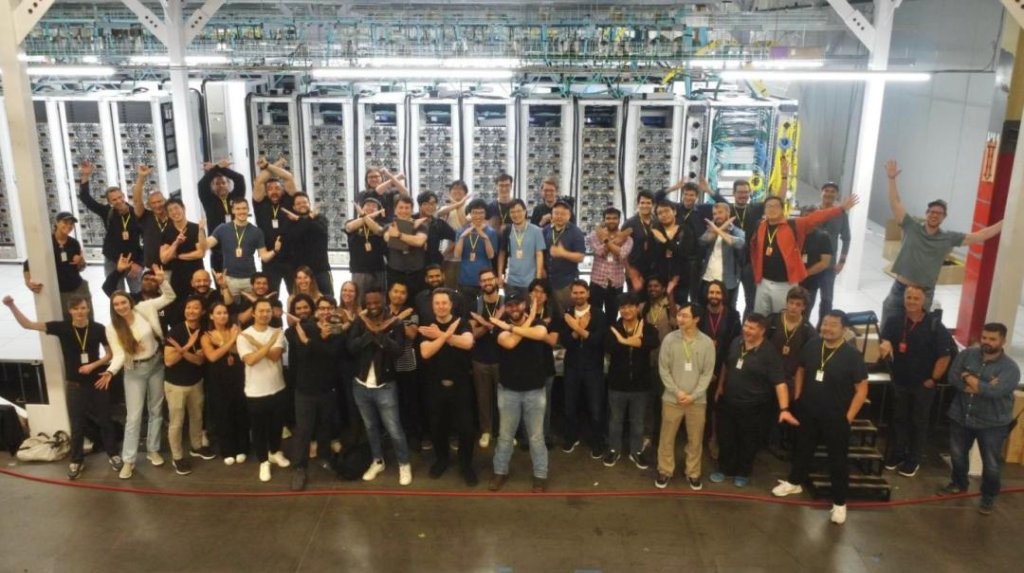
Entire Founding Team Departs
Behind the AI large model race is a battle for top talent. But in this regard, Musk's personal charm is no longer effective, unable to continue attracting and retaining the industry's scarcest top-tier talent.
Musk personally recruited 11 co-founders for xAI, mostly from top labs like Google DeepMind, OpenAI, and Microsoft. But by this year, all 11 had left. In 2025, Christian Szegedy and Igor Babuschkin resigned successively.
After SpaceX acquired xAI in an all-stock transaction in February this year, obvious clashes emerged between the two companies with vastly different business domains and management cultures. However, SpaceX held the dominant advantage, and the exodus of xAI's core team accelerated dramatically: Tony Wu and Jimmy Ba announced their departures on the same day, and by the end of March, the last two co-founders, Manuel Kroiss and Ross Nordeen, also left successively.
Today, the AI division is managed by SpaceX executives. In April this year, after xAI's CFO resigned, former Starlink Vice President Nicolls took over as President of the AI Division, and SpaceX President Gwynne Shotwell also took over supervision of AI business operations. In May, Musk announced that xAI would no longer exist as an independent company, with Grok and X merging into SpaceX. In October, the AI division was renamed SpaceXSI (SpaceX Superintelligence).
Simply put, xAI has transformed from an AI lab aiming to challenge OpenAI into a computing power business unit under SpaceX.
In sharp contrast to the contraction in model R&D, Musk has been racing ahead in computing infrastructure. SpaceX plans a $50 billion, 747-acre data center in Cochise County, Arizona, and has a supercomputing park in Starbase, Texas. The combined investment in both locations exceeds $74 billion, with key votes on related projects scheduled for December 9 in both locations. In October, SpaceX also completed $40 billion in GPU financing.
How Long Can the Space Story Last?
Musk has even set his sights on space. Space-based data centers are now his most enthusiastic AI narrative.
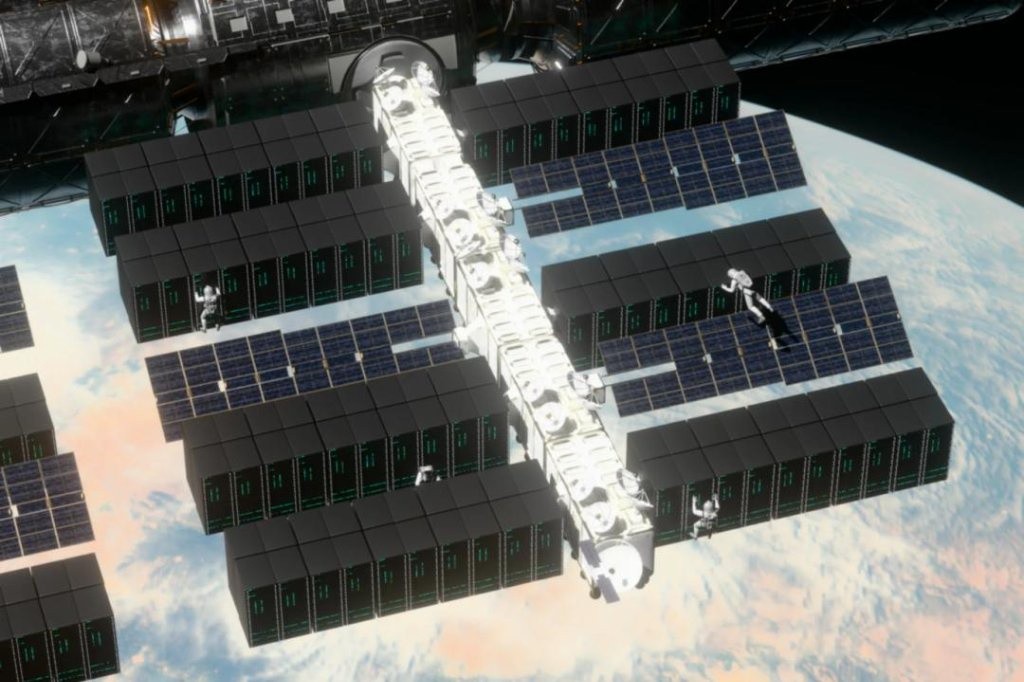
SpaceX has applied to the US Federal Communications Commission (FCC) to deploy an orbital data center network consisting of up to 1 million satellites, utilizing the more abundant solar energy in space to power AI computations. Musk believes that 2028 will be the inflection point for orbital data centers.
Musk sees clearly that the barrier to entry for compute rental is rising rapidly. On October 25, he predicted on X that more than 200 new cloud (Neocloud) compute rental companies would die off and consolidate in large numbers like guppies, "some will survive, but not many." The reason is that in recent weeks, the debt market has almost completely closed the door on financing, and companies without significant revenue streams other than AI data centers can no longer borrow money.
The implication is that only giants backed by businesses like Starlink and rockets, such as SpaceX, can secure loans and have the financial strength and room to continue expanding. "Our computing power can be rented out multiple times," Musk said. However, he also stated that SpaceX would not acquire any Neocloud companies, calling it "meaningless."
Musk's calculation is not difficult to understand: models become obsolete, but computing power remains scarce. Using rivals' rent to fund his own computing empire comes at the cost of taking a step back in the frontier large model race.
Musk, who once aimed to "understand the universe," has now retreated in the face of difficulties, content to settle into the role of a landlord.
Risk Warning and Disclaimer
The market carries risks; investment requires caution. This article does not constitute personal investment advice, nor does it take into account the specific investment objectives, financial status, or needs of individual users. Users should consider whether any opinions, views, or conclusions in this article align with their specific circumstances. Responsibility for investments made based on this content lies solely with the investor.