

$SBS Transit(S61.SG)
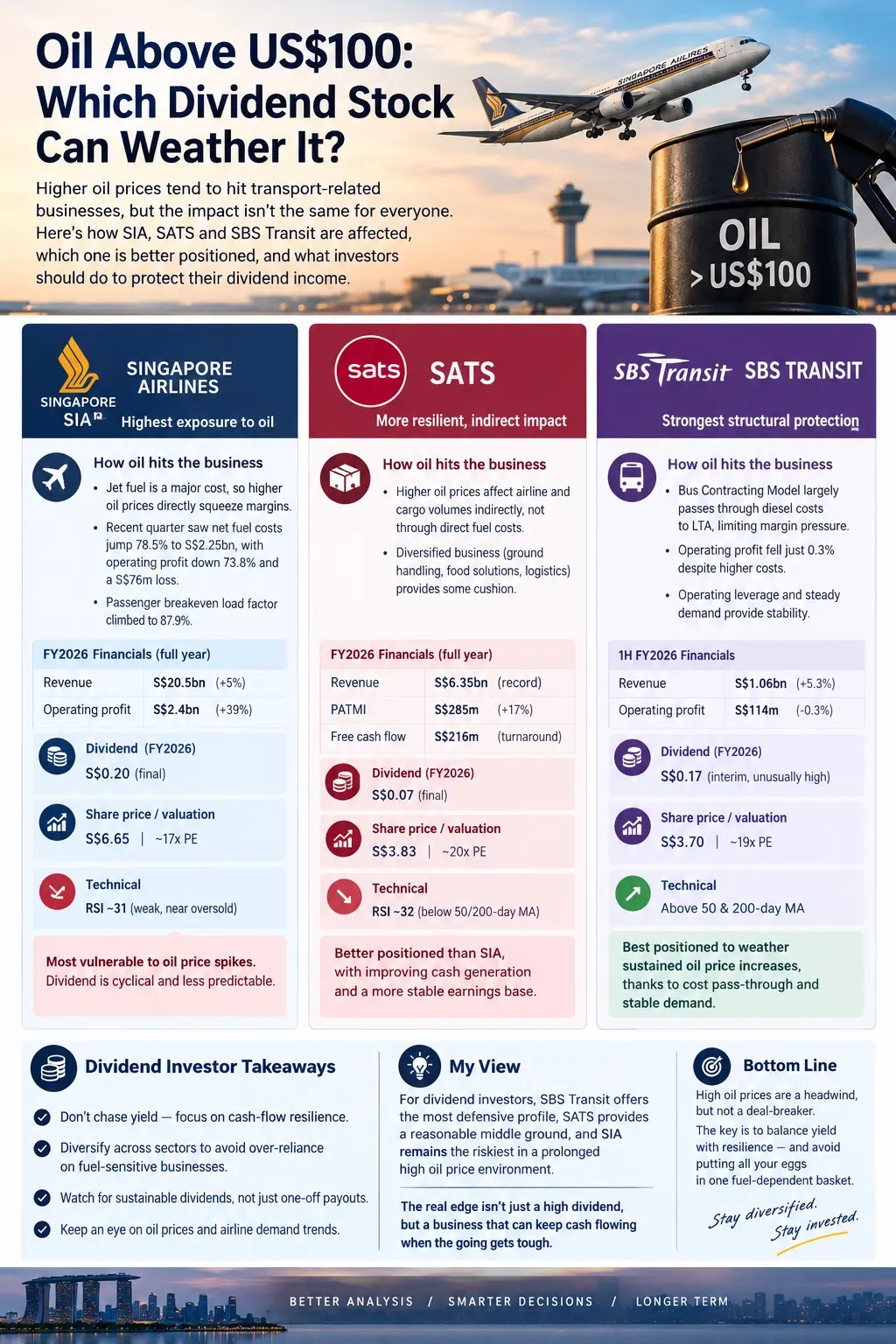
Oil above US$100 is exposing a big difference between Singapore’s transport plays: SIA, SATS and SBS Transit may all face higher energy costs, but the earnings impact is far from equal.
SIA is taking the hardest hit. FY2026 revenue rose 5% to S$20.5bn and operating profit jumped 39% to S$2.4bn, but the latest quarter shows how quickly oil can change the picture. Net fuel costs surged 78.5% to S$2.25bn, pushing operating profit down 73.8% and the group into a S$76m loss. Its passenger breakeven load factor has also climbed to 87.9%. At S$6.65, the stock trades at about 17x earnings, while RSI near 31 suggests it is approaching oversold territory.
SATS looks more resilient. FY2026 revenue reached a record S$6.35bn, PATMI rose 17% to S$285m and free cash flow turned positive at S$216m. Oil hurts indirectly through airline and cargo volumes rather than directly through jet fuel. At S$3.83, valuation is around 20x earnings, while RSI near 32 and the price below its 50- and 200-day averages point to near-term pressure.
SBS Transit has the strongest structural protection. Its Bus Contracting Model largely passes diesel costs through to LTA. 1H FY2026 revenue rose 5.3%, while operating profit slipped just 0.3%. At S$3.70, it trades around 19x earnings, with the share price above its 50- and 200-day averages.
For dividend investors, my view is to prioritise cash-flow resilience over headline yield. SIA’s dividend is more cyclical, while SATS offers improving cash generation. SBS Transit appears best positioned to weather sustained oil inflation.
The key defence is diversification: don’t let one fuel-sensitive business become the foundation of the income portfolio.