longbridgelongbridge
  • Platform Features
    Features
    Investment ProductsPrivate Wealth ManagementTrading ToolsMarket Data ServicesAnalysis ToolsNews ServicesFor Developers
    Account Types
    For IndividualsFor Institutions
  • Café
longbridge
© 2026 Longbridge|Terms of ServicePrivacy Policy
Marina Bay

Marina Bay

Traded Value
3Following17Followers278Likes & Bookmarks
Marina Bay
Marina Bay
ArticlesOriginalFollowingFollowersStocks mentioned

Who to follow

M
Marina BayJul 23 at 01:50 PM

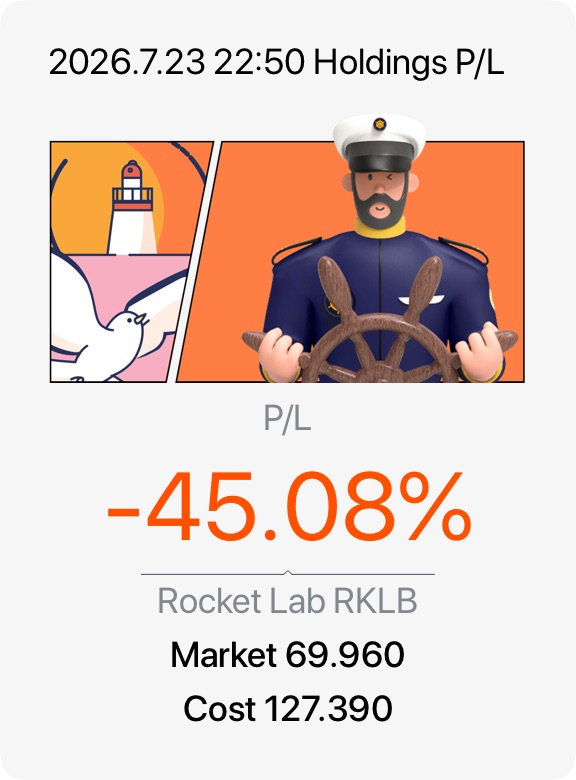
$Rocket Lab(RKLB.US)has seen a mix of constructive company-specific developments in recent days amid an ongoing stock correction. As of July 23, 2026, shares were trading around roughly 54% below the May peak, after a multi-month pullback driven by SpaceX IPO-related sector rotation, valuation concerns, earlier insider selling, and broader market pressures.

The most notable positive catalyst is a $266 million firm-fixed-price contract awarded by the U.S. Space Force (Space Systems Command) around July 20–21 for 12 suborbital launches under the HASTE program, primarily supporting hypersonic and missile-defense testing from the Pacific Spaceport Complex in Alaska. The work runs through the end of 2028, with options for six additional launches and roughly $112 million obligated upfront. This expands Rocket Lab’s defense backlog and further validates its responsive/suborbital launch capabilities.

Separately, the Space Force raised the ceiling on its National Security Space Launch (NSSL) Phase 3 Lane 1 contract vehicle from $5.6 billion to $17 billion. Rocket Lab is one of the seven qualified vendors (alongside SpaceX, ULA, Blue Origin, and others), which meaningfully increases potential future national security launch task-order opportunities through fiscal 2029.

@Captain's Treasure
图片 1,共 1 张
Rocket Lab

Rocket Lab

USRKLB

Trade Showcase: Trade, Show & Earn Rewards!
M
Marina BayJul 22 at 02:43 PM

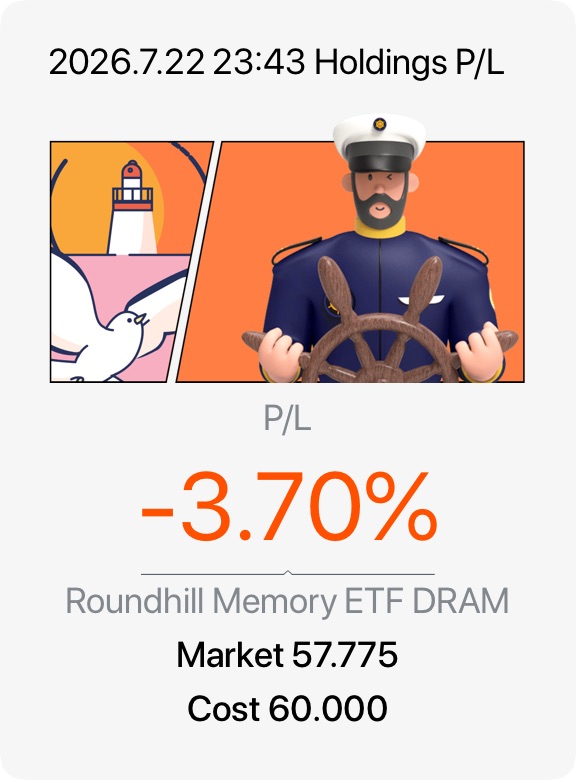
$Roundhill Memory ETF(DRAM.US)’s concentrated, pure-play structure makes it a high-volatility vehicle, more amplified than broad semiconductor ETFs. It tracks the AI-memory narrative tightly but inherits the sector’s historical cyclicality. Recent action shows classic “buy the rumor / sell the news or guidance” behavior mixed with genuine profit-taking after a parabolic phase.

The July 21 rebound occurred against a backdrop of still-elevated physical prices and ongoing shortage commentary, but after-hours/pre-market quotes around that period showed some giveback, underscoring continued two-way risk.

This pattern aligns with the broader AI hardware / HBM customization and demand cycle discussions (structural token-throughput driven demand potentially differentiating from traditional DRAM cycles, alongside capacity and contract dynamics). Volatility is likely to remain elevated near term around earnings, guidance, and any shifts in hyperscaler capex signals.

@Captain's Treasure

图片 1,共 1 张
Roundhill Memory ETF

Roundhill Memory ETF

USDRAM

Trade Showcase: Trade, Show & Earn Rewards!
M
Marina BayJul 21 at 03:18 PM

$PDD(PDD.US) is statistically extremely cheap. After subtracting its large cash holdings of roughly $60 billion (about 60 percent of market cap), the company trades at only around three times forward operating profits and a similar multiple of free cash flow. A formal valuation model produces a base-case intrinsic value near $100 per ADR against a then-current price in the mid-$70s, supported by annual free-cash-flow generation of around $15 billion. The domestic business is credited with a differentiated, impulse-driven model built on team buying, heavy gamification, the absence of a shopping cart, very high purchase frequency, and a focus on value-conscious shoppers in lower-tier Chinese cities. This approach enabled the company to overtake larger competitors in key categories and become a significant player in grocery.

At the same time, there is deep unease about the company’s opacity and the limited quality of information available to outside investors. Disclosures remain minimal: there are no meaningful segment breakdowns between the core Chinese marketplace, grocery operations, and the international platform; earnings discussions offer little substance; and management provides almost no forward guidance. When operating margins compressed from the low-20s to around 18 percent, the causes, whether temporary investment or lasting competitive pressure, could not be diagnosed with any confidence. This black-box quality is seen as especially problematic once growth slows, because owners cannot properly assess problems or capital-allocation decisions.

@Captain's Treasure

图片 1,共 1 张
PDD

PDD

USPDD

Trade Showcase: Trade, Show & Earn Rewards!
M
Marina BayJul 20 at 01:42 AM

$Alibaba(BABA.US)holds a significant equity position in Moonshot AI, the developer of the Kimi LLM. The company emerged as one of Moonshot’s largest and earliest institutional backers through a landmark February 2024 funding round that Alibaba led. In that transaction, Alibaba invested approximately $800 million as part of a roughly $1 billion round, securing an approximately 36 percent stake at a $2.5 billion post-money valuation, according to the company’s subsequent annual report disclosure.

$Alibaba(BABA.US)continued to participate in follow-on rounds alongside other major investors such as Tencent. These included a Series C round of around $500 million completed near the end of 2025 at roughly a $4.3 billion valuation and an additional financing of approximately $700 million in early 2026. Most recently, in May 2026, Moonshot closed a $2 billion Series D round led by Meituan’s venture arm that valued the company at more than $20 billion; reports on that transaction continued to list Alibaba among the prominent existing backers even as new capital entered the cap table.

The 36% stake referenced in Alibaba’s disclosures has likely been diluted by the substantial capital raises and rapid valuation increases that followed the initial investment. Nevertheless, Alibaba remains one of Moonshot AI’s most notable shareholders and is frequently cited in 2026 coverage as a key financial backer of the fast-growing AI startup. The investment is structured as preferred shares held for financial return rather than operational control; Moonshot continues to operate independently under its founding team, developing its own Kimi models that compete with leading domestic and international systems while Alibaba pursues parallel efforts with its Qwen series. This positions $Alibaba(BABA.US)with meaningful exposure to one of China’s most prominent private AI companies amid the sector’s intense capital inflows and technological progress.

@Captain's Treasure

图片 1,共 1 张
Alibaba

Alibaba

USBABA

Trade Showcase: Trade, Show & Earn Rewards!
M
Marina BayJul 17 at 06:01 AM

$Rocket Lab(RKLB.US)has dropped roughly 55% from its late-May 2026 peak. The decline is largely a high-beta unwind rather than a company-specific operational collapse.

The main catalyst was the post-SpaceX IPO reset. Space stocks had rallied hard on expectations that the listing would lift the entire sector through hype and potential passive inflows. Once SpaceX listed, investors took profits, rotated capital into the newly public giant, and reassessed valuations across the group. The absence of a quick S&P 500 inclusion for SpaceX removed another hoped-for tailwind, accelerating the sector-wide selloff.

Broader market dynamics amplified the move. The stock had risen hundreds of percent over the prior year. High-beta growth names faced profit-taking amid valuation concerns (including AI-related), occasional rate and risk-off pressure, and secondary events such as a Blue Origin test incident that triggered sympathy selling across launch stocks.

@Captain's Treasure

图片 1,共 1 张
Rocket Lab

Rocket Lab

USRKLB

Trade Showcase: Trade, Show & Earn Rewards!
M
Marina BayJul 16 at 05:59 AM

$Roundhill Memory ETF(DRAM.US)is a concentrated fund tracking memory chipmakers, with heavy weights in SK Hynix (~24%), Samsung (~25%), and Micron (~24%). It serves as the main pure-play vehicle for the DRAM/HBM sector driven by AI infrastructure demand.

In mid-July, it dropped sharply. On July 13, SK Hynix shares in Seoul plunged more than 15%, its largest one-day decline in nearly two decades, dragging South Korea’s Kospi down ~9% (triggering a trading halt). US ADRs fell ~8%, peers like Micron dropped 6%+, and the $Roundhill Memory ETF(DRAM.US) saw multi-percent declines amid sector selling. This followed SK Hynix’s blockbuster Nasdaq ADR debut around July 10, which raised over $26 billion and initially fueled enthusiasm.

The main triggers were profit-taking and nuanced guidance rather than collapsing demand. After a parabolic rally earlier in 2026 (the ETF had roughly doubled in weeks at one point on AI memory enthusiasm), investors took gains post-listing. SK Hynix faced analyst revisions on near-term expectations. Key factors included a shift toward multi-year Long-Term Agreements (LTAs) with customers, which stabilize revenue but moderate the aggressive near-term price-hike assumptions previously modeled on spot volatility. SK Hynix’s much higher HBM (High Bandwidth Memory for AI) exposure, around 58% of recent revenue versus lower shares at peers, meant it benefited less from the recent surge in conventional DRAM prices. There was also some caution around the pace of HBM4 ramps. Broader worries about new capacity coming online in 2027–2028 potentially easing the current supply crunch added pressure, alongside high valuations and questions about AI capex durability across semis.

@Captain's Treasure

图片 1,共 1 张
Roundhill Memory ETF

Roundhill Memory ETF

USDRAM

Trade Showcase: Trade, Show & Earn Rewards!
M
Marina BayJul 15 at 06:25 AM

$PDD(PDD.US)via its subsidiary Shanghai Xinpinmu Pudong E-Commerce Co. Ltd., recently acquired the DBS Bank Tower in Shanghai’s Lujiazui financial district for approximately 3.3 billion RMB (~$486 million USD).

This is a 19-story office tower completed in 2009, with ~46,000 sqm total floor area and standard floors of ~2,600 sqm. And it is one of the largest single office-building deals in Shanghai’s bulk commercial property market in the first half of 2026. It was paid for with $PDD(PDD.US)’s own funds (no debt mentioned).

In the past month or so, PDD has acquired two full office buildings (one in Xiong’an New Area and this one in Lujiazui Shanghai), for a combined ~3.6–3.8 billion RMB.

This fits directly into $PDD(PDD.US)’s ongoing “deep transformation” strategy highlighted in their Q1 2026 earnings (in May 2026). They launched a dedicated first-party brand business entity in Shanghai and are committing significant resources (initial ~15 billion RMB mentioned earlier, with longer-term plans scaling toward 100 billion RMB over three years) to build supply chain capabilities, support merchants, and develop their own brands. The new Shanghai office tower provides physical space for these operations in a prime financial hub.

@Captain's Treasure

图片 1,共 1 张
PDD

PDD

USPDD

Trade Showcase: Trade, Show & Earn Rewards!
M
Marina BayJul 14 at 12:13 PM

$Alibaba(BABA.US)has been actively repurchasing shares on the NYSE in late June through early July (e.g., millions of ordinary shares/ADSs for cancellation, with specific reports like ~4.1 million shares bought on July 6 at ~$12.05–$12.25 each). This is part of an ongoing program authorized in 2025. It signals strong confidence in the stock’s value and directly supports the price by reducing outstanding shares.

At the same time, it climbed sharply after hitting lows, fueled by:

Resolution of the $600M DOJ settlement (non-prosecution deal over historical illegal drug sales issues via its payment processor) removes a major overhang and uncertainty.

Temporary legal relief on the Pentagon Chinese military companies blacklist (a U.S. federal judge lifted a related lobbying ban temporarily while Alibaba’s lawsuit proceeds).

@Captain's Treasure

图片 1,共 1 张
Alibaba

Alibaba

USBABA

Trade Showcase: Trade, Show & Earn Rewards!
M
Marina BayJul 13 at 02:44 PM

$Rocket Lab(RKLB.US)has fallen sharply in recent weeks, declining nearly 45% from its all-time high. This pullback comes after a massive multi-year rally, with the stock still showing strong year-to-date and one-year gains overall, but recent trading has featured multiple consecutive down days amid heightened volatility.

A notable catalyst in early July was heavy insider selling, with CEO Peter Beck disclosing the sale of nearly 3 million shares worth roughly $286 million shortly after another key event. The $8 billion acquisition of Iridium Communications, announced on June 29, initially boosted the stock with a sharp surge and drew highly bullish analyst reactions, as it was seen as a transformative step toward vertical integration with recurring revenue and satellite capabilities. However, short-term sentiment turned more cautious as investors weighed the deal’s financing structure (including a large bridge loan), potential dilution from the stock component, added complexity, and the timing of the CEO’s share sales, which raised questions among some retail investors.

@Captain's Treasure

图片 1,共 1 张
Rocket Lab

Rocket Lab

USRKLB

Trade Showcase: Trade, Show & Earn Rewards!
M
Marina BayJul 10 at 02:23 PM

HBM can and largely is escaping the worst parts of the old DRAM $Roundhill Memory ETF(DRAM.US) cycle, especially while AI/token demand stays strong. It doesn’t kill cycles completely, but it changes their character from violent boom-bust into a much longer, higher-quality growth cycle what analysts are calling an AI memory supercycle.

The mainstream story blames commodity nature.

All chips are basically the same: from price wars to hoarding inventory.

That’s real, but it’s mostly an amplifier, not the root cause. The real structural problem is supply takes forever to adjust:

- Building a new fab costs $10B+ and takes 2–3+ years.

- Once you start, you can’t easily stop or pivot.

- Demand can spike hard (new phones, cloud, pandemic, etc.) then slow down after 1–2 years.

- By the time new supply arrives, the market is often already oversupplied, then prices crash and everyone loses money.

- In downturns, nobody wants to cut production first (prisoner’s dilemma, especially Samsung in the past). So losses get maximized.

This created the classic 2–3 year boom and bust pattern.

@Captain's Treasure

图片 1,共 1 张
Roundhill Memory ETF

Roundhill Memory ETF

USDRAM

Trade Showcase: Trade, Show & Earn Rewards!
M
Marina BayJul 8 at 12:43 PM

Europe imposed a temporary €3 customs duty per item or per tariff classification in a shipment on parcels under €150 from non-EU countries, mainly China. This ends the previous de minimis duty-free exemption for low-value imports. It targets platforms like $PDD(PDD.US) Temu, Shein, and AliExpress, which rely on direct-from-China shipping for ultra-cheap goods.

Negative for European growth and margins. Platforms may pass on costs or absorb them, raising consumer prices. This likely reduces volumes (air cargo forecasts down 10–35%), disrupting the low-price model. Shein is expanding EU warehouses and bulk shipping as mitigation, while Temu faces similar pressures. This adds to existing regulatory scrutiny.

The broader context is that all these policies were aimed at curbing unfair competition with EU retailers and controlling import surges. Similar moves were also made in the US.

@Captain's Treasure

图片 1,共 1 张
PDD

PDD

USPDD

Trade Showcase: Trade, Show & Earn Rewards!
M
Marina BayJul 7 at 01:56 PM

High analyst targets reflect belief in undervaluation and the AI/cloud growth story of $Alibaba(BABA.US), strong prior momentum in cloud/external revenue and AI products. The ban on foreign tools + focus on own models (Qwen, Qoder, robotics) could accelerate self-reliance: a long-term positive amid China policy support. Legal wins like the temporary ban lift reduce immediate pressure.

Persistent geopolitical risks (Pentagon list, US-China AI/tech war), potential further restrictions, and weak China consumption like the soft 618 data, pressure e-commerce margins. Heavy AI investments continue weighing on near-term profits.

$Alibaba(BABA.US)has priced in a lot of bad news and appears oversold to some observers. A rebound is plausible if AI execution delivers, China macro stabilizes, or tensions de-escalate, but elevated risks mean it could stay range-bound or dip on new headlines. Patient investors see huge upside in the AI bet despite near-term pain.

@Captain's Treasure

图片 1,共 1 张
Alibaba

Alibaba

USBABA

Trade Showcase: Trade, Show & Earn Rewards!
M
Marina BayJul 6 at 12:07 PM

$Rocket Lab(RKLB.US)has seen a sharp rebound in late June and early July 2026 following its major $8 billion acquisition of Iridium Communications, announced around June 29. The cash-and-stock deal values Iridium at about $54 per share, a 24% premium, with shareholders receiving $27 cash plus Rocket Lab shares subject to a collar. Expected to close in mid-2027 pending approvals, the transaction combines Rocket Lab’s launch vehicles and space systems expertise with Iridium’s global L-band satellite constellation, licensed spectrum, network infrastructure, and recurring revenue from over 2.5 million subscribers across government, defense, aviation, maritime, and commercial markets.

Rocket Lab is funding the cash portion partly through a $3.6 billion bridge loan from Deutsche Bank and Wells Fargo, plus cash on hand and other financing. Strategically, this positions the company as a more vertically integrated space powerhouse, diversifying beyond lumpy launch revenues into higher-margin, recurring satcom while leveraging its rockets to support and expand Iridium’s network, directly challenging SpaceX/Starlink dominance in the orbital economy.

@Bridge Buzz SG

图片 1,共 1 张
Rocket Lab

Rocket Lab

USRKLB

Trade Showcase: Trade, Show & Earn Rewards!
M
Marina BayJul 4 at 01:18 AM

Unlike traditional DRAM $Roundhill Memory ETF(DRAM.US), where DDR3 remained in use for about 15 years before DDR5 arrived, HBM upgrades much faster — roughly every two years per generation, with the pace even accelerating recently. HBM size and bandwidth continue to roughly double with each new generation, which matches the expected pattern.

Nvidia’s GPU bandwidth has been rising exponentially across generations: from 2 TB/s to 3.5 TB/s, then 4.8 TB/s, 8 TB/s, and now reaching 22 TB/s. Because inference token throughput scales linearly with HBM speed, the older generations quickly become uneconomical to use. Companies have a strong incentive to adopt the latest HBM, even if it costs more, because the gains in token throughput are significantly larger.

In the current “token factory” era, greater technical upgrades in HBM bandwidth directly translate into higher profits. This fast pace of improvement creates a situation similar to CPUs: older products lose value very quickly, making it less attractive to hold large inventories of previous-generation HBM. For example, HBM3 has already depreciated sharply and is rarely used in mainstream products today.

As a result, HBM manufacturers have rationally shifted their strategy. Instead of competing mainly on current production volume and fighting for market share through quantity, they now focus on technological leadership — improving stability, increasing speed, and securing qualification wins for the next generation on Nvidia platforms. This quality-focused competition helps them avoid the classic “prisoner’s dilemma” of traditional memory cycles, where companies hesitate to cut production during downturns for fear of losing share.

@Bridge Buzz SG

图片 1,共 1 张
Roundhill Memory ETF

Roundhill Memory ETF

USDRAM

Trade Showcase: Trade, Show & Earn Rewards!
M
Marina BayJul 3 at 01:43 PM

Another major factor is strong structural growth in demand, and this one is clearly satisfied.

The most straightforward reason is Nvidia’s need to keep upgrading its “token factory” hardware to deliver higher token throughput. This drives extremely fast generational upgrades in both HBM bandwidth and HBM capacity (size), leading to exponential demand growth.

As concluded in the earlier AI semiconductor analysis, token throughput equals HBM size multiplied by HBM bandwidth, and this roughly doubles with each new generation. On average, HBM size per GPU is growing more than 40% every year.

This demand curve is rising so steeply that it is very difficult for the supply side to keep up. Even with 14% growth in wafer production and 9% improvement in memory density, the overall $Roundhill T-Rex 2X Long DRAM Dly TrgtETF(RAM.US)DRAM supply growth simply cannot match the pace of AI-driven HBM demand.

In the hardware architecture, the attention stage’s KV cache requires both extremely high bandwidth and very large memory capacity. This gives HBM a unique and irreplaceable position. Even if HBM prices rise three to five times, the extra token throughput gained by investing in more HBM is still far more cost-effective than spending the money anywhere else.

Other memory technologies, such as SRAM, HBF, CXL, and PIM, are currently unable to compete directly with HBM in the critical KV cache and attention workloads. There is no viable replacement in sight for at least the next five years, and possibly much longer.

@Bridge Buzz SG

图片 1,共 1 张
Trade Showcase: Trade, Show & Earn Rewards!
M
Marina BayJul 2 at 01:19 PM

HBM does have elements of customization and co-design with companies like Nvidia, but the level is not very strong. The real customization is limited mainly to the packaging and the base die. The many layers of $Roundhill Memory ETF(DRAM.US) DRAM dies stacked on top remain fully standardized according to JEDEC specifications, meaning they are essentially the same for all customers.

For example, when Samsung’s HBM3E failed to pass Nvidia’s qualification and its share dropped dramatically from around 60% to 20%, the company did not scrap the production. Instead, it redirected that capacity to supply Google’s TPU and AMD. Physically, the HBM3E chips provided to Nvidia are the same as those supplied to AMD and Google, which shows that capacity can still be partially transferred between customers relatively easily.

Looking ahead to HBM4 and future versions, customization is expected to increase. This includes integrating custom logic or cache directly on the base die. In more advanced designs, the HBM4E memory controller and custom die-to-die interfaces can even be built into a logic base die. According to SemiAnalysis, companies such as OpenAI, Nvidia, and AMD are working on their own custom HBM solutions, but these efforts primarily focus on the base die while the upper DRAM layers stay standardized.

Because of the need for close cooperation on packaging, customers are often required to sign long-term agreements. However, since the core DRAM components are standard and production capacity remains somewhat flexible and transferable, the overall customization barrier is only moderate. As a result, HBM is considered only partially customized and counts as roughly half a point in this context.

@Bridge Buzz SG

图片 1,共 1 张
Roundhill Memory ETF

Roundhill Memory ETF

USDRAM

Trade Showcase: Trade, Show & Earn Rewards!
M
Marina BayJul 1 at 05:40 AM

All things go through cycles, and $Roundhill T-Rex 2X Long DRAM Dly TrgtETF(RAM.US)memory is especially cyclical. The main driver is the extremely long lead time for capacity expansion. You simply can’t ramp up production fast enough to avoid mismatches when demand suddenly drops.

There are a few ways to meaningfully reduce or even largely escape traditional boom-bust cycles.

1. Customization: products aren’t interchangeable. Capacity can’t be easily redirected to other customers, so buyers have to sign long-term contracts.

2. Structural exponential demand growth: demand itself grows very steeply and consistently outpaces supply.

3. Rapid generational upgrades: each new generation quickly makes the previous one obsolete.

Hitting even one of these can take some of the sting out of traditional cycles. Hitting two or three can remove most of it.

@Bridge Buzz SG

图片 1,共 1 张
Trade Showcase: Trade, Show & Earn Rewards!
M
Marina BayJun 30 at 06:42 AM

$BitMine Immersion Tech(BMNR.US)is heavily influenced by ETH performance, amplified by operational and financing factors, with moderate correlation to broader macro conditions.

$BitMine Immersion Tech(BMNR.US)exhibits moderate correlation with ETH (around 0.53–0.57), but its treasury strategy, bolstered by recent preferred stock raises and ongoing dip-buying (such as additional tens of millions in ETH), creates a leveraged effect where positive ETH momentum can lead to outsized gains via net asset value growth, while weakness hits harder. Company-specific positives, including the successful launch and dividend payments on its BMNP preferred shares plus progress toward its 5% ETH milestone, provide some fundamental support, yet these have not fully insulated the stock from the prevailing ETH downtrend.

Macroeconomic conditions have added meaningful headwinds, particularly through a hawkish Federal Reserve stance amid resilient U.S. economic data and sticky inflation readings that have tempered expectations for aggressive rate cuts. Higher-for-longer interest rates increase opportunity costs and discount rates for speculative, non-yielding assets like crypto and growth-oriented equities, contributing to tighter liquidity and reduced risk appetite. Geopolitical developments and broader market volatility have compounded this, creating a risk-off environment that weighs on both ETH and $BitMine Immersion Tech(BMNR.US).

@Bridge Buzz SG

图片 1,共 1 张
BitMine Immersion Tech

BitMine Immersion Tech

USBMNR

Trade Showcase: Trade, Show & Earn Rewards!
M
Marina BayJun 29 at 01:24 PM

$Rocket Lab(RKLB.US)experienced a sharp correction this month. This pullback occurred despite strong underlying fundamentals and was driven primarily by sentiment, sector rotation, and technical profit-taking rather than company-specific negatives.

$Rocket Lab(RKLB.US)had surged dramatically into late May (hundreds of percent over 1–3 years), leaving it technically overbought and vulnerable. High valuation multiples (very elevated P/S ratio) made it sensitive to any rotation or risk-off sentiment.

Macro/tech pressures and a general selloff in high-beta growth names amplified the move. Some reports noted insider selling and dilution concerns from an earlier ~$3 billion equity/ATM program as additional headwinds around mid-June.

@Bridge Buzz SG

图片 1,共 1 张
Rocket Lab

Rocket Lab

USRKLB

Trade Showcase: Trade, Show & Earn Rewards!
M
Marina BayJun 28 at 11:26 AM

$PDD(PDD.US) has dropped sharply recently: down significantly from its 52-week high. It’s down roughly 17% in the past month in some measures and has seen sustained selling pressure since late May, trading near the bottom of its range and below key moving averages. The decline stems primarily from the Q1 2026 earnings miss reported on May 27 and related factors, compounded by ongoing analyst revisions and regulatory news.

Heavy strategic investments in supply chain capabilities and a new first-party brand business (plans for RMB 100B+ over three years mentioned in coverage). This is framed as a deliberate deep transformation for long-term resilience, quality, merchant support, and ecosystem value amid external changes, but it pressured near-term margins and profitability.

The drop reflects a classic reaction to disappointing near-term results amid heavy reinvestment, plus fresh regulatory and analyst headwinds. Management’s long-term supply chain/brand transformation story is being tested against short-term profitability concerns and external risks.

@Bridge Buzz SG

图片 1,共 1 张
PDD

PDD

USPDD

Trade Showcase: Trade, Show & Earn Rewards!
M
Marina BayJun 27 at 11:31 AM

$Alibaba(BABA.US)has been declining sharply recently due to a combination of geopolitical shocks, new negative headlines, and ongoing fundamental pressures.

Anthropic accused Alibaba of illicitly accessing its Claude AI models using ~25,000 fake accounts. This has been a fresh catalyst for selling. It adds to concerns about AI ethics, potential legal/regulatory fallout, and execution risks in Alibaba’s heavy AI push.

The Pentagon news created a major exogenous shock in early June, leading to institutional outflows and a higher risk discount. Fresh Anthropic allegations in late June added fuel, pushing the stock to new lows.

AI/cloud growth is real and accelerating (prior quarters showed 30–40%+ external cloud gains with AI as a big driver), but short-term pain from spending + geopolitical noise dominates.

@Bridge Buzz SG

图片 1,共 1 张
Alibaba

Alibaba

USBABA

Trade Showcase: Trade, Show & Earn Rewards!
M
Marina BayJun 26 at 03:53 PM

$Roundhill Memory ETF(DRAM.US)has been one of the most volatile and high-profile thematic ETFs of 2026, tracking global memory/semiconductor companies heavily weighted toward DRAM/HBM players like Micron, Samsung, and SK Hynix. Its price moves closely with the AI-driven memory market boom and any shifts in chip pricing/earnings.

Up massively since inception nearly tripled at peaks, though with sharp pullbacks. For example, it saw a ~15% single-day drop on June 5 after memory stock guidance concerns like Micron, but rebounded strongly later (e.g., +9.95% on June 25.

Early June selloff (15%+ drop) was triggered by guidance misses and memory stock weakness, erasing short-term gains. Broader chip sector sentiment, like Micron earnings, continues to drive swings. Recent rebounds reflect sustained AI optimism.

@Bridge Buzz SG

图片 1,共 1 张
Roundhill Memory ETF

Roundhill Memory ETF

USDRAM

Trade Showcase: Trade, Show & Earn Rewards!
M
Marina BayJun 21 at 02:07 AM

$BitMine Immersion Tech(BMNR.US)’s price performance was mixed but leaning stabilizing after volatility. The preferred sale close, BMNP listing, and first dividend declaration are positive execution signals that reduce uncertainty and show the company is delivering on its capital structure plans. Recent stock upticks align with holdings updates and buying activity. However, $BitMine Immersion Tech(BMNR.US)has seen dips tied to ETH weakness, broader market sentiment, or profit-taking around the raise. High 9.5% preferred dividend cost adds ongoing pressure that must be serviced via staking yields or other means.

More ETH accumulation directly boosts treasury NAV (key valuation driver for these vehicles). Nearing the 5% supply milestone strengthens the narrative. Staking via MAVAN and preferred dividends show revenue/return potential. Analyst targets imply significant room to run if the leveraged ETH thesis plays out (similar to MSTR’s model). Continued buys during dips reinforce conviction.

Price remains highly correlated to ETH (current weakness weighs on it). Fixed high-cost preferred capital creates obligations. Valuation concerns and retail sentiment mixed on X, with some frustration over volatility or execution. Any slowdown in buys or ETH underperformance could pressure the stock. Operational losses persist.

@Bridge Buzz SG

图片 1,共 1 张
BitMine Immersion Tech

BitMine Immersion Tech

USBMNR

Trade Showcase: Trade, Show & Earn Rewards!
M
Marina BayJun 19 at 03:19 PM

$Rocket Lab(RKLB.US)has been under pressure this week. Here are the key drivers based on recent market action and reporting.

SpaceX went public around June 12, 2026, in one of the largest IPOs ever raising ~$75 billion at a massive valuation. This created intense focus and capital inflows into SpaceX itself, leading to profit-taking and rotation out of other public space stocks like $Rocket Lab(RKLB.US), ASTS, LUNR, and SPCE. Many space names dropped 10–40% in the days following as investors reassessed valuations and shifted attention. $Rocket Lab(RKLB.US)was caught in this sell the hype dynamic: pre-IPO excitement had lifted the whole sector, but post-IPO reality triggered selling in peers. Analysts and traders noted SpaceX sucking the oxygen out of the broader space trade.

Besides, $Rocket Lab(RKLB.US)was added to the Nasdaq-100 Index effective on June 22. The announcement triggered a strong pre-market rally (up 7–8%+ at times), but this reversed into profit-taking once regular trading began. One session saw a sharp drop (around 10%+ intraday in reports) as traders who bought the rumor sold the news. Passive index fund buying is expected starting next week, which could provide support, but the immediate reaction was negative.

@Bridge Buzz SG

图片 1,共 1 张
Rocket Lab

Rocket Lab

USRKLB

Trade Showcase: Trade, Show & Earn Rewards!
M
Marina BayJun 18 at 01:29 PM

BNP Paribas on June 16 initiated $PDD(PDD.US) with Underperform rating and $89 price target. Highlights profound domestic challenges, such as China competition, slowing growth signals, and global issues like regulatory, international expansion hurdles. This adds fresh negative momentum.

Bank of America maintained Hold but lowered its price target (recent cuts noted around $113 in some reports). Broader post-Q1 revisions continue, with revenue/profit estimates trimmed. Consensus 12-month target has come down to roughly $118 (still implies meaningful upside from current levels, with highs up to ~$170). Overall rating remains mixed/moderate buy territory, but tone has shifted cautious.

The sell-off has made valuations even more attractive on trailing metrics. Strong cash position funds the transformation without balance sheet strain. If supply chain/first-party investments improve competitiveness, margins, compliance (relevant for EU), and user/merchant value over time, it could support re-rating. Temu’s global scale remains a growth driver. Contrarian views see current levels as an opportunity.

@Bridge Buzz SG

图片 1,共 1 张
PDD

PDD

USPDD

Trade Showcase: Trade, Show & Earn Rewards!