



The technological innovation of Spark Digital Car Key: the next super connection point for smart cars

In September 2023, the stunning launch of Huawei's Mate 60 Pro created significant waves in both the tech and automotive industries.
Discussions about "whether the Mate 60 Pro supports 5G" sparked a wave of teardowns and sales frenzies. The Mate 60 Pro sold out almost immediately upon release, with online orders being snapped up as soon as they were listed.
Beyond that, the phone's popularity unexpectedly boosted the Aito M7 model. With the Mate 60 Pro's push, the new M7 achieved over 60,000 pre-orders within just one month of its launch, becoming a dark horse in the automotive sector.
However, the impact of the Mate 60 Pro goes far beyond this.
Many may not have noticed, but the latest generation of short-range wireless connectivity technology—SparkLink—is also a major highlight of this phone.
Compared to traditional wireless technologies like Bluetooth and WiFi, SparkLink achieves qualitative improvements instability, low latency, and high-precision positioning.
Today, this technology has deeply integrated with digital car keys and may even become the most critical entry point for enhancing user experience in smart cars in the future.
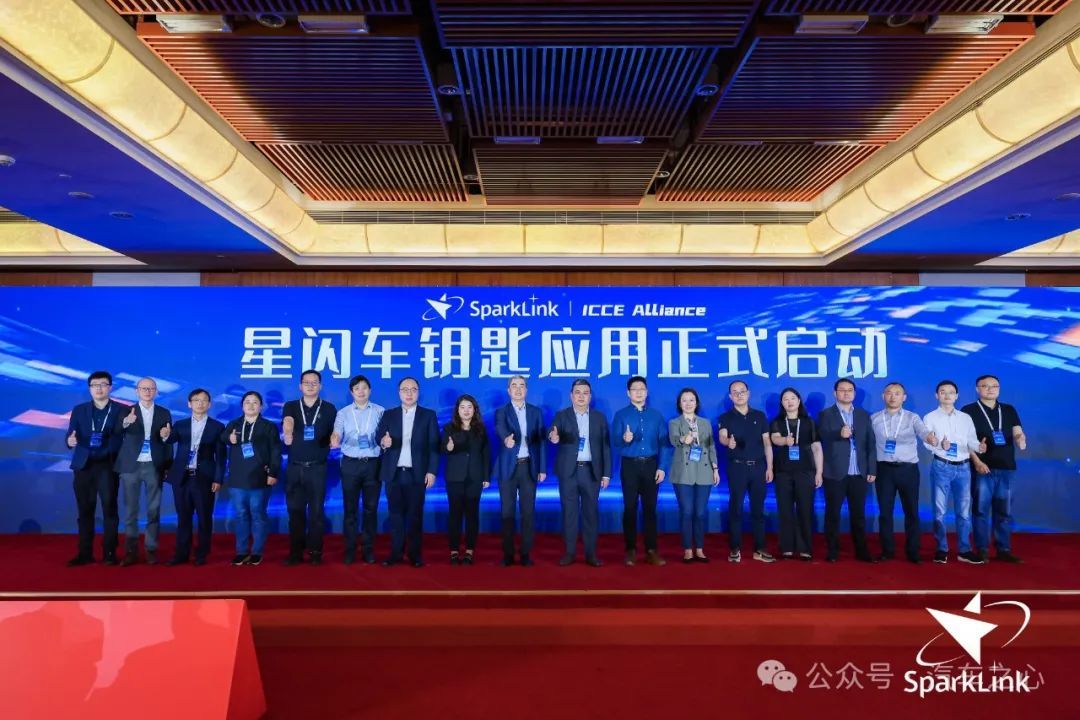
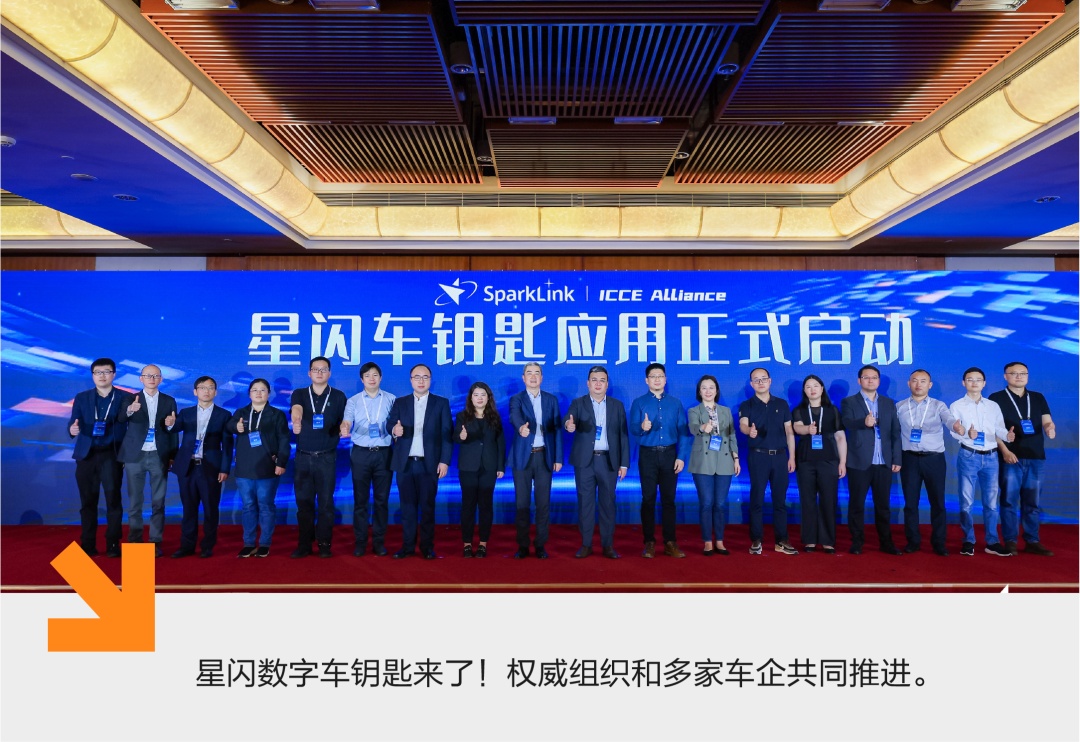
On March 30, at the 2024 International SparkLink Alliance Industry Summit held in Shenzhen, the International SparkLink Wireless Short-Range Communication Alliance(referred to as the "SparkLink Alliance") and the Smart Car Connectivity Industry Ecosystem Alliance (referred to as the "ICCE Alliance") jointly released the SparkLink Digital Car Key Standard.
The introduction of the SparkLink Digital Car Key Standard is seen by industry experts as a major breakthrough in digital car keys, following NFC, Bluetooth, and UWB digital car keys.
Currently, several automakers, including FAW, GAC, BYD, Seres, and JAC, have keenly recognized the leading-edge nature of this technology and actively participated in the SparkLink Car Key Application Launch Ceremony, expressing their commitment to accelerating the commercial deployment of SparkLink digital car keys. This is a representative case of SparkLink technology being applied to smart car scenarios.
It is foreseeable that in the near future, SparkLink technology will become a key connectivity point for enhancing user experience in the smart car sector, delivering more convenient and intelligent mobility experiences.
01、A New Breakthrough in Digital Car Keys
As the latest generation of wireless short-range communication technology, SparkLink is leading the revolution in short-range wireless communication systems.
Wu Hequan, an academician of the Chinese Academy of Engineering and Director of the Expert Committee of the International SparkLink Alliance, highly praised SparkLink technology, believing it will redefine the next generation of short-range wireless communication systems.
Since the release of SparkLink 1.0 standards in 2022, short-range wireless communication systems have entered the "sub-millisecond transmission era," achieving unprecedented improvements in data transmission efficiency and speed.
The application prospects of SparkLink technology in the automotive field are particularly broad, showcasing immense potential in scenarios ranging from in-car audio, active noise cancellation, interactive screen projection, and 360-degree panoramic surround to wireless doors, ambient lighting, and smart digital keys.
In November 2022, the SparkLink Alliance released SparkLink 1.0, which included12 standards. At that time, several automotive industry chain-related companies had already demonstrated the technical value of SparkLink for smart car scenarios. The International SparkLink Wireless Short-Range Communication Alliance Launch Summit in 2023 first publicly showcased the SparkLink digital car key solution.
On March 30 this year, the SparkLink Alliance further released 21 SparkLink 2.0 standards, establishing standards for native SparkLink applications and achievingend-to-end application integration, with the digital car key standard being particularly noteworthy.
It is understood that the newly announced SparkLink Digital Car Key Standard primarily advances two major initiatives:
First, it integrates the ICCE Digital Car Key Basic Framework with the SparkLink access layer, basic service layer, and basic application layer functions.
Second, it establishes processes tailored to car key business needs, including SparkLink broadcast access, pairing connections, ranging and positioning, car key authentication, and seamless entry.
Industry experts commented, "The SparkLink Car Key Standard is a more competitive digital car key solution and represents a new direction in the development of domestic digital car key technology."
Compared to other digital car keys, SparkLink digital car keysenable more precise ranging, positioning, and locking/unlocking.
On-site, we also saw a demonstration of a modified car with SparkLink digital car keys, using a smartphone to connect to the car's system and achieve high-precision, location-aware door locking and unlocking actions.
With the official release of this standard, numerous upstream and downstream players in the automotive industry chain have deeply felt the strong cohesion of the SparkLink Alliance's "many hands make light work" approach.
According to AutoHeart, since its inception in April 2023, the ICCE SparkLink Digital Car Key Standard has attracted attention and active participation from over 70 automakers, terminal manufacturers, Tier 1 and Tier 2 suppliers, chipmakers, and other industry chain stakeholders.
It is believed that this standard will soon become a powerful catalyst for the development of digital car keys.
02、In the Era of Smart Cars, Traditional Car Keys Are Disappearing
NFC, Bluetooth, and UWB digital car keys are gradually becoming standard features in smart cars.
In 2017, Tesla's Model 3 eliminated physical keys, offering only NFC card keys and smartphone Bluetooth keys, which automatically sense and unlock doors without requiring touch.
In 2021, when Nio launched the ET7 sedan, it emphasized that this car was the world's first model equipped with a UWB digital key.
Public data shows that from January to September 2023, the number of passenger vehicles in the Chinese market(excluding imports and exports)equipped with pre-installed digital keys reached 4.7199 million, a year-on-year increase of 52.28%, maintaining rapid growth.
By the end of September 2023, the adoption rate of digital keys in the market exceeded 30% for the first time. It is projected that by 2025, the installation rate of digital car keys in new vehicles will surpass 50%.
The rapidly growing adoption rate signifies the increasingly important role of digital car keys.
Digital car keys, with features like remote permission sharing and seamless entry, are not just replacements for physical keys but are evolving into "super connectivity points" for smart cars. Their importance is reflected in two aspects:
- First, they significantly enhance consumers' experience of vehicle intelligence.
- Second, they provide automakers with a valuable window to establish closer connections with consumers.
However, the widespread adoption of digital car keys has also brought a series of challenges.
From a practical usage perspective, car key system settings can be divided into sensing zones, welcome zones, locking zones, and unlocking zones.
Corresponding to these zones, the current pain points in digital key experiences mainly manifest in the following four areas:
- Connection failures: The key fails to connect to the car, leaving users unable to lock or unlock.
- Ping-pong issues: The door repeatedly locks and unlocks, creating an unstable experience.
- Security concerns: Traditional BLE solutions cannot achieve secure ranging, posing car theft risks.
- Long-distance ranging: Inability to measure distance accurately at slightly longer ranges, leading to "penalty stands" during fast movements and poor user experiences.
At the SparkLink Alliance Industry Summit, Zhao Bin from the China Automotive Technology and Research Center elaborated on the core elements of digital car keys as essential needs for car usage:the stability, positioning capability, and security of wireless short-range connections.
He emphasized that these factors are critical for automakers when choosing short-range connection technologies, directly impacting their ability to provide consumers with safe, intelligent, and convenient car experiences.
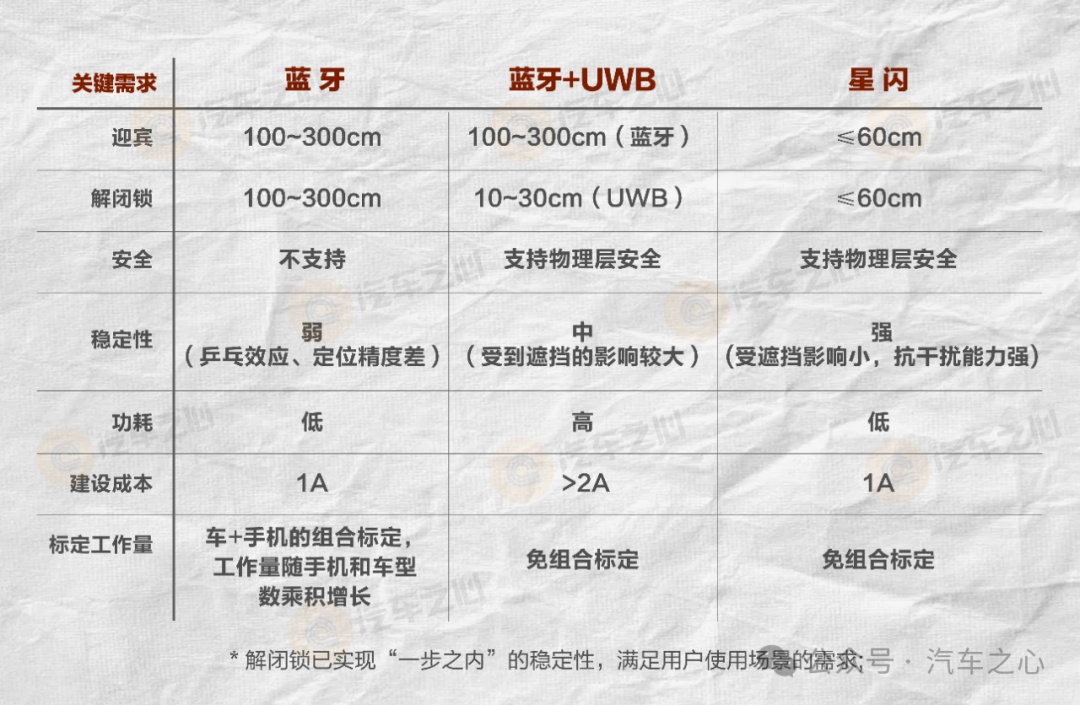
Comparison of SparkLink, Bluetooth, and UWB Advantages
Zhao Bin further pointed out that compared to Bluetooth and UWB digital car keys, SparkLink car keys demonstrate significant advantages across multiple dimensions.
First, positioning accuracy is stable within 0.6 meters, with in-car and out-of-car recognition errors controlled within0.2 meters, completely eliminating common issues like ping-pong and penalty stands in traditional Bluetooth systems and greatly enhancing the user experience of smart entry systems.
Second, SparkLink technology builds rigorous security mechanisms at the underlying link level, using TOF technology to obtain real distances and phase difference ranging to defend against spoofing attacks, ensuring car usage safety.
Third, SparkLink car keys provide more stable connection performance through 80 MHz bandwidth and polar coding technologies, maintaining excellent performance even in complex signal environments like underground garages.
Finally, longer connection distances and higher accuracy enable vehicles to be detected earlier, reserving ample time and more accurate judgment space for interactions between cars and keys, ensuring consistency in smart entry system experiences.
It is evident that SparkLink car keys, with their high-precision positioning, robust security, stable connection performance, and longer connection distances, hold a leading position in the digital car key domain.
03、Better Digital Keys Will Become Vital Links in Smart Mobility
Looking back at the evolution of car keys, it is clear that each innovation reflects advancements in automotive technology.
- Initially, mechanical keys provided basic security and entry methods.
- Later, Cadillac's remote keys combined convenience with remote control, offering users a new experience.
- Chevrolet further advanced this trend with its PEPS seamless entry system, significantly improving the fluidity of human-car interaction.
- In 2016, BMW's forward-thinking move—introducing the digital key concept—turned smartphones and wearables into new forms of car keys.
For automakers, digital keys are not just entry points for smart connectivity but also critical foundations for achieving fully keyless experiences.
SparkLink technology provides a vast new frontier for Chinese new energy vehicle companies to innovate based on local standards, and the debut of SparkLink car keys marks a pivotal step in this innovation.
Beyond their immediate functionality, digital keys hold far greater significance.
When car owners activate digital keys, they also open communication channels with automakers, creating a traffic entry point between people and cars.
In this context, short-range technologies with superior connectivity experiences will play a key role, helping automakers build tighter "human-car-scenario" connections, driving the realization of innovative scenario-based services, and ultimately delivering safer and smarter mobility services to users.
With adoption rates continuously rising, digital keys have become vital links connecting automakers with car owners and enabling smart mobility.
Therefore, we have every reason to believe that, empowered by the next-generation wireless short-range communication technology SparkLink, digital car keys will usher in new vitality, propelling the automotive industry toward a smarter, more convenient, and safer era.
$华为概念股.US $Huawei(HUAWEI.NA) $Intelligent Vehicle(399432.SZ)
The copyright of this article belongs to the original author/organization.
The views expressed herein are solely those of the author and do not reflect the stance of the platform. The content is intended for investment reference purposes only and shall not be considered as investment advice. Please contact us if you have any questions or suggestions regarding the content services provided by the platform.
