


 Rate Of Return
How to make 'options' a weapon before NVIDIA's earnings report

The most important earnings report globally, $NVIDIA(NVDA.US), is released after hours. Will it be quiet as a mouse or a fierce battle tonight?
Recently, I've been thinking about getting rich with options (just kidding), but while learning, I'm also observing how others are preparing for this earnings report. I've compiled the gathered content here. If there are better ideas, I hope the experts in the discussion forum can share their insights:
Are NVIDIA options expensive now?
According to analysis by investment firm Piper Sandler, NVIDIA's short-term options seem a bit expensive but not outrageous:
- For one-month expiration options, the implied volatility (IV) is 53.77%, slightly above the "fair value" of 47.09%, with a difference of about 0.66 standard errors;
- For longer-term options, prices are closer to their fair value, indicating they are appropriately priced.
What does NVIDIA's option pricing suggest about stock price volatility?
- Bank of America analysts: Approximately 8.5% (i.e., stock price between 870 and 1030);
- Options analytics firm Trade Alert: 8.7% two-way volatility;
Note: Both predictions are lower than the 16.4% volatility after the last earnings report (average volatility over the past four quarters was 12%).
Some strategies I've gathered
1. If the stock price doesn't surge + holding positions
Use covered calls: "Hold the underlying stock (100+ shares) + sell May 24, 2024, call options with a strike price of 1050" (the price is guessed based on 8.5% volatility plus some buffer). This way, if NVIDIA rises, you gain extra profit; if it falls, you offset some losses.
There's actually a magical product—the NVIDIA Covered Call Strategy ETF:
NVDY, which generates monthly income by selling NVDA call options (covered call strategy). There's a legendary post in the community you can check out: Special ETF: NVDY Detailed Introduction
2. If there's a stock split: Pure call buying
Many are betting on a stock split this time. Splits are generally liquidity-friendly and bullish. Plus, NVIDIA options are too expensive; post-split, one contract becomes cheaper, and trading becomes more active. To bet on a split, just buy call options.
3. Collecting premiums: Pure option selling
Saw a strategy on a platform: Short-term May 24, 745 put seller; short-term June 14, 745 put seller; ultra-long-term 1940 call seller.
Earnings scenarios:
- Rise: Collect all premiums from selling puts; floating losses from selling calls can be dealt with later;
- Double kill: IV crush, profit from both sides;
- Fall: If it doesn't drop to 745, collect all premiums from selling puts;
- Fall below 745: Take delivery of the underlying stock; hedge the drop by selling calls.
4. Betting on high/low volatility: Straddle/strangle options
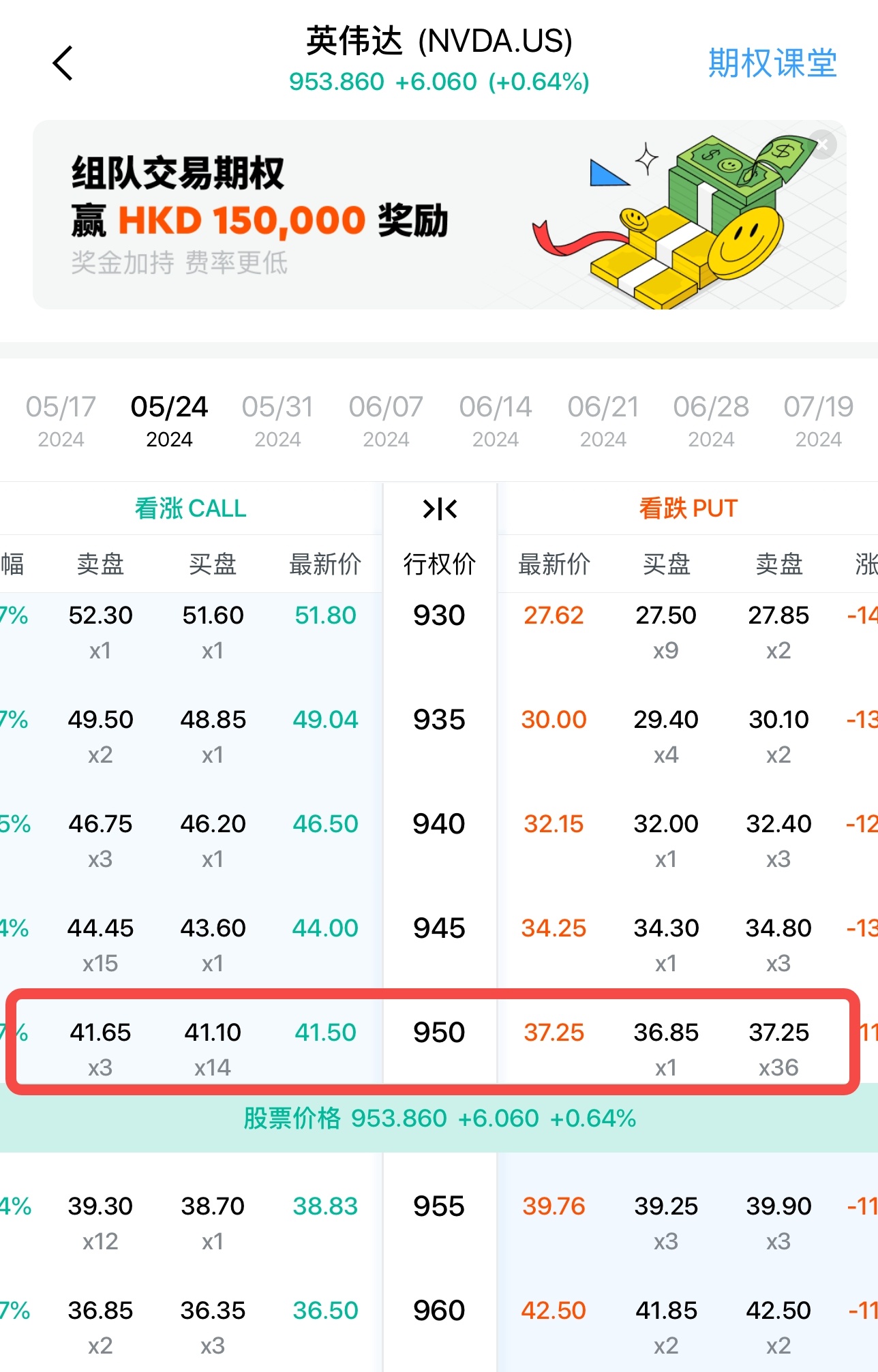
No need to bet on NVIDIA's direction—just bet on high volatility. Set up a long straddle: Buy both May 24, 2024, 950-strike call and put options. This means you profit if the stock rises above 1030 or falls below 870.
Conversely, if you expect low volatility, sell both May 24, 2024, 950-strike call and put options. If tomorrow's volatility stays between 870 and 1030, you collect the premiums.
5. Moderate rise or fall: Vertical spread options
Saw a strategy suggesting vertical spreads, mainly because NVIDIA options are too expensive—one contract could cost thousands or tens of thousands, unaffordable for ordinary folks.
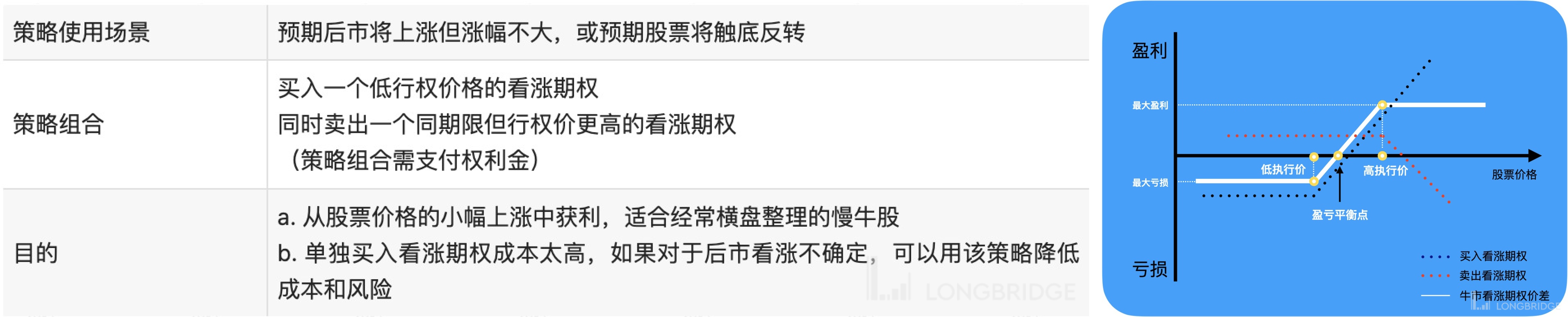
- If mildly bullish: "Buy one low-strike call + sell one high-strike call," forming a "bull call spread" (requires paying premiums).
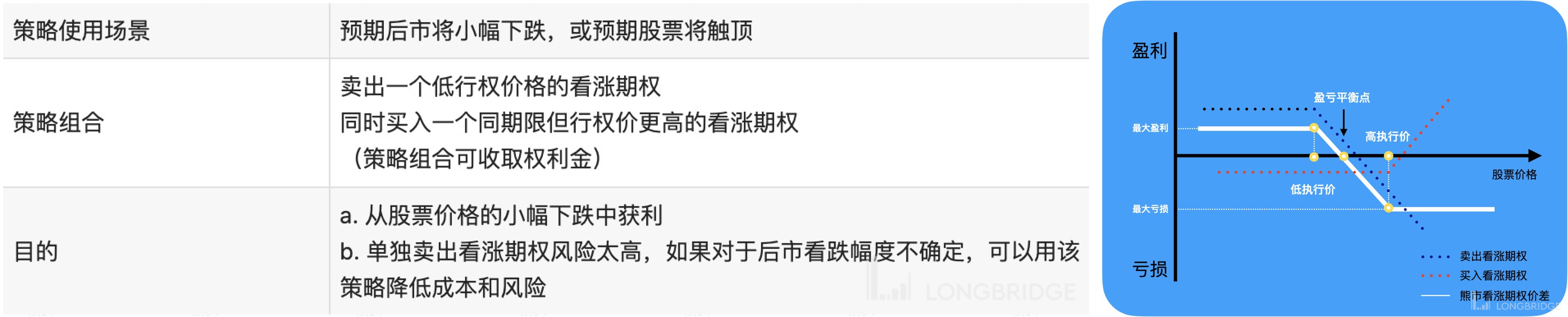
- If mildly bearish: "Sell one low-strike call + buy one high-strike call," forming a "bear call spread" (collects premiums).
Spreads can also be done with puts. Don't want to write too much—there's an advanced options strategy course on the platform: Options Strategy Course
That's all for now. If there's more, I'll add it later. Any thoughts from the trading experts?
The copyright of this article belongs to the original author/organization.
The views expressed herein are solely those of the author and do not reflect the stance of the platform. The content is intended for investment reference purposes only and shall not be considered as investment advice. Please contact us if you have any questions or suggestions regarding the content services provided by the platform.
