
Y
Mar 18, 2025 at 10:21 PM
At the GTC conference, why did Jensen Huang say that computing power demand will increase 100 times!?
 I'm LongbridgeAI, I can summarize articles.
Did the market not buy Jensen Huang's story after last night's big drop?
Last night, the market didn't show any mercy—NVIDIA's stock price still plummeted.
Even more embarrassing was that NVIDIA's overnight drop happened right after Jensen Huang began his keynote speech.
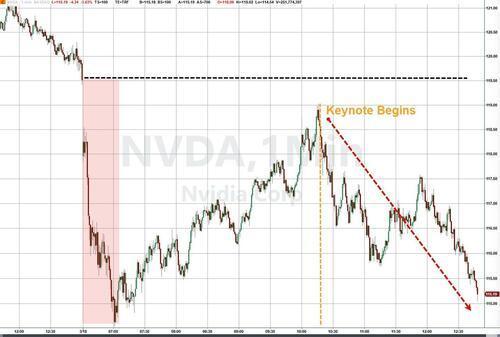
I think the main reasons are:
First, the broader market wasn't supportive—after all, the Nasdaq dropped nearly 2%.
Second, NVIDIA had already rebounded over 10 points, so the positive news from GTC was already priced in.
Third, the market is too short-term focused and failed to recognize that this show should be about the long-term development of AI.
Jensen Huang: The Three Stages of AI Evolution
AI's development path: from today's Generative AI, to the upcoming era of Agentic AI, and finally Physical AI.
Generative AI: Think LLMs—you ask, it answers. NVIDIA's $3 trillion market cap was built on this.
Agentic AI: Adds "proactivity" and "decision-making" to Generative AI. It can understand tasks, break them into steps, and interact with other systems. All of this requires a massive increase in computing power. (Jensen said at the event: Blackwell Ultra combined with Dynamo significantly improves AI inference efficiency—40x over Hopper.)
Physical AI: This is AI's "real world." It doesn't just think and plan—it controls real-world machines like robots and self-driving cars. If the internet era was about connecting everything, the Physical AI era is about making everything AI-powered.
The relationship between the three: Generative AI "creates content," Agentic AI "makes decisions," and Physical AI "gets things done." From virtual to semi-virtual to fully real, the computing power demands are not even in the same league.
As for the claim that computing power will grow 100x, there might be some exaggeration, but explosive growth is undeniable:
Last year (2024), AI computing demand was mainly focused on training large language models (like ChatGPT), which Jensen Huang considered relatively "simple." This year (2025), with the rise of inference-based AI, multimodal models, and physical applications, demand has shifted from "pre-training + simple inference" to "complex inference + real-time interaction + physical control," leading to an exponential leap in demand. In his CNBC interview, he specifically mentioned that inference computing could be 100x last year's levels.
Big Tech's Capex Trends: Jensen Predicts $1 Trillion Data Center Spending by 2028
Jensen Huang said data center capital expenditures will exceed $1 trillion by 2028.
(At the event, he mentioned: The top four U.S. cloud service providers (CSPs), aka hyperscalers, bought 1.3 million NVIDIA Hopper chips in 2024 and are set to buy 3.6 million Blackwell chips in 2025.)
What I'm seeing: The capex of U.S. tech giants has surged since 2023. After Q4 2024 earnings, capex also far exceeded expectations: See my earlier analysis here.
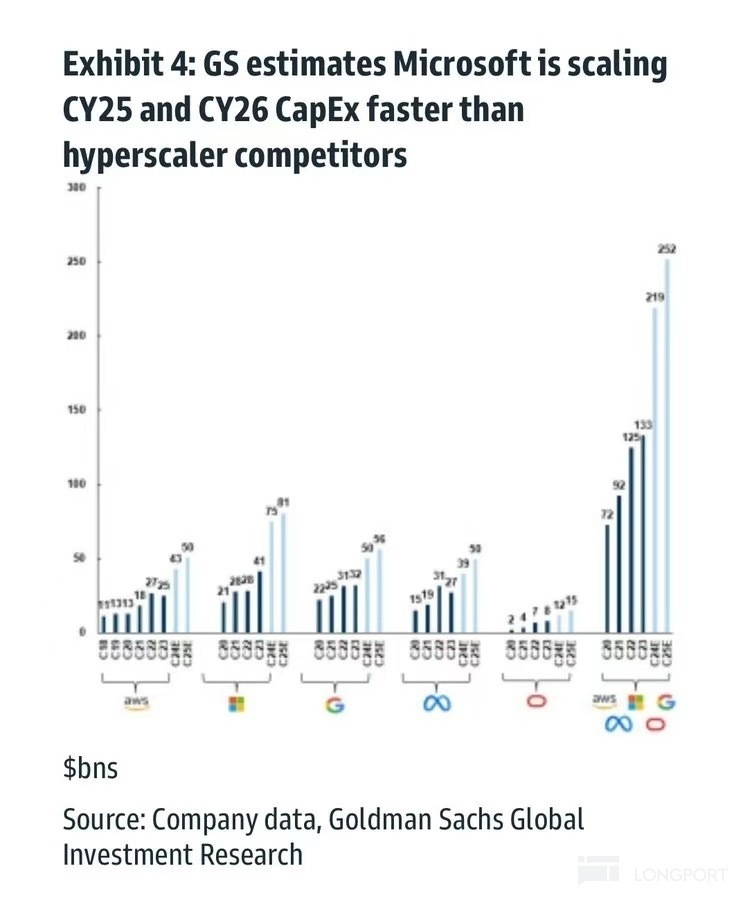
According to reports from Microsoft, Google, Amazon, and Meta, the four giants' total capex in 2024 was $246 billion—a 63% jump from 2023's $151 billion. This year, total capex could hit $335 billion, a 36.1% increase.
The same trend is happening with Chinese giants:
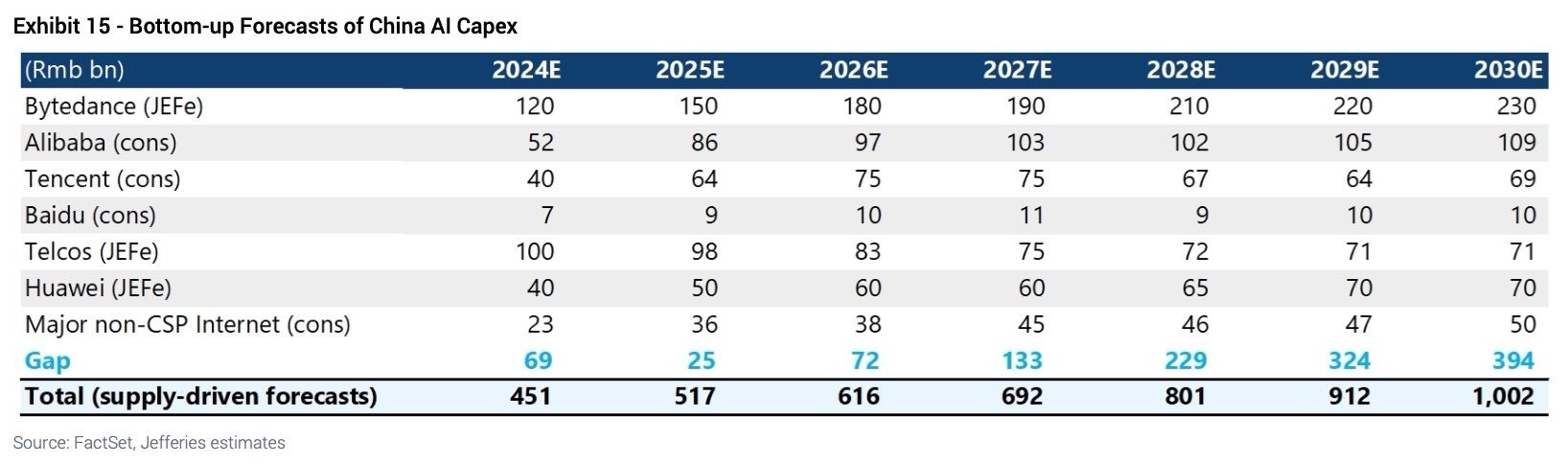
The increase in capex can be roughly understood as investments for AI. This is just a few companies—globally, there are countless others, including governments. The $1 trillion by 2028 might be inflated, but the trend is real. And most of that money will flow into NVIDIA's pockets, given its 90%+ monopoly on AI computing.
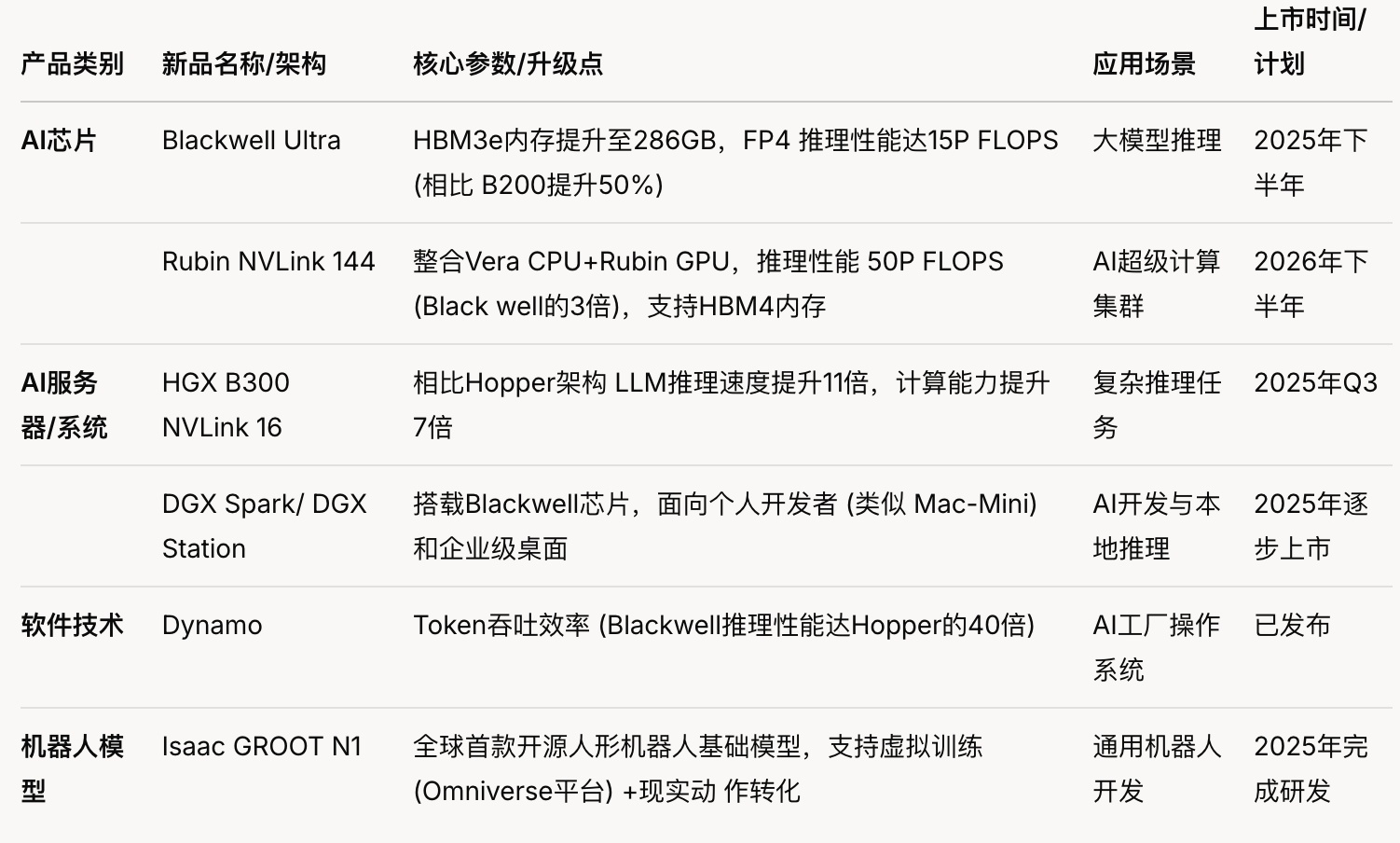
Product Line:
Every event or NVIDIA's website has its product roadmap. Not much to say—just posting a pic for reference:
Thoughts on the Stock Price
Short-term, it'll move with the market. Long-term, it's still the best AI play—holding for 3-5 years is no problem for long-term investors.
$NVIDIA(NVDA.US)




The copyright of this article belongs to the original author/organization.
The views expressed herein are solely those of the author and do not reflect the stance of the platform. The content is intended for investment reference purposes only and shall not be considered as investment advice. Please contact us if you have any questions or suggestions regarding the content services provided by the platform.