

Hong Kong and US Stock Selection | Global warehouse robotics giant Symbotic, continues to deepen cooperation with Walmart after doubling this year

$Symbotic(SYM.US) is a leader in automation technology, revolutionizing warehouse supply chains with its end-to-end, AI-driven robotics and software platform. It automates the handling of pallets and cases for large warehouses or distribution centers of retail companies.
Financial Performance
The company reported Q2 2025 revenue of $550 million, up 42% year-over-year, exceeding market expectations by 5.2%. Net loss was $21 million, while adjusted EBITDA reached $35 million, surpassing market expectations by 30%. Except for Q1 2025, which was impacted by accounting revisions and fell short of expectations, every quarter since its IPO has outperformed market expectations. 95.4% of the company's revenue comes from the U.S., with international revenue rising from less than 1% to over 4% year-over-year.
The business is divided into three segments: Systems, Software Maintenance & Support, and Operational Services. The majority of revenue comes from Systems, contributing $510 million (88.6% of total revenue), up 38.5% year-over-year. Software subscription revenue was $7 million (up 161%), and operational services revenue was $30 million (up 47%).
Gross margin for the quarter was 21%, with segment breakdowns as follows: Systems gross margin improved to 19% from 8% year-over-year; Software gross margin rose to 69% from 25%; and Operational Services gross margin increased to 15% from 5%. All three segments saw significant margin expansion.
Cash and cash equivalents increased by $52 million sequentially to $955 million.
As of Q2 2025, the company has deployed 37 systems, with 46 systems currently in deployment. The backlog stands at $22.7 billion, expected to convert to revenue by 2030.
Guidance: Revenue is projected at $520-$540 million, below expectations by 5%, while adjusted EBITDA is forecasted at $26-$30 million, 30% below expectations. Regarding tariff impacts, the company stated it would pass costs to customers without affecting revenue, though this may temporarily weigh on gross margins.
Macro & Industry Trends
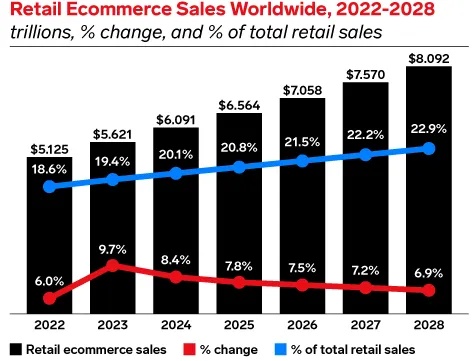
Rapid Growth of Online Retail: According to eMarketer, global e-commerce sales are expected to reach $6.6 trillion in 2025, climbing to $8.1 trillion by 2028.
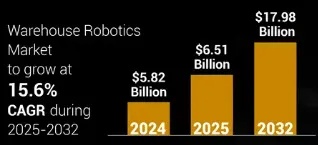
High-Speed Growth in Global Warehouse Robotics: The global warehouse robotics market is projected to grow from $6.51 billion in 2025 to $17.98 billion by 2032, at a CAGR of 15.6%. Currently, 80% of U.S. warehouses remain manually operated, and Symbotic, as a leader, stands to benefit significantly.
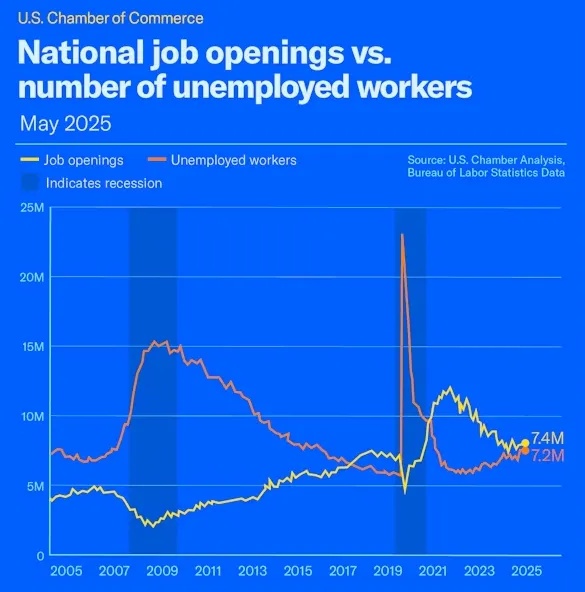
Aging Population & Anti-Immigration Policies: While the labor demand-supply gap has narrowed post-COVID, Trump's crackdown on illegal immigration may further reduce local labor supply in the U.S., making automation increasingly critical.
AI & Digital Transformation: Entering 2023, the global hype around AI models like ChatGPT and GPT-4 continues unabated, with AI and robotics becoming hot sectors for investors.
Diversifying Customer Demand & Rising Expectations: Traditional warehouse systems are designed for bulk storage and sorting, whereas modern consumers demand personalized, small-batch, and multi-variety products. Warehouse robotics, with their flexibility and intelligence, can meet this growing demand while improving delivery speeds.
Shareholders & Management
The company was founded by Richard B. Cohen, who has decades of experience in supply chain operations and innovation. About half the team comprises software, mechanical, electrical, and systems engineers and scientists focused on technical solutions, with over 650 patents.
SoftBank is the largest shareholder and partnered with Symbotic in 2023 to establish Greenbox (SoftBank owns 65%, Symbotic 35%), which uses Symbotic's technology to provide warehouse construction and services. This allows Symbotic to focus on its core automation business. Walmart, the second-largest shareholder, is also a customer, ensuring long-term stability and improving cash flow. In Q1, SoftBank and Walmart reduced their holdings by ~1% collectively.
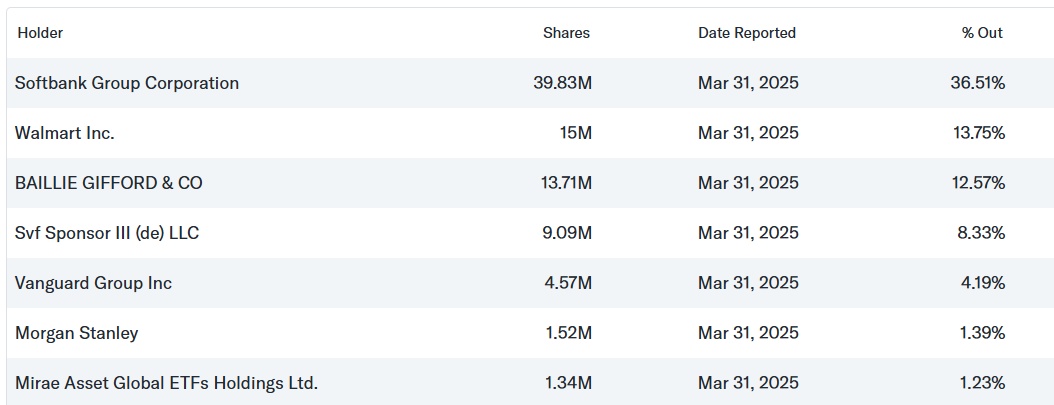
Other shareholders include prominent financial firms with varying investment styles: Vanguard favors passive, stable returns; Baillie Gifford and Mirae Asset focus on long-term growth; Frontier and Thematics target emerging markets. This diversity reflects strong confidence in Symbotic's growth and stability under AI-driven automation.
Strengths
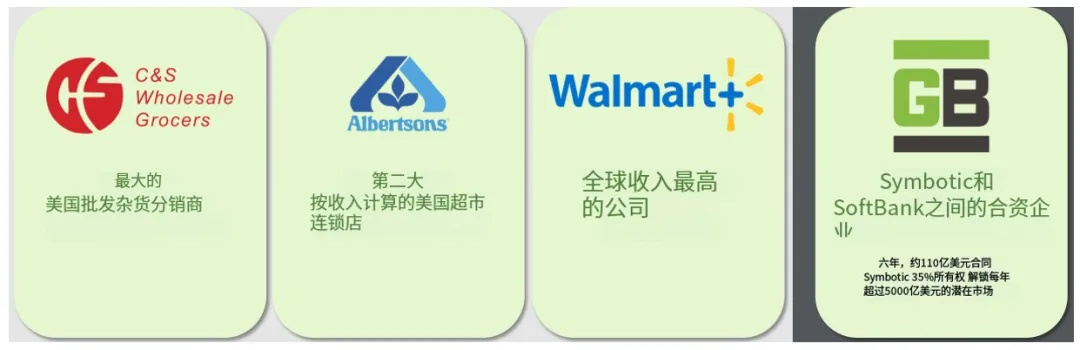
1. High-Profile, Sticky Client Base & Backlog Ensure Revenue. Clients include Walmart, Albertsons, C&S Wholesale Grocers, GreenBox, and Target. Walmart alone contributed 85.6% of Q2 revenue (up 0.3pp year-over-year). The backlog reached $22.7 billion (up $3 billion sequentially), driven by a new Walmart contract (see "Acquisition Strategy") to accelerate APD (Automated Pickup & Delivery) deployment.
2. Strategic Acquisitions Strengthen Capabilities & Secure Orders. In June 2024, acquired Veo Robotics ($8.7 million) for machine vision; in December 2024, bought OhmniLabs to enhance robotics R&D. Most notably, in January 2025, acquired Walmart's robotics unit for $200 million cash to expand automated supply chains. Walmart also invested $520 million in Symbotic to upgrade APD systems, potentially unlocking over $5 billion in future orders and expanding the U.S. addressable market by $300+ billion.
3. Improved Deployment Efficiency Despite Scaling. Symbotic started 10 and completed 8 system deployments in Q2, with installation-to-acceptance periods ~2 months shorter than historical averages, despite 15% larger projects.
Technology
1. "Piece-Level" Sorting Maximizes Space & Speed. Unlike competitors limited to pallet-level handling, Symbotic's system breaks down pallets to individual items, removing unused space and accelerating throughput.
Competitors' pallet-only systems increase inventory and slow logistics by occupying excess space.
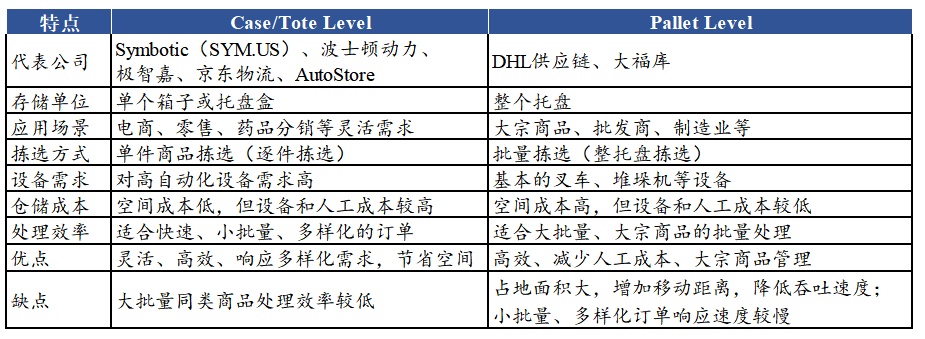
2. Dynamic Storage Reduces Robot Movement. Goods are randomly placed, and AI-directed robots minimize travel, boosting efficiency and reducing fleet size. The system handles diverse packaging and industries.
3. Faster Robots (25 mph vs. 8–20 mph for peers) clear aisles quicker, enabling higher throughput.
4. Lift-from-Below Forklifts (vs. clamps/magnets) handle varied box types, reducing damage and waste.
5. Hardware-Software Integration: Saves 80% labor and 25–40% space. Modular installations allow phased upgrades without disrupting operations.
Future Growth
Total addressable market over 15 years: $432 billion, including:
· Core ($144B): U.S. grocery, apparel, and CPG warehouses.
· Secondary ($126B): Home improvement, auto parts, 3PL, frozen foods.
· Other ($52B): Pharmaceuticals, electronics.
· International ($111B): Europe, Latin America.
Long-term targets include 30% gross margins (90%+ for software). Q3 revenue may dip post-Walmart deal, but prototypes in 8–12 months will reignite growth.
Risks
1. Customer Concentration (Walmart/Greenbox). Growth may slow post-Walmart saturation unless new clients are secured.
2. Layoff Costs ($12–14M in Q3) from Walmart unit integration.
3. Competition (Amazon Kiva, Ocado). Though Symbotic dominates brick-and-mortar retail automation, pricing pressure could emerge.
4. Accounting Errors revealed weak controls but responsible disclosure.
Investment Recommendation
As of July 9, Symbotic closed at $47.16 (+98.9% YTD). At 2.02x EV/Sales (FY25 consensus: $2.2B revenue), our $61 target implies 3x multiple. Street targets: $35–56.
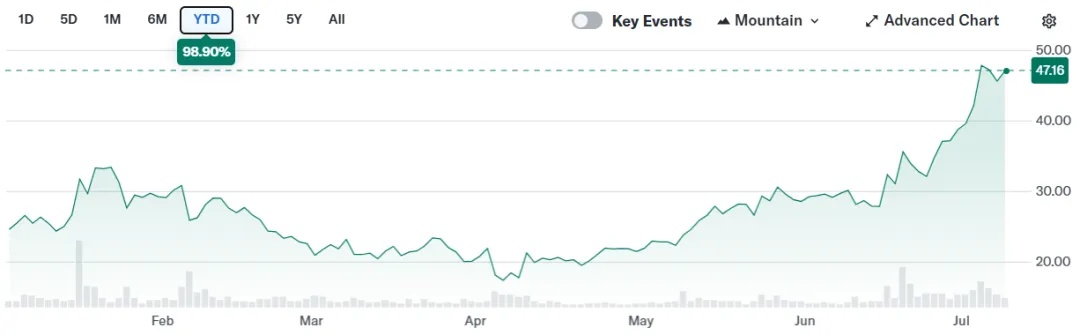
Strong backlog and Walmart reliance ensure stability. International growth is promising. Buy on dips, but caution ahead of potential tariff-related market corrections.
The copyright of this article belongs to the original author/organization.
The views expressed herein are solely those of the author and do not reflect the stance of the platform. The content is intended for investment reference purposes only and shall not be considered as investment advice. Please contact us if you have any questions or suggestions regarding the content services provided by the platform.
