

The Revelation of the 'Food Delivery' War: Expectation Gap and Anti-Consensus

The scorching sun in July is fierce, but even fiercer is the new three-way battle in the food delivery industry.
Several years ago, the Chinese food delivery market was once a battleground for three companies represented by yellow, blue, and red, backed by Meituan, Ele.me, and Baidu Waimai, respectively, ultimately ending with the red exiting at a low price.
Back then, food delivery was just restaurant delivery. Today, the delivery we discuss also includes instant retail of various items. Unless specifically noted as restaurant delivery, the delivery mentioned in this article refers to broad instant retail—encompassing both restaurant delivery and non-food instant retail, which is why we put quotation marks around delivery in the title.
In 2025, JD.com returned with its red army and broke through the peak of 25 million orders on June 1st, coming in strong.
Ele.me, backed by Alibaba, also went all out, not only providing core resources from Taobao and Alipay homepage but also announcing a 50 billion subsidy plan on July 2nd. Taobao Flash Sale (including Ele.me) broke through 40 million orders at the end of May, 60 million at the end of June, and 80 million on July 5th, gaining momentum.
Compared to the aggressive new platforms, Meituan has been quite restrained, neither crazily subsidizing high-elasticity categories like tea and coffee nor issuing large amounts of coupons. Despite this, its order volume continued to break through 90 million orders after mid-June, especially maintaining a market share of around 70% for food orders.
Summer is traditionally a peak season for food delivery, and with competitors continuously increasing their efforts, Meituan also made a small move on July 5th, without large-scale publicity, quietly issuing more large coupons to consumers. In the afternoon, some areas of the Meituan APP were overwhelmed to the point of automatic flow restriction. At 8:45 PM, the order volume broke through 100 million orders, and at 10:54 PM, it broke through 120 million orders.
Unfortunately, in this July battle, JD.com gradually lost its voice, and the market's attention returned to Meituan and Alibaba.
This is not surprising. When JD.com was soaring in the previous two months, we predicted:
The second quarter is JD.com's best quarter for free cash flow every year, coupled with 618 being its home ground, providing great motivation to complete this quarter. The third quarter is the off-season for e-commerce and the peak season for food delivery, meaning it needs to invest more bullets in the quarter with the least bullets, so the third quarter is likely to be a hurdle, and JD.com may be in a dilemma. We might as well continue to observe.
Riding Horse Man, WeChat Public Account: Riding Horse FinanceMeituan: Chaos is a Ladder
Today, we will continue to provide some observations that differ from market consensus for your reference, with the core viewpoints as follows:
The value of order-pushing tactics is significant, but the strategic value is not;
Order-pushing strategies have many uncertainties;
Instant retail is ultimately a street battle rather than an air battle;
Anti-consensus predictions about the competitive endgame.
I. The Value of Order-Pushing
Overall, order-pushing is more of a tactical value for Meituan rather than a strategic need, because whether it's restaurant delivery or instant retail, they are essentially local businesses with limited supply and steady flow, fundamentally different from shelf e-commerce, which is unlimited supply + one place supplying the whole country.
E-commerce can concentrate a month's demand to explode in one day, but you have to eat every day, and it's impossible to eat a month's worth in one day, neither supply nor demand can achieve this.
The restaurant delivery industry has entered a relatively mature stage, and Meituan has long been the stable industry leader, clearly not needing to lead the charge every day.
Of course, it's not entirely absent, for example, Meituan habitually conducts milk tea order-pushing activities on the day of the beginning of autumn every year. Last year's "First Cup of Milk Tea in Autumn" activity on August 7th saw Meituan's instant retail order volume break through 90 million, and this year's order peak was 33 days earlier.
This occasional order-pushing can somewhat raise the industry's ceiling. This time, Meituan's restaurant delivery order volume broke through 100 million orders, and non-food instant retail order volume also broke through 20 million orders, indicating that the market's potential space is still large. It can also test the stability of merchant supply and fulfillment resources. In terms of absolute numbers, they certainly don't match the e-commerce order myths of 618 and Double 11, but considering the spatial limitations of delivery supply and the time attributes of high concurrency in a short period, Meituan's delivery network's system elasticity has withstood the test.

For Meituan, the value of order-pushing is more tactical: occasionally showing off muscles to strengthen merchant and market confidence, letting everyone know "it's not that we can't, it's that we choose not to."
Especially considering that Meituan achieved this without prior large-scale publicity and basically without any anomalies in merchant supply, rider fulfillment, and consumer experience, compared to competitors who occasionally experience order delays, timeouts, location anomalies, and backend instability, further verifying its deep moat in user mindset, merchant supply, and fulfillment delivery in the delivery field.
For chasing competitors, order-pushing carries too many strategic expectations:
Take JD.com as an example, it likely hopes to achieve multiple goals through order-pushing in categories with high elasticity in both supply and demand, such as milk tea and coffee.
The first goal is to penetrate from tea and coffee to main meal categories; the second goal is to penetrate from restaurant delivery to non-food instant retail; the third goal is to use overall instant retail to feed back e-commerce, achieving better cross-coordinated sales.
These are not secrets, and we have heard many such voices in public.
However, these expectations have uncertainties at every step, and the final effect is questionable.
II. Strategic Expectation Uncertainty
First, tea and coffee are special categories in delivery because of strong brand regional chain penetration, high profit margins, fierce market competition, supply surplus, high demand elasticity, all-day availability, standardized supply, and relatively simple production, meeting all conditions for order-pushing promotions.
Therefore, new platforms choosing tea and coffee as entry points for order-pushing is indeed a very smart choice.
However, main meal consumption does not meet these conditions on most levels. They are highly concentrated in two hours each for lunch and dinner, consumer demand is generally stable, and merchant supply is more limited in a short time.
It is evident that main meal delivery is much more complex in operational difficulty and hard to convert through order-pushing. Instead, the experience issues encountered during tea and coffee order-pushing may alert consumers to be more cautious in choosing main meal delivery platforms.
Considering that merchants and riders have profit attributes, they naturally invest more time and resources in leading platforms rather than immature new entrants. Every rational person in commercial activities is self-interested, which is very reasonable.
Meituan, without joining aggressive subsidies, has maintained a stable market share of around 70% for food delivery, also verifying from the result level that the effectiveness of penetrating main meal consumption through tea and coffee order-pushing is questionable.
Secondly, non-food instant retail is still in the early market stage, with insufficient supply, especially in non-core urban areas and overall lower-tier markets. Meituan has greatly enriched the supply side through self-operated Xiaoxiang front warehouses and over 30,000 joint lightning warehouses, and has the most abundant fulfillment resources, barely meeting basic needs but still needing effort.
For platforms with imperfect supply and fulfillment infrastructure, attempting to drive instant retail order volume through order-pushing subsidies cannot be said to be meaningless, but may be relatively limited.
As for the third, both delivery and instant retail have a user mindset of 30-minute delivery, while e-commerce has an N-day delivery mindset. When a user's 30-minute order mindset becomes stronger, their acceptance of N-day delivery may be lower, which is imaginable, or rather, a person is more willing to transition from N-day delivery to 30-minute delivery overall, rather than the opposite, it's easier to go from frugality to luxury, harder to go from luxury to frugality, this is human nature.
So, in the long run, attempting to achieve enhanced cross-sales between delivery users and e-commerce is also questionable.
Moreover, among the users in milk tea and coffee order-pushing, there are many wool party and low-value users. Subsidizing these users and then trying to earn e-commerce profits from them also needs a question mark.
Now, to achieve user retention and effective cross-coordinated sales with the new users acquired through tea and coffee order-pushing activities, we need to first assume they transitioned from tea and coffee consumption to main meal delivery, then assume they transitioned from main meal consumption to instant retail, and also assume they transitioned to shelf e-commerce, and need to assume they are normal value users.
If a prediction needs to first satisfy one assumption, we can believe it; if it's two, we can only listen; if it's three or more, regardless of the final result, we can only assume it cannot be achieved.
In summary, the overall order-pushing strategy is still subsidy-driven demand, attempting to stimulate the entire network through order volume, its fragility lies in ignoring that delivery is a business woven by users, fulfillment, and supply, what truly determines your upper limit is actually your lower limit.
III. Delivery is Ultimately a Street Battle Rather Than an Air BattleJust a few days ago, I ordered a delivery at home, and about 5 minutes later, I ordered a cup of milk tea. Coincidentally, the milk tea shop and the delivery merchant were in the same business district. About 25 minutes later, I received two deliveries, delivered by the same courier at once. I was quite surprised at the time, but later thought that this experience might become a certain degree of norm in the future. This kind of short-time same-user same-business district order, previously making the system achieve "order merging," might have been very difficult, but with the popularization of AI large models, it may become not so far-fetched. Not only the evolution of algorithms, but the evolution of the business itself will also enhance this experience. For example, Pinhao Fan actually has this logic in it. The system prioritizes facilitating nearby same-route user order merging, arranging a courier to deliver multiple orders at once along the way, which can reduce delivery costs and thus lower the user's dining costs. The newly launched Raccoon Canteen further concretizes the collective supply of the supply chain through the mode of offline delivery store aggregation, enhancing the food safety baseline and cross-store consumer experience while reducing costs. User subsidies are of course also important, such as Shenqiangshou and member inflation coupons directly subsidize users, but this more precise user subsidy subsidizes effective demand, will raise the average order value, and enhance user loyalty and retention rate, looking at it long-term, subsidy efficiency will be higher. In addition to innovation in the supply chain and user operation, Meituan delivery is also doing must-order lists, dine-in store tags, local specialty foods, store exploration notes, etc., to help consumers discover more and better food maps, providing high-temperature subsidies for couriers in summer, simplifying the backend operation system for merchants and partners. Local life is a slow business, and delivery is even more so. Many people are obsessed with simple and crude subsidy air battles, perhaps longing to occupy the strategic high ground for a quick victory, but from history, this somewhat violates the industry's development rules. Tea and coffee water battles have certain air battle attributes, on one hand, due to the special nature of these categories, on the other hand, new platforms have their "money power," but delivery is ultimately a long-lasting tug-of-war, unable to achieve everything in one go.
It does not follow the general logic of GMV=traffic * average order value * conversion rate in e-commerce business, even for tea and coffee categories, merchant supply has physical space and time limits, not to mention main meal categories, and the scale of the fulfillment network further limits the long-term value of air battles.
Whether it's a billion-dollar subsidy or a super-billion-dollar subsidy, they can achieve impressive results in a short time, but in the long term, they must return to city or even business district management street battles based on user geographic location:
In extremely limited spatial range, merchants need to recruit and operate one by one; courier capacity needs to be gradually built; consumer experience also needs to gradually climb.
Only when users, fulfillment, and supply achieve balance can the entire consumption experience reach the optimal state. Unilateral user subsidies are effective in the short term, but the long-term effect needs a huge question mark.
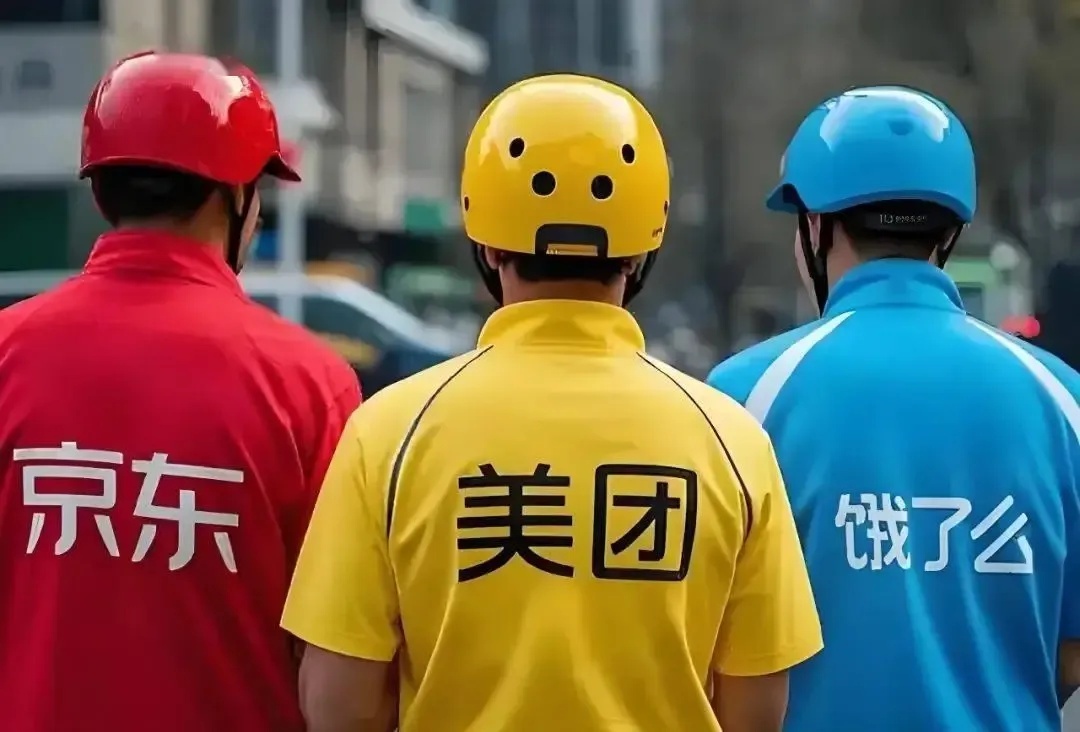
JD.com was in the limelight for a few months but soon fell silent, likely confirming the above logic.
More frighteningly, the core key to determining whether delivery can be profitable lies in the scale and density of order volume in limited space, because this will directly relate to fulfillment costs. The higher the order density, the more orders a courier can deliver at once. Assuming the normal order price is 6 yuan, delivering 3 orders at once for 18 yuan, and delivering 5 orders at once for 25 yuan, the choice for the courier is self-evident, the latter can compress the average order cost by 1 yuan. This saved 1 yuan may be shared by the platform, merchants, couriers, and consumers, meaning the top platform creates the community that best aligns the interests of all four parties.
We have already explained that couriers and merchants are rational people in transactions, with self-interest attributes, naturally investing more resources and time in platforms with more orders and more stable profits, and consumers are no different. When the leading platform gathers the richest merchant resources and the most abundant courier network, the market will achieve the optimal price, quality, and service after full competition, naturally winning the favor of the most consumers.
Based on this, we can easily make anti-consensus predictions about the competitive endgame.
IV. Anti-Consensus Endgame
Amid the noise of subsidies, market consensus seems to have become "three kingdoms standing," with voices saying the moat of the delivery industry is nothing more.
After the noise, I want to remind everyone to respect common sense.
Subsidy tides rise and fall, but the competition for user experience never ends. Subsidies can create new increments, but when the tide recedes, most of these new increments will be converted into new stock for the leading platform.
Every consumption is people voting with their money, in the short term people will vote for those who use money as bait, in the long term they will only reward those who tirelessly improve the richness of the supply chain, fulfillment stability, and service accessibility.
Regarding this war, our other anti-consensus prediction is:
The delivery battle on the surface is JD.com and Taobao challenging Meituan's instant retail position, but in essence, it is instant retail challenging the ecological niche of self-operated e-commerce.
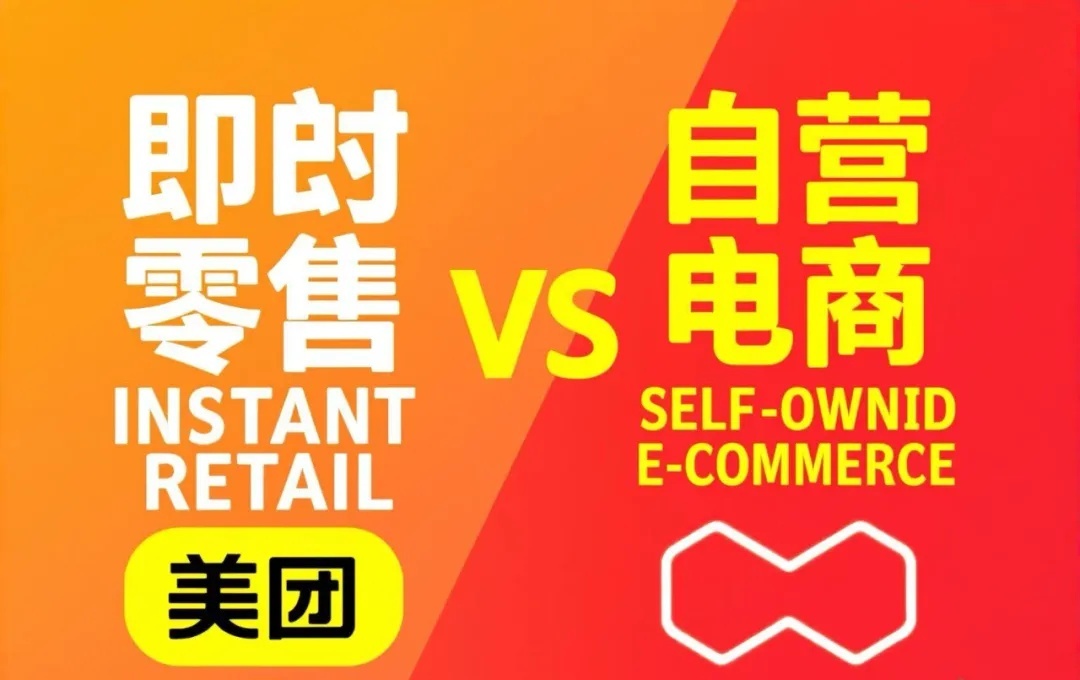
As more and more resources flow into this field, the consumer mindset of 30-minute delivery of everything becomes stronger, the supply richness and fulfillment network of the entire industry are enhanced, the narrative of instant retail users feeding back e-commerce will exist, but may not be a major trend, more users turning to instant retail may be the trend.
Just look at three simple logics: the migration of consumption habits of Generation Z, AI driving the improvement of social productivity and disposable income, and the increasingly atomized and fast-paced structure of human society.
The core advantage of self-operated e-commerce is speed, instant retail is naturally faster.
Self-operated e-commerce is a typical centralized warehouse network, instant retail is a distributed point platform, the distributed point structure is naturally superior to centralized warehouses; platform operation absorbs extensive social idle resources, and is also more advantageous in terms of cost.
Due to being closer to consumers, naturally faster inventory turnover rate, brand owners will ultimately invest more and better resources into instant retail as a new incremental channel.
Ultimately, we will see instant retail comprehensively surpass self-operated e-commerce in the four dimensions of "more, faster, better, and cheaper."
Generational migration is an objective law of the retail industry, we originally expected that the GMV of non-food instant retail would surpass self-operated e-commerce within 5 years, now it seems the delivery battle will accelerate this process, perhaps achieving it within three years, let's wait and see. $MEITUAN(03690.HK) $JD.com(JD.US) $Alibaba(BABA.US)
The copyright of this article belongs to the original author/organization.
The views expressed herein are solely those of the author and do not reflect the stance of the platform. The content is intended for investment reference purposes only and shall not be considered as investment advice. Please contact us if you have any questions or suggestions regarding the content services provided by the platform.
