


Stop it, the outside is all pure electric large three-row SUVs.

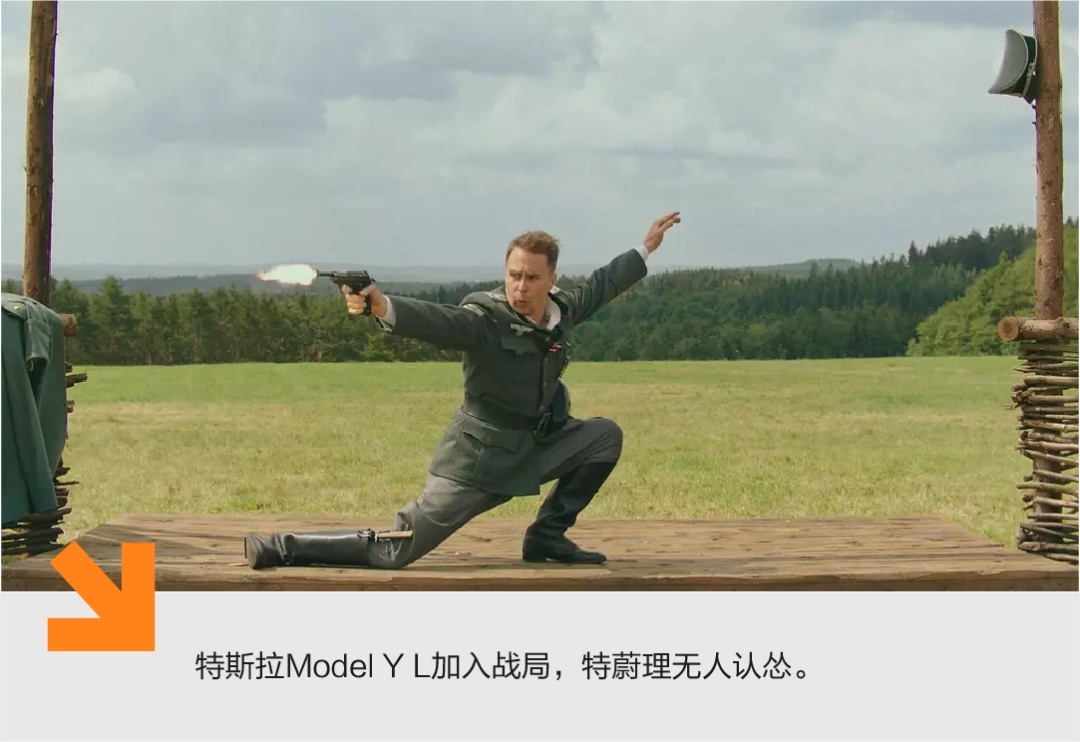
Large three-row SUVs have never been as popular as they are this year.
In the first half of the year alone, more than a dozen large three-row SUVs emerged in the Chinese new energy vehicle market.
The first tier is the practical type, with Lynk & Co 900 and Deep Blue S09 both focusing on "large six-seaters," representing a battle of space cost-effectiveness;
The second tier is the mid-to-high-end type, with Aito L90, Li Auto i8, and Aito M8(pure electric version) being a pure electric version of the Three Kingdoms battle, competing in aesthetics + space + experience, with releases concentrated in July and August.
The third tier is the luxury type, represented by ZEEKR 9X and Yangwang U8L, competing in value.
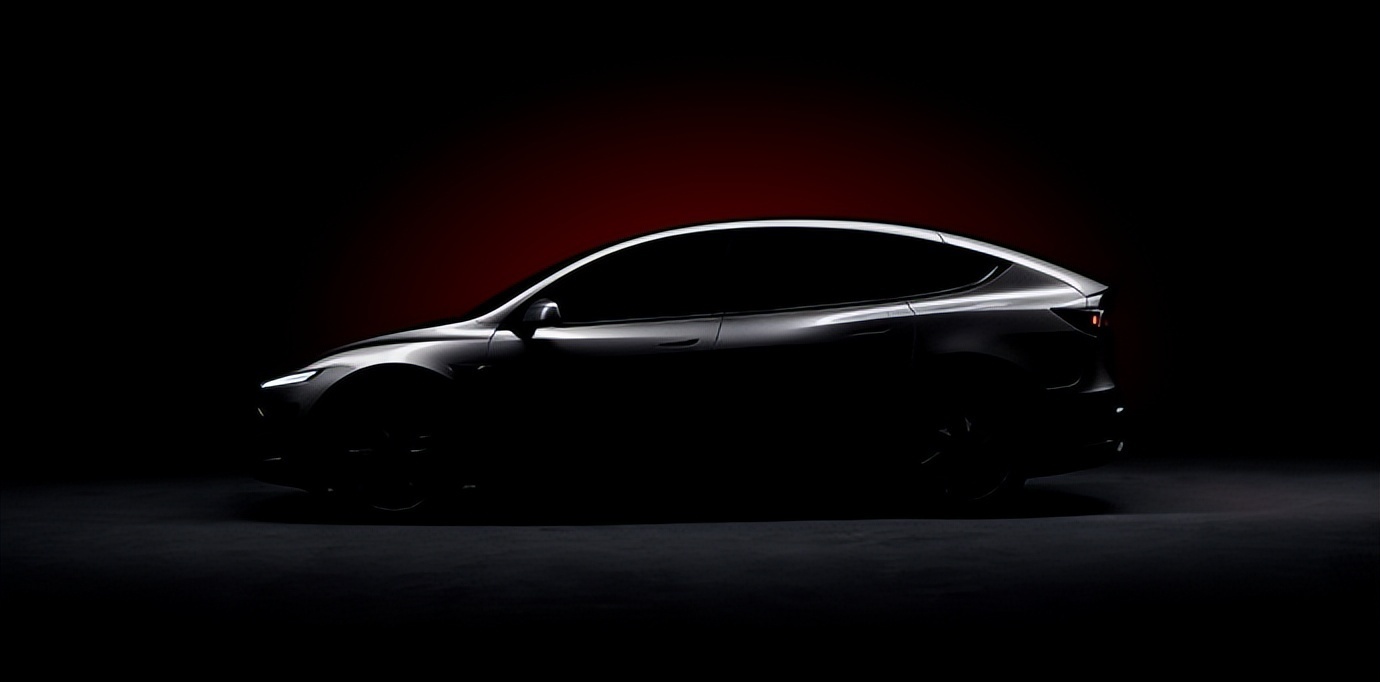
Noweven Tesla is moving, officially announcing the launch of a large six-seater luxury SUV Model Y L in the fall.
In the competition of three-row SUVs, no one backs down. The biggest change is that the competition points of mid-to-large SUVs have become more detailed, focusing on the specific third-row space equality and function equality, with "large six-seaters, true three rows" becoming the main thread of competition for mid-to-large SUVs.
But SUV users with a budget of over 200,000 yuan are not only paying for the product and space but also for their own aesthetics.
Among the three tiers, Aito L90's banner is the most distinct, labeled as the first large three-row pure electric SUV.
Considering its BaaS plan at 198,900 yuan and the vehicle purchase price of 278,000 yuan, Aito L90 is most likely to become the dark horse with the most competitiveness in the 200,000 yuan SUV market this year.
01,Three-row SUV evolution: Without a third row, it's hard to call it an SUV
Three-row SUVs are not a new thing.
Many people generally misunderstand three-row SUVs, thinking that it was because Chinese people love big cars that joint venture cars developed three-row SUVs for the Chinese market when entering China.
In fact, this is not the case. "Three rows" was one of the original hallmarks of SUVs. In other words, without a third row, it doesn't have the SUV vibe.
The ancestor of SUVs, the first generation Chevrolet Suburban, was born with a third row.
The earliest three-row SUVs were a mix of truck chassis and station wagon appearance. The Chevrolet Suburban, born in 1935, not only had a third row of seats but also adopted a "3+2+3" layout, seating 8 people in one vehicle.
Another peak for SUVs was the post-World War II civilianization of Jeeps, with various three-row vehicles flooding the market, such as Jeep's Wagoneer series, which focused on creating spacious interiors for family users, with long seats in the rear that could accommodate three passengers.
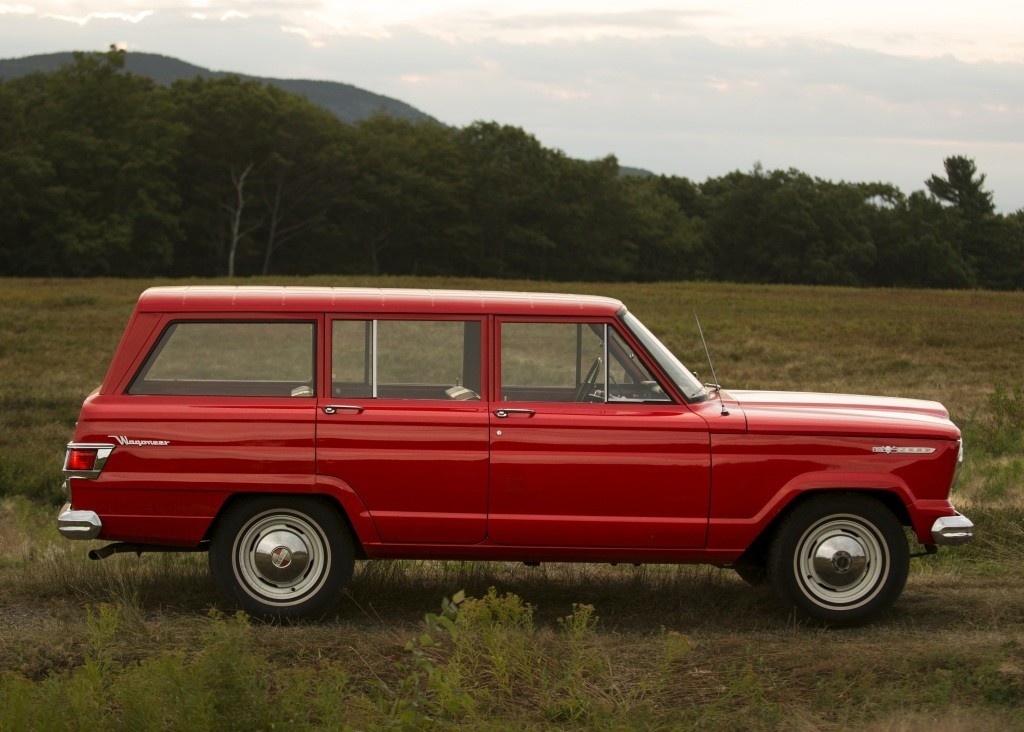
Jeep's Wagoneer series
For example, the sixth generation Suburban had a wheelbase of 3.2 meters and a body length of 5.4 meters, which today seems like a giant.
But looking back at the evolution history of domestic three-row SUVs, it can be divided into three stages.
1.0 Stage: The second generation Highlander brought three-row SUVs to the Chinese market, mainly with utility vehicle attributes.
In 2003, Toyota released the 7-seater version of the Highlander model. Compared to the first generation, the second generation Highlander extended the car length from 4.6 meters to 4.7 meters, and the second-row seats could be flexibly adjusted.
From the second generation Highlander, three-row SUVs officially entered the domestic consumer's vision, with cumulative sales of nearly 500,000 units, becoming the first three-row SUV hit model in China, with subsequent facelifts getting longer and longer.
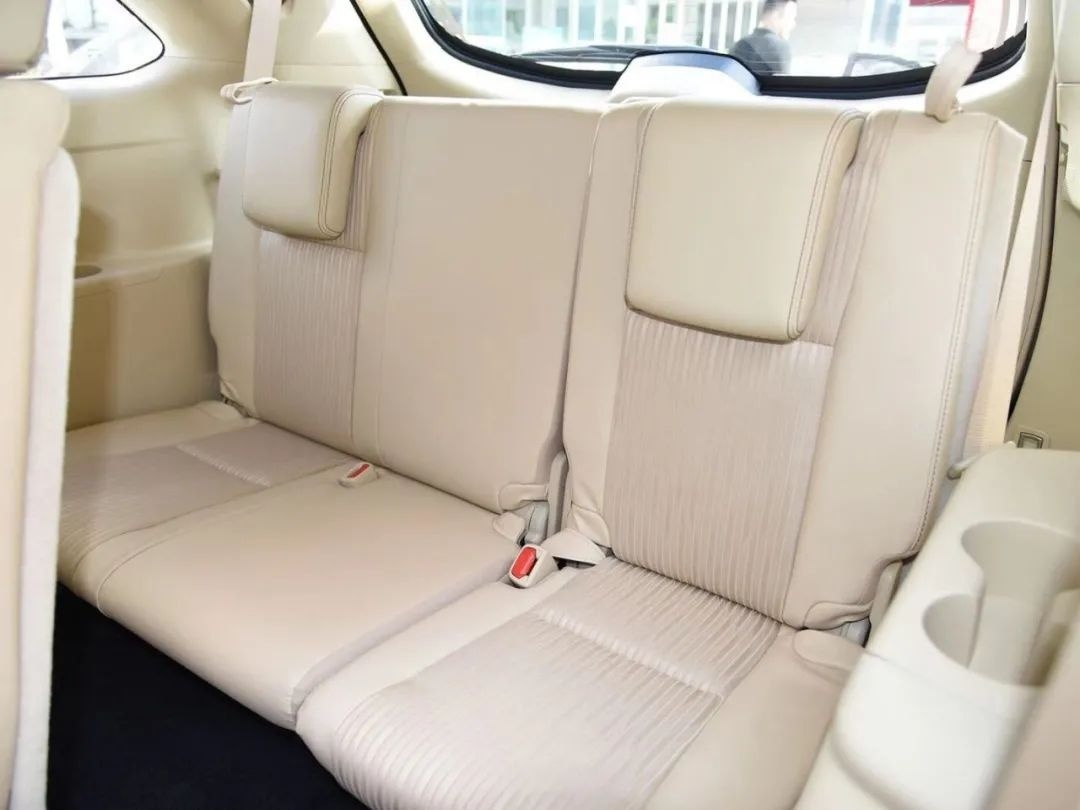
The third-row seats of the Toyota Highlander just entering the domestic market
This traditional three-row SUV had too much of a utility vehicle shadow, gradually falling into the inertia of making space longer and power bigger.
The 2024 Highlander reached a car length of 4.9 meters, 2.5T hybrid, and 7-seat layout.
For a long time, the third row of the Highlander had no comfort, for example, the Highlander had an 8-seater model abroad, but it was set as a 7-seater model in China (actually seating 8 people violates traffic regulations), and the seats were not modified, with a three-seat design that could only seat two people, affecting comfort.
2.0 Stage: Li Auto ONE reshaped the SUV market, leading SUVs to focus on family scene development functions.
Li Auto ONE pioneered the development of vehicle functions with family scenes.
The biggest feature is that the brand was deeply integrated with SUVs from the beginning.
Li Xiang recalled that when he was picking up his child, it suddenly rained heavily, and the umbrella was blown away, and he couldn't get a car. From that time, he wanted to make a car that could shelter the family from the wind and rain, which was the origin of "car and home."
In 2018, Li Auto ONE was released, and for the first time, it was equipped with "refrigerator, color TV, and big sofa" in the car.
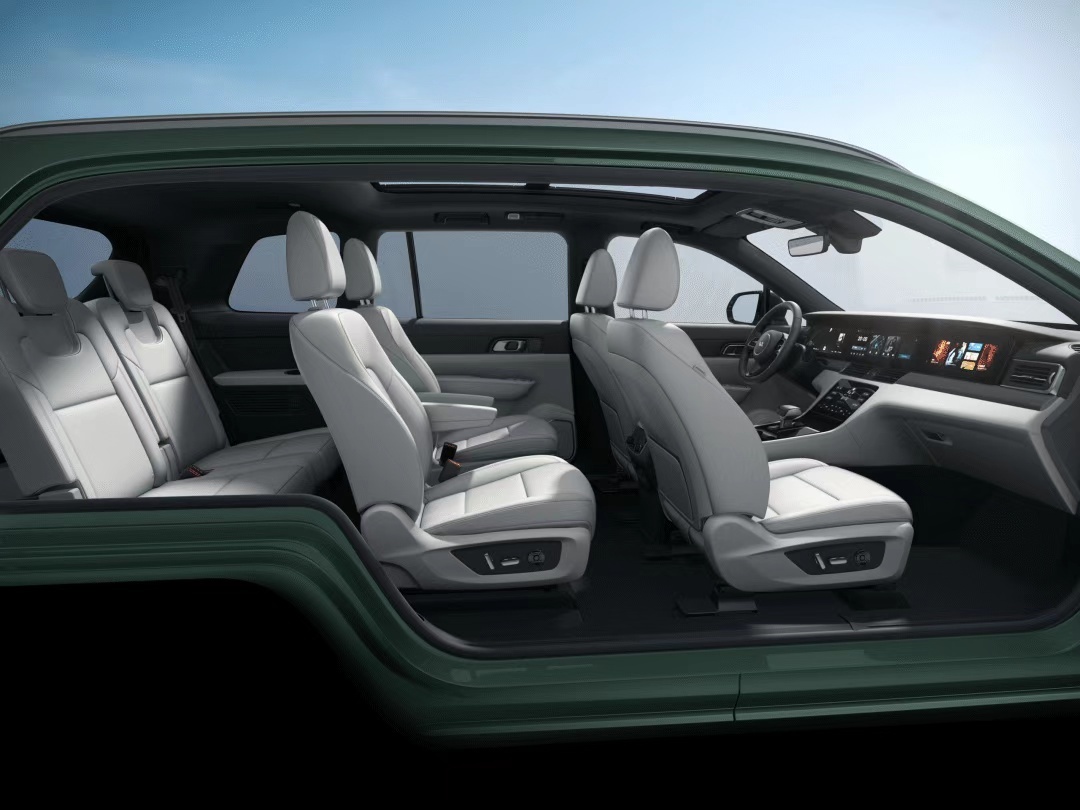
Li Auto ONE passenger cabin
At that time, many people compared Li Auto ONE with the Highlander. The second generation of large three-row SUVs was not only larger but also more technologically advanced.
The initial Li Auto ONE had a car length of 5020mm, 20cm more than the Highlander at the time, and also had a sense of technology.
At that time, Li Auto ONE had pioneering features such as four-screen voice interaction, dual chips, and an auxiliary driving system, which were unprecedented configurations in joint venture three-row SUVs.
From that time on, Li Auto ONE's "refrigerator, color TV, big sofa" became the intelligent standard for subsequent domestic three-row SUVs. But the shortcomings were also obvious, as Li Auto ONE's third-row space was not perfect.
Neither the Highlander nor Li Auto ONE made special optimizations for the third row. Li Auto ONE's maximum third-row legroom was 710mm, and the Highlander's was 690mm. The headroom and seat height were consistent with Li Auto ONE. Both models had cramped third-row legroom, only suitable for short-term emergencies.
3.0 Stage: Represented by Aito L90 and Li Auto i8, the three-row SUV is the generation with the highest weight on third-row seating experience in history.
Aito L90 and Li Auto i8 brought three-row SUVs into the system of "intelligent, space three-row equality."
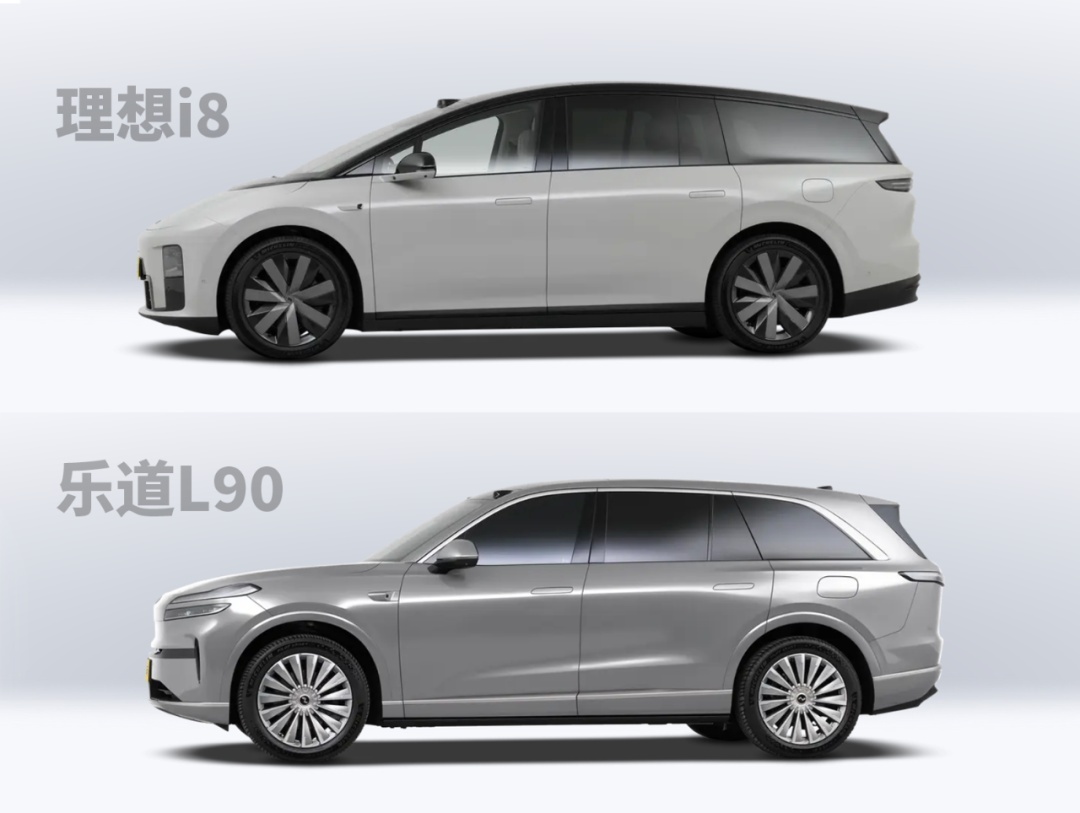
Previously, mid-to-large SUVs had issues with the third row being non-adjustable, not large enough, and uncomfortable. In the 3.0 stage, three-row SUVs not only have space equality but also technology equality.
Aito L90 has a car length of 5.145m and a wheelbase of 3.11m, with legroom exceeding 1m in each row, especially the third row with a maximum legroom of 1043mm. The third-row seats can be electrically adjusted, with a maximum reclining angle of 38° to ensure ample space.
Additionally, the third row also has seat ventilation, charging ports, and cup holders to enhance the experience.
Similarly, Li Auto i8's third row will also have cup holders, armrests, and other comfort-enhancing configurations.
Thus, the era of equally comfortable three-row SUVs is slowly arriving.
02,Solving three problems, Aito L90 has the potential to become a hit
Aito L90 has two labels: it is the first pure electric large three-row SUV, and it is also the largest model Nio has ever made.
Nio traditionally does not disclose order numbers, but after the pre-sale launch event, Aito L90 showed signs of becoming a hit.
On one hand, the number of people visiting the store increased significantly. According to blogger Sun Shaojun, the number of people visiting Aito on weekends increased by 3-4 times.
On the other hand, Aito L90 has a breakout effect. It is reported that only 20% of Nio's old customers are upgrading to Aito L90, which also means that a large number of users may come from traditional fuel vehicles.
Aito L90 can stand out in the competition of large three-row SUVs by answering three questions well.
The first question is, what makes Aito L90 different from other three-row SUVs?
The large three-row concept adopted by Aito L90 is not new. It is equivalent to the three-room concept, which Li Auto and Leapmotor have successively referenced to precisely design the space, but it is actually difficult to do the third row well.
Leapmotor C16 emphasizes "large 6-seater," with a starting price of 151,800 yuan. Due to cost constraints, the whole vehicle can only achieve 6 seats, unable to ensure the comfort of the third row. User tests show that the third-row legroom is about 820mm.
The biggest feature of Aito L90 is that it makes both the seating space and storage space large and real.
In addition to the third-row legroom exceeding 1 meter, Aito L90 also innovates in storage space.
First, Aito L90 has the largest front trunk among SUVs, with a space of 240L. The innovation lies in making the storage function scenario-based, similar to a person's "fourth space."
It solves the pain points of large families in supermarket shopping and child-carrying scenarios. For example, after buying a lot of things in the supermarket, if the parking spaces on both sides are already full, you don't have to squeeze through the gap to open the trunk.
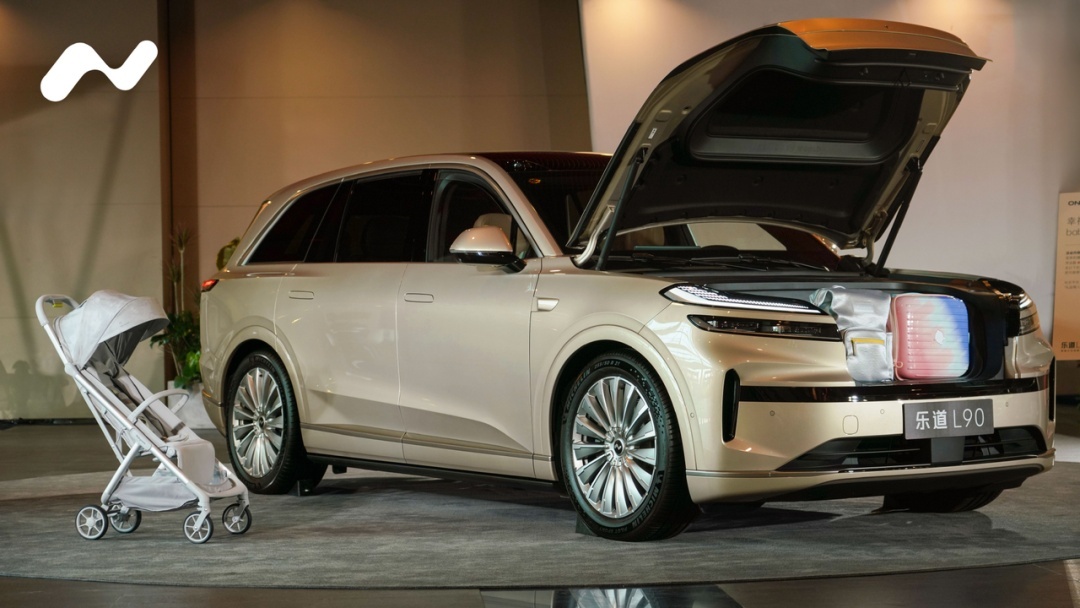
More importantly, it provides emotional value on the basis of space.
This year, the front trunk has also become a competition point for SUVs. XPeng G6 and Xiaomi YU7 both offer front trunks, but they are mainly for small items, while Aito L90's front trunk is the only one that can be scenario-based: people can sit in the front trunk to fish, camp, etc., enhancing the scenario-based connection between people and cars.
Adding the 430L rear trunk space, Aito L90 can achieve "6 people 10 boxes," solving the driving and riding experience for a family of three generations.
The second question is, what did Aito do to dig out these spaces?
The focus of SUVs is space, but Aito L90 and Xiaomi YU7 adopt a diagonal strategy. YU7 is an extremely stylish car, with appearance weight far exceeding space, while Aito L90 aims for extreme space.
To this end, Aito and Nio have paid a huge price in research and development. In summary, it is integration, lightweight, and miniaturization, testing Nio's ability to refine and transfer technology.
For example, the thermal management system of new energy vehicles usually has three circuits - air conditioning, battery, and motor control. After integrating the three thermal management systems, the volume is usually large, and the pipeline is long. Aito L90 integrates the 8.8-meter pipeline into an A4-sized flow channel board, which can release 50L of front trunk space.
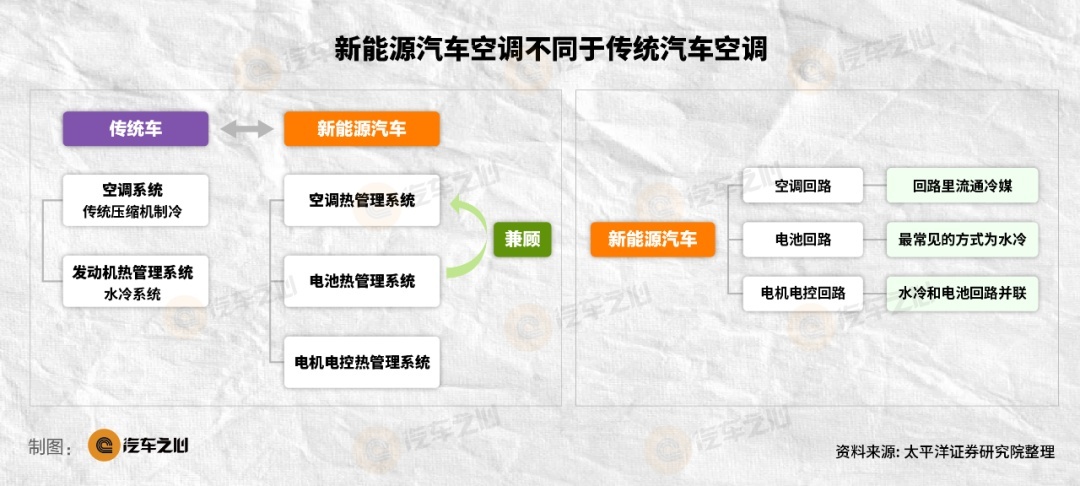
Even some details are not overlooked. Aito upgraded the traditional fuse to an intelligent fuse, reducing the volume by 88% and releasing 8.4L of space for the entire vehicle layout.
The core is that Aito L90 insists on only making pure electric vehicles. Former Aito CEO Ai Tiecheng once mentioned: the engine, fuel tank, and intake and exhaust systems of hybrid/extended-range vehicles are equivalent to the size of 2 suitcases.
Since pure electric can release more space, this also raises the third question: why didn't anyone make pure electric SUVs before?
It wasn't done because they didn't want to? Obviously, it was because the conditions were not mature.
For a long time, the charging and swapping infrastructure in China did not solve the problem of range anxiety, and the larger the SUV, the heavier and more power-consuming it would be.
Aito M8 has a car length of 5.1m and weighs 2695kg, while Li Auto L9 has a car length of 5.2m and weighs 2570kg. Full-size SUVs generally exceed 2.5 tons.
And large three-row SUV users have a stronger demand for power safety than car users. Therefore, Aito and Li Auto's mid-to-large SUVs are all extended-range vehicles.
Until Li Bin asked a soul-searching question: "Now that the extended-range battery is getting bigger and bigger, why not just buy pure electric?"
Aito L90 can be labeled as the "first large three-row pure electric SUV" because Nio has laid the foundation.
Nio is currently the car company with the most self-built charging piles in China, with a total of 26,000 charging piles and 3,400 swapping stations, with an investment of over 18 billion yuan. Nio co-founder Qin Lihong once made an analogy: "It's like parents used to fill their children's pockets with food and drink when going out, but now with takeout, there's no need to worry."
In short, the swapping station is equivalent to a range extender that doesn't need to be carried.
Another reason is that Aito L90 is very light. With a car length of 5.1m, the rear-wheel-drive version of Aito L9 weighs only 2250kg, 10%-15% lighter than similar 5-meter-long large SUVs, and only 25kg heavier than Nio ET5T.
In this way, L90 is likely to create the highest level of lightweight for large three-row SUVs, which also makes the rear-wheel-drive version of Aito L90 have a minimum energy consumption of only 14.5kWh/100km, lower than some pure electric mid-sized cars.
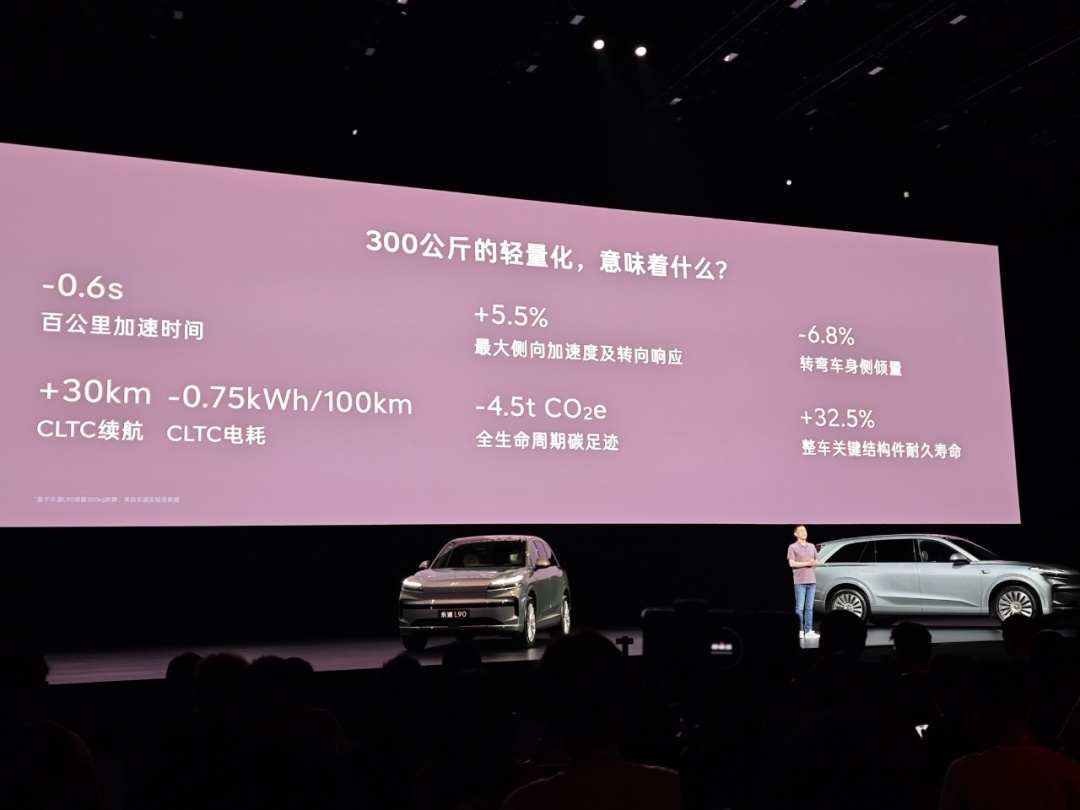
After answering these three questions, it will be found that Aito L90 already has a moat in the product definition of large three-row SUVs.
03,Both are pure electric three-row SUVs, the aesthetic divide between Li Xiang and Li Bin
This time, Aito L90 and Li Auto i8 are very close.
The timing is close, with L90 pre-sale and i8 official release both concentrated in July; the positioning is also close, both focusing on pure electric large family 6/7-seater SUVs; even the marketing rhythm of Aito L90 is very close to i8.
Aito L90 closely follows a more expensive model, which is very smart.
Many people once thought that Aito L90 should be close to Deep Blue and Lynk & Co, but after Nio transferred its product refinement capabilities to Aito, it also brought positive feedback to Aito.
Thus, there is a cross-level comparison between the 200,000 yuan Aito L90 and the 300,000 yuan Li Auto i8.
And the external factor is that everyone is eager to see a fierce close battle between Li Auto and Nio.
These two cars are of great significance to both Li Xiang and Li Bin. Li Auto i8 is Li Auto's first pure electric SUV, and the fate of i8 determines whether Li Auto can stand firm in the main battlefield of SUVs.
Aito L90 is even more of a turning point in the storm for Li Bin.
In the past year, Nio has experienced low sales of Aito, layoffs, and poor financial conditions, urgently needing a hit model, and currently, only Aito L90 can take on this responsibility.
Li Auto i8 and Aito L90 represent the new forces' different aesthetic preferences for large three-row SUVs.
Li Xiang is the radical faction.
There are two thinking paths here. Some users expect a pure electric SUV similar to the L series, while Li Xiang's approach is to completely separate the appearance of pure electric SUVs from the L series - pure electric looks one way, extended-range looks another.
It can be seen that the appearance of Li Auto i8 draws design inspiration from MEGA, looking more like an MPV.
For this, Li Auto also has to pay a higher explanation cost.
Li Xiang said on Weibo that Li Auto i8 undertakes a lot of "cognitive pioneering" work, so more media and users need to be invited to the launch event, requiring a larger venue.
Looking inward, i8 is very restrained, with an interior not much different from the Li series, except for gold trim, dual small tables in the second row, automatic air outlets, and extended ambient lighting to further enhance the sense of luxury.
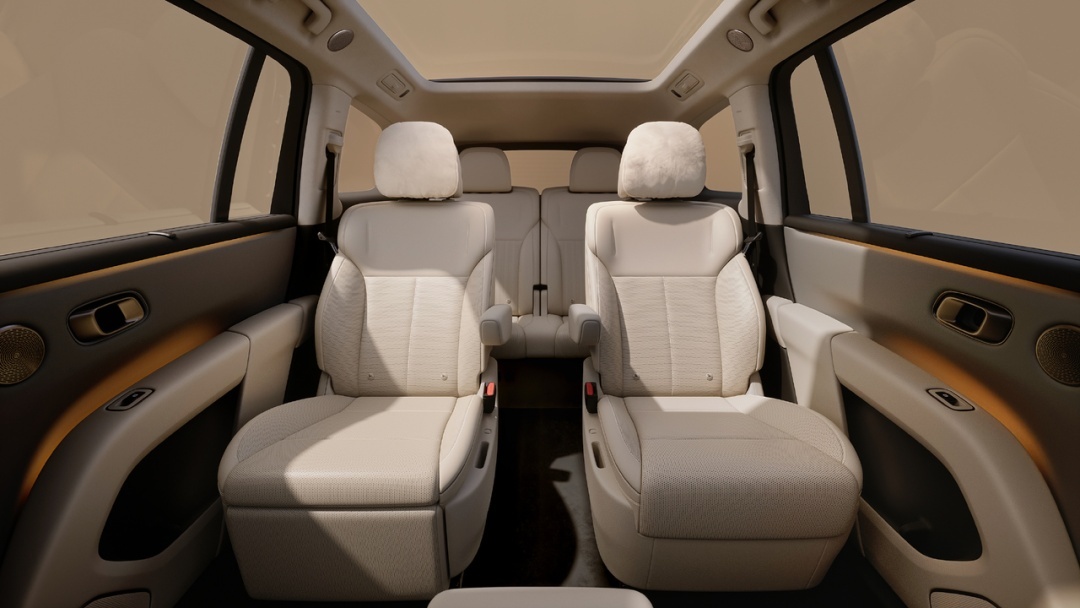
Li Auto i8 second row
In contrast, Li Bin has become the conservative faction, making a cheaper SUV more luxurious.
The appearance of Aito L90 is first and foremost a very square and orthodox large SUV.
And Aito L90 brings luxury elements such as solid wood trim, speaker covers, soft packages, and wrap-around ambient lighting to the forefront, while the interior of Li Auto i8 is relatively simple.
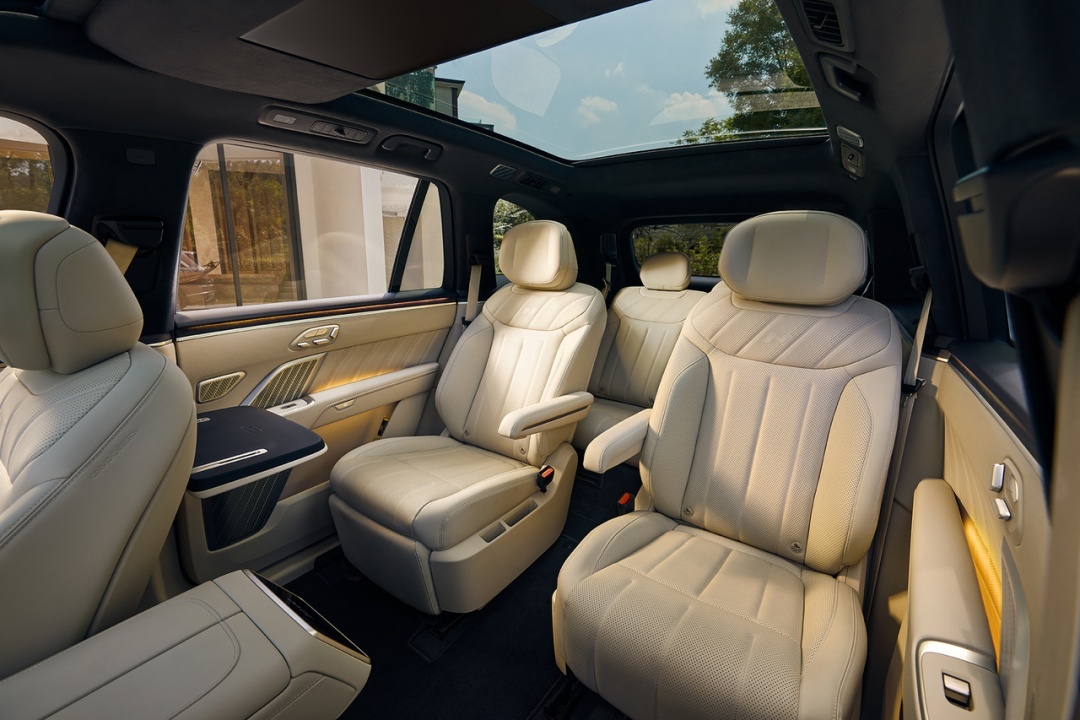
Li Auto i8 second row
From here, it can be seen that Nio's temperament has completely changed.
Nio used to "hide the meat in the rice," but this time on Aito L90, you can see: the car should be able to see the braised pork at a glance, and as you look, you find that there is minced meat hidden underneath.
There is no right or wrong in Li Bin and Li Xiang's preferences for large three-row SUVs, as they are the best choices based on their own positioning.
Aito can no longer rely on Nio users' repurchase to survive, but must rely on "Little Nio" to leverage non-Nio users and penetrate the mass market, and Li Auto is the same.
For this reason, Aito is making a pure electric version of "Li Auto L10," while Li Auto is creating a new form between SUV and MPV.
But in any case, Li Auto i8 and Aito L90 both bear the role of "educating the market," and their goal is to eat up those former fuel vehicle users, telling them that the best time to buy a pure electric car has arrived, which will also pave the way for other brands to enter the pure electric SUV market and do the preliminary education.
"There are no delicate grasses in the desert, and no nameless people in the sea," the market for large three-row SUVs is never calm, and who is the aircraft carrier and who is the yacht will be revealed in the fierce competition.
$Li Auto(LI.US) $NIO Inc(NIO.US)
The copyright of this article belongs to the original author/organization.
The views expressed herein are solely those of the author and do not reflect the stance of the platform. The content is intended for investment reference purposes only and shall not be considered as investment advice. Please contact us if you have any questions or suggestions regarding the content services provided by the platform.
