

 Top 10 Influencers in 2025
 Traded Value
Stock Live Trading P17: The Most Practical Live Trading - Choice Matters More Than Effort

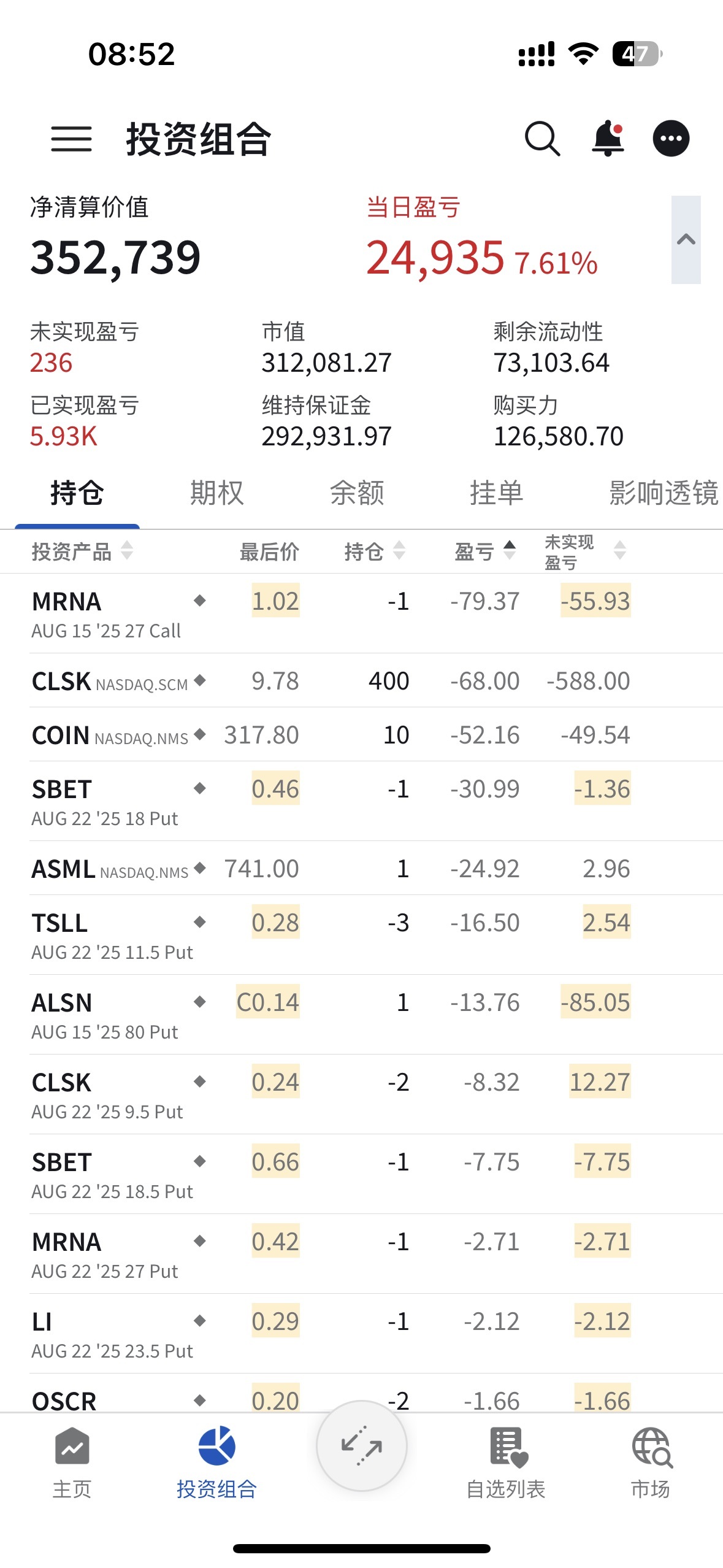
I really have no energy to complain about the A-share market. The index surged, but my leveraged full position only made a profit of 89 yuan, 0.08 points, which isn't even enough to cover the transaction fees. What's the point of this?
Although the Myanmar A-share market has been in a bull market this year, the stocks that have risen the most are micro-cap stocks, clustered stocks, and hot stocks. On the other hand, true value investment stocks haven't risen at all—some have even fallen, like China Shenhua, COSCO SHIPPING Energy, and Wuliangye. This is confusing for me, as my watchlist is full of value stocks. Who is actually making gains?
I'm treating the A-share market like a Yu'ebao (money market fund) now. First, I'm waiting for sector rotation. Second, I'm waiting for a big opportunity in the U.S. stock market to shift my portfolio there (I'll transfer everything at once, but poor risk control could be problematic, so I'm waiting for the right moment).
After complaining about the A-share market, let's talk about the U.S. stock market. Simply put: no shorting, no chasing highs, no buying small-cap stocks, no gambling—this is the survival logic for retail investors.
Sometimes, patience pays off. Often, you can wait for a great stock to crash, like ASML or Eli Lilly. There might only be one such crash in a year, but when it happens, you hesitate and miss the opportunity.
The mindset of being in cash versus being stuck in a losing position is different. If you're in cash, you always want to wait a bit longer. Even if you buy a little, you're quick to sell for a small profit (I bought ASML at 753 and sold at 753, Eli Lilly at 699 and sold at 699, because I subconsciously thought they'd drop again). But when you're stuck in a losing position, you stubbornly wait for it to recover. No wonder Boss says, 'You only hold when you're stuck.'
Take UnitedHealth, for example. Many bought at 230 and sold between 240-250. Those who held until 300 were mostly the ones stuck from the last crash—painful.
Think about it: a piece of gold, even if thrown into a cesspool, will eventually be recognized. As long as the gold hasn't collapsed by then, you'll make money.
So, in the future, I'll set a fake cost price when buying the dip. For example, if I buy ASML at 753, I'll trick myself into thinking I bought it at 803—inflating the cost by 7-8 points. This way, the profit feels richer, and I'll hold longer. After all, why sell gold at the price of a rock? What's the harm in holding longer?
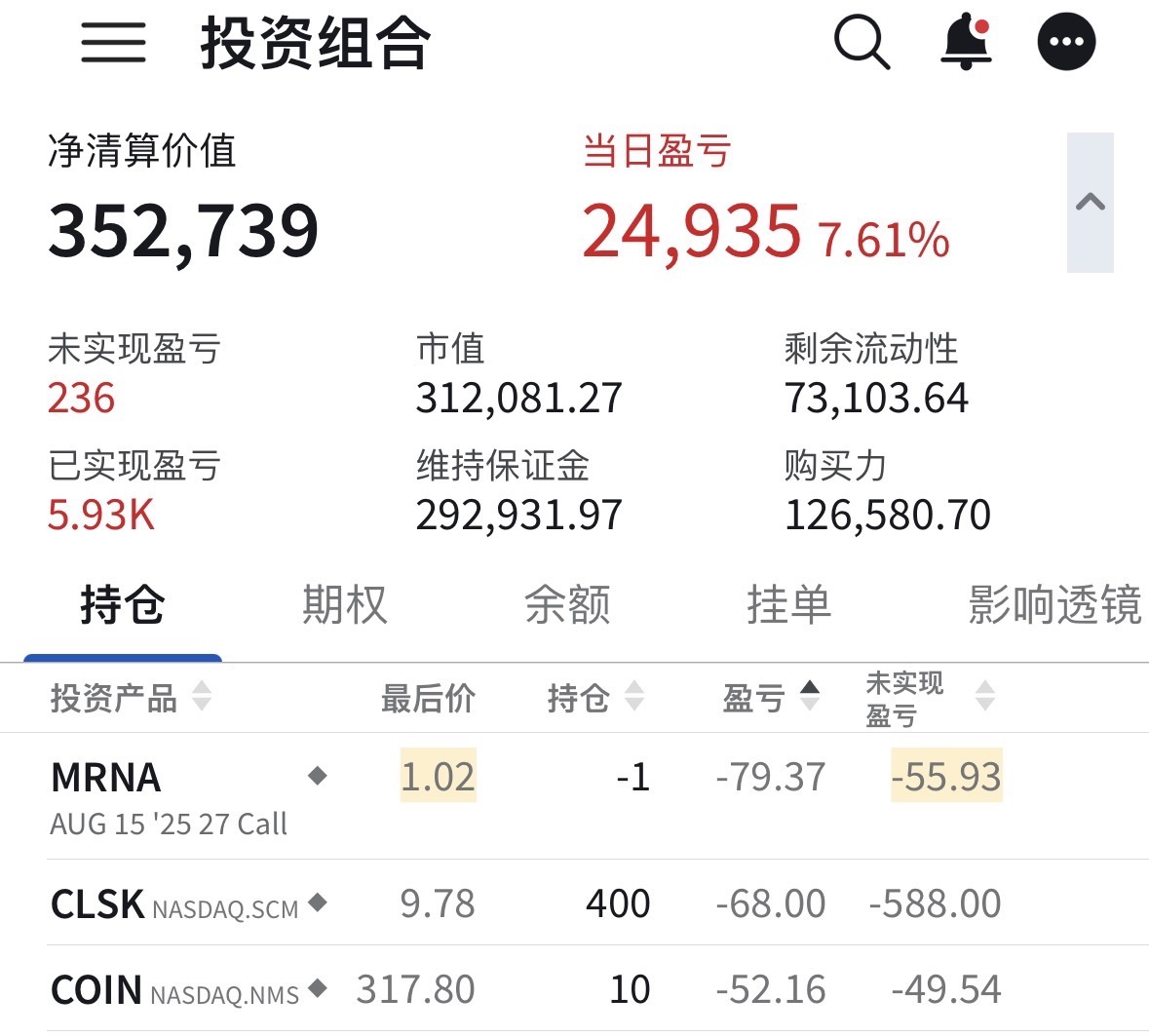
On Friday, my main gains came from UnitedHealth and stablecoin rebounds. Some rental puts expired worthless. Well, next week continues.
In summary: A-shares made 89 yuan, Hong Kong stocks made 19,247 HKD (IB's daily profit isn't accurate).
Total realized profit: A-shares made 1,247 yuan, Hong Kong stocks made 46,084 yuan (U.S. stock principal was double that of A-shares, but profits were nearly 40x—at least 10x more profitable).
$Unitedhealth(UNH.US)
The copyright of this article belongs to the original author/organization.
The views expressed herein are solely those of the author and do not reflect the stance of the platform. The content is intended for investment reference purposes only and shall not be considered as investment advice. Please contact us if you have any questions or suggestions regarding the content services provided by the platform.
