



Don't worry, gas cars will step in


Gasoline cars have recently regained their swagger.
The Audi brand has stepped up its game, helping it carve out a niche in the luxury B-segment sedan market in November. With sales of 14,000+ B-segment luxury sedans in November, the Audi brand once again secured the top spot in this segment. This is largely thanks to the strong performance of the FAW Audi A5L, which sold over 6,000 units in a single month.
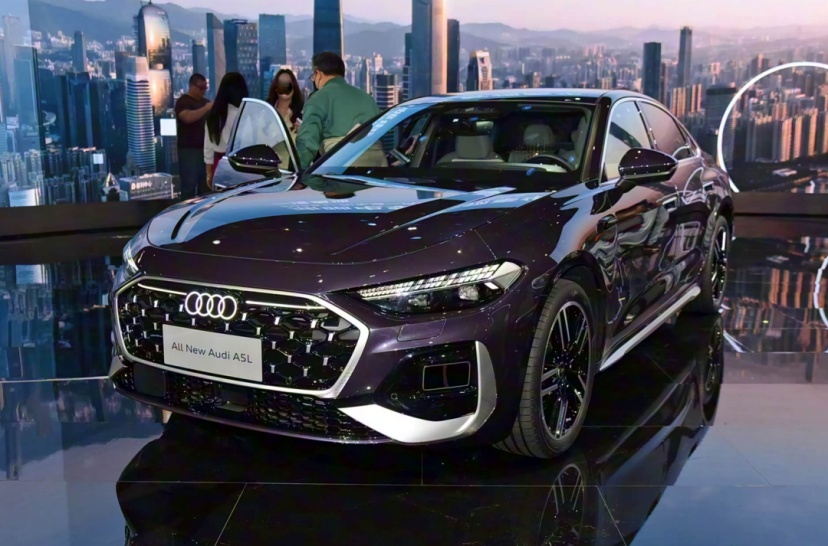
But the FAW Audi A5L isn’t stopping there—it has another ace up its sleeve: the FAW Audi A5L Qiankun Intelligent Driving Edition.
As the name suggests, this version builds on the FAW Audi A5L by adding Huawei’s Qiankun Intelligent Driving system, specifically customized for the A5L.
This configuration might represent the pinnacle of intelligent driving experience for gasoline cars at this stage, and it’s already available. Currently, test-drive vehicles for the FAW Audi A5L Qiankun Intelligent Driving Edition have arrived at dealerships nationwide, and those interested in intelligent driving for gasoline cars can experience it anytime.
Intelligent gasoline cars are, in fact, products that align with consumer demand. The "2025 China New Energy Vehicle User Demand Trend Study" points out that the intelligent driving experience has, for the first time, surpassed electrification itself, becoming the key variable that determines survival. This means that the battleground in China’s auto market isn’t about gasoline vs. electric—it’s about intelligence.
At the recent Guangzhou Auto Show, a wave of intelligent gasoline cars made their debut.
Nissan set up a separate booth to showcase the Nissan Teana equipped with the Harmony cockpit. FAW-Volkswagen also smartly placed its gasoline cars with high-speed NOA (Navigate on Autopilot) in the front row.
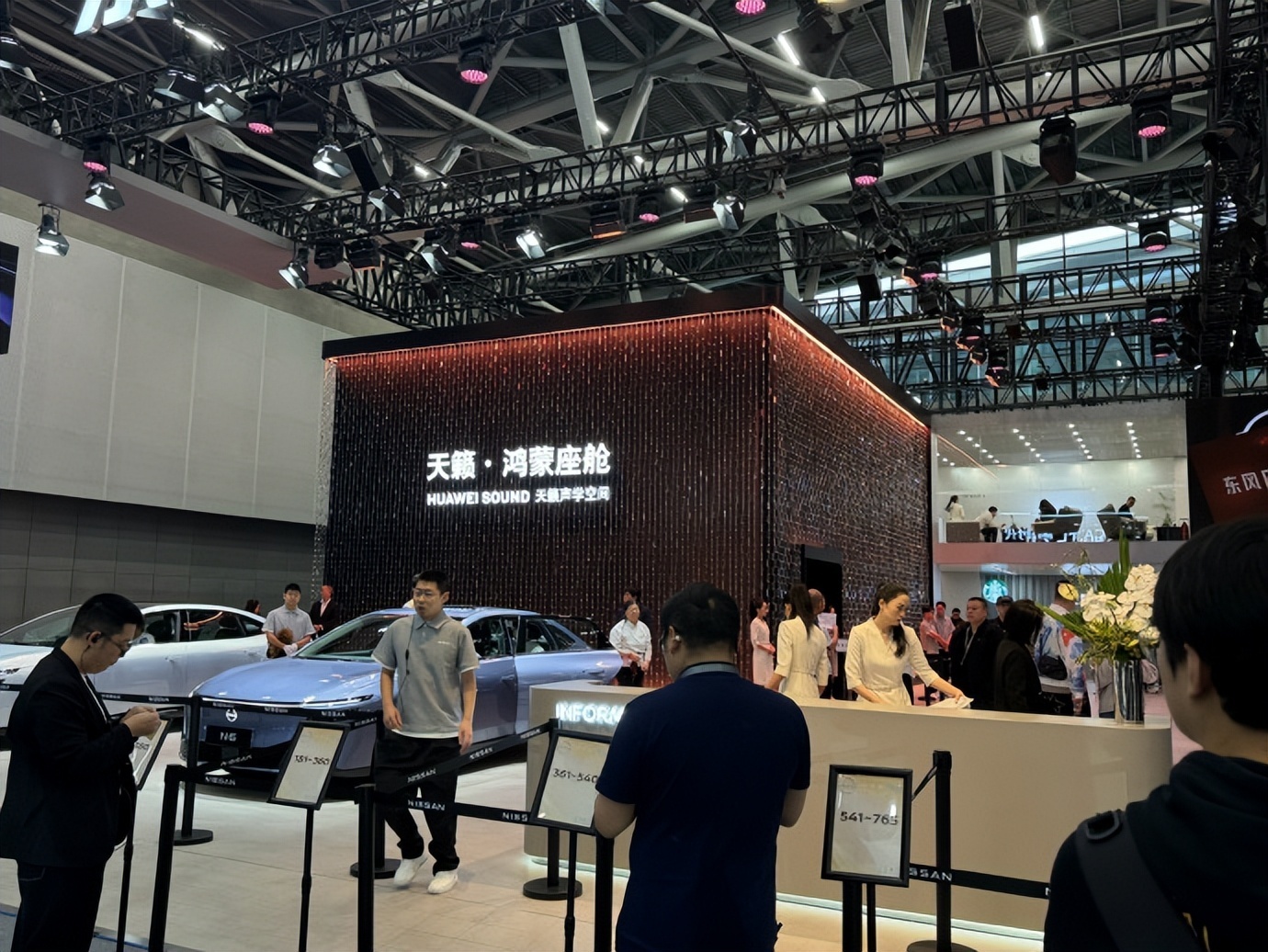
The FAW Audi A5L Qiankun Intelligent Driving Edition was even placed in the most prominent spot at the entrance of Huawei’s Qiankun booth.
For joint-venture automakers, the boost from intelligent driving is like rain after a long drought.
Now, collaboration between joint-venture automakers and Chinese tech companies has become a mainstream trend, but the approach and attitude toward cooperation determine the penetration rate of intelligent driving.
Some adopt a trial mindset—either limiting intelligent features to one or two models to mitigate risks, hoping for a moonshot, or, due to cost constraints, choosing between intelligent driving and intelligent cockpit, resulting in limited scope.
Others take an ownership mindset, betting big on intelligence with flagship models, determined to overturn the market’s stereotypes about gasoline cars—succeed or die trying.
The former might succeed, but the latter is more likely to usher in a new era of intelligent gasoline cars.
01. A Counterattack Six Years in the Making
"Equal intelligence for gasoline and electric" isn’t a new phrase, but it’s one fraught with misconceptions.
Most people’s first reaction is: Can gasoline cars even be intelligent? Their second thought: Gasoline cars’ intelligence can’t possibly match that of electric cars.
In this wave of intelligent driving, the biggest cognitive gap is: Electric cars = smartphones, gasoline cars = feature phones. To bridge this gap, the market needs a gasoline car that fully embraces intelligent driving across all scenarios.
In short, equal intelligence for gasoline and electric also needs a "blockbuster car."
Right now, the model that best embodies this "blockbuster" potential might be the FAW Audi A5L Qiankun Intelligent Driving Edition.
Its first label: A precision-engineered "premium intelligent driving" experience.
The FAW Audi A5L Qiankun Intelligent Driving Edition is a one-two punch from Huawei and Audi—one is the market’s undisputed leader in intelligent driving, the other a representative of premium joint-venture brands. Audi chose Huawei for its overwhelming technical prowess.
The Huawei Qiankun Intelligent Driving system in the FAW Audi A5L isn’t the off-the-shelf Huawei ADS 4 but a high-end, deeply customized version based on Huawei and Audi’s next-gen PPC intelligent platform. From the vehicle’s electronic architecture down to its handling style, everything is fine-tuned to the FAW Audi A5L’s characteristics.
Through deep collaboration, the FAW Audi A5L Qiankun Intelligent Driving Edition delivers a human-like, comfortable intelligent driving experience while retaining the unique handling style of a gasoline car.
Second label: The FAW Audi A5L Qiankun Intelligent Driving Edition achieves "full-scenario intelligent driving," covering highway NOA, urban NOA, and intelligent parking. With intelligent driving covering all scenarios, it’s far more convenient for consumers, effectively covering daily commutes, trips, long-distance travel, and more—ready to use anytime, anywhere, with peace of mind.
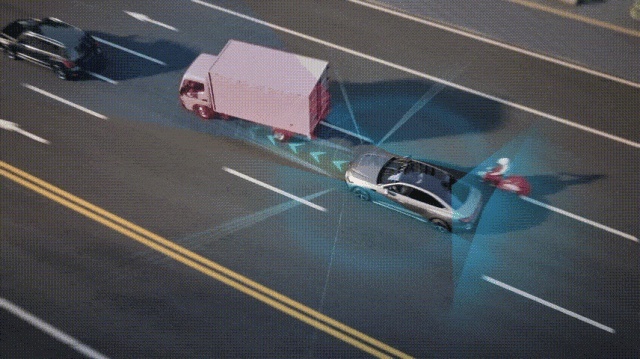
The market isn’t short of gasoline cars with assisted driving capabilities, but most focus on highway NOA. The FAW Audi A5L Qiankun Intelligent Driving Edition, bundled with exclusive purchase policies, starts at around ¥272,800. In the ¥250,000–300,000 price range, gasoline cars with high-end urban intelligent driving are a rare breed.
Third label: Dual LiDAR configuration.
The most interesting thing about this car is that it maxes out on intelligent sensing hardware while maintaining a low-key appearance.
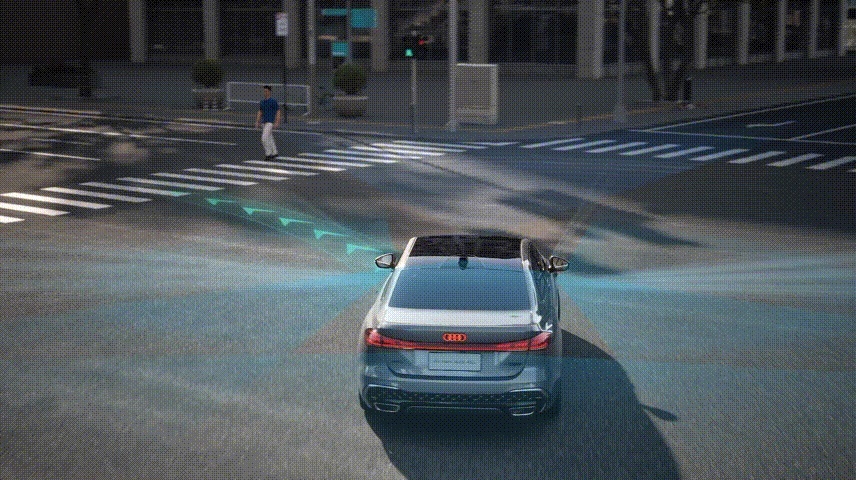
The FAW Audi A5L Qiankun Intelligent Driving Edition adopts a multi-sensor redundancy solution: 2 LiDARs, 6 millimeter-wave radars, 13 cameras, and 12 ultrasonic radars. In the joint-venture camp, gasoline cars with LiDAR are uncommon—let alone two.
The FAW Audi A5L Qiankun Intelligent Driving Edition is the only model in its class with dual LiDARs. To avoid compromising aesthetics and aerodynamics, the two LiDARs are cleverly embedded on either side of the front bumper, with a design that extends their lifespan. You’d hardly notice them unless you looked closely.
Test-drive vehicles for the FAW Audi A5L Qiankun Intelligent Driving Edition are now available at dealerships. The subtle design details and the intelligent driving experience powered by Huawei Qiankun can only be fully appreciated through an in-person test drive, revealing the depth of the joint development.
The reason for going all out with hardware? To perfect intelligent driving. Dual LiDARs provide comprehensive environmental perception, especially at intersections and during lane changes, making intelligent driving safer.
Judging by these specs, this is a true flagship joint-venture gasoline car with fully loaded intelligent driving.
Fully loading intelligent driving onto a gasoline car isn’t easy.
The difficulty of intelligent driving for gasoline cars isn’t on the same level as for electric cars. Intelligent driving for gasoline cars sits at the pinnacle of the intelligent driving pyramid.
Industry insiders have pointed out the challenges: heat dissipation, slow engine response, and jerky acceleration.
Take acceleration commands, for example. Electric cars can respond instantly, ramping up motor speed, while gasoline engines lag by 200–400 milliseconds.
But the challenges don’t end there. The root issue lies in the vehicle’s electronic architecture.
Unlike electric cars’ centralized domain-control architecture, traditional gasoline cars typically use a distributed setup, with independent control units for brakes, powertrain, air conditioning, and lights. Communication happens over CAN buses, with dozens of ECU protocols interlinked but operating in silos. Integrating an intelligent driving "brain" into this setup—while achieving low-latency vehicle control—is the real challenge.
Intelligent driving for gasoline cars faces inherent barriers. But that doesn’t mean it’s impossible—it just needs a powerful enabler.
Audi dares to "eat the crab first." High-end intelligent driving for gasoline cars isn’t something that can be achieved in a year or two. This requires Audi to plan and develop ahead of time.
According to Auto Heart, Audi’s collaboration with Huawei wasn’t a spur-of-the-moment decision. The two companies finalized their partnership six years ago, with Huawei tasked with developing high-end intelligent driving for select Audi models.
Thus, Huawei and Audi have worked closely from the start to ensure the vehicles can achieve high-end intelligent driving.
So, while the outside world thought joint-venture brands were doing nothing, Audi unveiled its six-year-in-the-making "ace in the hole"—the FAW Audi A5L Qiankun Intelligent Driving Edition. Six years of joint refinement speak volumes about the product’s maturity.
This has also shifted the industry’s focus to the evolution of intelligent driving. Previously, there were calls for "intelligent driving equality"—making intelligent driving standard for cars under ¥150,000.
Looking at the sales landscape of China’s auto market, gasoline cars remain fertile ground for intelligent development. Last year, gasoline car sales outpaced new energy vehicles by 1.12 million units, and this year, gasoline cars are showing signs of recovery.
Data from the China Association of Automobile Manufacturers shows that from January to September 2025, domestic gasoline car sales totaled 8.141 million, up 1.7% year-on-year. In contrast, gasoline car sales in 2024 fell by over 17% year-on-year.
In all likelihood, gasoline and new energy vehicles will share the Chinese market equally for a long time to come.
Gasoline car users also need intelligence.
Thus, "intelligent driving equality" must include "gasoline-electric equality."
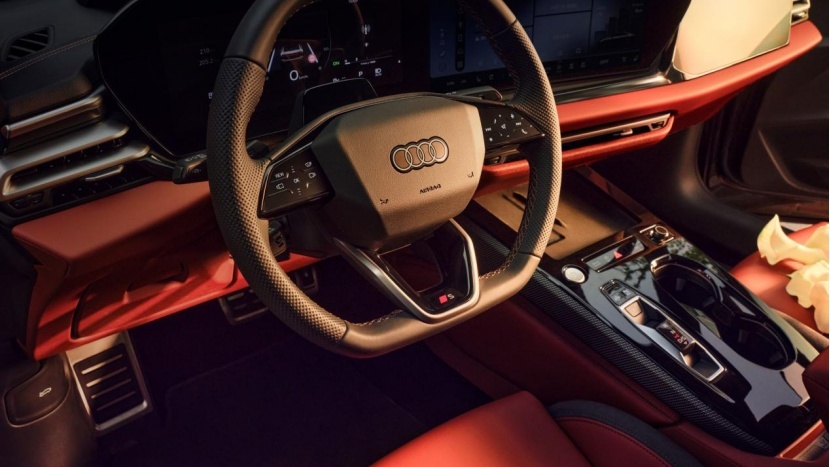
The FAW Audi A5L’s high-end intelligent driving isn’t about one model—it’s about firing the loudest shot for "gasoline-electric equality."
This requires resilience and persistence. According to Auto Heart, beyond the FAW Audi A5L Qiankun Intelligent Driving Edition launching this year, the new FAW Audi Q5L and A6L e-tron, set for release in early 2026, will also have corresponding intelligent driving versions.
02. The Foundation of Gasoline Cars Has Changed
High-end intelligent driving for gasoline cars boils down to the deep conflict between mechanical and digital architectures.
For example, actuator calibration cycles for gasoline cars are about 5x longer than for electric cars, and control tuning cycles are 8x longer, requiring extensive testing and adjustments.
Technically, intelligent cars can be broken into six layers: cloud, application software, basic software, electronic architecture, energy, and mechanical.
The first four layers determine a car’s intelligence; the last two determine whether it’s gasoline or electric.
In terms of division of labor, Huawei focuses on the top three layers, Audi on the bottom three—the latter being the prerequisite for intelligent driving in gasoline cars.
First, the platform can’t hold it back.
Behind the FAW Audi A5L Qiankun Intelligent Driving Edition’s breakthrough lies the PPC platform, built on the E(3) 1.2 electronic architecture.
Volkswagen’s E(3) architecture spans three generations:
- E(3) 1.1 corresponds to the MEB platform, represented by the VW ID.3 and ID.4.
- E(3) 1.2 corresponds to the PPC/E platform, represented by the FAW Audi A5L and Q6L e-tron.
- E(3) 2.0 corresponds to the SSP platform, slated for 2029.
The difference between the three lies in the evolution from a distributed to an integrated architecture.
From this perspective, the perception that gasoline cars are "dumb" stems from their distributed EEA architecture—not their powertrain.
Compared to E(3) 1.1, E(3) 1.2 consists of five high-performance computing platforms (HCPs), connected via gigabit Ethernet, enabling over-the-air updates from infotainment to chassis.
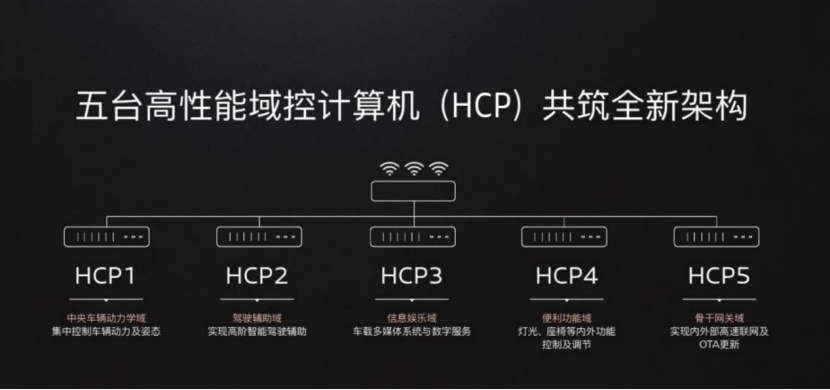
This is Audi’s most powerful computing setup yet. The five HCPs control all vehicle functions, including powertrain, intelligent driving, infotainment and comfort, safety systems, and backend connectivity.
For intelligent driving, HCP5 acts as the "chief dispatcher," HCP2 runs Huawei’s Qiankun algorithms, commands are relayed via HCP5 to HCP1 (powertrain/chassis), and HCP1 executes them—this is how gasoline intelligent driving works.
Insiders reveal that Huawei chose Audi because of the E(3) 1.2 architecture.
Second, power can’t be a bottleneck.
Whether gasoline or electric, every car has a lead-acid battery (the "small battery") powering low-wattage components.
Electric cars can use a DCDC converter to draw power from the traction battery, but gasoline cars only charge the small battery when the engine is running, leading to unstable and limited power.
A typical small battery, with 0.72–1.2 kWh, powers headlights, screens, audio, and AC. Adding an intelligent driving system (peak power ~200W) pushes it beyond its limits.
Audi’s solution is a stable power supply system.
On one hand, Audi adopts a "open source + throttle" strategy, fitting a larger battery (~1.79 kWh) and precisely managing each ECU.
On the other, the FAW Audi A5L Qiankun Intelligent Driving Edition has two motors in a P0+P3 configuration.
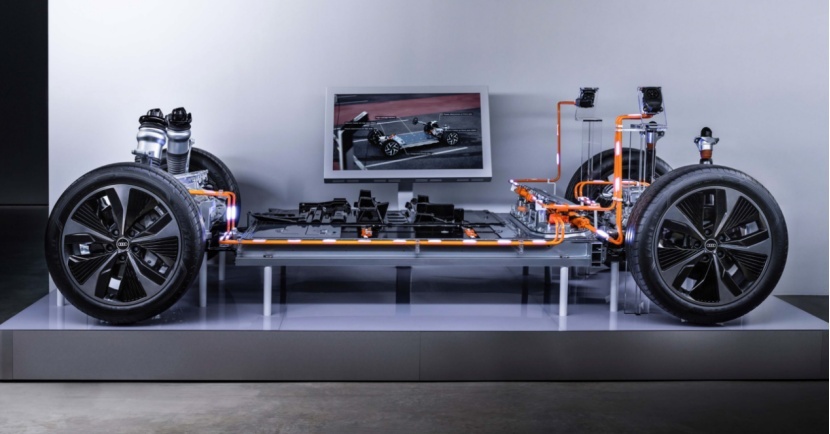
One is a BSG motor for starting the engine; the other, a PTG motor integrated into the transmission, assists power output and enables pure-electric driving for low-speed and remote parking.
To ensure stable power, Audi enforces a minimum 50% state of charge (SoC), supporting intelligent driving, cockpit, and electrical needs.
From component swaps to new platform development, the FAW Audi A5L Qiankun Intelligent Driving Edition proves one thing—intelligent driving for gasoline cars requires boldness and decisiveness.
From a consumer standpoint, the FAW Audi A5L Qiankun Intelligent Driving Edition is the product of "wanting it all"—a comprehensive reinvention of intelligence, performance, pricing, and branding, marking a "major counterattack" for gasoline cars.
03. Don’t Rush to Label Gasoline Cars as Non-Intelligent
The "importance" of the FAW Audi A5L Qiankun Intelligent Driving Edition also lies in its embodiment of the new survival rules for luxury sedans.
China’s auto market is cutthroat, but century-old luxury brands know that, no matter how tech evolves, driving’s about "man-machine harmony."
FAW Audi uses gasoline tech at its peak to prove: Heritage isn’t baggage—it’s a trump card in the intelligent era.
To preserve Audi’s signature handling, it developed the Vehicle Motion Management (VMM) system.
Simply put, Huawei Qiankun gives orders, VMM instantly "translates" them into engine power, brake pressure, and steering angle, then executes precisely.
Think of Huawei Qiankun as the brain (thinking) and Audi as the cerebellum (movement).
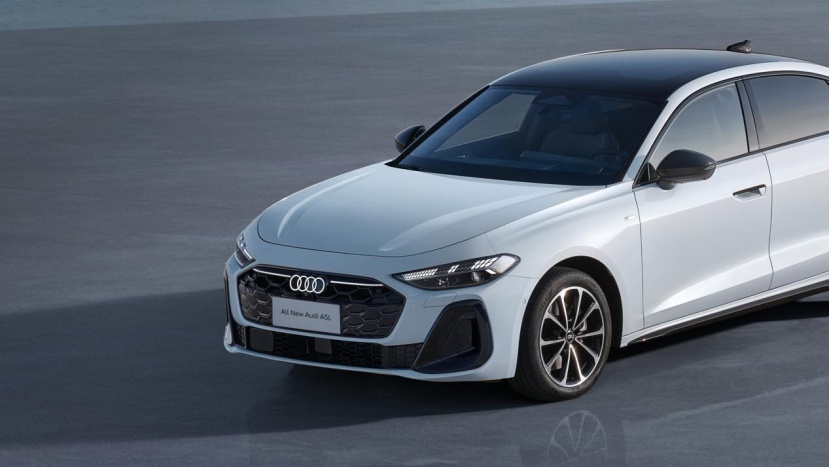
The upside? Huawei doesn’t need to understand Audi’s complex mechanics, focusing on intelligent driving tech, while Audi doesn’t need to retune its dynamics for Huawei—achieving 1+1>2 synergy.
For example, adaptive cruise smoothly adjusts speed based on the lead car, avoiding jerky acceleration, or lane changes align perfectly with lane markers, no corrections needed.
These details show: In the intelligent era, Audi’s essence is stronger than ever—not diluted.
The difference? Most cars’ intelligent driving and chassis work in silos; Audi fine-tunes the chassis first, then integrates intelligence—true man-machine harmony.
Times have changed, and so must the rules.
Many think FAW Audi adopted intelligent driving because it couldn’t beat the competition, so it joined them.
In reality, it’s Audi proactively adapting to market shifts, challenging stereotypes about gasoline cars while preserving its DNA.
Timing and strategy suggest FAW Audi isn’t following—it’s starting a new era, bridging the gap between gasoline and intelligence.
Breaking inertia is hard, but someone must lead the change.
In capability, the FAW Audi A5L Qiankun Intelligent Driving Edition rivals top EVs, but it must still overcome the "gasoline cars aren’t intelligent" stereotype.
It’s fighting not just a tech battle, but a mindset revolution.
In the past, you couldn’t have it all—gasoline cars, opposed to "new energy," seemed incompatible with intelligence.
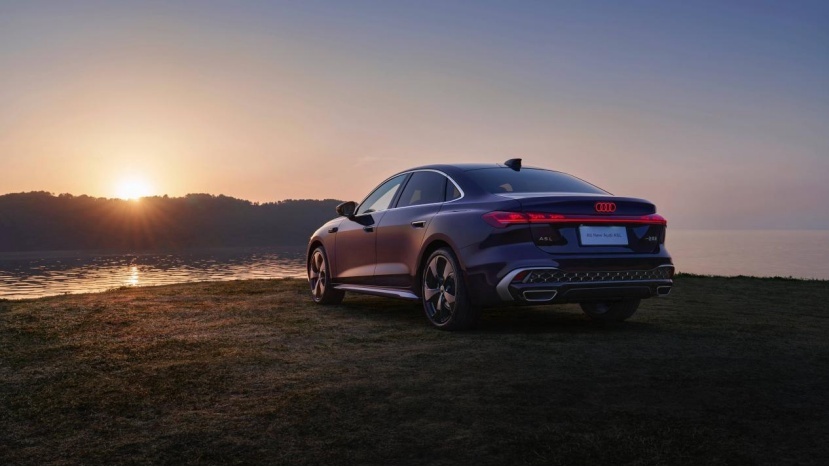
Now, intelligent driving is a must for all cars, and the FAW Audi A5L Qiankun Intelligent Driving Edition breaks the "gasoline or electric" binary.
It iterates gasoline tech while bringing intelligent driving’s convenience and safety to more users.
After all, intelligent gasoline cars are hard but right—and necessary.
In today’s market, "gasoline cars can’t do intelligence" and "gasoline cars can’t compete with EVs" dominate consumer mindset.
Is gasoline cars’ fate really so bleak?
Clearly not. What’s doomed are traditionalists who refuse to change—and FAW Audi is reshaping gasoline cars’ intelligent image.
This is gasoline cars’ second-half opportunity. The real decider? Using innovation to extend their legacy.
Today’s auto industry tests leaders’ ability to find the right path in uncertain times and push forward.
Non-intelligent gasoline cars are already history.
$Volkswagen(VWAPY.US) $Volkswagen(VWAGY.US)
The copyright of this article belongs to the original author/organization.
The views expressed herein are solely those of the author and do not reflect the stance of the platform. The content is intended for investment reference purposes only and shall not be considered as investment advice. Please contact us if you have any questions or suggestions regarding the content services provided by the platform.
