

ATFX: US-Iran Tensions Escalate Again: WTI Crude Oil Aims for $100 Once More?

ATFX: The already fragile ceasefire agreement between the United States and Iran has shown clear signs of tension recently. Divergences between the two sides on key issues have not been bridged; instead, they have rapidly escalated due to isolated incidents, completely shattering market hopes for an easing of tensions in the Middle East. In its place, investors have begun to reprice the risk of a broader and more prolonged escalation of conflict.
This sentiment reversal was not gradual—it completed the switch from "optimistic pricing" to "panic premium" within just a few trading days. In previous weeks, the market had once anticipated that the US and Iran might reach some temporary arrangement through indirect negotiations, thereby reducing transit risks in the Strait of Hormuz. However, the latest developments have completely altered this expectation.
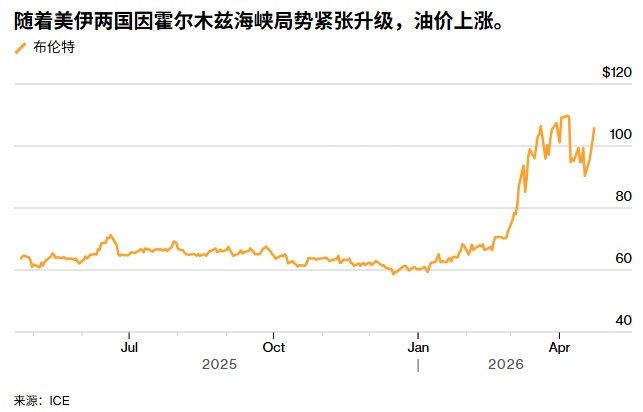
Tension signs in the fragile US-Iran ceasefire have dashed market hopes for easing Middle East tensions, replaced by concerns about escalation. Both the US 10-year Treasury yield and the Bloomberg Dollar Index are poised for their first weekly gain in a month, while gold is set to end a four-week winning streak, and crude oil prices are on track for their first weekly gain in three weeks.
▲ATFX Chart
The War Shock Since Late February: Persistent Turbulence in Energy Markets
In the two months since the war broke out in late February, the international energy market has experienced wave after wave of severe volatility. This conflict differs from previous Middle East wars in the following ways:
Longer Duration: Two months of ground and naval standoff have exceeded many traders' initial expectations of a "quick resolution."
Direct Targeting of Energy Infrastructure: The Strait of Hormuz is almost completely closed, rather than being limited to sporadic attacks.
Both Sides Possess Substantial Blockade Capabilities: Iran has an asymmetric maritime denial strategy, while the US possesses overwhelming naval superiority, creating a dangerous stalemate.
The result is a sharp decline in oil and gas shipments from major production areas in the Persian Gulf. This has not only directly pushed up spot oil prices but also led to a steepening of the forward curve—the market has already begun pricing in longer-term supply disruptions.
Evolution of Risk Premium: From Retreat to Re-accumulation
Notably, the risk premium had retreated somewhat in recent weeks. At that time, the market believed that after the initial military standoff, the two sides might find some diplomatic exit. However, recent tanker seizures and the escalation of maritime blockades have rapidly reinjected the previously receding premium into prices.
The following three factors have further amplified the current geopolitical premium:
Concerns Over Stalled Peace Talks: There is no credible mediation mechanism between the two sides, and any potential dialogue is difficult to advance due to a lack of mutual trust.
Escalation of Rhetoric: Public statements by US and Iranian officials have become increasingly hawkish, creating conditions for accidental conflict.
Growing Military Threat: More military assets have been deployed around the Strait of Hormuz, raising the risk of a "miscalculation."
Caution Ahead of the Weekend: Awaiting New Signals
ATFX points out that investors remain highly cautious ahead of the weekend. This caution stems not from uncertainty about price direction, but from the desire to avoid two-way risk exposure to potential diplomatic breakthroughs or military escalation over the weekend. Market sentiment currently hinges entirely on a binary choice: will the Iran tensions escalate further, or will they be unexpectedly resolved through diplomatic channels?
If there are no conciliatory signals from the US or Iran this weekend, and the tanker seizure incident leads to more retaliatory actions, oil prices could gap above $100 at Monday's open. If there are unexpected signs of diplomatic contact (e.g., progress in third-party mediation) or hints from Iran of a willingness to negotiate, oil prices could retrace most of their recent gains and retest the $92-94 zone.
WTI crude is currently trading in the $92–98 per barrel range, near a two-week high, and is once again approaching the key psychological level of $100. Can oil prices effectively break through and hold above $100?

▲ATFX Chart
Judging from the current resonance of fundamentals and technicals, and with the Strait of Hormuz still effectively blocked, WTI crude has a chance to break through $100 again. The core driver is the blockade of the Strait of Hormuz and the escalation of US-Iran maritime confrontations, with supply-side risk premiums once again dominating price movements. The real test is whether it can hold above $100 after breaking through—historically, major round-number levels often require 2-3 attempts to truly stabilize. Whether diplomatic conciliatory signals emerge next week is the only external variable that could reverse the current uptrend.
ATFX Disclaimer: The views, scenario analysis, and market judgments presented in this article are for reference and discussion purposes only and do not constitute any form of investment advice, trading recommendation, or endorsement of any financial product.
The copyright of this article belongs to the original author/organization.
The views expressed herein are solely those of the author and do not reflect the stance of the platform. The content is intended for investment reference purposes only and shall not be considered as investment advice. Please contact us if you have any questions or suggestions regarding the content services provided by the platform.
