

 BRK.B Commentator
 BRK.B Gain Hunter
The scale of capital is different, so copying and pasting strategies might not be appropriate. $Berkshire Hathaway B(BRK.B.US) US stocks have hit a new high. With positive news likely exhausted, a pullback is possible. Focus on defense in May!

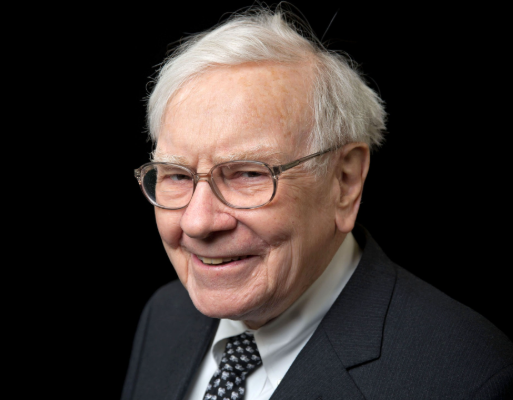
Many people want to learn from Warren Buffett when investing. Seeing that he avoids AI, they think there's a bubble in AI; seeing him holding a huge amount of cash, they follow suit and keep their money idle. But have you ever considered one question: the position you and Buffett are in right now is fundamentally different.
Buffett is 94 years old this year, with a net worth exceeding $150 billion, and Berkshire Hathaway's cash reserves alone are close to $350 billion. His primary task now is not to double his wealth, but to preserve and pass it on. At this scale, every decision he makes has its specific constraints, which are far removed from the situations you and I are in.
Buffett does not reject tech stocks; he has bought Apple and Google, but what he values is the clear and understandable business logic behind these two companies—Apple's consumer stickiness and ecosystem moat, and Google's advertising monopoly. One of his stock selection principles is to only invest in businesses he can truly understand. The underlying technology, competitive landscape, and future profit models of AI are not within the scope of his deep expertise. Therefore, his avoidance of AI is a self-imposed constraint at the boundary of his circle of competence, not a denial of the value of this direction. This is his limitation, not your basis for judgment.
If you really want to learn from Buffett, I suggest reading about his early investment history. In the 1950s, when he managed his partnership fund, his annualized return was close to 30%, which was not achieved by holding cash and waiting for opportunities. He heavily invested in GEICO, American Express, and The Washington Post—all were growth assets at the time, opportunities that others didn't fully understand yet. The Buffett back then was far more aggressive than he is today.
What is truly worth learning from is his approach to studying companies. Before making an investment decision, he spends a great deal of time researching a company's fundamentals, business model, historical financial reports, and even delving deeply into the capabilities, character, and behavioral habits of the management. He would rather spend months thoroughly understanding a company than hastily building a position with only a superficial understanding. This obsession with "truly understanding" is one of the underlying reasons for his ability to navigate bull and bear markets for decades.
For us ordinary investors, the lesson from this point is far more significant than what positions he currently holds. Before buying a stock, can you clearly articulate how the company makes money, where its moat lies, and the execution capabilities of its management? If the answer is vague, then the position shouldn't be too heavy.
Learning Buffett's moat thinking, his deep understanding of business models, and his composure unaffected by short-term market sentiment—these are things that transcend eras. But blindly copying the asset allocation decisions of a 94-year-old man at a $150 billion scale to guide your own wealth accumulation in your thirties or forties is not learning; it's like trying to find a sword by marking the boat.
From: x
This is very similar to my view; we should learn more from the early Buffett.
The copyright of this article belongs to the original author/organization.
The views expressed herein are solely those of the author and do not reflect the stance of the platform. The content is intended for investment reference purposes only and shall not be considered as investment advice. Please contact us if you have any questions or suggestions regarding the content services provided by the platform.
