

NVDA V-shaped rebound approaches $225—with 140,000 call options overhead, can the bulls break through?

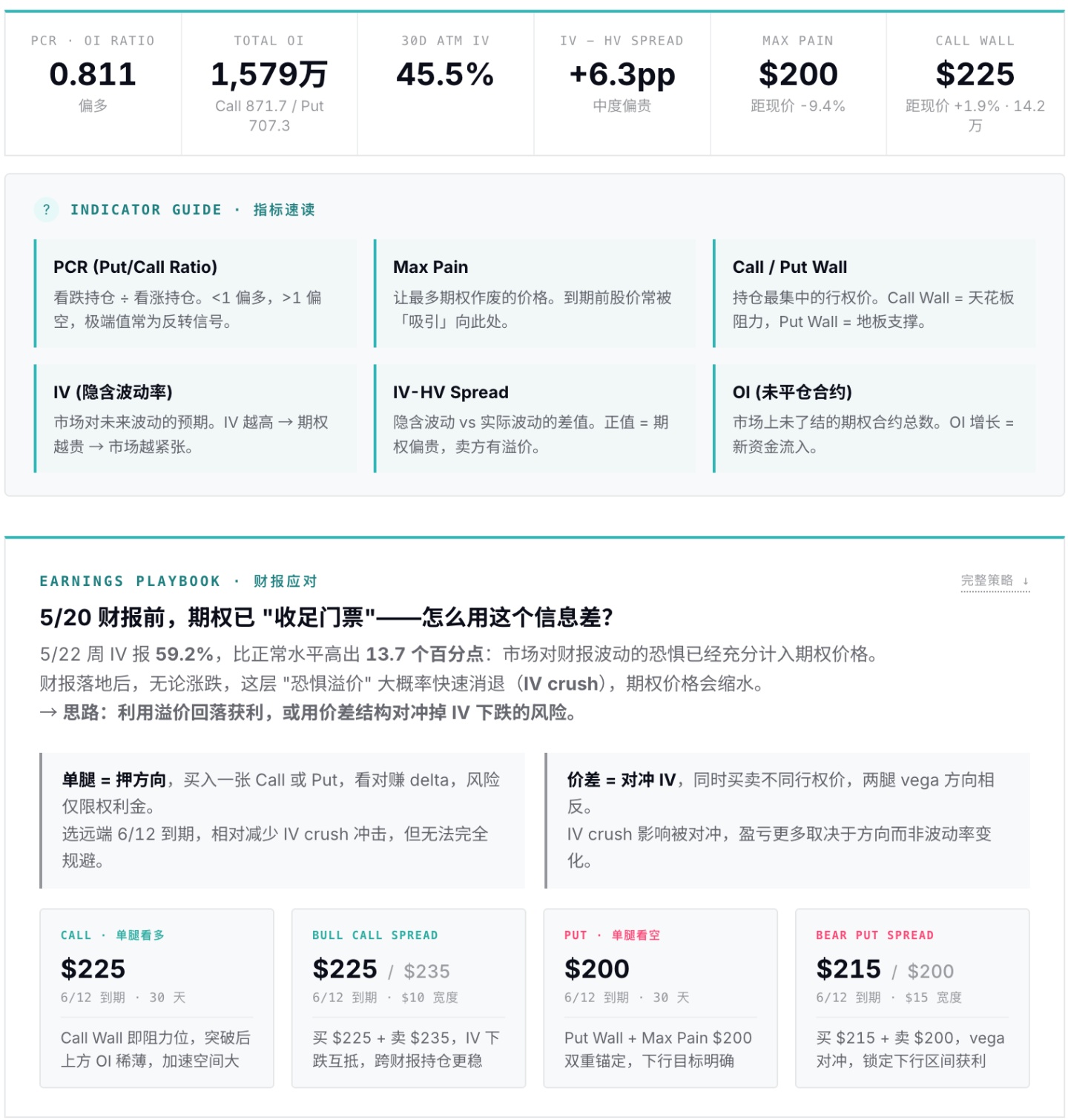
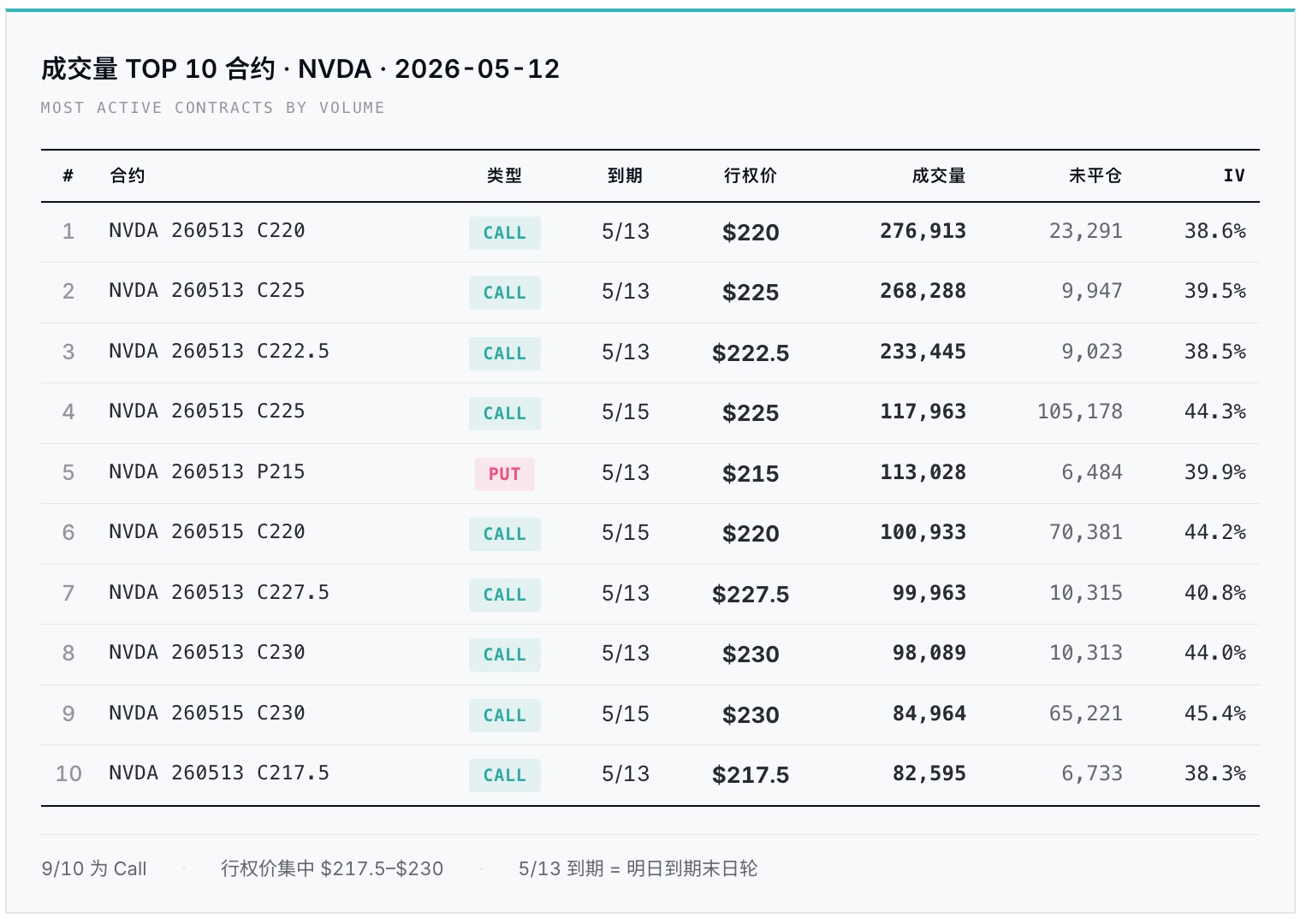
Over the past two weeks, $NVIDIA(NVDA.US) has rebounded from $196.5 to $220.78, hitting a 16-day high, with strong bullish momentum. However, the options market reveals a signal: at the $225 price level, a massive amount of bullish bets have accumulated (142,000 contracts), equivalent to a "selling wall"—it will be difficult for the stock price to break through this level. Additionally, with the 5/20 earnings report approaching, option prices have already been pushed up significantly by fear. Once the report is released, this premium is highly likely to evaporate quickly, and those who bought at high prices may lose money even if their directional bet was correct.
1. Capital Flow
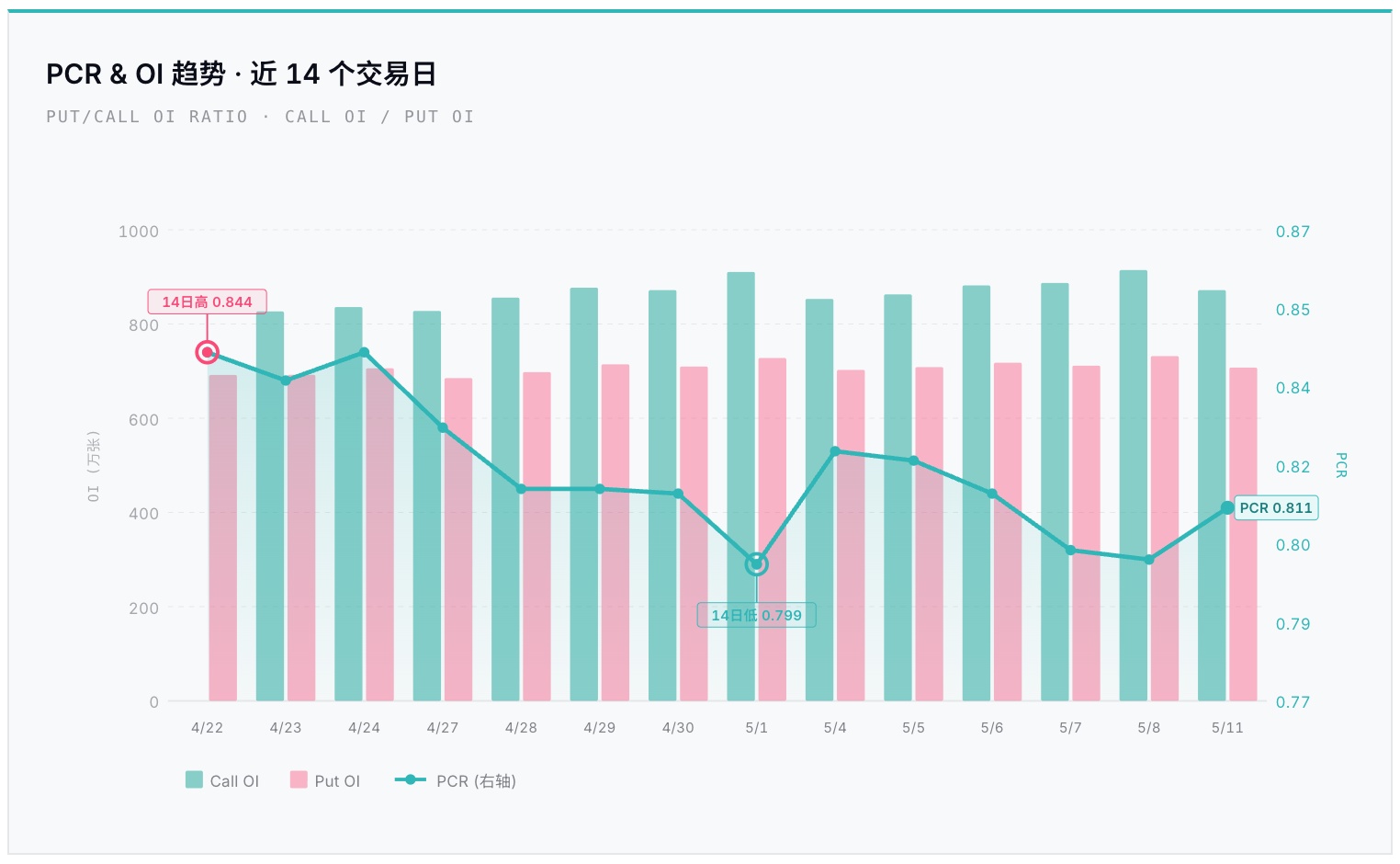
First, let's explain two concepts: OI (Open Interest) can be understood as the "total amount of unsettled bets in the market"; the higher the OI, the more capital is involved. PCR (Put/Call Ratio) is Put bets ÷ Call bets; a lower value indicates more bullish sentiment.
From the chart above, we can see that over the past 14 trading days, the green bars (Call positions) have continued to grow, while the pink bars (Put positions) have remained largely flat—Calls have accumulated an increase of +525,000 contracts, while Puts only added +156,000 contracts. Bullish capital is more than three times that of bearish capital. Reflected in the PCR line, it has slid from 0.844 to 0.811, showing a clear trend: the market is continuously adding bullish bets.
2. Key Levels
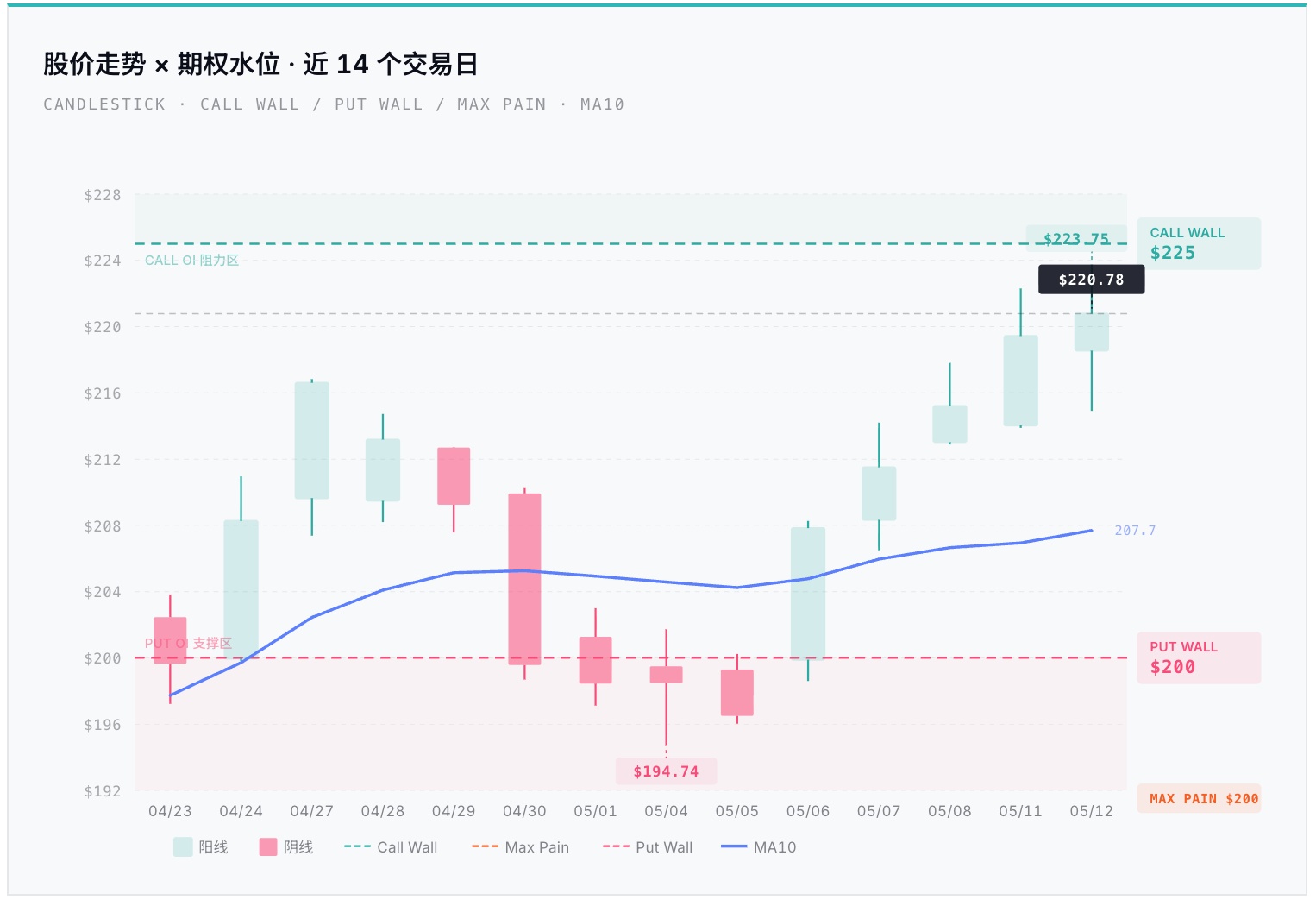
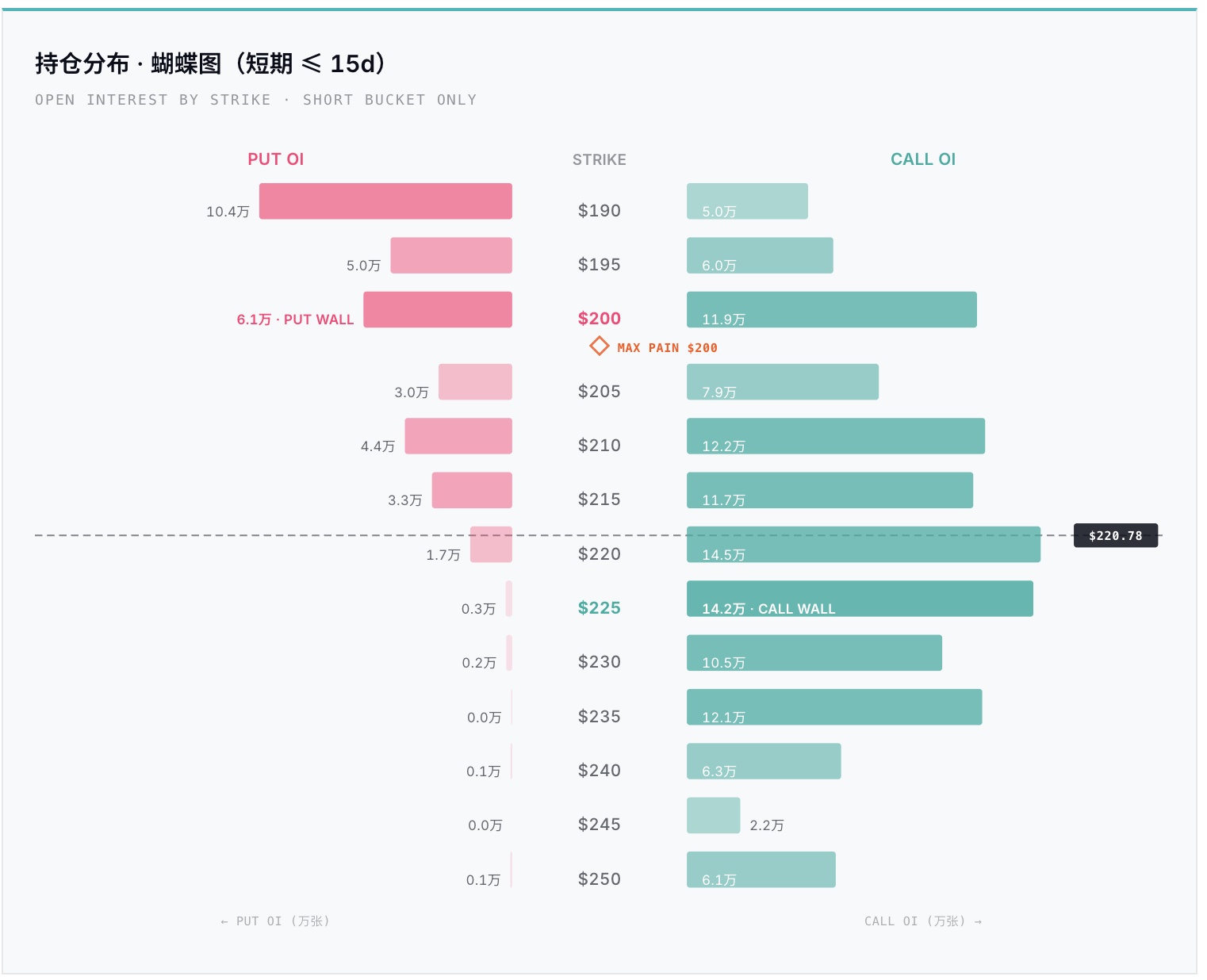
One chart shows the price action, the other shows the position distribution. Combined, they address a core question: Where is the stock price heading next, where is the resistance, and where is the support?
The options market has position concentrations at each strike price. The more concentrated the positions, the greater the "magnetic pull" on the stock price. The chart marks three key price levels:
$225 (Call Wall): The most concentrated area for bullish positions, with 142,000 contracts piled up. This can be seen as a "ceiling"—when the stock price reaches here, a large number of option sellers will need to hedge by selling shares, creating downward pressure. The current price is $220.78, only 1.9% away from this wall, very close.
$200 (Put Wall + Max Pain): The most concentrated area for bearish positions, and also the price that would cause the most options to expire worthless. This dual anchoring acts as a "floor," -9.4% away from the current price.
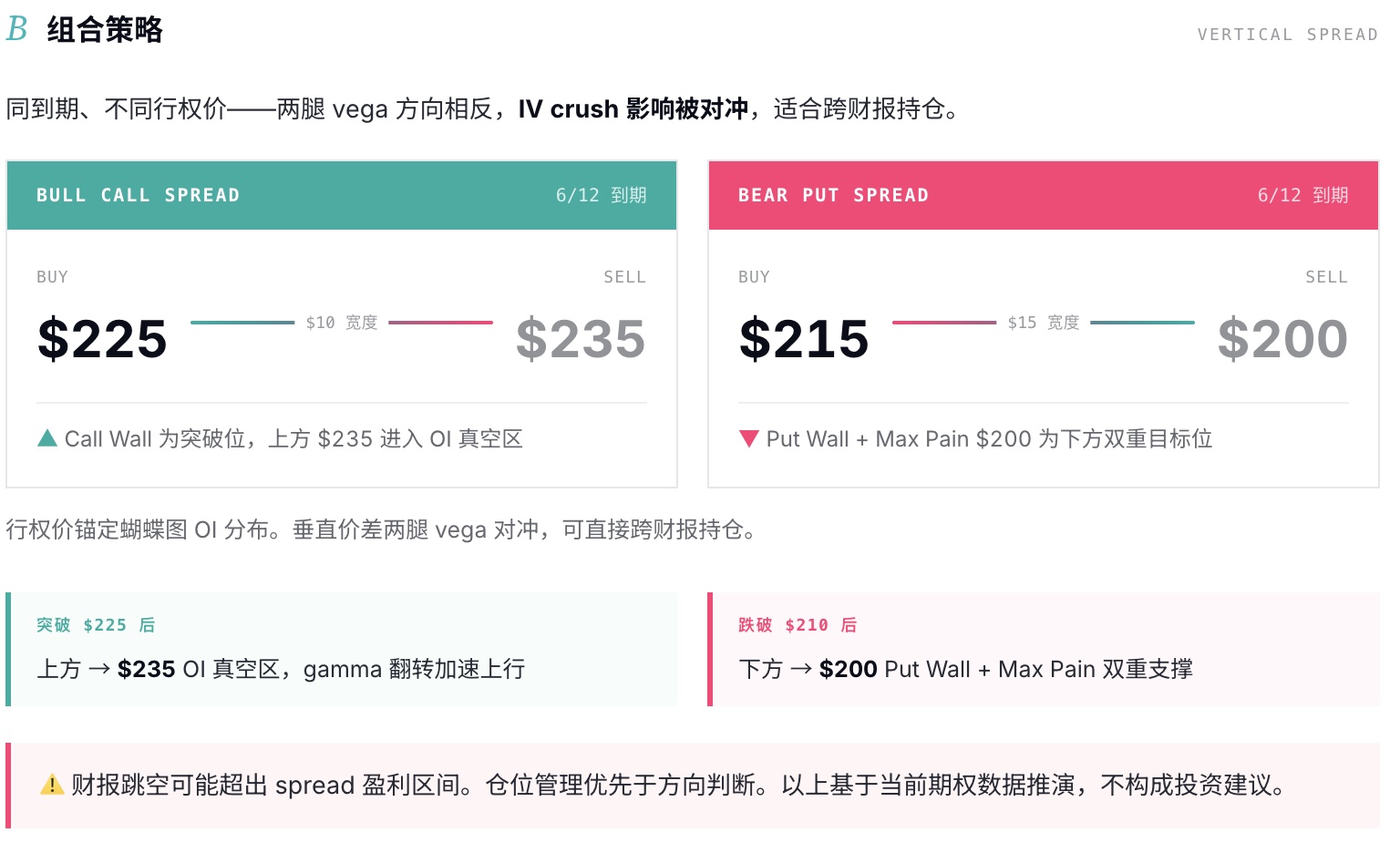
Above $225: The butterfly chart shows almost zero bearish positions (red bars disappear), creating a "vacuum zone." Once $225 is breached, resistance above is minimal, potentially leading to accelerated upward movement.
The ceiling above is very close ($225, only 1.9% away), while the floor below is far away ($200, 9.4% away). If the ceiling is breached, there's little resistance above and the price may accelerate upward. If it fails to break through, be cautious of a pullback with little support in between.
Call Wall / Put Wall:
A Call Wall is the strike price with the highest concentration of call option positions, representing the market consensus for short-term resistance—selling pressure will concentrate here. A Put Wall is the opposite, the most concentrated area for put positions, forming support. Current resistance is at $220, support at $190.
3. Volatility Perspective
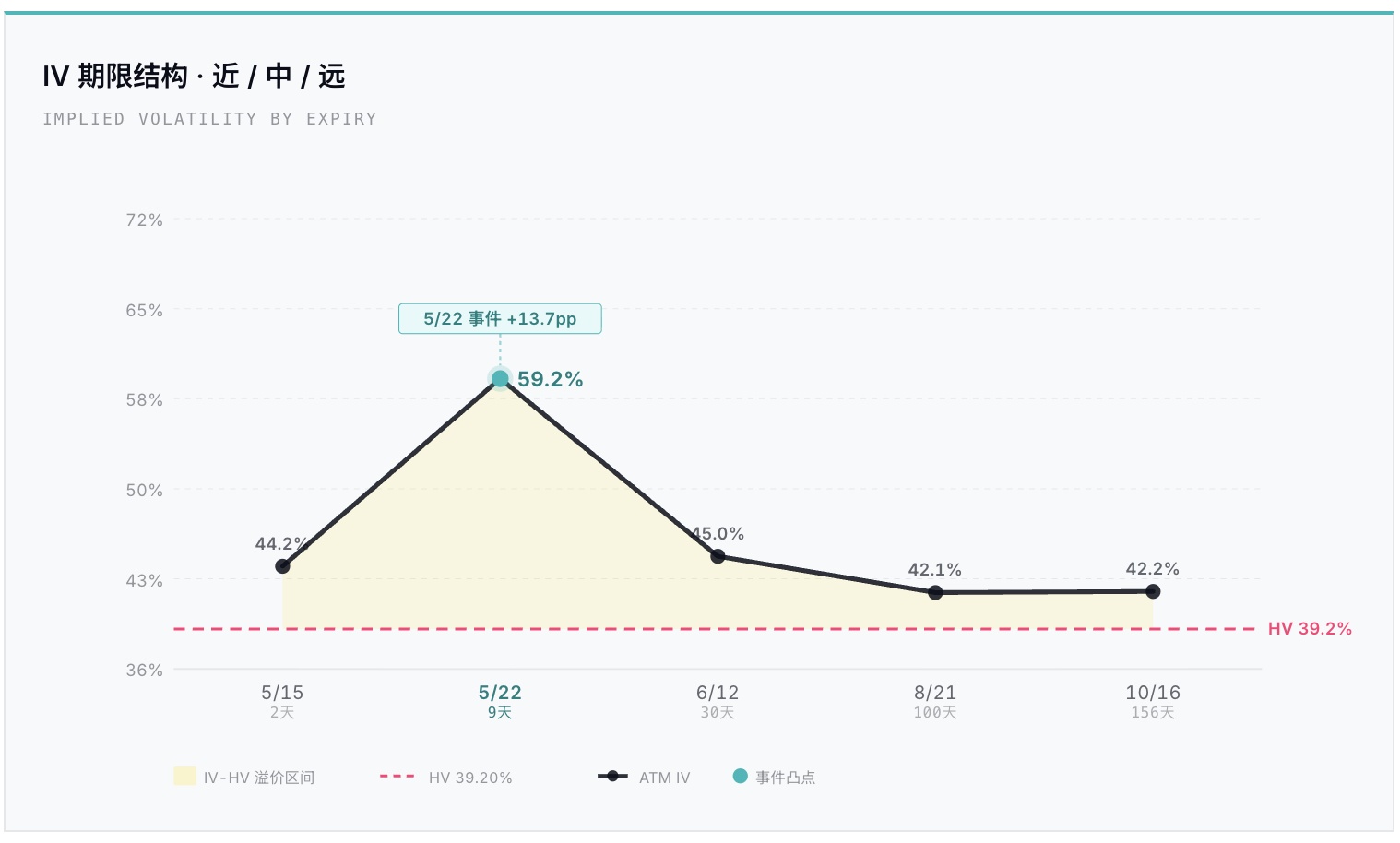
How to read this chart? The black line is the "Implied Volatility" (IV) for options at each expiration date—this can be understood as the market's fear level regarding future volatility. The higher the IV, the more expensive the options. The red dotted line is the stock's actual volatility level (HV). The yellow area in between represents the "extra premium" charged by the options.
Two key points:
① Options are generally expensive. Current IV is reported at 45.5%, while actual volatility is only 39.2%, a difference of 6.3 percentage points. Simply put, option prices contain about 14% of "overvaluation."
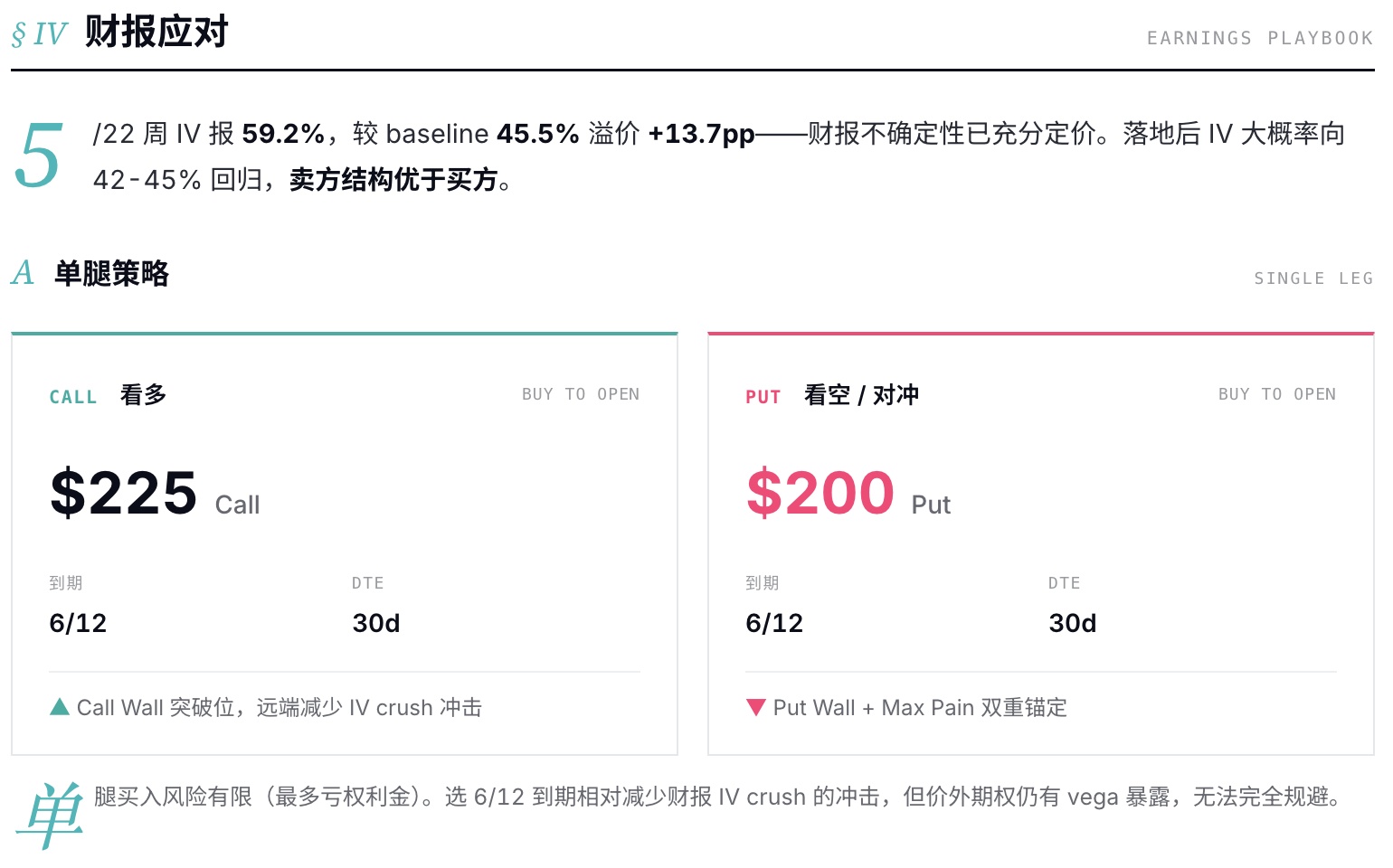
② The week of 5/22 is particularly expensive. The prominent bulge on the chart is for options expiring on 5/22, with IV soaring to 59.2%, 13.7 percentage points above normal levels—this is the market "buying insurance" for the 5/20 NVDA earnings report. Once the report is released, regardless of whether the stock rises or falls, this fear premium is highly likely to evaporate quickly (called IV crush), causing option prices to shrink. Therefore, if you plan to buy options across the earnings report, you may not profit even if your directional bet is correct, because the "insurance premium" evaporation could eat into your profits.
$Alphabet - C(GOOG.US) $Taiwan Semiconductor(TSM.US) $ISHRS-Sp100(OEF.US) $Invesco QQQ Trust(QQQ.US) $Micron Tech(MU.US) $Sandisk(SNDK.US)
The copyright of this article belongs to the original author/organization.
The views expressed herein are solely those of the author and do not reflect the stance of the platform. The content is intended for investment reference purposes only and shall not be considered as investment advice. Please contact us if you have any questions or suggestions regarding the content services provided by the platform.
