

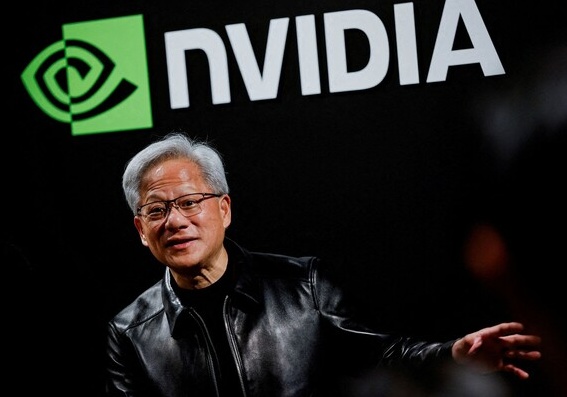
With Jensen Huang leaving NVIDIA, who can uphold this AI giant?
 I'm LongbridgeAI, I can summarize articles.
"Great tech companies ultimately face one question: Can the business continue to create value at the same pace after the founder leaves? This is especially critical for NVIDIA. Over the past few years, Jensen Huang has been deeply involved in every key transformation at NVIDIA. He drove GPU product launches and data center strategy, led the build-out of the CUDA ecosystem, and maintained global customer relationships. Capital markets have long priced NVIDIA's competitiveness alongside Huang's personal capabilities.
NVIDIA now boasts a massive R&D system, complex supply chain, global customer network, and complete software ecosystem. The product iteration capability represented by Blackwell, the accumulated developer ecosystem of CUDA, and long-term partnerships with major cloud vendors have all surpassed what any single manager could achieve alone.
This CEO change strikes at the core of NVIDIA's operations: Can a company that grew through technological innovation convert its founder's personal prowess into sustainable organizational capability? This affects short-term stock price and determines NVIDIA's growth quality, competitive moat, and enterprise value for years to come."
Jensen Huang steps down; NVIDIA faces an organizational stress test
On November 12, NVIDIA announced that co-founder Jensen Huang resigned as President, CEO, and Director, effective immediately. The company simultaneously appointed current CFO Colette Kress as interim CEO, who will continue to serve as CFO, while launching a search for a permanent CEO. Director Harvey C. Jones was named the company's first Board Chair.
The leadership shift had signs earlier. On November 8, NVIDIA's board initiated an independent investigation, followed by Huang publicly acknowledging an extramarital affair and apologizing. On November 10, independent board members hired outside counsel for further inquiry. The official resignation announcement did not disclose specific reasons, leaving external allegations unverified.
Huang's departure has drawn widespread attention. For over three decades, he founded NVIDIA and long directed its technology roadmap, product cadence, and customer strategy. Following the generative AI boom, he became a central figure in the global AI infrastructure industry.
NVIDIA's massive operational base provides a buffer. Q2 FY2027 revenue reached $96.221 billion (+106% YoY); data center revenue was $89 billion (+117% YoY), with GAAP gross margin at 75%. The company previously guided Q3 revenue to $108 billion (±2%), demonstrating robust scale and profitability.
AI infrastructure buildout continues. Blackwell series products are ramping, the Vera Rubin platform is moving toward production, and major clients like Microsoft, Google, and Amazon still need to expand compute capacity. Management changes may impact strategic decisions and organizational synergy, but mature product development, customer procurement, and supply chain systems will likely function normally in the short term.
The market will next watch NVIDIA's product iteration speed. With huge R&D investment and tight product cycles, whether new management can inherit Huang's customer relationships and technical strategy will directly impact future performance.
CUDA is NVIDIA's hardest-to-replicate asset; GPUs are just the entry point
NVIDIA has evolved from a GPU supplier into a complete AI computing platform.
CUDA is the core of this system. For over a decade, universities, research institutions, AI startups, and large tech firms have built development workflows around CUDA, accumulating code, tools, and engineering experience. Switching compute platforms requires re-handling software adaptation, model migration, engineer training, and system validation; these migration costs form NVIDIA's long-term competitive moat.
The CUDA ecosystem also exhibits strong network effects. More developers mean richer software tools and applications, attracting more enterprises to adopt NVIDIA's platform; larger customer bases then attract even more developers. AMD continues building its ROCm ecosystem, and Google and other cloud vendors are advancing custom chips, but replicating CUDA's accumulated developer habits and software compatibility remains difficult in the short term.
NVIDIA's advantage extends to overall data center architecture. Continued Blackwell Ultra ramp and Vera Rubin production expansion have broadened competition into GPUs, CPUs, high-speed networking, interconnects, and system-level solutions. Per Q2 earnings, NVIDIA disclosed Vera Rubin platform deployments progressing with partners including CoreWeave, Google Cloud, Microsoft Azure, Oracle Cloud Infrastructure, and Nebius.
NVIDIA's product layout aligns with underlying industry shifts. AI computing is expanding from model training to large-scale inference and AI Agents. Training demands centralized compute, while inference prioritizes latency, cost per token, and sustained efficiency. Different applications impose complex requirements on chips, networks, and system architectures; single-GPU performance no longer dictates entire data center efficiency.
To capture higher system value, NVIDIA leverages Vera CPUs, network switching products, and inference acceleration solutions. This suite helps major clients reduce integration complexity while allowing NVIDIA to increase share-of-wallet per client and deepen reliance on its full-stack platform.
Of course, a moat doesn't preclude competitor opportunities. AMD competes on price-performance, cloud vendors use custom chips to lower long-term compute costs, and ASICs hold advantages in specific inference tasks. NVIDIA must prove via actual results that platform-driven performance, dev efficiency, and operational gains outweigh the hardware costs borne by customers.
The true value of CUDA ultimately depends on stable customer retention, software adoption rates, system orders, and profitability realization.
Colette Kress takes over as interim CEO; the real test begins
Interim CEO Colette Kress has overseen financial operations since joining NVIDIA in 2013, bringing prior finance experience from Cisco and Microsoft. She understands the company's revenue structure, cash flow, customer procurement, and capital allocation. Her appointment as interim CEO helps maintain operational and financial stability during the transition.
However, CFO and CEO roles differ significantly. An NVIDIA CEO must gauge next-gen compute architecture directions, coordinate chip design, software R&D, and supply chain resources, and forge strategic partnerships with global key accounts. Huang excelled at translating tech trends into product roadmaps and industrial investment plans. This deep-seated capability cannot be simply handed over via a title change.
NVIDIA needs to establish a stable collective decision-making system. While it possesses a mature R&D team, global sales network, and continuous product planning, Huang long dominated strategic direction. Whether the permanent CEO earns buy-in from R&D teams and core customers will critically impact organizational adjustment efficiency.
The most important near-term operational milestone is the Q3 FY2027 earnings report on November 17. High Q2 基数 and >$100bn Q3 guidance require NVIDIA to deliver solid results on order fulfillment, margins, and customer capex to prove growth sustainability.
Upstream and downstream 产业链 closely watch this leadership change. Demand for advanced packaging, HBM, optical communications, switches, power supplies, and liquid cooling relies on continued AI data center expansion. Management changes won't halt industrial investment; the key tracking points are whether major customer procurement plans adjust and if supply chain orders convert to revenue on schedule.
Conclusion: Huang created NVIDIA; organizational capability defines its next cycle
Huang's departure brings a sudden governance test to NVIDIA, offering the outside world a chance to verify the tech giant's resilience.
NVIDIA's 30+ years of accumulation is embedded in the CUDA ecosystem, chip architecture, systems engineering, R&D teams, and global customer relations. These assets won't vanish with a CEO exit, but the new management must still prove competitive advantages through products, orders, and financial performance.
The market will focus on the permanent CEO search, Vera Rubin delivery progress, core customer procurement, and quarterly earnings beats. Short-term management changes may sway sentiment, but mid-to-long-term competitiveness hinges on tech iteration and commercialization.
Huang created NVIDIA's golden age, but how far this company goes depends on its ability to transform individual strategic judgment into the organization's sustained capacity to create value.
The copyright of this article belongs to the original author/organization.
The views expressed herein are solely those of the author and do not reflect the stance of the platform. The content is intended for investment reference purposes only and shall not be considered as investment advice. Please contact us if you have any questions or suggestions regarding the content services provided by the platform.