
Search isn't dead yet; answers have become a business.
 I'm LongbridgeAI, I can summarize articles.

Asking questions and seeking answers is a daily task ingrained in the "十万个为什么" (Why?) gene of all humanity.
In 2006, if you wanted to know "good places to visit in Shenzhen on the weekend," you would naturally open Baidu and sift through various travel websites and local forums for answers.
Fast forward to 2016, and you'd likely open Dianping or Xiaohongshu, where a few image-text posts could thoroughly explain the correct way to check in.
By 2026, the role has shifted to AI. With a single sentence, Doubao can tailor an itinerary for you, catering to your entire family's needs.
People still relentlessly pursue answers, but the first-choice tool has become the AI that provides precise responses.
Twenty years ago, mastering search engines represented the ability to collect and integrate information; twenty years later, proficiently using AI represents efficiently obtaining results and harnessing cutting-edge technology.
So, did AI kill search engines?
Perhaps not yet. Tracking by Similarweb in May 2026 showed that 95% of ChatGPT users also use Google. Baidu remains the largest Chinese traditional search engine by user volume.
But AI has indeed changed users' habits for obtaining answers: when in doubt, ask AI first.
For the former hegemon of internet entry points, the retreat of search behavior is like a heavy artillery strike, landing first on business models reliant on online advertising as their pillar.
Proactively disrupting oneself and being disrupted by new entry points are playing out simultaneously.
01. I had no choice before, now I ask AI first
The last time I opened a search engine, it was to download Anthropic's prospectus from the US SEC website. After turning left and right, I ended up on the Cambridge English Dictionary site and a CSDN blog.
Clicking into the English official website, I still had to open Xiaohongshu on my phone to find a guide, clearly seeing where the entry point and download button were.
But ask Doubao or Workbuddy, and they will directly throw you the webpage link to the full prospectus, along with a deep analysis of the financial report.
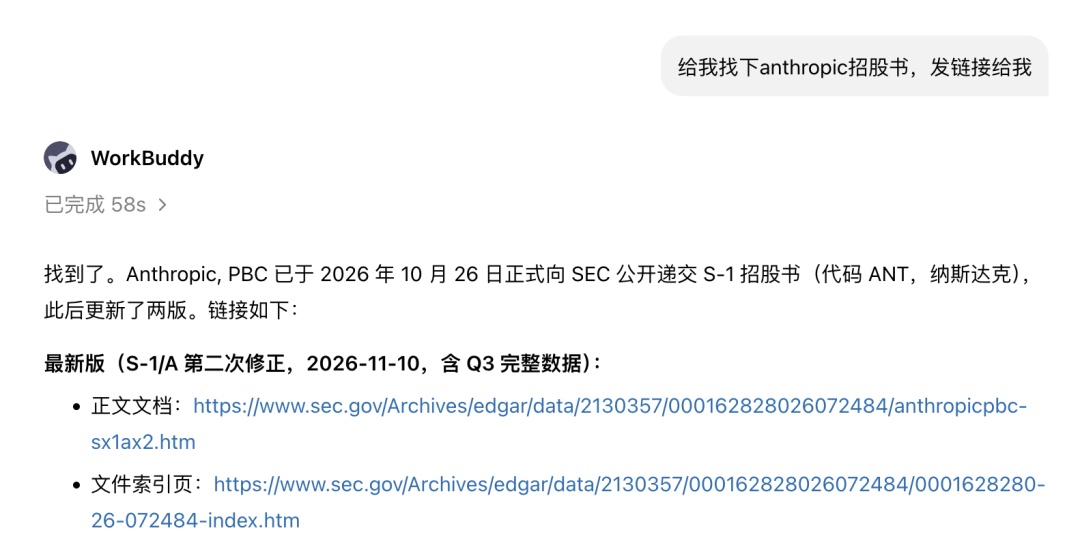
The act of searching has been perfectly delegated to AI.
The turning point didn't happen overnight. New tools can quickly influence old ones not just because they are efficient, but because the user mindset behind old tools is wavering.
On one hand, traditional search engines lack a human touch. Websites and forums left over from the Web 2.0 era have often fallen into disrepair, offering little substantial content and attracting fewer new users, making it hard to retain user attention with content alone.
On the other hand, after keyword search modes are overlaid with ad information, the top three search results are sometimes occupied by imposter sites with similar names. Users coming for the real thing often encounter low-quality counterfeit content, feeling somewhat misled.
This is why, long before AI entered the scene, social content platforms like Xiaohongshu and Douyin were able to intercept user attention from search engines head-on.
Checking guides, reviews, store visits, and purchase advice—these strong-intent needs can be met by a few posts on Xiaohongshu; meanwhile, the powerful algorithmic recommendations on the platform's homepage 顺势 retain and extend user attention.
The logic of search competition has changed. User scale remains important, but it is no longer the sole metric. Activity levels, usage frequency, retention, and scenario penetration have become more critical.
However, search engines still hold some value. Based on open web indexing, they possess strong public utility, aggregating vast amounts of public information.
In contrast, social and content platforms tend to build closed ecosystems, hoping everything from content seeding to transaction closure happens within the platform. This commercial design does not aim solely at "providing information," which also blurs the boundary between ads and content, requiring users to expend extra attention to discern.
Over the past decade, two imperfect solutions have been 博弈 (game-theoretically competing), diverting users' search attention.
If your search need is for guides, product seeding, or solving life problems, you'll consciously open Xiaohongshu; but if you just want to browse news or locate a specific website, you still need a search engine.
And after AI's debut, these two streams of attention merged and flowed toward AI platforms. Users are freed from the hassle of shuttling back and forth between various apps and search tools.
I had no choice before, but now I ask AI first. The reason lies in simplicity and efficiency.
For example, just in the "asking" step, I save myself much translation work. Any idea can be spoken directly in everyday language, without first having to break it down into keywords in my mind and then piece together a search query.
If the answer isn't suitable, I can continue modifying it. "The elderly can't walk too far," "lower the budget a bit," "give me the original link"—all can continue along the previous conversation thread.
When major and minor issues in life and work can be caught by AI, users reduce the time spent sifting through fragmented information and lower the risk of ad interference. The sense of efficiency—get the answer and go—once formed, makes it hard for users not to become dependent on AI.
02. The Great Transformation: Using AI to Fight AI
Against the backdrop of six consecutive quarters of declining online marketing revenue, Baidu adjusted its disclosure methodology in its Q4 2025 earnings report: for the first time, it stopped disclosing this business separately, merging it into traditional advertising, while beginning to report AI new business performance.
Pressure on traditional search ads is a structural change facing the search engine industry collectively. Precisely because of this, a transformation centered on AI search models is advancing simultaneously.
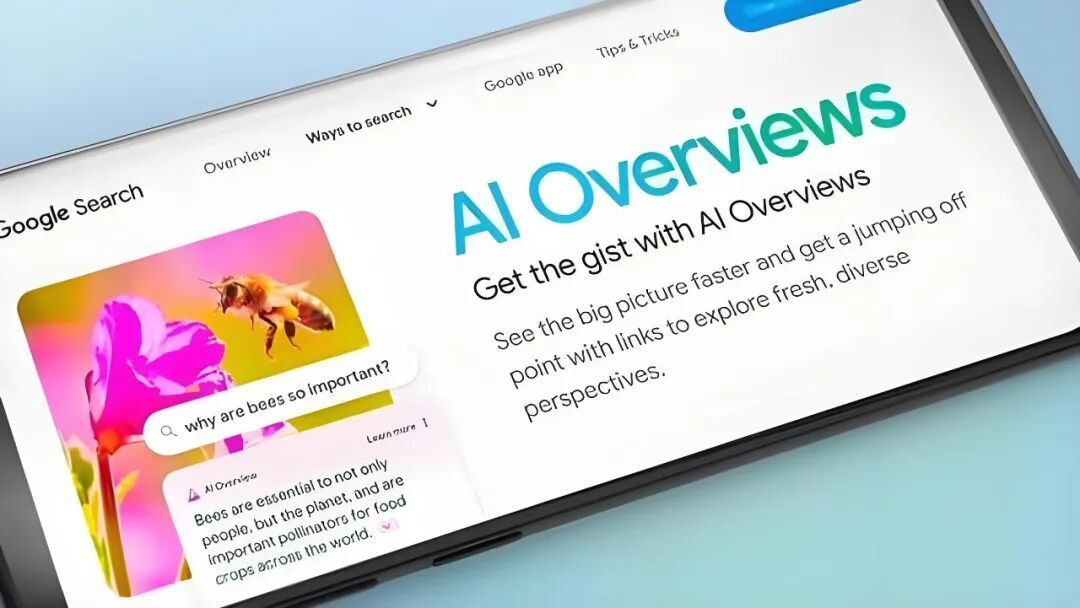
Google rolled out AI Overviews to the public in May 2024, while Baidu accelerated the reconstruction of search experience in early 2025 through "AI Search" and integration with DeepSeek. Search engines are moving from "adding a summary above links" to reorganizing products around questioning, answering, and continuous follow-ups. They hope to use AI to retain users who might otherwise be taken away by AI.
Social platforms are also vying for this opportunity.
Xiaohongshu launched the AI search assistant "Dian Dian." After users ask questions, AI summarizes structured answers in one click based on real-person notes, while retaining a dual-column flow of source notes below the answers. In the past, users had to flip through dozens of notes to piece together the "Ha, ChatGPTs are like a regular army, breaking the shackles of low-quality information in the fragmented information era, establishing the rule of "directly handing the answer to the user".
Faced with a specific problem, users increasingly hope to get clear, relevant, and verifiable answers first, rather than repeatedly filtering through repetitive content, marketing jargon, and irrelevant information.
Using magic to fight magic, this attempt has already shown certain appeal.
Multiple studies cited by The New York Times show that user dwell time under Google's AI mode is 1 to 9 minutes longer than traditional search. Directly presenting answers and allowing continuous follow-ups turns search from a series of jumps into a conversation that can deepen continuously.
But for platforms relying on traditional advertising revenue, this transformation also brings growing pains.
Transformation means overturning the underlying rules of the attention economy. Platforms make money by "keeping users scrolling longer and clicking more," so the harder it is to find answers, the more room there is for dwell time, ad inventory, and click conversion. AI search front-loads answers and compresses decision-making, directly threatening these very metrics.
After all, they don't want users to get answers too quickly.
Data is already reflecting pressure. Alphabet's search revenue has slowed for two consecutive quarters, with Q3 revenue at $63.35 billion, below expectations. Chief Business Officer Philipp Schindler also admitted that the strong growth in AI Mode queries had an impact, because AI search's ad inventory structure is thinner and monetization is lower.
Even so, traditional platforms find it hard to stop. Keeping the old model means absolutely losing users; pushing the new model, although it may 触动 (touch) existing revenue sources, at least leaves room for turnaround.
03. AI Search Commercialization: How Should This Battle Be Fought?
Laying out the big picture of AI search, players can roughly be divided into four categories based on their path into this market.
The first category includes traditional search giants like Google and Baidu, which must defend user entry points while caring for existing ad revenue. Every time AI saves a user a jump, it may require them to rearrange a commercial display.
The second category includes content platforms like Xiaohongshu and Douyin. They possess vast notes, videos, and user experiences; AI helps users understand this content faster, while the platform hopes to further capture the consumption demand behind the answers.
The third category comprises general AI applications like ChatGPT, Doubao, and Qwen, which offer more services. Beyond search, writing, coding, file processing, and agent tasks can all become reasons for charging.
The fourth category consists of startups entering via AI search, exemplified by Perplexity.
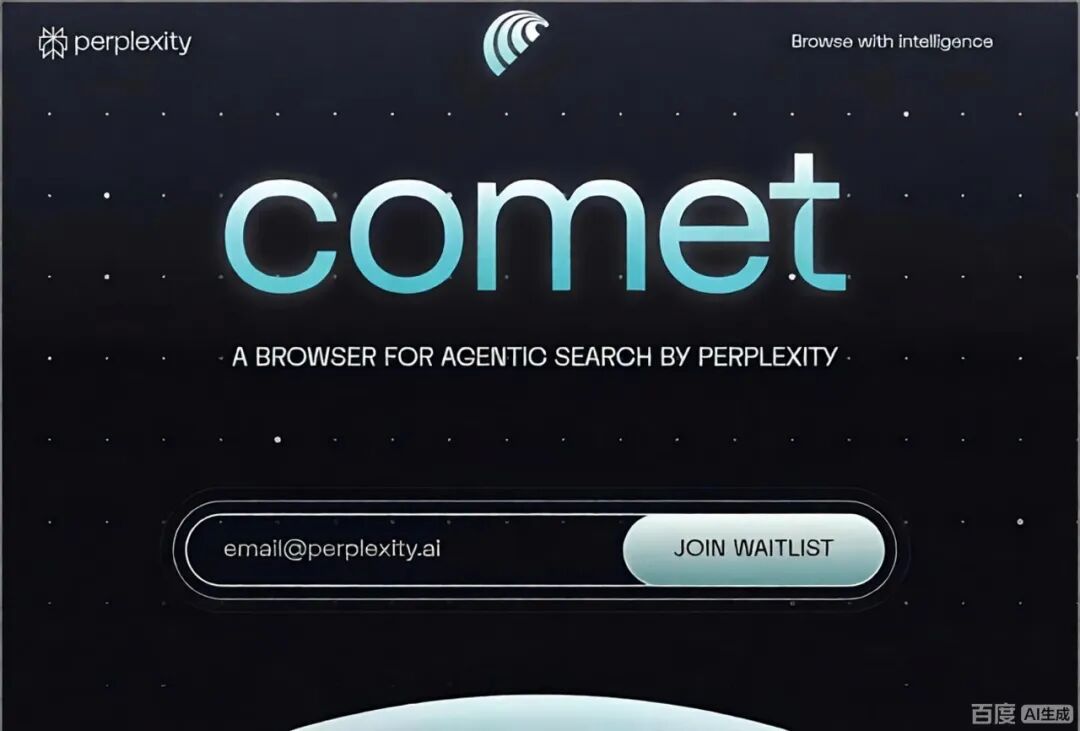
Unlike traditional search that relies on links guiding users to find things themselves, Perplexity places integrated answers, source citations, and continuous follow-ups at the center of its product, and attempts to turn stronger models and deeper research capabilities into revenue through paid subscriptions, with its valuation now exceeding $30 billion.
All four types of players must pay the compute bill, but the revenues they protect and the charging methods they can try are not the same.
General AI applications and dedicated AI search products have shed the burden of existing search ad revenue. They can divide free and paid services earlier, allowing users to pay for a whole suite of capabilities.
Traditional search giants and content platforms don't have it so easy.
Years of free use have made search approach a basic service. Checking weather, finding official websites, searching recipes—users rarely consider the underlying costs. Adding AI to the search box means platforms pay more for compute, but users may not feel they should buy another membership.
Although improving model efficiency and controlling free quotas can ease cost pressure; enterprise services, subscriptions, and transaction commissions can also share some expenses. But as long as platforms want to serve massive free users, getting merchants to pay cannot be ruled out.
But this isn't a dead end. AI giving direct answers reduces the number of times users sift and click, but it can also clarify needs and address concerns through repeated conversations, pushing a vague 消费念头 (consumption thought) to the point where ordering is possible.
That is to say, longer conversations and more follow-ups may create new business opportunities. The ad value of AI search has not disappeared with reduced clicks.
Taking the search for "good places to visit in Shenzhen on the weekend" as an example again. The user might initially just ask casually, with no clear destination and no decision on accommodation. After a few rounds of chat, AI gradually learns: a family of four traveling, the elderly can't walk too far, the kids want to play in water, the budget is limited, and there's worry about parking and dining convenience.
A specific itinerary thus takes shape. The originally vague travel thought may turn into a hotel booking, several tickets, and an order.
In this process, AI is comparing options and eliminating concerns for the user, while helping the user make up their mind. "Is this place suitable for the elderly?" "Can we still play if it rains?" "Is it worth spending this extra money?"—all can continue to be discussed around the same plan.
The certainty users gain may become a more direct purchasing motive.
This is very attractive to advertisers. A person who is just casually browsing is clearly at a different distance from closing a deal than someone who has already stated their budget, purpose, and is confirming the final details. How much merchants are willing to pay for the latter may not depend on how many ads they've seen.
A report released by Adobe in October 2026 showed that in September of that year, visits to US retail sites entered via AI links had a purchase conversion rate 90% higher than non-AI source visits. This observation doesn't prove the AI conversation caused the increase; people willing to click into stores may inherently want to buy more. But it at least shows that traffic brought by AI can have high commercial value.
For Xiaohongshu and Douyin, this opportunity is especially worth fighting for. The platforms already possess content, merchants, and partial transaction capabilities; AI can organize scattered seeding information into suggestions tailored to individual needs.
Traditional search engines are also trying. In ad tests announced by Google in May 2026, "Highlighted Answers" allows eligible ads to enter the AI Mode recommendation list, clearly marked as "Sponsored".
Ads are approaching the moment users make decisions. Platforms only need to verify whether these more targeted commercial displays can make up for lost click revenue and cover increased compute costs.
Obviously, this still needs time to prove, but at least it can be confirmed that AI hasn't killed search engines; after transformation, the industry still has hope of carving out a new path.
04. Free is the Starting Point, Ads are the End Goal
Whether the search business runs profitably is an account the platforms must calculate. But next, switching to the user perspective, let's re-examine the flaws behind this efficient tool, AI search.
Returning to a fundamental question: Why are users so willing to listen to AI's recommendations? And how independent are these suggestions?
Although no one discusses AI hallucination rates anymore, largely, people believe it has already read materials and made comparisons for them. After a few rounds of conversation, a phrase like "more suitable for you" is easily understood as a judgment derived for personal circumstances.
This trust can facilitate purchases, but to some extent, it also seems easily exploitable by commercialization, leaving two hidden worries:
First, is AI search still trapped by "information barriers"?
What answers AI can give is closely related to what materials it can access.
It can retrieve public webpages, call cooperative content, and after user authorization, read files and operate apps. But being able to connect to the internet doesn't mean gaining access to all information. Logins, payments, scraping restrictions, and content authorizations still affect search scope.
Content accumulated by each platform therefore remains important.
Tencent recently launched Yuanbao Search, which can link to WeChat Official Account articles; this convenience obviously relies on Tencent's content ecosystem. Xiaohongshu's "Dian Dian" relies on notes, and AI Douyin combines video and real-person sharing, both utilizing existing resources to answer questions.

Beyond models, who holds content and can access which services is also determining product competitiveness. For platforms, these resources can attract users and provide conditions for subsequent product recommendations and transactions.
But users have a hard time knowing exactly how much AI compared.
Some materials require login, some content isn't open for scraping, some services are only available on specific platforms. An option not appearing in the answer isn't necessarily because it's bad; it might just be that AI didn't find it, or that AI found it but didn't want to tell you.
Second, will AI "poisoning" make "dark ads" even harder to identify?
More troublesome than incomplete data is the fact that the materials AI finds are problematic themselves.
In a typical case exposed during the previous 315 Consumer Rights Day, industry insiders fabricated a smart band called Apollo-9, then used software to generate promotional articles and publish them. Subsequently, AI began citing the false information in them; as more fictional reviews went online, two other AI models included it in their recommendations.
A non-existent product thus gained parameters, reviews, and reasons to buy.
This business doesn't need to let AI know it's running an ad. Service providers only need to spread soft articles into places AI might scrape, creating opportunities for sales pitches to enter answers. The so-called "multiple sources" behind might be the same promotion budget.
These dark ads aren't necessarily sold by the platform. Money might be pocketed by third-party service providers, while the AI platform bears the reputational loss for wrong recommendations. Even if users buy memberships, they might not escape.
So, realistically, after search connects with AI, the efficiency of finding and organizing information has indeed improved, and the motivation to do business around user needs still exists; this is unavoidable.
Free is the starting point, ads are the end goal. This seems like a reasonable business model.
Especially now, changes in the AI search business have gone beyond how many ads can fit on a page. Platforms are participating in users' comparisons and trade-offs; what merchants hope to obtain includes being mentioned, explained, and recognized in this process, representing higher commercial conversion value.
But the rationality of the business model is built on user trust.
Indeed, free services need someone to bear the cost; ads remain one choice, and subscription, transaction services, and other business revenues can also participate in sharing. But where revenue comes from, and whether recommendations are credible, remain important propositions platforms need to self-prove.
A phrase like "more suitable for you" is indeed enough to push users to order, but does AI have an obligation to clarify what materials it relied on, what choices it considered, and whether there were paid promotions among them?
After all, talking about money hurts feelings, and talking about "money spent wrongly" hurts feelings even more. Users willing to hand over answers to AI doesn't equal willingness to hand over their wallets to the highest-bidding merchant.
The battle for AI search is far from over. Search players must quickly figure out: in the AI era, how can product experience, ad formats, and user trust coexist and achieve balance?
This might be a new "impossible triangle".
The copyright of this article belongs to the original author/organization.
The views expressed herein are solely those of the author and do not reflect the stance of the platform. The content is intended for investment reference purposes only and shall not be considered as investment advice. Please contact us if you have any questions or suggestions regarding the content services provided by the platform.