
With the debut of Seedance 2.5 Flash on LibTV, I finally feel confident enough to shoot 'blockbusters'
 I'm LongbridgeAI, I can summarize articles.
AI-generated videos have already produced quite a few viral hits. But the appeal of a hit often hinges first and foremost on the story itself.
We've seen this power before with novel-based promotional videos: even if the visuals are mundane—like trimming donkey hooves or cleaning carpets—it doesn't stop people from watching.
As long as suspense is maintained and the characters' fates keep viewers hooked, they'll keep watching. In AI short dramas, minor visual flaws can be temporarily overshadowed by the urge to follow the plot.
Looking back to when AI was still nascent, the companies that pioneered micro-dramas came from the programmatic advertising industry. This represents a bottom-up force: story comes first, and production methods evolve to meet demand.
Today, brands are also collaborating with AI and professional production teams to create ads. There are more specific requirements for product materials, lighting, movement, and camera work. The visuals themselves must be compelling enough to make people stop and watch.
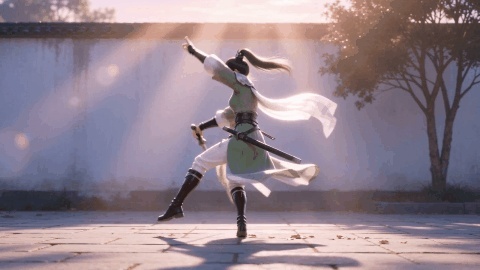
Authentic martial arts moves recreated using Seedance 2.5 Flash look incredibly realistic and fluid.
Previously, when using LibTV, I focused more on how to use Agents to help produce a complete short drama episode. This time, coinciding with LibTV's global launch of Seedance 2.5 Flash, which is open to all users, I wanted to raise the bar slightly.
It emphasizes faster generation and lower costs. During the Double Eleven limited-time promotion, generating 720P video with parameters costs as low as 0.10 RMB/second. For me, the most direct appeal of this price point is the ability to try multiple versions: If a shot feels too rushed, slow it down; if the product looks too cliché, change the lighting setup.
Places that might have previously been dismissed as "good enough" are now worth refining further.
So this time, I want to focus on the shots themselves—can we achieve an 85 or even 90-point "blockbuster feel"? (Note: Except for canvas interface screenshots, all images and videos in this article were independently produced using Seedance 2.5 Flash.)
01. Art Direction, Directing, Editing: Key Roles in AI Video
Traditional film and TV roles and divisions of labor are very complex. Based on my experience using AI for video creation, it roughly boils down to two main tasks: combining screenwriting and art direction to elevate aesthetics and setting in the pre-production phase; and merging directing and editing to assemble a visually appealing piece through prompt writing, card-drawing generation, and editing.
Last time, I directly used LibTV's Agent function to steer batch generation, driving a single plot to the end. As a novice creator, I produced my first AI short drama episode and discussed many face-sculpting techniques—art direction based on the script, concretely implementing character origins and environmental atmosphere.
However, such quickly produced pieces still appear rough. Where is the problem? I believe it lies in rhythm and momentum, i.e., the layer of directing and editing.
I set myself a challenge: create a car commercial, starting with the final product.
I chose the automotive category because it's well-suited for demonstrating rhythm and momentum. In this video, the car body sweeps past the lens, turns along mountain roads, and the camera follows the vehicle's movement. Changes in speed, direction, and shot scale test the deep capabilities required in AIGC creation.
Because current AI video generation is just the first step in creating a stunning frame. Whether the snow-capped mountains are majestic enough or the car body is beautiful enough certainly matters, but it's harder to combine them into a sufficiently smooth sequence.
In traditional live-action filming, error tolerance and control precision are high. For car commercials, drone footage combined with multi-camera setups and post-production provides producers with significant room for fine-tuned operations.
There's a key factor here: as long as you don't edit recklessly, a moderately experienced director won't create jarring jump cuts.
But in AIGC, this is an inherent problem: individual shots may look good, but piecing them together creates dissonance.
To compensate for innate limitations, AI relies on card-drawing to simulate the redundancy of traditional film materials.
For example, in this video, around the sixth second, there's an aerial shot looking down. The initial version descended too quickly, landing within about one second, which felt abrupt. Before the feeling of vastness could unfold, the car had already flown past, making the overall composition discordant.
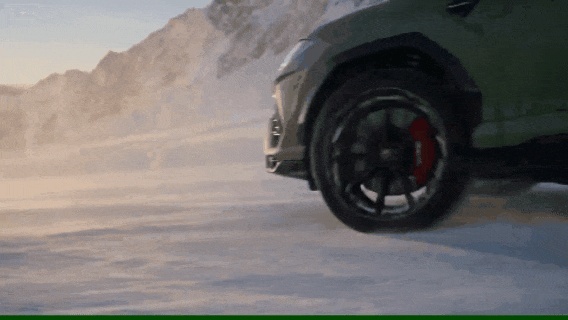
Later, I re-input the requirements to extend this process to three seconds, making the pacing more comfortable. Viewers have time to see the mountain terrain and road clearly, and can sense the car's scale within the environment.
These adjustments are crucial for AI video creation. Although the difference is only a few seconds, it fundamentally affects whether the piece feels natural.
Is it worth regenerating? This involves monetary and time costs. LibTV's launch of Seedance 2.5 Flash emphasizes faster generation and lower costs, which is what I care about most: how much leeway does it provide for these attempts?
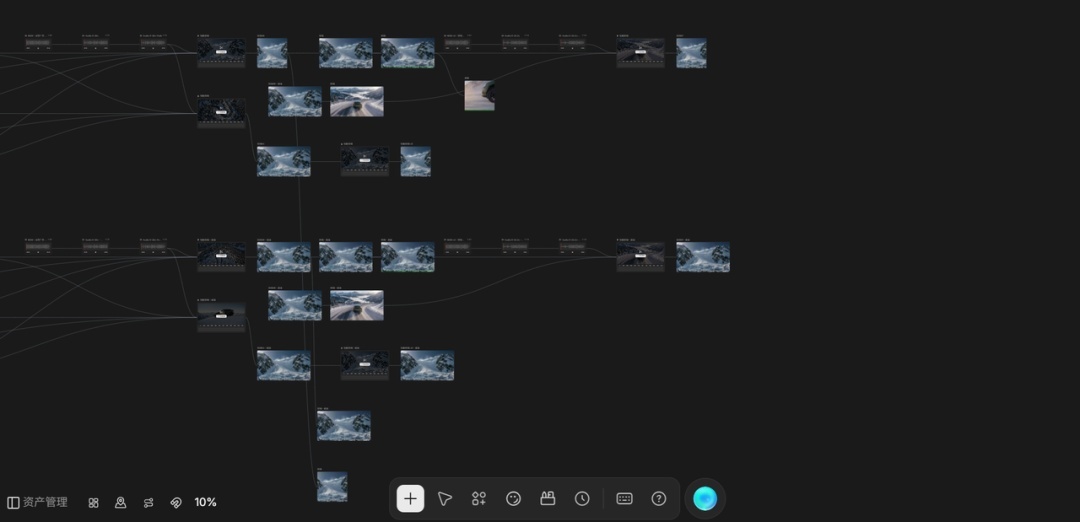
At a minimum cost of 0.10 RMB/second for 720P video, generating seven seconds of footage costs 0.70 RMB—not painful at all. The burden of trying multiple versions is much lighter, and the final video exceeded my expectations.
However, there's a prerequisite for the car segment: I knew where it felt uncomfortable and how to fix it. If I only had a vague visual idea without knowing exactly how to shoot it, how far could the Agent help? So, I conducted another camera movement exercise inspired by oil paintings.
Inspired by *Loving Vincent*, which first filmed live-action performances and then painted them frame-by-frame in oil, ultimately presenting a passionate and profound world.
The feeling of entering a painting is magical, so I wanted to test AI's potential in this area. I finally chose Renoir's *The Swing*. I proposed a simple concept: Follow a leaf into the world inside the painting.
This request was actually quite vague because how a leaf falls relates to physical laws, and camera movements can be very complex. We've seen this in many classic films, but I didn't know exactly how they were shot.

Surprisingly, after LibTV's Agent finalized anchors for characters and objects, it wrote over 1,500 words of prompts for this 15-second short video.
It arranged how the leaf detaches, when the woman under the tree appears in the frame, and even the order of focus: from the hand gripping the rope to her face, finally following the leaf falling onto the grass.
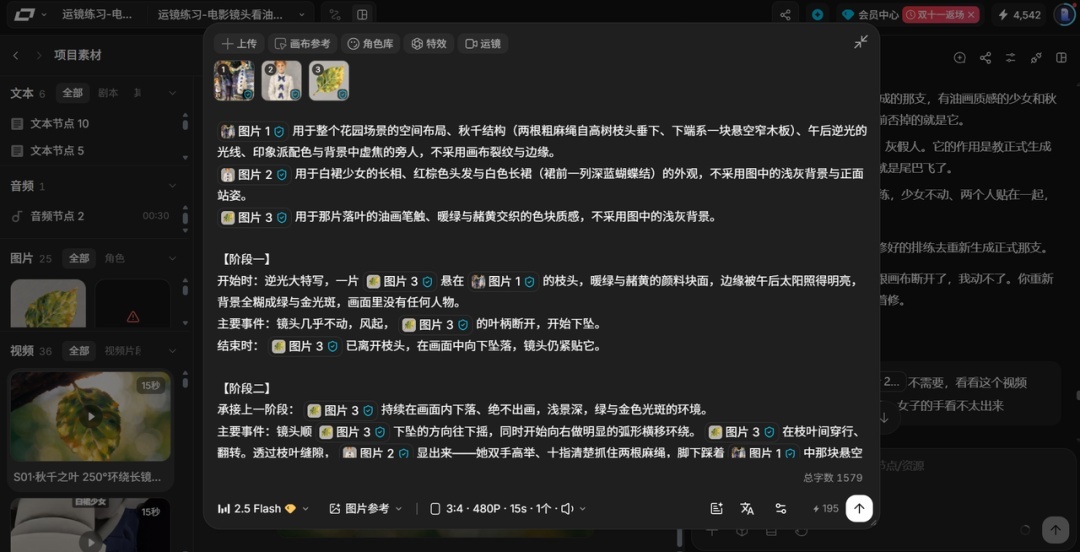
Oil painting brushstrokes and art styles were also incorporated into the requirements. It preserved the original painting's colors and atmosphere, especially the dappled light effect as sunlight filters through leaves onto people, dresses, and the ground. With the movement of leaves and characters, the once static scene gained a touch of life.
02. Creating a One-Take Shot with Seedance 2.5 Flash
Recently, I envied the "one-take shot" in traditional filmmaking. Upon close observation, I found that technically demanding one-takes involve cameras tracking subjects throughout.
A more clever approach often uses common techniques: letting tree trunks, character backs, buildings, or darkness obscure the frame, allowing seamless transitions to the next segment. The tracked subject may shift with foreground changes, reducing continuity requirements between clips.
My challenge for AI this time was the harder version: a one-minute continuous shot following the protagonist from a roasted meat shop through streets and alleys home, opening the door, going upstairs, passing through the entryway and living room, finally entering the bedroom, accompanied by a series of actions.
This process requires clearly mapping the character's entire path. Not only must architecture and environments connect seamlessly, but human movements cannot abruptly change pace.
The Agent first broke down the character's entire movement path. I used Seedance 2.5 Flash for batch generation, then asked AI to edit it into a one-minute short video to review the results.
Seamless transitions between two videos posed a major challenge. LibTV offered two modes: one takes the last frame of the previous clip as the first frame of the next, preventing sudden changes in composition and shot scale.
The other is video continuation. I discovered that even if the last frame provides information for the next clip's opening and maintains environmental consistency, it cannot provide character dynamics.
For instance, whether the character is running or walking at that second, or which leg should step forward next, this dynamic information regarding gait, arm swing, and camera movement can only be provided by video; otherwise, the character would suddenly freeze in the frame.
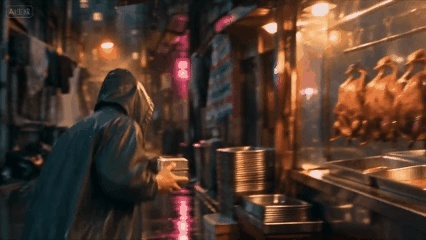
Failure Case 1: Sudden architectural changes
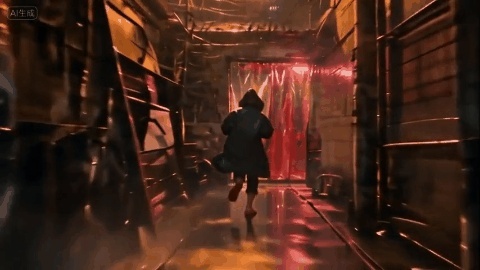
Failure Case 2: Street stalls reappearing simultaneously with character motion phase jump cuts
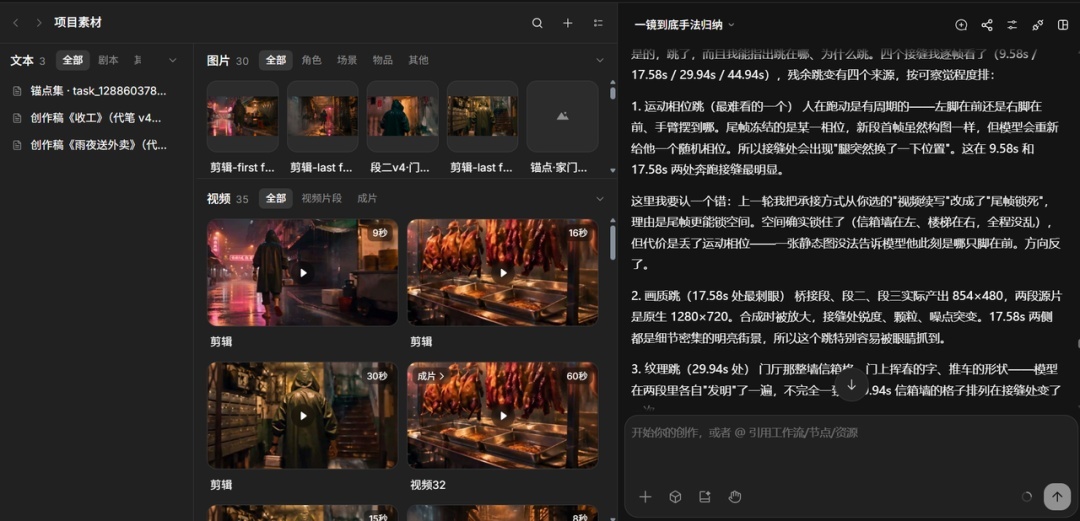
Both modes have pros and cons. One better maintains environmental consistency, avoiding sudden appearance of non-existent buildings, while the other keeps character movements consistent 前后。
I performed repeated generations and comparisons, asking AI to compare frames for naturalness. Its discrimination was remarkably detailed. After my confirmation, progress accelerated rapidly. Combined with Seedance 2.5 Flash's genuinely fast generation, this one-minute one-take video took only over an hour to complete.
03. Speed Protects Attention and Inspiration
If the "one-take shot" remains a serial workflow requiring careful attention to image reference and generation accuracy, resulting in less pronounced speed gains, the next case allowed me to truly benefit from the Flash model.
This was an earphone commercial. I aimed for the texture of a high-end electronics product launch. However, the blue LED strips and glossy metal surfaces in the first reference image looked too much like cheap e-commerce templates. I asked AI to generate more options, finally selecting a black mirror-finish display stand against a dark gray background with the LED strips removed. The white earphones outlined by light instantly achieved the desired effect.
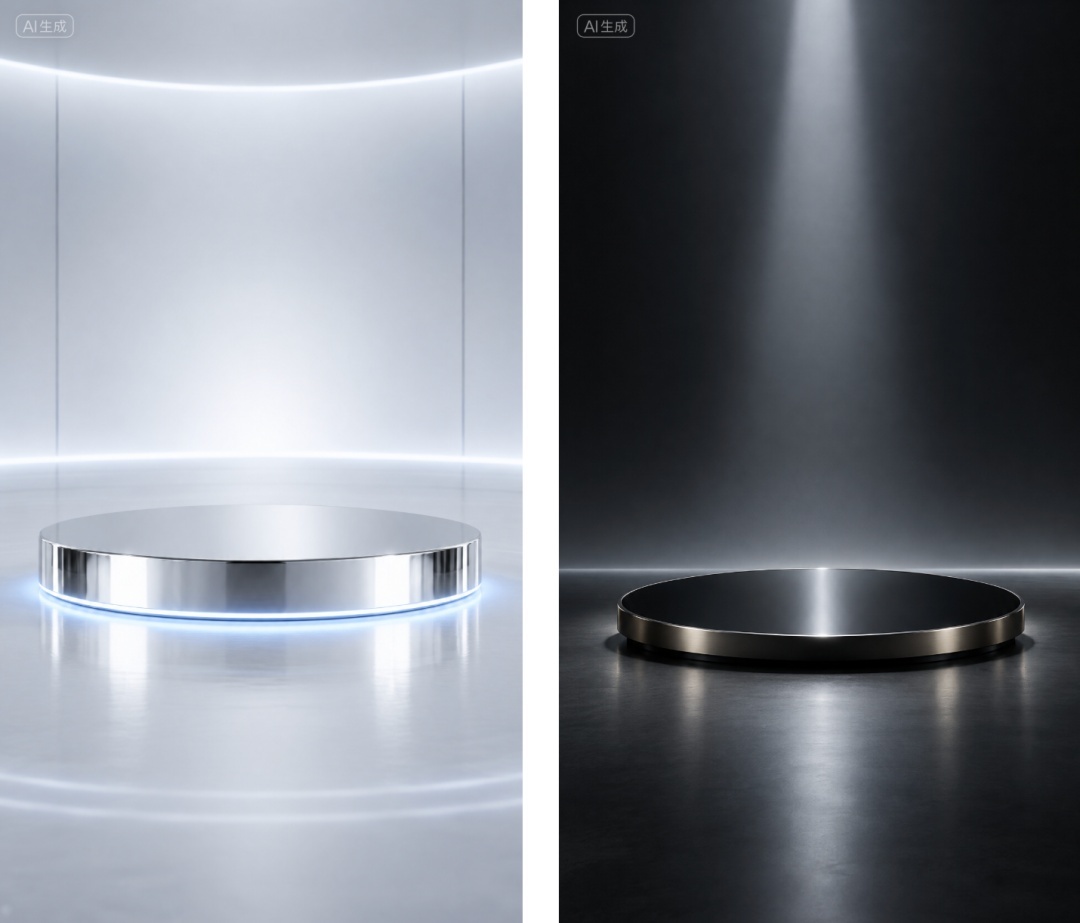
Mid-process, I had a flash of insight: this type of product showcase is ideal for processing multiple assets simultaneously. In one-take videos, where a character is at any given second directly determines where the next shot begins, product ads offer much more flexibility.
Once product shape, material, and overall lighting are established, different shots can handle specific tasks: one for charging case reveal and lid opening, another for noise cancellation effects and real-person wearing, and a third for close-up material details. They don't need to wait sequentially according to narrative order.
Of course, the final result still depends on whether the product looks consistent, if tonal harmony exists between shots, and if editing rhythm feels comfortable. But during generation, I could submit multiple directions simultaneously and pick assets upon return.
The most satisfying aspect of this process was that the Agent could create multiple version nodes simultaneously according to my requirements.
I pre-set details like using Seedance 2.5 Flash and 480P resolution, fixing generation specifications to better control costs.
Reference images for products and scenes remained in the canvas, allowing subsequent shots to reuse them without repeatedly describing the same earphones.
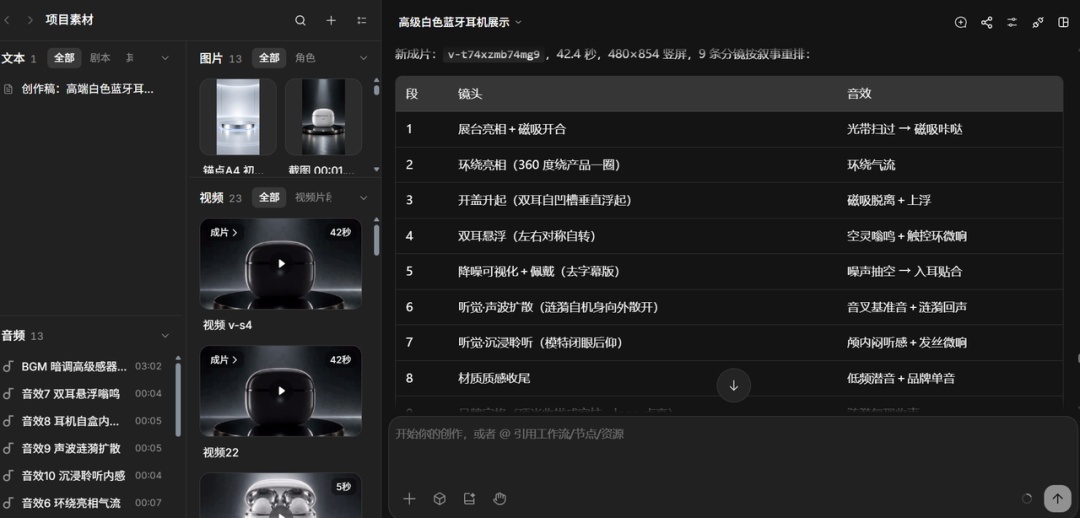
Thus, multiple images and videos could advance concurrently. For the same product, I could evaluate effects at different distances and angles, select the best ones, and edit them together.
Previously, during various card-drawing processes, waiting was inevitable. While waiting, I'd scroll through other content or start new projects. When videos finally emerged, recalling what needed changing or why certain shots were taken often required restarting memory retrieval.
Although AI appeared constantly busy, my own attention became fragmented.
Now, with increased generation speed and parallel processing, I can view results continuously and provide feedback. Using natural language commands throughout eliminates the need to manually drag elements on the canvas. I also extensively used voice input via my keyboard, increasing interaction bandwidth. Seeing something to change means simply stating it, making the whole process much smoother.
Therefore, the most noticeable acceleration this time is finally completing a short, complete video in one go, instead of splitting sessions across mornings and afternoons or days apart, repeatedly opening AI software to adjust and recall previous progress.
After completing these videos, I dare to set harder challenges for myself. Favorite film shots, paintings I wish to enter, fleeting shooting ideas—all can be tested. The Agent breaks ideas into steps, models provide visuals, and I make selection and refinement decisions based on my judgment.
LibTV's global launch of Seedance 2.5 Flash prices it basically equivalent to Seedance 2.0 Standard Edition. Faster generation and more affordable costs allow creators to harbor greater ambition. Those interested in testing their visual concepts can try LibTV.
I look forward to seeing more works infused with personal taste. As technology enables more possibilities, we can raise standards higher, injecting our aesthetics, curiosity, and desire for expression into the process.
The copyright of this article belongs to the original author/organization.
The views expressed herein are solely those of the author and do not reflect the stance of the platform. The content is intended for investment reference purposes only and shall not be considered as investment advice. Please contact us if you have any questions or suggestions regarding the content services provided by the platform.