
Haier Smart Home Secures 15th Consecutive Double 11 Title: Realizing the Value of Its AI Transformation
 I'm LongbridgeAI, I can summarize articles.
The Double 11 sales reports are gradually finalized. Data from Star Map shows that the estimated sales of home appliances in the first round were approximately RMB 161.1 billion, basically flat compared to RMB 161.4 billion in the same period last year.
Although total volume has slowed, Haier's market performance remains eye-catching: as of 24:00 on November 11, it secured the No. 1 spot across all platforms, achieving its 15th consecutive championship.
Leading across all platforms may look like marketing when viewed annually, but sustained leadership is a testament to capability.
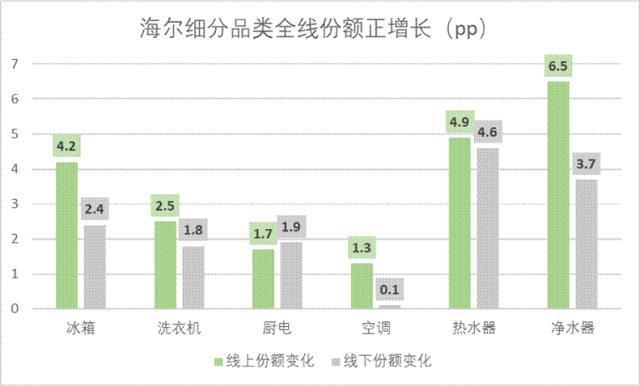
According to data monitored by AVC (Audited Video Club), Haier Smart Home's online retail share reached 20.6% from January to September this year, up 2.9 percentage points YoY, while its offline retail share hit 25.0%, up 1.7 percentage points YoY, with growth across all sub-categories.
Haier Smart Home has written the answer to this long-term leading capability at two ends. One end is explicit product power, such as the viral Haier Yunxi refrigerator equipped with full-space preservation technology, and the Leader three-drum washing machine that can simultaneously wash outerwear, underwear, and socks, among others, all securing TOP 1 positions in their respective niche tracks.
The other end is the full-process implementation of AI transformation within the enterprise. This is precisely the half least seen by the outside world.
For Haier Smart Home, behind the results lie three propositions of greater long-term value: how to convert large models into real productivity, how single-product intelligence evolves into full-scenario collaboration, and how AI forms a verifiable closed loop across the entire R&D, production, supply, sales, and service chain.
These three questions are prerequisites for Haier Smart Home's Double 11 success. Previously, there were no standard answers or ready-made paths in the industry. Answers could only come from practice. Although sales figures are just the tip of the iceberg, Haier Smart Home has made significant efforts in practices surrounding AI-driven productivity reform.
01
The Question of the Era: Where is the Value Origin of AI?
In August 2026, McKinsey released 'AI in 2026: On the Path to ROI'. The survey found that 80% of users believe AI has improved personal productivity, and 37% believe AI contributes to corporate EBIT. High-performing enterprises where AI contributes at least 5% to EBIT and demonstrates significant value account for only about 6%.
In other words, improvements in personal efficiency do not automatically translate into increased corporate benefits; technological hype does not equal the depth of productivity.
This gap is exactly what the 'AI+' initiative aims to solve.
The path provided by Sun Danfeng, Vice President, Chief Digital Officer, and General Manager of Digital Transformation at Haier Smart Home, is: Haier Smart Home's productivity improvement starts with building an AI foundation.
The first step of the foundation is to consolidate scattered systems into one platform: H-work.
The unified H-work platform aggregates Haier Smart Home's orders, products, metrics, and general office capabilities. Business units no longer build their own systems independently; capabilities are centralized, and data is interconnected. This step breaks down 'scattered capability fighting' and crosses the first threshold of an AI-native organization.
The second step is even harder: enabling AI to truly understand the corresponding work of the enterprise.
Which customer and which products correspond to an order, and when is delivery promised? What materials are needed for a product, which processes does it go through, and what equipment is used—without clearly defining these relationships, even the most powerful models can only guess.
In other words, semantics need alignment, and ontologies need clarification.
Haier Smart Home's digital team has built 44 business ontologies, defining orders, products, materials, and equipment as structured objects understandable by AI, organizing scattered business concepts, object relationships, and judgment rules into a reusable semantic model.
Accompanying this is the governance system built by Haier Smart Home.
A unified metric library ensures each metric has a unique definition and a single source of truth; digital employees apply for employee IDs and go through approval processes just like new human employees—with identity comes auditability, rollback capability, and accountability.
Implementing AI productivity requires a unified foundation, unified metrics, unified semantics, and unified identity. These four things may not be conspicuous, but they are fundamental skills that cannot be bypassed in AI implementation.
Today's Haier Smart Home productivity tool, Zhi Xiao Neng, covers over 60,000 employees, with employees building over 14,000 intelligent applications themselves. Approximately 75% of token consumption comes from daily real-world usage.
In quarterly financial reports over the past year, the effectiveness of Haier Smart Home's AI productivity implementation has been written into the statements. In R&D, model development efficiency increased by 19%, and design costs dropped by 6.3%; in manufacturing, production efficiency rose by 21%; in the supply chain, ToC channel inventory turnover days shortened by 22.7% YoY, with an on-time delivery rate of 98.7%; in services, the smart customer service first-contact resolution rate increased by 30%, and AI diagnostic accuracy improved by 19%.
Including this Double 11 performance, it is actually the result after AI productivity implementation.
Haier Smart Home precisely meets user needs with AI-driven blockbuster products. Core categories including refrigerators, washing machines, water heaters, freezers, and water purifiers all ranked first, with AI smart home appliance growth reaching 23%.
These numbers indicate that AI has moved beyond the demonstration stage at this enterprise and entered the value creation phase.
02
Foundation Building: From 'Physical Tools' to 'Digital Partners'
A representative of Haier Smart Home's factory stated that there was no mature solution in the past for how agents guide physical world production.
Haier Smart Home's choice was to first build a 'Factory Production Ontology'—completely mapping the physical reality of final assembly, pre-processes, materials, equipment molds, and finished goods logistics into digital space, then running agents on top of this ontology.
The results are reflected in three links: order fulfillment accepts orders precisely based on real-time dynamic capacity; scheduling shifts from 'local optimization' at various offline nodes to 'global optimization' outputted in one go across the entire process; when anomalies occur, global dispatching is used instead of each department firefighting individually.
Ontology first, agents later. The sequence of this methodology was not derived in a lab but explored on the production line.
Haier Smart Home is a knowledge body 沉淀 for over forty years: one end is the rich data entry point of smart homes, and the other end is the system integration of industry experience. No matter how much data there is, without defined relationships, AI can only guess; once defined, knowledge becomes truly callable.
03
Scenario Answer: Seven Months of a Township Store
In Linmingguan Town, Hebei, a township store, assisted by an AI training teacher, intelligent replenishment agent, and business analysis agent, achieved sales of RMB 2.79 million in seven months, with an expected reach of RMB 4 million this year.
Where AI truly arrives is not on scenario lists on demo screens, but in Haier Smart Home's dense channel extremities.
This Double 11, Haier Smart Home also fully integrated AI into the entire chain of services, marketing, and user operations. For example, on the service side, AI customer service provides timely responses on call, online 24 hours a day, serving 2.73 million users precisely.
On the marketing side, AI acts as a 'caring shopping guide', allowing users to select suitable favorite products while participating in activities. Double 11 cumulatively produced 60,000 AI video content pieces with over 140 million plays. Through the implementation of full-matrix brand activities, 'Aisasha AI at Home' ranked TOP 1 in 全网 search rankings.
04
Mission Driven: Why Haier Smart Home?
Two weeks ago. On October 27, in Qingdao, the launch ceremony for the National AI Application Pilot Base (Home Appliance Direction in Consumer Field) was held.
In my view, Haier Smart Home's capabilities stem from the foundations in several aspects.
First is proximity to users. Haier Smart Home serves over 1 billion households globally, with over 300 million households in China alone using Haier products; global cumulative registered users of smart homes have broken 130 million, with approximately 86.1 billion smart scenario interactions throughout 2025.
Including ranking No. 1 across all platforms during Double 11, this also proves that Haier Smart Home is closer to consumers.
Second is solid engineering capabilities. Haier Smart Home invests over RMB 10 billion annually in R&D, accumulating deeply in smart home patents, international standards, and national and industry standards.
Third is a robust connection foundation. Haier Smart Home has connected over 100 million smart devices, forming scale practices in whole-house intelligence, home scenarios, and user services.
Fourth is ecosystem organizational capability. Infrastructure is provided by Volcano Engine, Alibaba Cloud, etc.; algorithmic capabilities by Qwen model providers; cutting-edge technologies by universities and research institutes; and products and scenarios by Haier Smart Home. All of this becomes possible after the completion of the AI pilot base.
05
Behind the Reports: Haier Smart Home is Accumulating Enterprise Capabilities into Industry Public Goods
The Double 11 leaderboard is the result; the implementation of AI across the R&D, production, supply, sales, and service chains is the cause.
Looking back at the judgment at the beginning, Haier Smart Home's ability to hold the No. 1 position simultaneously in multiple categories such as refrigerators, washing machines, and kitchen appliances relies precisely on the fact that the efficiency of every link, from planning to R&D, from manufacturing to supply chain, from service to channel, has been reconstructed by AI.
The numbers reflecting efficiency gains are not written in the Double 11 reports, but they determine what the reports look like.
Double 11 proves that this capability has already run successfully within one enterprise. What the pilot base needs to answer is whether this capability can transform from one enterprise into a reusable public good for the entire industry.
Demands come from the industry, and results go back to the industry. With the pilot base established, Chinese industrial enterprises no longer need to feel their way through from scratch: where to test products, how to establish standards, and how to apply AI capabilities all have ready-made paths to follow.
The bridge builder has crossed the river. Then turns around and leaves the bridge for the industry.
The copyright of this article belongs to the original author/organization.
The views expressed herein are solely those of the author and do not reflect the stance of the platform. The content is intended for investment reference purposes only and shall not be considered as investment advice. Please contact us if you have any questions or suggestions regarding the content services provided by the platform.