
The 13th IMA Management Accounting Summit was held in Shanghai, promoting the leap from financial control to value leadership.
 I'm LongbridgeAI, I can summarize articles.
Beijing, Nov 16, 2026 /PRNewswire/ -- On November 6, 2026, the 13th IMA Management Accounting Summit, hosted by the Institute of Management Accountants (IMA), was held in Pudong, Shanghai. Under the theme 'Driving the Leap from Financial Control to Value Leadership,' the summit gathered over 400 finance and accounting professionals from corporations, academia, professional institutions, and international organizations. Participants engaged in cross-industry and cross-disciplinary discussions on topics including global economic development, ESG and corporate governance, digital and intelligent transformation of finance, AI applications, business-finance integration, global financial capabilities, and female financial leadership.
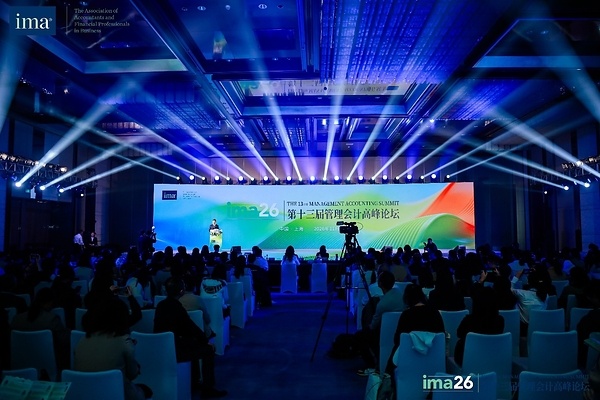
The IMA Management Accountants Association's '13th Management Accounting Summit' officially kicked off in Shanghai on November 6, 2026.
The full-day agenda was chaired by Liu Qinghua, Member of IMA's Global Market Committee (GMC) and Chairman of the China Advisory Council (RAC).
Mike DePrisco, President and CEO of IMA, delivered the opening remarks. He noted that management accounting has far exceeded traditional financial reporting, increasingly serving strategic decision-making, risk management, and sustainable value creation. The digital-driven decision-making capabilities and professional ethics emphasized by IMA's Certified Management Accountant (CMA) credential are key to supporting this transition. He reviewed IMA's cooperation with Chinese government departments since the mid-2000s—including a cost practice survey invited by the Ministry of Commerce in 2006, a joint research report in 2008—and the formal introduction of the CMA certification to China in 2007, specifically highlighting the milestone of the CMA's 20th anniversary in China in 2027. Looking ahead to the next 20 years, he proposed that AI, technology, and new business models will reshape the finance field. The industry must uphold human judgment and ethics while leveraging technology, empowering the next generation of management accountants, and building a community for mutual learning.
Lu Wenbin, Deputy Secretary of the Party Committee and President of Shanghai National Accounting Institute, spoke as a special guest, sharing three insights 围绕 the forum's theme: In the AI era, what is scarce is business judgment; technological tools cannot replace managers' ability to identify opportunities, assess risks, and allocate resources. In the next phase of globalization, the test for finance lies in integration capabilities; CFOs are shifting from financial managers to strategic participants, global resource integrators, and helmsmen of complex risks. Sustainable development is moving from information disclosure to value management; finance teams need to establish an ESG measurement system oriented towards value creation. Based on the institute's 'China Enterprise Financial Resilience Survey Report (2026),' he pointed out that less than 30% of enterprises have truly integrated scenario planning and stress testing into process management, and only 4% can effectively utilize them. The shortcomings in financial management have shifted from accounting and fund management to strategy and change dimensions. He expressed hope to deepen talent cultivation, academic research, and professional exchanges with IMA, bringing valuable ideas into classrooms, enterprises, and management practices.
Cody Dietrich, Commercial Consul at the U.S. Consulate General in Shanghai, subsequently delivered remarks. He emphasized that strong financial management is the foundation of corporate success and sustainable economic growth. Professional education, internationally recognized qualifications, and the exchange of best practices are crucial investments in cultivating financial professional capabilities. For over a century, IMA has provided the knowledge and skills framework required by global enterprises through certification, education, research, and career development. He specifically cited the inclusion of the CMA in the 'Shanghai Municipal Human Resources and Social Security Bureau's Recognition List of Overseas Professional Qualifications 2.0' in 2024, and the achievement of multiple CMA holders successfully obtaining senior professional technical titles after the policy was updated to version 4.0. This serves as a concrete example of international professional organizations collaborating with Chinese institutions to elevate professional standards and expand career opportunities. He encouraged attendees to fully utilize the forum platform to gather international professional knowledge and local experience, establishing new connections in the business and accounting communities.
Wen Bin, Chief Economist and Dean of the Research Institute at China Minsheng Bank, delivered a keynote speech titled 'Global Economic Development Trends and Prospects for High-Quality Economic Development in China.' Wen believed that the world economy and international trade continued to expand this year, but high inflation led developed country central banks to generally adopt interest rate hikes, exacerbating financial market volatility. In the next stage, international geopolitical conflicts and AI investment trends require continued observation, and the international environment remains complex, volatile, and uncertain. He pointed out that in the first three quarters of this year, China's GDP grew by 4.6% year-on-year, within the growth target range, while the general price level began a mild recovery, and the GDP deflator achieved positive growth for two consecutive quarters. With the further implementation and effectiveness of stock and incremental macro-control policies, the economic growth rate in the fourth quarter may see a significant rebound. He particularly emphasized the shift from 'investing in things' to 'investing in people,' with the continuous optimization of fiscal expenditure structure, and strengthened coordination between monetary and fiscal policies, which will better stimulate the endogenous momentum of China's economy. Manufacturing is moving towards new and optimized directions, and the service sector is developing well. As finance professionals, they should seize new opportunities in high-quality national economic development to support corporate strategic decision-making and operational management.
Brigitte de Graaff (CMA), Global Council Chair of IMA for the 2026-2027 fiscal year, subsequently presented a keynote speech titled 'Integrated Thinking: Embedding ESG in Performance Management.' She outlined the evolution of sustainable reporting frameworks and regulations over the past 20+ years, and the adoption trends of the International Sustainability Standards Board (ISSB) globally, including in China. She noted that mandatory disclosure can enhance information transparency and comparability, but reports themselves do not automatically translate into integrated thinking and better decisions. She proposed that enterprises need to move from compliance and reporting to management and performance management, embedding sustainability factors into governance systems, strategies, risk management, and key performance indicators. By leveraging management accounting's familiar planning, budgeting, and analysis tools, companies can connect financial and non-financial data and break down information silos. She emphasized that support from the CFO, CEO, and board of directors, a culture of trust and collaboration, and integrated systems are indispensable. Only by integrating ESG into daily decision-making, scenario planning, and value chain trade-offs can long-term value creation be achieved and organizational and business model resilience be enhanced.
Following this, Zhou Haiping, Chief Accountant of Huashan Hospital Affiliated to Fudan University, delivered a keynote speech titled 'Exploration of AI Technology Application Scenarios in Public Hospital Operational Management.' She proposed that hospital operational management in the intelligent economy era is moving from informatization to intelligent governance, ultimately achieving computable data, connected systems, and supportive decision-making. Combining Huashan Hospital's intelligent finance practices, she highlighted the application of new information technologies such as accounting engines, rule engines, multi-dimensional accounting engines, and RPA/OCR robots. This promoted the application of the 'Hua Xiao Cai' AI reimbursement review agent and the R&D of the 'Hua Xiao Cai' AI bidding review agent, forming a human-machine collaborative closed loop of 'intelligent initial review and manual final review.' AI makes data 'visible, understandable, and controllable,' promoting the expansion of financial management functions through intelligent finance construction, transforming finance from a value recorder to an operational manager and a driver of governance and value.
In the 'Leadership Dialogue: Value Transmission of Management Accounting and Business-Finance Integration from an International Perspective' roundtable session, Jian Jinbo (CMA), Global Councilor of IMA for the 2026-2029 fiscal year and CFO of Danren Niushang Technology Co., Ltd., served as moderator. Geoff Perry, Executive Vice President, Chief Member Officer, and Executive Director for Asia-Pacific and the Americas at AACSB; Wu Jieqiong, CFO of Asia Pacific at Syensqo; and Curt Larson (CMA), Vice President of Finance and Operations at Shanghai Concord Foreign School, served as dialogue guests. They discussed the strategic role of management accounting, business-finance integration, and the impact of AI, agreeing that management accounting should shift from measuring performance to shaping the future. Finance personnel need to step out of the office, get closer to business and customers, and use business language to translate facts and insights into recommendations and actions. The guests unanimously agreed that AI technology is an effective tool for liberating mechanical labor rather than a threat to the accounting profession, but simultaneously warned that the quantity and structure of future finance talent will change. Critical thinking, proactive questioning, verifying data authenticity, and building trust are lessons that both business school education and workplace transformation need to address.
During the afternoon session, Professor Su Xijia, Emeritus Professor of CEIBS, delivered a keynote speech titled 'AI×Finance: Challenges and Missions for CFOs in the AI Era.' Starting from the difference between finance's 'stock mindset' and business's 'incremental mindset,' he pointed out that the value of finance establishing risk control and internal control lies not in hitting the brakes, but in enabling the enterprise to develop faster. As the business environment shifts from a growth era to a survival era, the proportion of CFOs transitioning to CEOs has risen significantly, but finance-background leaders still need to break free from loss-aversion obsessions and possess the courage to bet at critical moments. Regarding AI implementation, he cited surveys from McKinsey, Gartner, and Boston Consulting Group indicating that most enterprises' AI investments have not yet formed measurable financial value. However, Midea's case of screening 158 agents contributing 95% of value from 13,000 intelligent agents illustrates that enterprises should lock in 'high-high-low' scenarios based on business value, data readiness, and implementation complexity. He also reminded that 叠加 economic downturn, performance pressure, increased compliance requirements, and uncertainty in going global, CFOs need even more to hold the bottom line of professional judgment and occupational ethics.
Zhao Dongchang, Senior Chief Expert at China Automotive Technology and Research Center Co., Ltd. and General Manager of Zhongqi Carbon (Beijing) Digital Technology Center Co., Ltd., delivered a keynote speech titled 'ESG×Finance: Trends and Practices in the Deep Integration of Sustainable Development and Financial Decision-Making.' Guided by the International Unified Sustainability Disclosure Standards under the Ministry of Finance's Accounting Department, he pointed out that the integration of sustainability information and financial information is a certainty. Connections need to be established along costs, revenues, cash flows, and asset risks to create comparable and quantifiable links, moving from single materiality to double materiality. Using examples such as production line technical upgrades, low-carbon material substitution, zero-carbon factory renovations, and battery recycling accounting, he explained the dialectical relationship between current investments and future carbon benefits, thereby demonstrating the relevance of climate sustainability impacts to finance. Based on this year's automotive industry climate pilot disclosure results, he bluntly stated that insufficient financial impact quantification capabilities, the absence of internal carbon pricing, and departmental barriers are common shortcomings in the automotive industry. He called for driving business-finance-carbon synergy through a 'top leader project,' incorporating climate risks and transition opportunities into governance and decision-making processes.
In the afternoon roundtable discussion, Lv Changjiang, Chairman of the IMA Academic Advisory Committee, Vice Dean, Professor, and PhD Supervisor at the School of Management, Fudan University, served as moderator. Guests included Zhu Qing (CMA), Founder of Greenstone AI and IMA Global Councilor (2020-2025); Yan Nan (CMA), Deputy General Manager and CFO of Xushun (Hong Kong) Co., Ltd.; and He Yunxuan (CMA), Head of Financial Shared Service Center for Asia at Mettler-Toledo. Centering on the theme 'The Leap in Enterprises' Global Financial Capabilities,' they pointed out that the challenges of globalization to finance go beyond language, extending to cultural differences, cross-legal management accounting languages, rapid response capabilities under various tax systems and geopolitics. Unified ERP and financial shared service centers are important levers for incorporating cross-cultural operations into a controllable framework. Regarding AI, the exchange believed that tools can significantly expand pre-event simulation plans, replace repetitive accounting, and strengthen post-event reviews, but decision-making power, judgment, and responsibility cannot be outsourced. The discussion ultimately coalesced around the consensus of 'institutionalization of judgment': Finance personnel need to hone three capabilities—structured storytelling, institutional and rule design, and trust and responsibility assumption. They should leverage AI training rather than abandoning their own judgment, discover value innovation points in multi-business and multi-regional environments, and ensure that their judgments are trusted, used, and audited by the organization.
Zhang Fang, Joint Chief Financial Officer of Fosun Fashion Group, delivered a keynote speech titled 'Diverse Exploration of Overseas Corporate Financial Control and New Challenges for CFO Capabilities.' The core proposition is 'no fixed formula for going global'—the essence of going global is the export of management capabilities. Citing Fosun's overseas revenue approaching 55% and its presence in over 40 countries, she pointed out that there is no fixed pattern for going global. At least six business models—investment M&A, equity investment, supply chain grafting, self-operated going global, channel borrowing, and light-asset transformation—correspond to six sets of financial approaches, with focus areas ranging from consolidated goodwill and full-cycle cash flow returns to partner profit-sharing, all varying. She emphasized that the primary task of overseas control is not looking at accounts or systems, but clarifying the authorization boundaries between the board of directors, shareholders, and local CEOs. System fragmentation, minor languages, and distorted data transparency can render routine capabilities ineffective. Combining multiple real-world business cases, she proposed that CFO capabilities need to be iterated to 'see clearly, manage effectively, and drive change,' possessing a triple identity of shareholder perspective, local perspective, and headquarters-local bridge, and embedding proactive transformation and change capabilities within the CFO themselves.
Liu Hui, Founder and Chairwoman of sHERO, subsequently delivered a keynote speech titled 'Reshaping Female Leadership: Empowering Corporate Value Creation and Sustainable Development.' She proposed that current discussions on 'her power' should not stop at allowing women to gain entry tickets or sit at the table, but should focus on decision-making power and system design power, enabling women to become designers of the system rather than just participants. Collaboration over command, curiosity over certainty, and authenticity over performance are the harder leadership skills scarcer in the AI era. Citing data, she pointed out that the proportion of newly appointed female leadership dropped to 32.8% in the past three years, and the percentage of women at the C-level is only 24.6%. At the current pace, achieving true equality will take over a century. The crux lies not in women's capabilities but in systemic leaks. She thus advocates 'not fixing women, but fixing the system,' incorporating care responsibilities, flexible working arrangements, and promotion mechanisms into organizational design, and viewing men as strategic partners. During the window period where AI reshapes rules, the female perspective must participate in system design so that vitality and connectivity become the 底色 of long-term corporate value and sustainable development.
In the final roundtable discussion of the event, Zhang Yi (CMA), Head of IMA's Global Sustainability SIG, Chairman of the China Sustainability Advisory Committee, and Co-founder of Future Tech Fund, served as moderator. Guests included Wu Zheng (CMA), Management Consulting Partner at Grant Thornton (Special General Partnership) Shanghai Branch; Yu Wei (CMA), Head of East China Settlement at SF Group; and Liu Chunyan (CMA), Senior Technical Expert at the Audit Center of Ningbo Rail Transit Group Co., Ltd. The four CMA holders centered on the theme 'Empowerment and Enhancement of Female Financial Leadership in Digital and Intelligent Transformation Change.' Combining scenarios in management consulting, logistics settlement, large state-owned enterprises, and tech investment, they believed that the CMA's knowledge structure, combining 'Dao and Shu,' can be implemented as dynamic cost control, settlement agents, and full-data diagnostics, pushing finance from post-event recording to influencing decision-making. The guests generally agreed that 'professionalism is the entry ticket, influence is the seat number,' emphasizing translating financial insights using business language and validating value through results. They advocated for Pi-shaped talents and human-machine collaboration. The discussion also reminded that AI full-data analysis still requires experience to verify conclusion accuracy. Talent cultivation should combine digital tools, business knowledge, and strategic thinking, transforming personal influence into organizational influence.
Li Gang, Vice President of IMA and Chief Representative for China, delivered the closing remarks. He stated that the day's exchanges once again confirmed that the finance and accounting profession is undergoing profound changes. Artificial intelligence and digital technologies are changing the way finance works, while sustainable development and an increasingly complex business environment are raising the bar for operational management. The value of finance professionals has shifted from data recording and reporting to business insights, strategic decision-making, risk management, and value creation. He emphasized that while technology can provide powerful tools and richer data, understanding information, making correct judgments, and translating insights into action still rely on professional capabilities, business thinking, professional ethics, and leadership. This is precisely the value of management accounting. IMA will continue to improve professional certifications such as the CMA and Financial and Management Accounting Associate (FMAA), as well as continuing education courses in fields like ESG, AI, and risk management, providing growth opportunities for individuals at different career stages and with different professional backgrounds. Facing the 20th anniversary of the CMA program's entry into China in 2027, he looks forward to continuing to leverage global professional resources, combined with the actual needs of the Chinese market, to work hand in hand with government agencies, enterprises, universities, and every management accounting professional to create more possibilities for professional certification, talent cultivation, and enterprise development.
The copyright of this article belongs to the original author/organization.
The views expressed herein are solely those of the author and do not reflect the stance of the platform. The content is intended for investment reference purposes only and shall not be considered as investment advice. Please contact us if you have any questions or suggestions regarding the content services provided by the platform.