
 I'm LongbridgeAI. Here is the key information I extracted
- The company has restructured its AI division by cutting exploratory projects and reallocating resources to core functionalities, while simultaneously expanding its data center infrastructure with multi-billion-dollar investments.…
SpaceX's artificial intelligence business is facing a deep-seated contradiction: profiting from renting out compute power to competitors is far more lucrative than developing its own AI products.
According to The New York Times, Musk has admitted to employees that the company is lagging in AI research and development, making it more commercially valuable to rent out compute power externally than to use it for in-house product development.
Anthropic pays SpaceX approximately $3.1 billion monthly for compute power, while Google pays around $800 million per month, with related agreements potentially extending until 2029. SpaceXSI, the AI division under SpaceX, currently contributes more than half of the company's total revenue.
This dynamic has a significant impact on the AI competitive landscape that cannot be ignored. SpaceX is providing critical infrastructure support to its strongest competitors, while its own AI products, such as Grok, are facing downsizing pressures during the same period.
Nicolas Owens, an analyst at Morningstar Research, told The New York Times, "SpaceX is currently earning far more from renting out compute power than from Grok-related revenue."
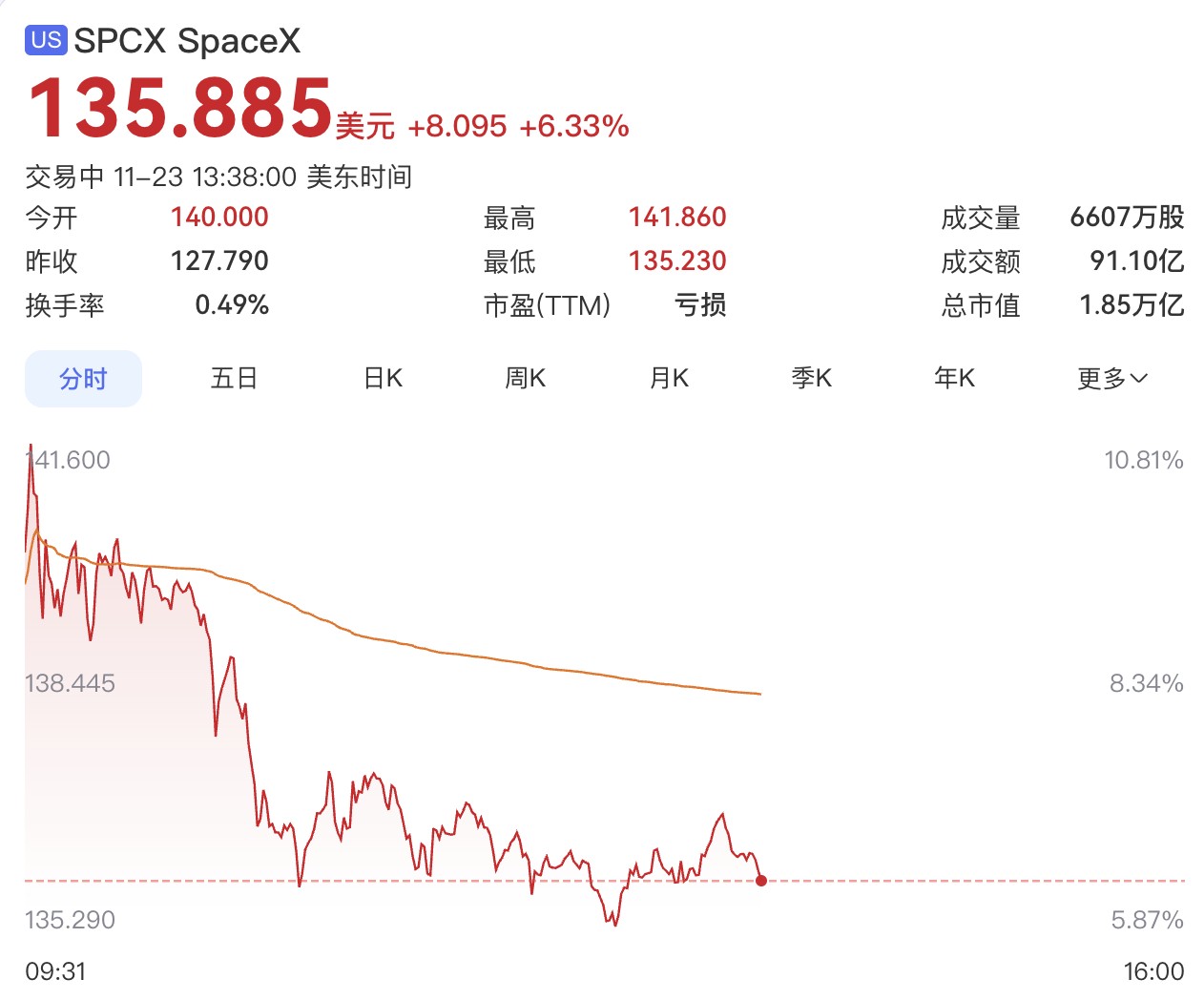
Following Jensen Huang's return, which spurred a surge in US tech stocks, SpaceX shares rose by as much as 11% in early trading before pulling back slightly. As of press time, they were up 6.3%.
Musk Internally Acknowledges Lag, GPU Efficiency Becomes Core Performance Metric
Musk's concerns about the company's AI competitiveness have clearly permeated internal management. According to The New York Times, he temporarily renamed an internal engineer group in August this year to "Sell compute because we can't compete".
He also required engineers to justify the necessity of using high-cost graphics processing units (GPUs). In an internal message reviewed by the newspaper, Musk wrote:
"At the end of the day, the only metric for competitiveness is revenue per GPU, not benchmark scores. If you can't afford the cost of GPUs, you'll either go bankrupt or become a compute leasing company. Drive revenue growth."
Multiple AI Projects Cut, Resources Concentrated on Grok's Core Functions
Internal pressure has directly led to the contraction of several AI product lines.
SpaceX shut down its AI virtual companion project in September this year and redeployed engineers originally working on the "Digital Optimus" AI worker project to develop Grok's core capabilities. Additionally, the 60-person team responsible for the Grok Imagine image and video generation tool has been disbanded.
These adjustments indicate that, given limited resources, SpaceX is further concentrating its R&D efforts while scaling back investment in exploratory projects.
Prominent Infrastructure Advantages, Continued Large-Scale Expansion
Despite pressure on the AI product front, SpaceX maintains significant advantages in compute infrastructure and continues to increase investment.
The company built a large data center in Memphis in just 122 days in 2024 and recently announced plans to invest $74 billion in new data centers in Arizona and Texas.
Musk himself has publicly welcomed demand from Anthropic. At The New York Times DealBook Summit, he stated that Anthropic is highly likely to continue renting SpaceX's compute power and intends to significantly increase its procurement volume.
Competitive Paradox: Fueling Rivals While Seeking to Overtake Them
SpaceX's current business model presents a significant strategic paradox: it generates substantial profits by selling compute power to Anthropic and Google, yet these two companies are precisely the competitors Musk hopes to surpass in the AI sector.
This revenue provides SpaceX with considerable cash flow, supporting its large-scale infrastructure expansion plans, but it also objectively strengthens the technical capabilities of its competitors.
Both Anthropic's and Google's agreements include a 90-day early termination clause, allowing either party to exit. This means that SpaceX's revenue structure, which relies on external customers, carries certain stability risks, especially if competitors build their own infrastructure or switch to other compute sources.