
 I'm LongbridgeAI. Here is the key information I extracted
- The system maintains a 30-day data retention requirement while using automated monitoring to scan stored data every 15 minutes for potential attacks without granting Anthropic access to content.…
Anthropic is handing over data control to enterprise customers to resolve the controversy sparked by its previous mandatory retention policy.
On November 23, Anthropic officially launched the public beta of the "Enterprise Frontier Safeguards" (EFS) system, allowing enterprise customers to maintain autonomous control over data storage when using its most powerful AI models.
The system targets enterprise customers using the two flagship AI models, Mythos and Fable. While it still requires prompts and responses to be retained for 30 days, it allows customers to store data on their own cloud services rather than on Anthropic's servers.
Customers will hold their own encryption keys. Anthropic's software will only periodically scan the stored data to detect potential attacks and cannot access the actual data content. This move stands in sharp contrast to the company's mandatory data retention policy announced in June, which triggered widespread backlash among enterprise customers.
According to Bloomberg, EFS was co-developed by Anthropic with over 100 customers, including investment banks, large technology companies, startups, and law firms, among which a quarter are Fortune 100 companies. Bridgewater, Salesforce, and Stripe have completed private beta evaluations, while institutions such as Wells Fargo, KPMG, and Comcast have also provided feedback.
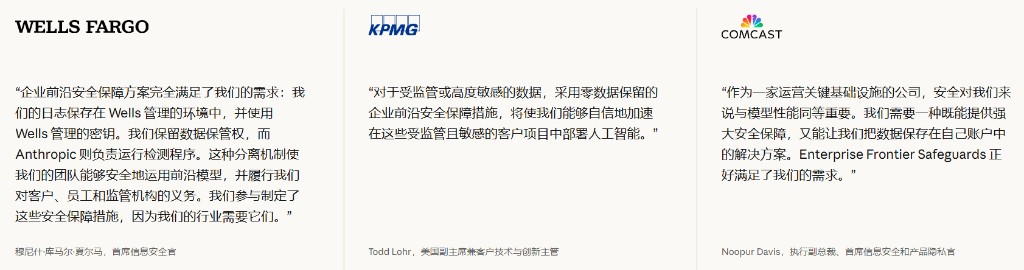
The implementation of the new system marks a substantive compromise by Anthropic on data policies in response to enterprise customer demands, which is particularly critical for strictly regulated industries such as healthcare, financial services, and law. Meanwhile, competitor OpenAI is also reportedly developing similar solutions to avoid retaining data from customers using its highest-level models.
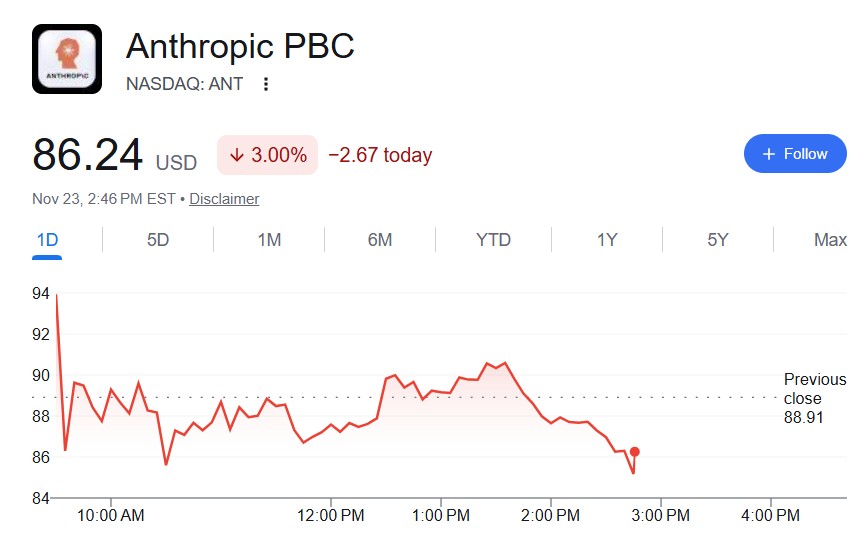
The new policy comes just days after Anthropic completed the largest tech IPO in history. At the time of writing, Anthropic's stock price was $86.24, down 3% for the day.
Policy Shift Driven by Customer Pressure
In June this year, Anthropic announced that it would mandate a 30-day retention period for all customer data used with its flagship Mythos and Fable models, as well as future frontier models, citing the need to help detect and prevent new types of cyberattacks.
Although the company stated at the time that it would not use the relevant data for AI training, the policy still provoked strong backlash among enterprise customers.
In a report, Anthropic admitted that the policy "would dissatisfy customers accustomed to zero data retention and pose a substantial risk to the company's commercial success, especially if competitors do not follow suit."
In September, Anthropic announced that EFS would replace the original policy and planned a phased rollout. The official opening of this public beta means the plan has entered the substantive implementation stage.
According to Bloomberg, the 30-day data retention requirement has not been canceled, but the data storage provider has shifted from Anthropic itself to the customers' own cloud platforms—thereby allowing enterprise customers to retain both compliance monitoring capabilities and data autonomy.
Technical Architecture: Dual-Layer Defense and Data Isolation
EFS constructs a dual-layer defense mechanism of "data isolation and automated monitoring" at the technical level.
Jon Turow, the head of frontier AI model security protection at Anthropic, stated that customers who choose self-hosted storage will hold the encryption keys. Software run by Anthropic on the cloud service will scan the stored data every 15 minutes to identify signs of complex attacks.
Anthropic defines the stored data as "Sealed Safety Data," meaning prompts, response content, and model inference processes encrypted in Anthropic's format, which even the customers' own teams cannot read.
Once the automated monitoring system detects potential issues, customers will receive an automated alert containing relevant excerpt information and will decide on the response method independently; Anthropic will also receive an alert but cannot access the underlying data.
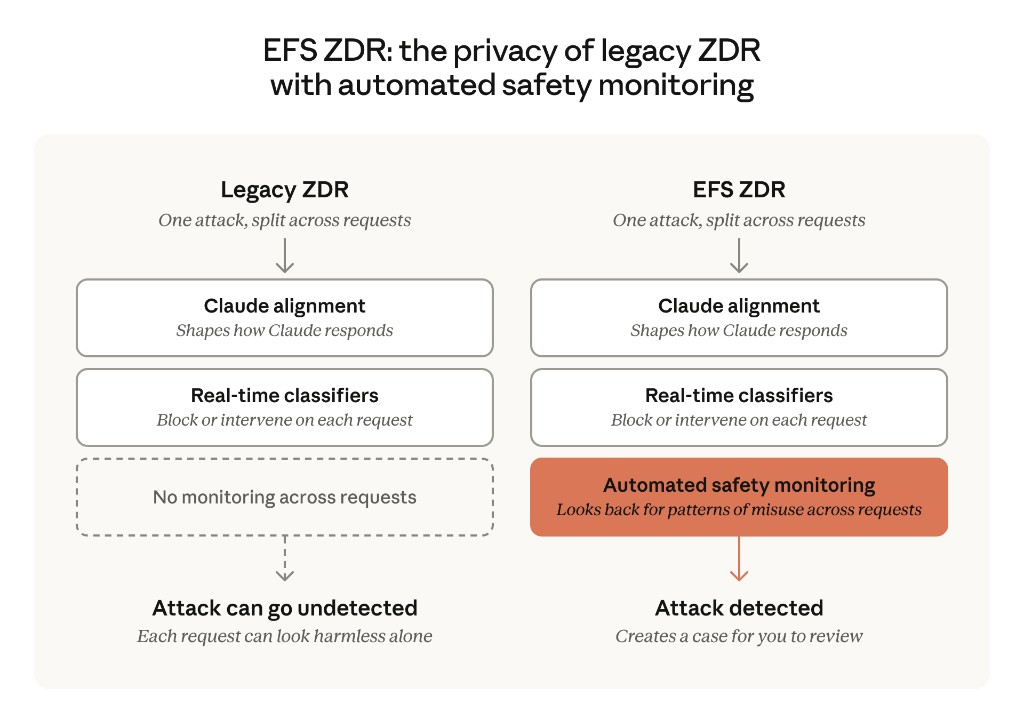
Anthropic explained the necessity of introducing automated monitoring. Traditional zero-data-retention solutions rely on real-time classifiers to screen individual requests, whereas complex attacks often span multiple queries. Each request may appear harmless in isolation, and only combined analysis can expose the intent of the attack.
Anthropic described a typical case in a threat intelligence report released in September: An AI agent distributed attack tasks to dozens of parallel agents and saved credentials between sessions to resume the attack. Single-request reviews were completely unable to identify such threats.
Customer Responsibility: Enterprises Must Proactively Assume Review Obligations
The design of EFS incorporates enterprise security teams into the protection mechanism itself, forming a division of labor: Data hosting and manual review are borne by the enterprise, while automated monitoring and potential enforcement measures are the responsibility of Anthropic.
According to EFS documentation, when the automated monitoring system identifies a potential violation, it generates a "Safety Case," listing the policy category and related messages, along with an index of corresponding excerpts.
Staff handling cases at Anthropic can only view limited information and cannot read specific input or output content. Enterprise customers must respond within 7 calendar days, stating whether a violation was found, without needing to provide names, evidence, or original excerpts; cases left unanswered may result in suspended access rights.
In rare instances of obvious, intentional harm, Anthropic may also directly suspend access rights during the customer's investigation.
Munish Kumar Sharma, Chief Information Security Officer at Wells Fargo, summarized this division of labor as:
We keep our own data, and Anthropic runs the detection.
Coverage, Pricing, and Limitations
Currently, users can access EFS through the official Claude platform and managed channels of major mainstream cloud service providers, specifically including the Claude platform on AWS, Amazon Bedrock, and Google Cloud. Additionally, support for Microsoft's AI platform (Microsoft Foundry) will be rolled out subsequently.
Eligible customers will receive setup instructions and can also deploy through consulting partners such as Accenture, Deloitte, KPMG, and PwC.
Anthropic does not charge separately for EFS. The service does not change model behavior, API pricing, or rate limits; customers must pay cloud service providers for storage, read/write operations, key management, and network transmission. Jon Turow stated that the company expects these costs to be "negligible" relative to customers' existing cloud storage expenditures.
Regarding usage limitations, if an enterprise has already enabled the US Health Insurance Portability and Accountability Act (HIPAA) compliance mode, it currently cannot use the EFS feature.
Once EFS is enabled, it applies to all requests sent via the basic conversation interface (Messages API) within the current workspace, but the following types of data are not covered:
Data stored in code execution containers;
Content uploaded via the Files API;
Return results from batch processing tasks (Batch API);
Session data from hosted agents (Claude Managed Agents).
If you wish to route only part of your business traffic through EFS, you need to create a separate workspace for isolation.