Ariel95

Ariel95

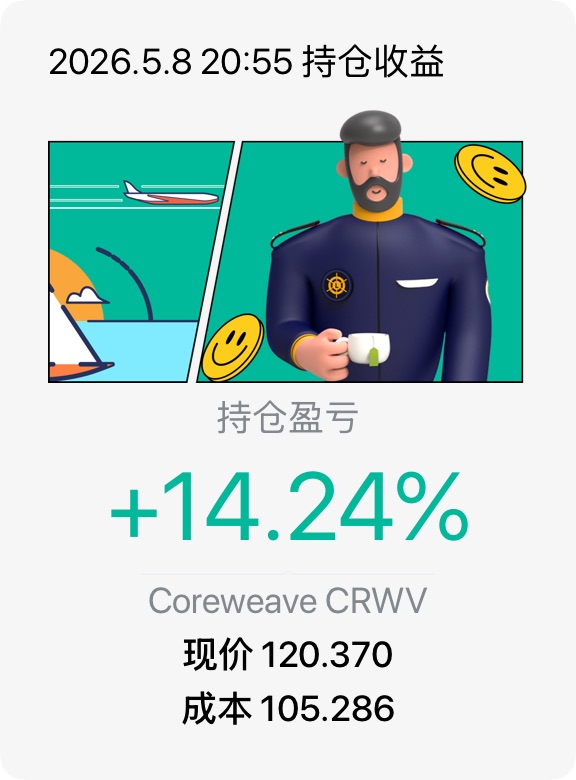
$Coreweave(CRWV.US)The biggest investment lesson CoreWeave taught me is: high growth does not equal low risk, and confirmed orders do not equal guaranteed returns. Investment shouldn't just focus on revenue growth rate and hot sectors; one must also consider the cost paid for that growth.

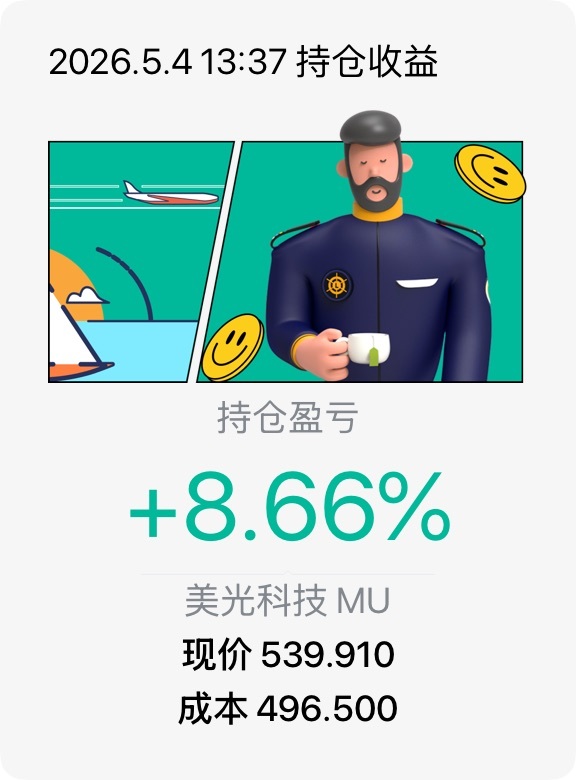
The cost basis for the held Micron Technology is 496, and the current price is 539, with a floating profit of approximately 8.7%. This indicates it has just entered the profitable range but the safety cushion is still not thick. From an industry positioning perspective, the memory cycle is most likely still in the early to middle stages of its upward trend, while the AI-driven demand (especially for HBM) spurred by NVIDIA remains the core driving force. Therefore, the upward logic is not yet over, and selling now could easily result in "selling too early." A more reasonable approach is to continue holding while setting up a defense, for example, using 500–510 as a dynamic profit-taking zone, and only consider reducing the position if it falls below that level. This way, profits can continue to expand...

Palantir is one of the few companies in AI software that I believe truly has the ability to deliver, but a good company doesn't mean you can buy it at any price. With a current paper profit of 10%, I should be more calm in my mindset, not get carried away. If the fundamentals continue to exceed expectations later, I will consider continuing to hold and let the profits run; but if it's just the valuation continuing to rise without earnings catching up, I would tend to take some profits in batches.

With a 10% floating profit, you need to set a discipline level first. Don't let this trade turn from profit to loss; take partial profits in batches; continue observing the remaining positions for the next earnings report, the fulfillment of 2026 guidance, the growth rate of U.S. commercial revenue, and the sustainability of government orders. Palantir is worth following, but it's not suitable for a "faith-based holding" that loses risk control.

MAS is more on the side of "fighting inflation," but will do so in a very cautious manner, rather than turning fully hawkish.

In other words, it's less like "completely standing on the sidelines," and more like gently tapping the brakes first, then watching oil prices and the Middle East situation.

MAS is more on the side of "fighting inflation," but will do so in a very cautious manner, rather than turning fully hawkish.

In other words, it's less like "completely standing on the sidelines," and more like gently tapping the brakes first, then watching oil prices and the Middle East situation.

Currently, there is a triple layer of uncertainty: geopolitics (Iran vs. the US); oil price risk premium (Strait of Hormuz); divergent policy paths (the Federal Reserve). Therefore, the portfolio objective is not "offense," but rather: inflation resistance + volatility resistance + preserving upside flexibility.

Currently, there is a triple layer of uncertainty: geopolitics (Iran vs. the US); oil price risk premium (Strait of Hormuz); divergent policy paths (the Federal Reserve). Therefore, the portfolio objective is not "offense," but rather: inflation resistance + volatility resistance + preserving upside flexibility.

Under the food delivery war that Meituan has been engaged in since Q2, the biggest impact has been on local commerce. Full-year sales and marketing expenses increased by over 80% year-on-year, with subsidies basically consuming all gross profit. Combined with losses from other business lines, the effects are piling up.

In the long term, AI may not necessarily help this labor-intensive company. In the short term, we can probably only hope for the food delivery war to stop quickly.

Under the food delivery war that Meituan has been engaged in since Q2, the biggest impact has been on local commerce. Full-year sales and marketing expenses increased by over 80% year-on-year, with subsidies basically consuming all gross profit. Combined with losses from other business lines, the effects are piling up.

In the long term, AI may not necessarily help this labor-intensive company. In the short term, we can probably only hope for the food delivery war to stop quickly.

$Super Micro Computer(SMCI.US)Technically, its edge lies more in system-level engineering, integration, and innovations like liquid cooling for high-density deployments, rather than in foundational chip design. This implies a relatively “midstream” positioning with limited hard moats, making it highly sensitive to upstream GPU supply and downstream enterprise spending cycles. Key risks to monitor include intensified competition from incumbents like Dell and HPE as supply constraints ease, and potential deceleration in AI investment. Overall, the outlook remains constructive, but the name exhibits high volatility and should be tracked closely with respect to both cycle dynamics and valuation.

This small loss on Nvidia turned out to be a valuable learning experience. Despite the company’s strong position in the AI boom, I underestimated how much of that optimism was already priced in. Entering the trade based on momentum rather than a clear valuation framework left little margin for error. It reinforced an important principle: even great companies can be poor investments if bought at the wrong price. Going forward, I will focus more on entry discipline, position sizing, and ensuring there is a reasonable balance between risk and reward.@Bridge Buzz SG

Alibaba Releases AI Chip: Game Changer or Noise?

Core Assessment: Moderately positive in the medium term, but more likely "narrative-driven" in the short term, not a fundamental inflection point.

Key Points:

• Positioning: If it's a self-developed inference/training chip (similar to Alibaba's previous Hanguang/Yitian architecture upgrades), the focus is on cost reduction + computing power autonomy.

• Competitive Landscape: The AI chip market is still dominated by NVIDIA, with deep ecosystem barriers (CUDA).

• Differentiation Potential:

• Cloud provider self-use (reducing cloud costs)

• Vertical scenario optimization (e-commerce recommendations, advertising, search)

Conclusion:

• Positive for cloud business profit margins (long-term)

• Difficult to shake up the global AI chip landscape in the short term

Alibaba Releases AI Chip: Game Changer or Noise?

Core Assessment: Moderately positive in the medium term, but more likely "narrative-driven" in the short term, not a fundamental inflection point.

Key Points:

• Positioning: If it's a self-developed inference/training chip (similar to Alibaba's previous Hanguang/Yitian architecture upgrades), the focus is on cost reduction + computing power autonomy.

• Competitive Landscape: The AI chip market is still dominated by NVIDIA, with deep ecosystem barriers (CUDA).

• Differentiation Potential:

• Cloud provider self-use (reducing cloud costs)

• Vertical scenario optimization (e-commerce recommendations, advertising, search)

Conclusion:

• Positive for cloud business profit margins (long-term)

• Difficult to shake up the global AI chip landscape in the short term

From the perspective of AI investment, Xiaomi's current AI efforts are more like "burning money to buy the future" rather than an immediately profitable business. The pressure from a 600 billion yuan level investment is real for them—mobile phone profits are being squeezed, the car business is still in the investment phase, and pouring more into AI at this time naturally makes short-term profits look less attractive.

The problem is, not investing is not an option either. This wave of AI is essentially redefining the "operating system" and the "entry point." If Xiaomi doesn't keep up, hardware like phones, cars, and IoT devices could become "carriers for others' AI" in the future, which would put them in a very passive position.

The key lies in Xiaomi's different approach:

It doesn't aim to make money by selling models, but rather wants to embed AI into its own hardware ecosystem—making phones smarter, cars more user-friendly, and home appliances more interconnected. As long as the user experience genuinely improves, there is a chance to raise prices a bit (this is crucial for countering the current decline in mobile phone gross margins).

But the risks are also very real:

If AI remains just PowerPoint material in launch events, or if users don't perceive a significant improvement, then this 600 billion yuan will essentially become pure cost, dragging down overall profits.

Short-term: It will definitely drag down profits; this is unavoidable.

Medium-term: It depends on whether the products deliver "genuine improvement" to determine if it's worth it.

Long-term: If it truly succeeds in connecting "people, cars, and homes" with AI, the money might be very well spent.

From the perspective of AI investment, Xiaomi's current AI efforts are more like "burning money to buy the future" rather than an immediately profitable business. The pressure from a 600 billion yuan level investment is real for them—mobile phone profits are being squeezed, the car business is still in the investment phase, and pouring more into AI at this time naturally makes short-term profits look less attractive.

The problem is, not investing is not an option either. This wave of AI is essentially redefining the "operating system" and the "entry point." If Xiaomi doesn't keep up, hardware like phones, cars, and IoT devices could become "carriers for others' AI" in the future, which would put them in a very passive position.

The key lies in Xiaomi's different approach:

It doesn't aim to make money by selling models, but rather wants to embed AI into its own hardware ecosystem—making phones smarter, cars more user-friendly, and home appliances more interconnected. As long as the user experience genuinely improves, there is a chance to raise prices a bit (this is crucial for countering the current decline in mobile phone gross margins).

But the risks are also very real:

If AI remains just PowerPoint material in launch events, or if users don't perceive a significant improvement, then this 600 billion yuan will essentially become pure cost, dragging down overall profits.

Short-term: It will definitely drag down profits; this is unavoidable.

Medium-term: It depends on whether the products deliver "genuine improvement" to determine if it's worth it.

Long-term: If it truly succeeds in connecting "people, cars, and homes" with AI, the money might be very well spent.

Today, I reviewed and reflected on my Tesla position. I re-examined this investment from three dimensions: fundamentals, industry trends, and market sentiment. The conclusion is: short-term fluctuations are inevitable, but the long-term logic has not been broken yet. 1. Review of Investment Logic The core logic for initially buying Tesla was mainly based on three points: Today, I reviewed and reflected on my Tesla position. I re-examined this investment from three dimensions: fundamentals, industry trends, and market sentiment. The conclusion is: short-term fluctuations are inevitable, but the long-term logic has not been broken yet...

In terms of operations, we maintained restraint and did not engage in high-frequency trading. We only made minor structural adjustments to existing positions and slightly increased holdings in targets with solid fundamentals and good cash flow. At the same time, we continued to control our position size to avoid excessive risk exposure in a highly uncertain environment.

Today, I remind myself again that holding NVIDIA is not about speculating on short-term price movements, but rather betting on a long-term, certain trend—the continuous expansion of AI computing infrastructure. Stock price fluctuations remain intense, but these ups and downs are essentially just reflections of sentiment, not changes in the company's intrinsic value.

The recent market decline is primarily driven by the confluence of multiple factors. On one hand, sectors with high valuations (such as AI and leading tech stocks) are highly sensitive to interest rate changes, making them more susceptible to valuation compression in the context of rising rates or delayed expectations for rate cuts. On the other hand, short-term event shocks are also amplifying volatility, including macro data exceeding expectations (CPI, PPI, employment) and geopolitical uncertainties. Furthermore, changes in liquidity cannot be ignored, such as passive selling pressure triggered by options Gamma flipping, and institutional rebalancing or passive fund outflows, all of which can exacerbate market downward pressure in a short period.

Alibaba is in a transition phase—from a high-margin e-commerce platform to a capital-intensive AI and infrastructure player. Short-term pressure remains, but long-term upside depends on whether AI can evolve into a meaningful profit engine.

Alibaba is in a transition phase—from a high-margin e-commerce platform to a capital-intensive AI and infrastructure player. Short-term pressure remains, but long-term upside depends on whether AI can evolve into a meaningful profit engine.

I'm quite satisfied with my tech stocks. The overall market sentiment has clearly improved today, with the indices showing a steady upward trend and trading volume expanding, indicating that capital is gradually flowing back in. The cautious wait-and-see mood from the previous period has eased somewhat, and market hotspots have begun to spread, no longer confined to just a few sectors. This is usually a positive sign of a strengthening market.

I would choose to trade Micron. Currently, the semiconductor industry is highly cyclical with obvious short-term fluctuations, but from a medium to long-term perspective, the demand for AI, data centers, and storage continues to grow, providing support for Micron. Therefore, my strategy is to average down by adding to my position in batches when the stock price declines, rather than making a large one-time purchase, in order to lower the overall cost basis. At the same time, I will monitor the industry's health and the company's financial reports. If the fundamentals don't deteriorate significantly, I will hold on, waiting for the industry recovery to bring about valuation repair and performance improvement.

I would choose to trade Micron. Currently, the semiconductor industry is highly cyclical with obvious short-term fluctuations, but from a medium to long-term perspective, the demand for AI, data centers, and storage continues to grow, providing support for Micron. Therefore, my strategy is to average down by adding to my position in batches when the stock price declines, rather than making a large one-time purchase, in order to lower the overall cost basis. At the same time, I will monitor the industry's health and the company's financial reports. If the fundamentals don't deteriorate significantly, I will hold on, waiting for the industry recovery to bring about valuation repair and performance improvement.