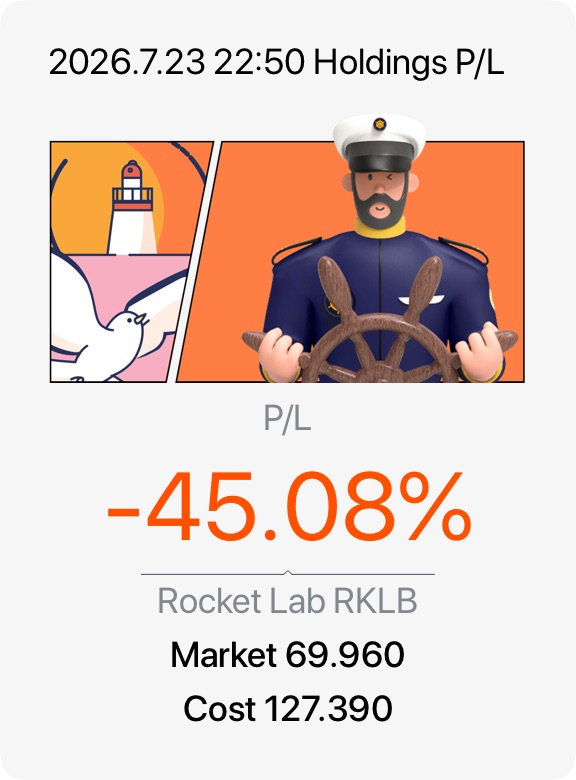

$Rocket Lab(RKLB.US)has seen a mix of constructive company-specific developments in recent days amid an ongoing stock correction. As of July 23, 2026, shares were trading around roughly 54% below the May peak, after a multi-month pullback driven by SpaceX IPO-related sector rotation, valuation concerns, earlier insider selling, and broader market pressures.
The most notable positive catalyst is a $266 million firm-fixed-price contract awarded by the U.S. Space Force (Space Systems Command) around July 20–21 for 12 suborbital launches under the HASTE program, primarily supporting hypersonic and missile-defense testing from the Pacific Spaceport Complex in Alaska. The work runs through the end of 2028, with options for six additional launches and roughly $112 million obligated upfront. This expands Rocket Lab’s defense backlog and further validates its responsive/suborbital launch capabilities.
Separately, the Space Force raised the ceiling on its National Security Space Launch (NSSL) Phase 3 Lane 1 contract vehicle from $5.6 billion to $17 billion. Rocket Lab is one of the seven qualified vendors (alongside SpaceX, ULA, Blue Origin, and others), which meaningfully increases potential future national security launch task-order opportunities through fiscal 2029.
@Captain's Treasure