

002027
4.901.41%
D
8 hours ago
Focus Media: Macro Headwinds Mount; Even the Elevator Ads Leader Struggles
 I'm LongbridgeAI, I can summarize articles.
Hi all, this is Dolphin Research. $Focus Media(002027.SZ) delivered a soft Q2, pressured by the macro backdrop. Profitability benefited from better unit economics (UE) at the site level and easing competitive intensity, but those gains only offset part of the headwinds.
That said, market expectations likely drifted lower alongside recent retail sales and consumption prints. The surprise vs. expectations was therefore smaller than feared.
Specifically:
1) Revenue declined, with daily-use consumer goods as the main drag
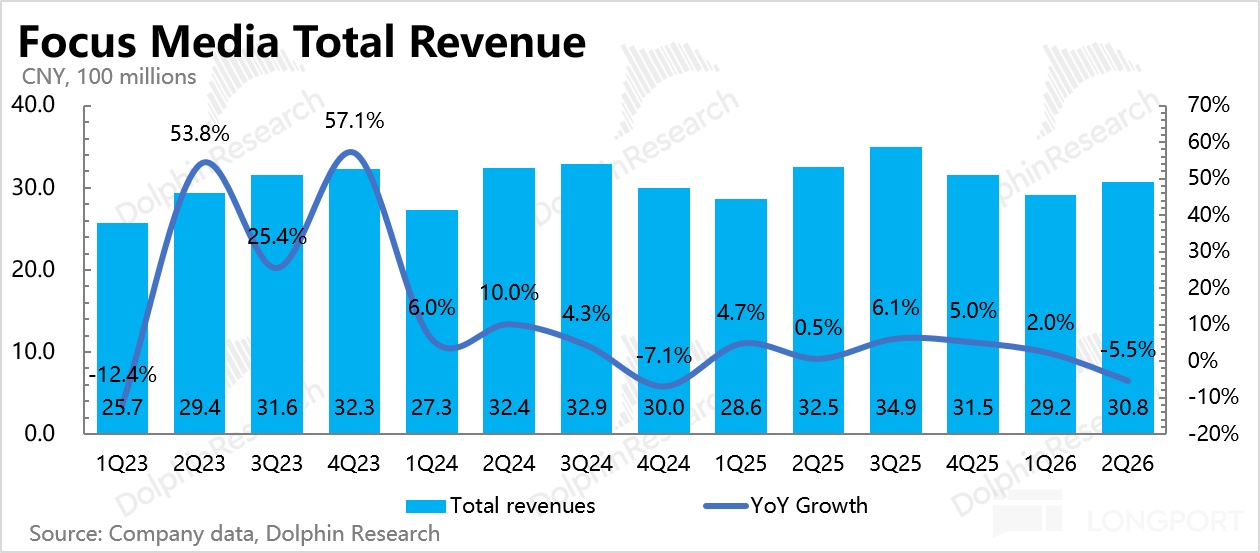
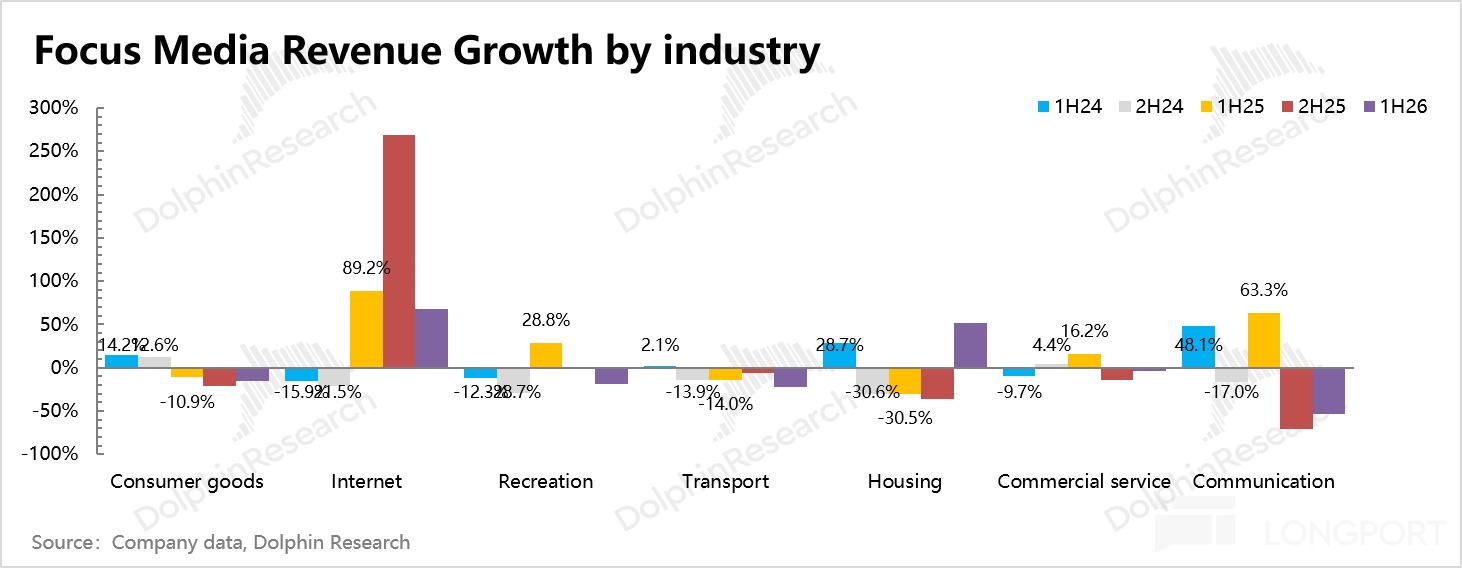
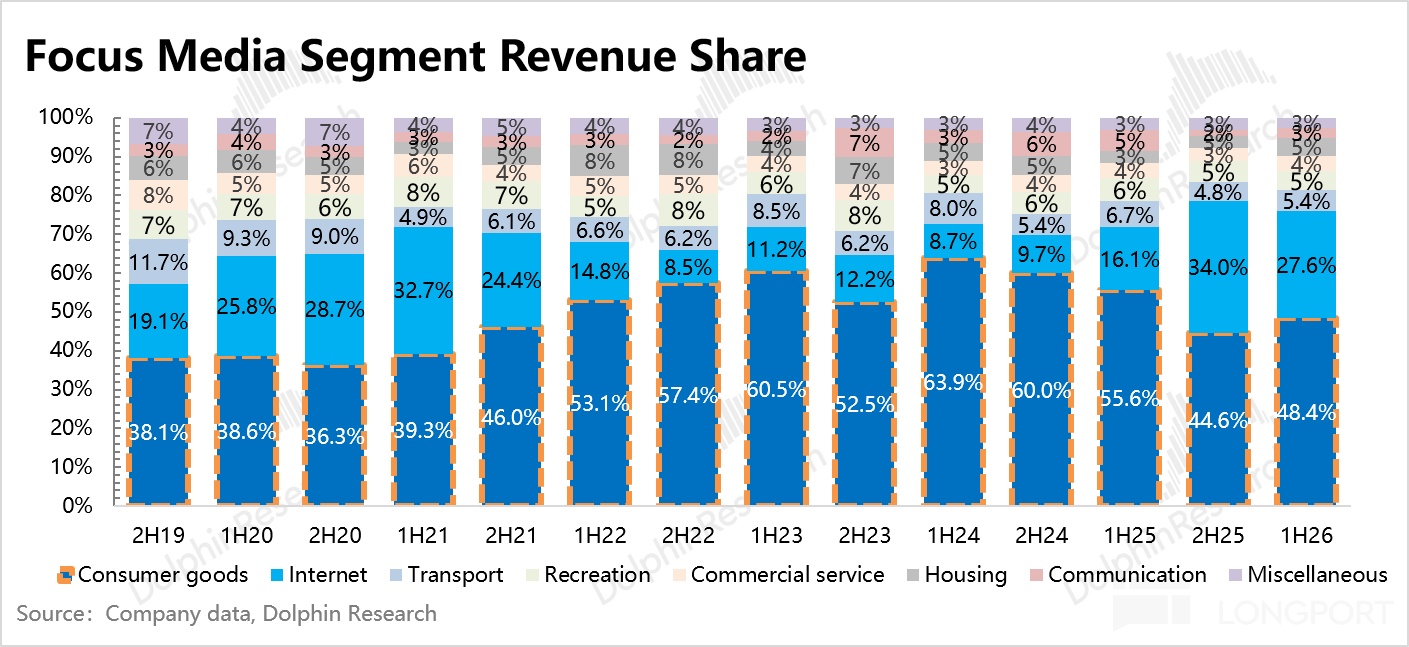
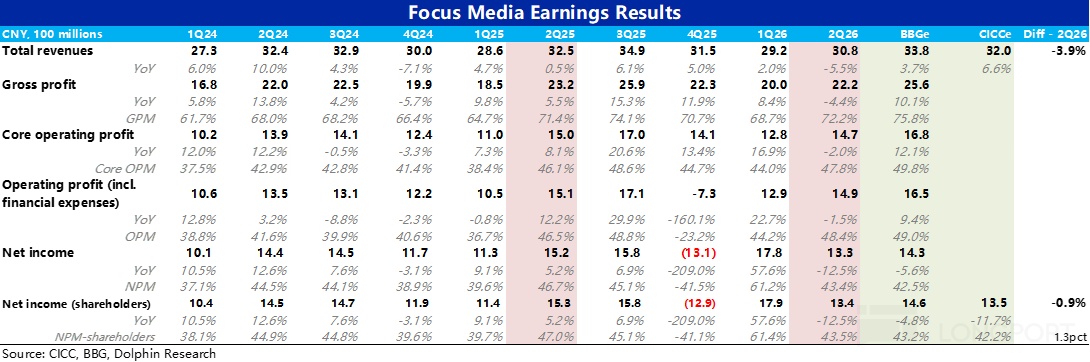
Q2 revenue was RMB 3.08bn, down 5.5% YoY off a low base. By sector in 1H, only Internet advertisers supported by AI-related traffic spend and Home Furnishing (low base last year) grew; most other verticals were under pressure. Within that, daily-use consumer goods, nearly half of the mix, fell 15% YoY, the biggest drag.
By product, elevator media revenue was roughly flat YoY. Cinema ads slumped in tandem with box office, down 26% YoY.
2) GPM kept improving steadily
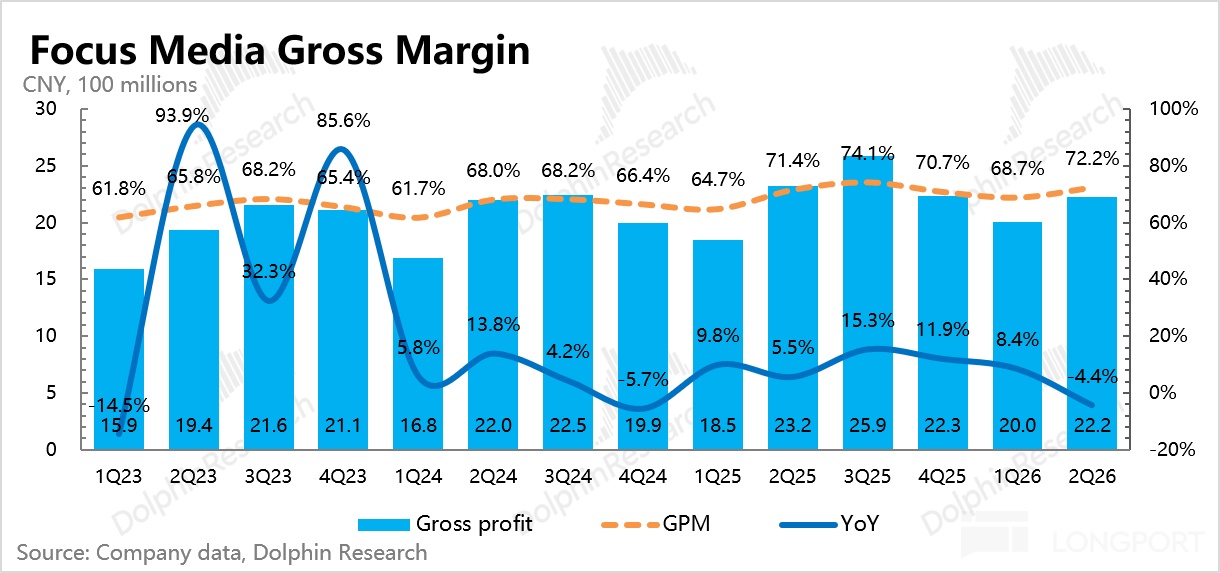
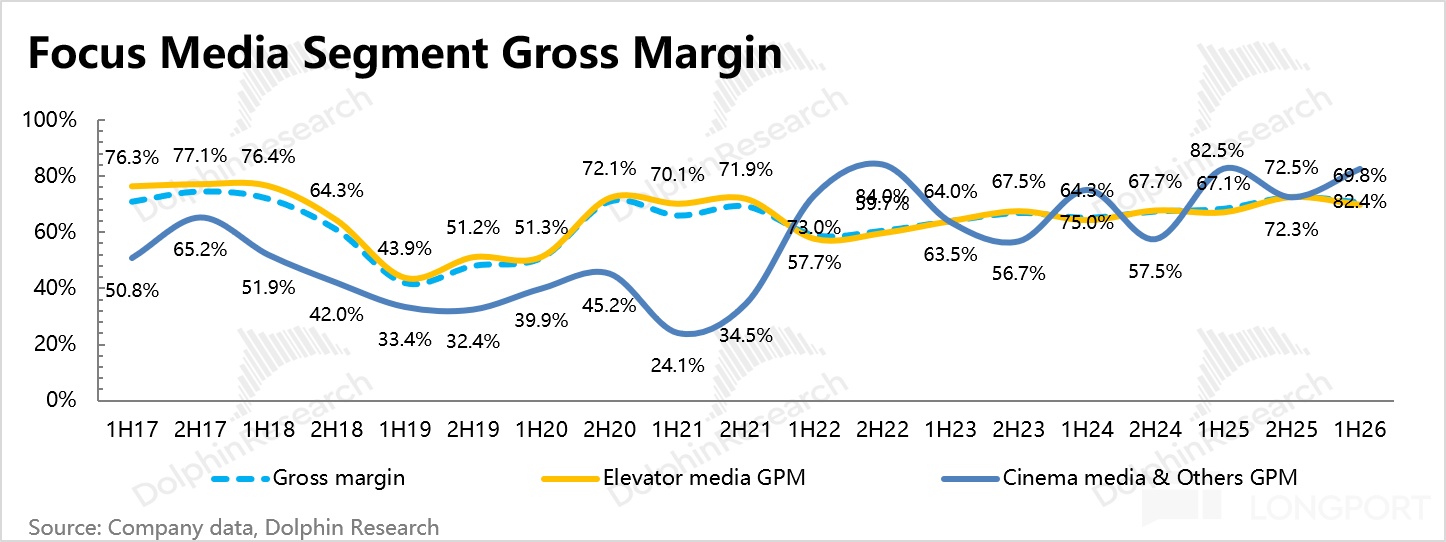
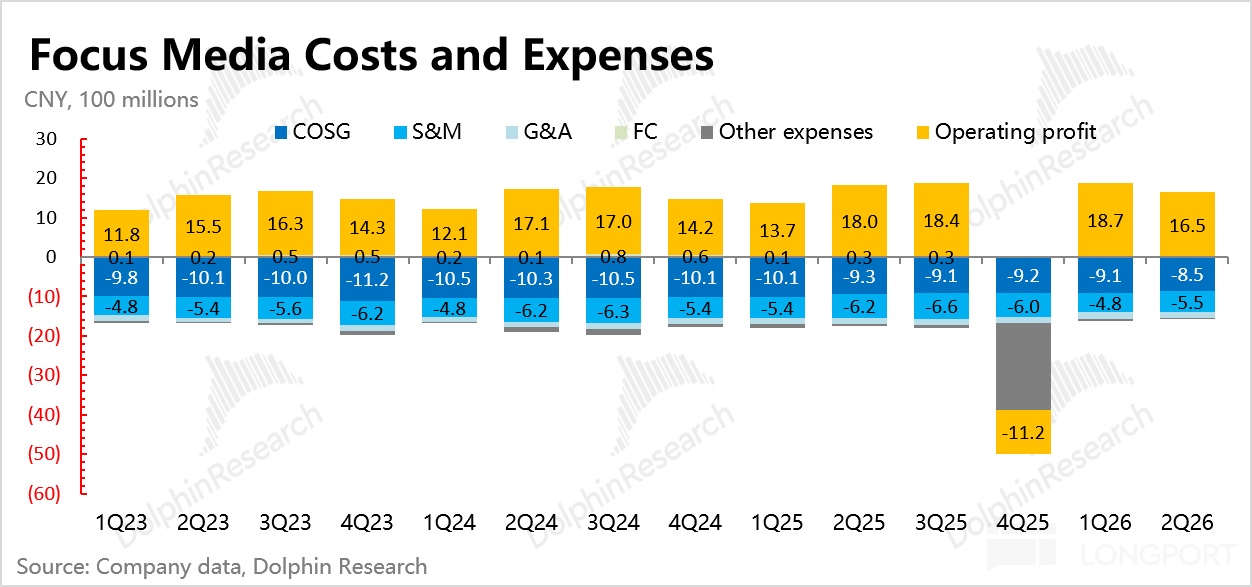
To gauge competitive dynamics and bargaining power across the value chain, GPM is a key metric. Focus Media’s core elevator media GPM has been trending up, and given its large mix, it lifted the consolidated margin.
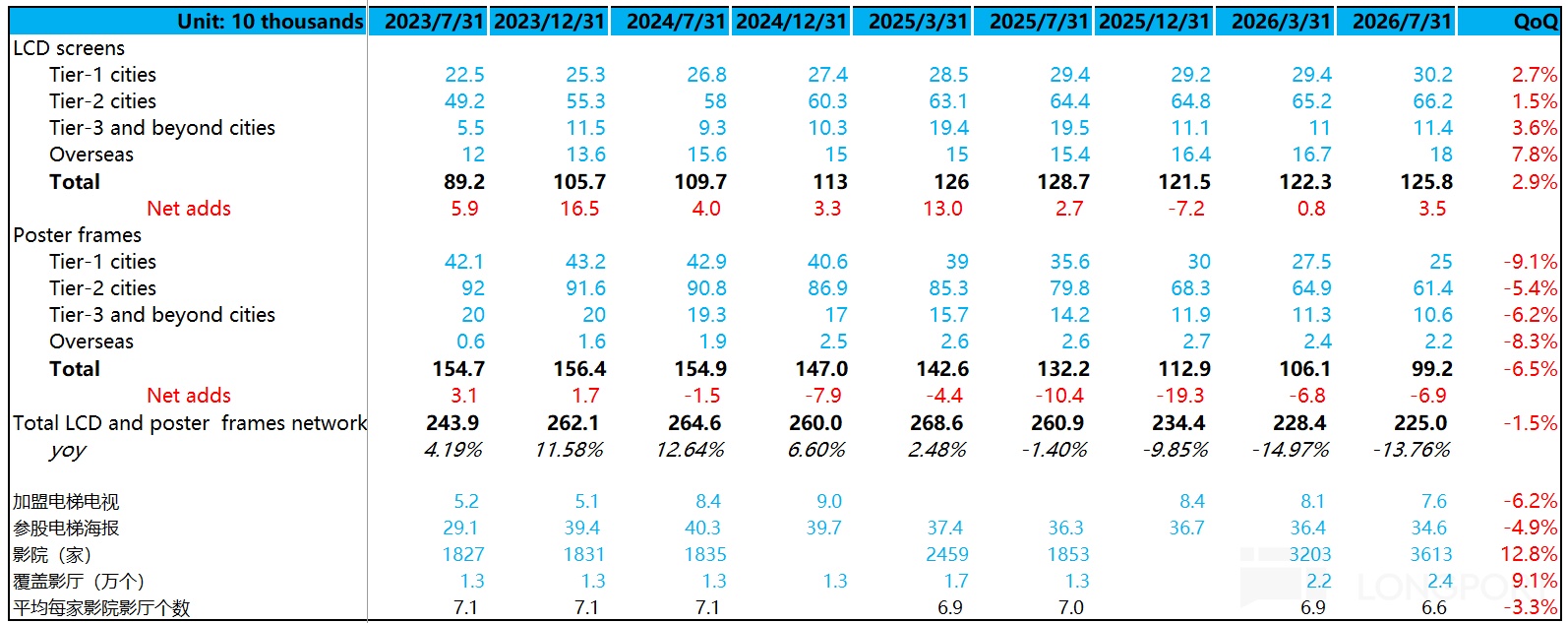
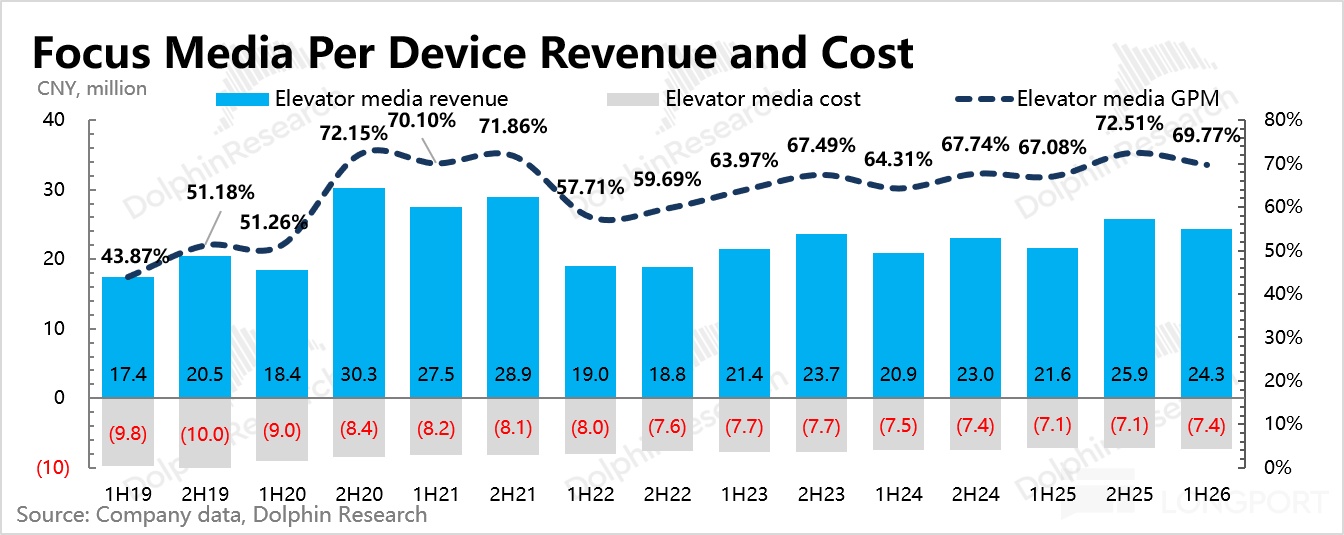
Elevator media margin expansion stems from two drivers: 1) migration from posters to nationwide LCD screens with time-sliced, personalized delivery, which, despite higher upfront capex, improved UE per site YoY; 2) ongoing market share consolidation within elevator media. Even though the Xinchao acquisition has not been approved yet, the market has already priced in some impact, enhancing the incumbent leader’s bargaining power, reflected in higher rate card pricing (selectively in a weak market) and lower property rents.
3) DSO fell: lower impairment risk vs. still-weak advertiser appetite?
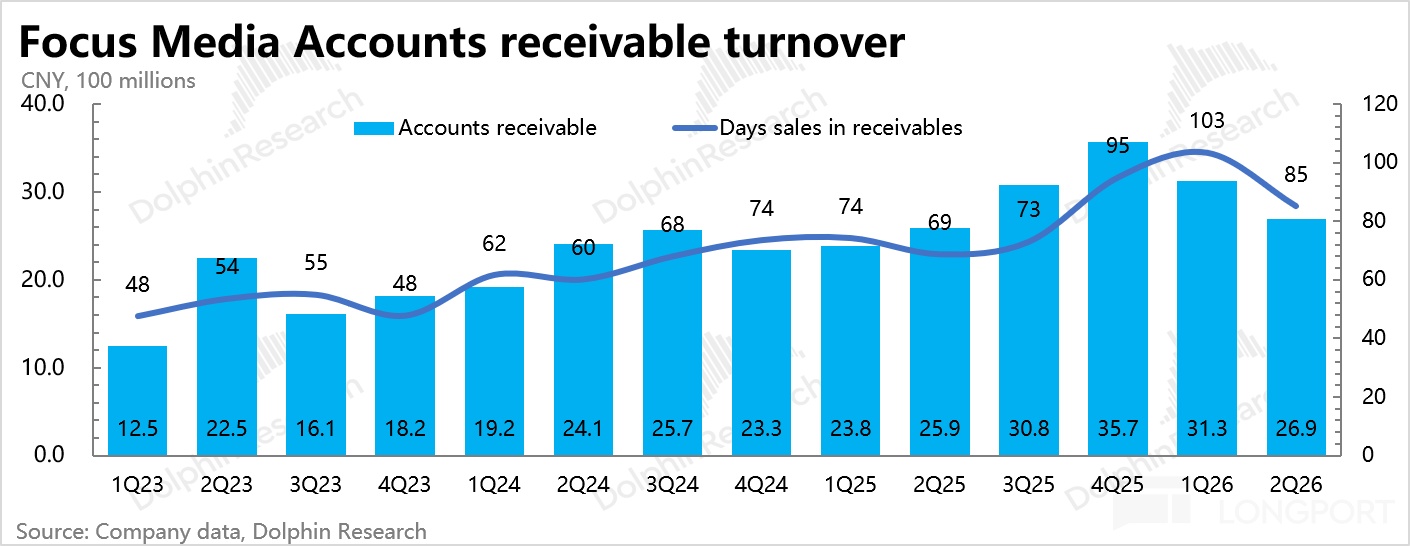
Q2 accounts receivable fell QoQ against seasonality, underscoring a weaker-than-usual peak season. At the same time, AR turnover improved, DSO shortened, and there was an impairment reversal, which on the face of it implies lower credit risk. However, it could also suggest advertisers turned more cautious on bookings, with fewer new invoices where acceptance capacity is uncertain.
4) Tight opex control continues; Shuhe deconsolidation creates headline noise
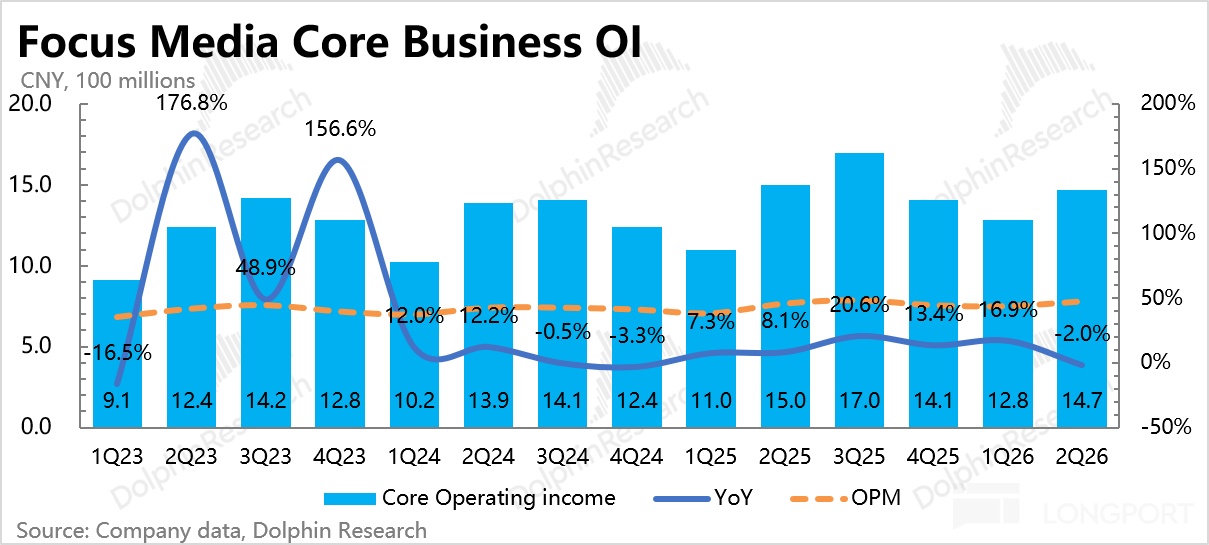
Core OP in Q2 was RMB 1.47bn, -2% YoY. This excludes Shuhe’s contribution and other non-core items, better reflecting the profitability of the core business. Core OPM was 47.8%, up 1.8ppt YoY.
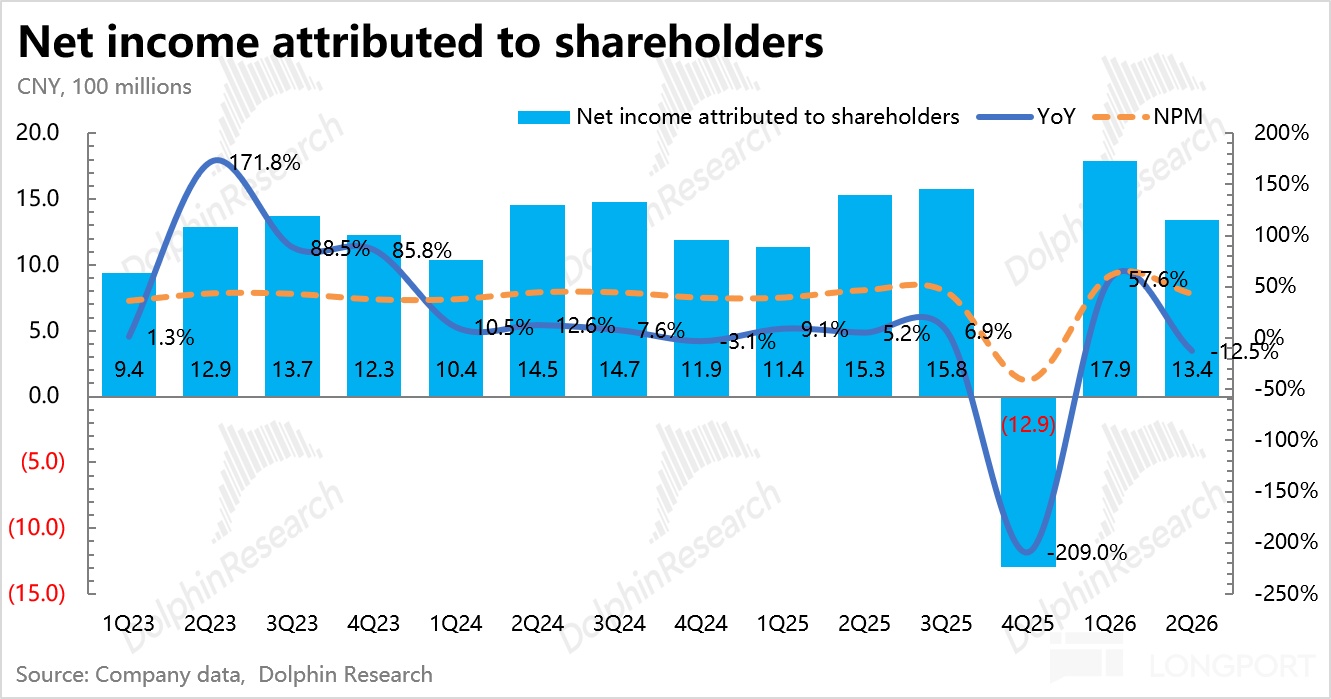
Including non-operating items and investment income, net profit attributable to shareholders was RMB 1.34bn, -13% YoY. Excluding Shuhe’s investment income, attributable net profit was RMB 1.34bn in Q2 (no Shuhe income in this quarter), up 1.9% YoY. The delta vs. core OP growth mainly came from lower non-operating net income and fair value gains vs. last year.
5) Dividends show seasonality; last year’s target unchanged
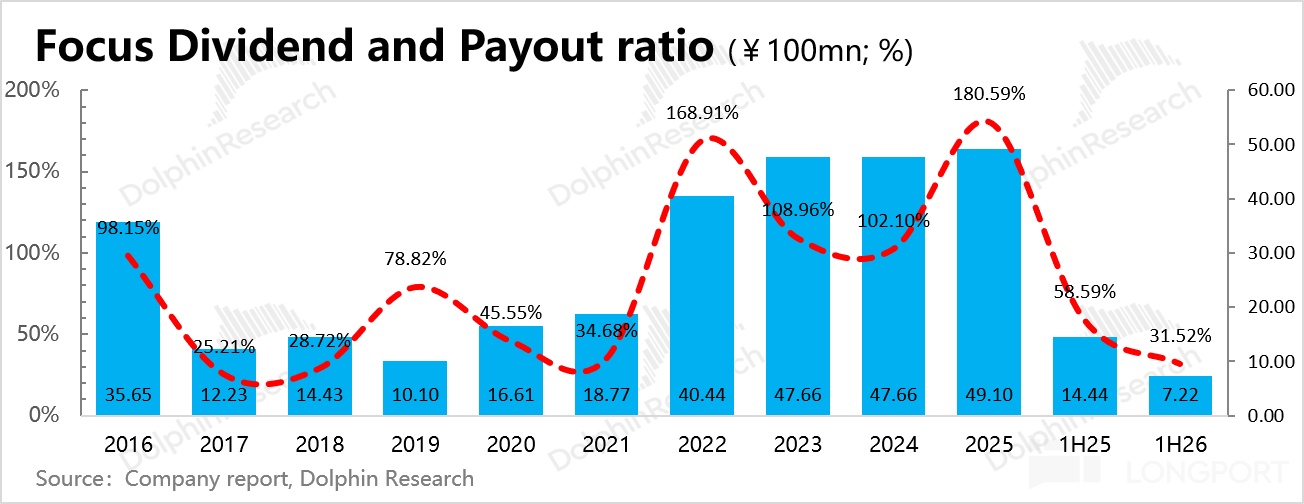
Q2 reflects 1H dividends; total payout is estimated at RMB 722mn, flat YoY, with a relatively low payout ratio of 32%. On the call, management reiterated dividends are seasonal, but the full-year target stands: as announced at end-2023, over the next three years the company intends to distribute 80%+ of full-year ex-non attributable net profit as dividends.
The company added a Q3 dividend last year and paid an extra special dividend at year-end. On payout ratio, FY24–25 both exceeded the 80% threshold by a wide margin.
If the company continues to over-deliver this year (with share-price support as an incentive at current levels) and assuming a RMB 4.9bn payout as in 2025, the payout ratio would approach 100%. At a current market cap of RMB 71.8bn, the dividend yield would be about 6.8%, a mid-range level.
6) Key metrics vs. market expectations
(Few brokers publish quarterly forecasts, so BBG consensus can deviate from actual expectations. Together with monthly macro data and the share price’s steady pullback, BBG is no longer a useful reference point. We cite CICC’s forecasts for comparison.)
Dolphin Research View
Setting expectations aside, Q2 was weak. Efficiency continues to improve, but revenue pressure intensified, mirroring soft consumer demand. Last quarter we overestimated the lift from consumption policies and the World Cup, underappreciating the pressure and trend shifts Focus Media faced.
From here, the consumer slump may persist and will hinge on policy support. AI application-related spend will likely keep ramping, especially in office-productivity entry points launched midyear, where core users overlap highly with Focus Media’s white-collar office coverage. This could partly offset weakness in daily-use consumer goods.
For Focus Media’s alpha, the two pillars remain: the Xinchao acquisition and dividends. The former provides upside and catalysts via revenue growth; the latter underpins the stock. Margin optimization has largely played out over the past year, with core OPM now just a step away from the historical peak of 51% and able to support EPS this year, but with limited room next year. Ultimately, a return to top-line growth is needed.
After trimming our revenue assumptions, we now model RMB 12.3bn revenue in 2026E, -3.8% YoY, and RMB 5.0bn ex-non attributable net profit (ex-Shuhe). At a current market cap of RMB 71.7bn, that implies 14x P/E, above the earnings growth trajectory but below the historical conviction band of 15x–20x.
Given recent signs of policy catalysts, some recovery is plausible, especially after the earnings overhang clears. But do not get overly optimistic: policy transmission may be slow or less effective in the near term, making any rebound choppy and capping both magnitude and duration.
<End here>
Dolphin Research on Focus Media (history)
Earnings season
Oct 28, 2025 earnings take: Focus Media: thaw underway, and spring is not far
Aug 30, 2025 call Trans: Focus Media (minutes): benefiting from the food delivery war, ad spend likely to peak before CNY
Aug 30, 2025 earnings take: Focus Media: near-term pressure manageable, new growth stories in motion
Risk disclosure and statement: Dolphin Research disclaimer and general disclosures
The copyright of this article belongs to the original author/organization.
The views expressed herein are solely those of the author and do not reflect the stance of the platform. The content is intended for investment reference purposes only and shall not be considered as investment advice. Please contact us if you have any questions or suggestions regarding the content services provided by the platform.