
From Momenta's IPO, looking at the long-term value reassessment of physical AI
 I'm LongbridgeAI, I can summarize articles.
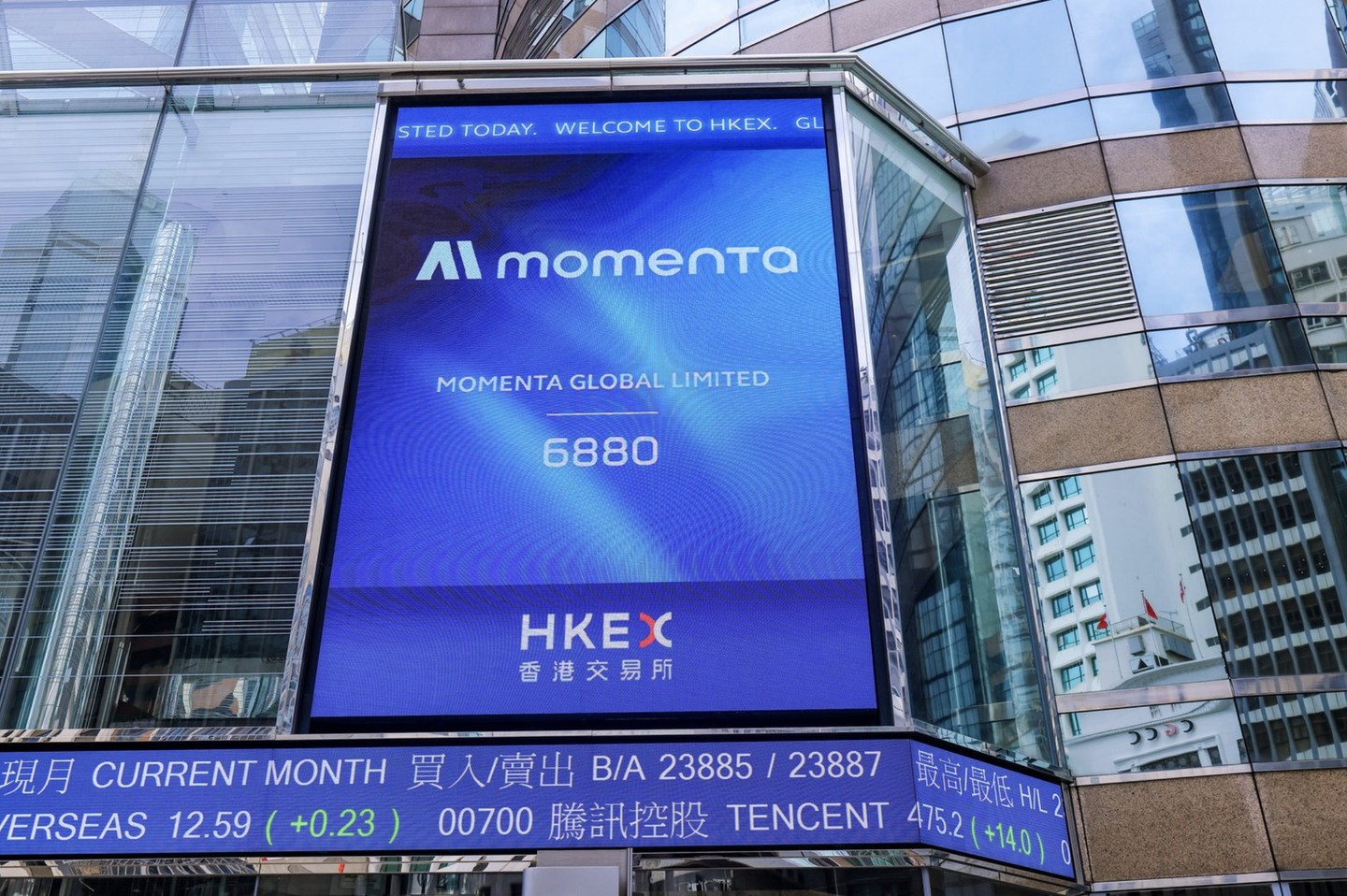
Momenta was listed on the Hong Kong Stock Exchange on July 8, with 14 cornerstone institutions subscribing for nearly HKD 3 billion. This marks the transition of the physical AI sector from the technology validation phase to the stage of scaled development, with capital exit channels opening up. The market is beginning to measure the weight of technological leadership and commercial implementation with stringent standards, and the industry is entering a phase of value realization
The narrative of physical AI is changing.
In the past few years, this sector has focused more on technological boundaries and financing scales, but in the summer of 2026, it welcomed its first IPO sample.
Momenta was listed on the Hong Kong Stock Exchange on July 8, with subscriptions from 14 cornerstone institutions totaling nearly HKD 3 billion, indicating that the physical AI sector has transitioned from the technology validation phase to the stage of scaled development.
As capital exit channels open, the market begins to measure the real weight between "technological leadership" and "commercial implementation" with stricter standards, and the story of physical AI has just entered a critical chapter.
IPO Window Opens: Why is Capital Paying for Physical AI?
As a carrier of AI implementation covering autonomous driving, embodied intelligence, industrial simulation, and other directions, physical AI has seen a sharp increase in financing heat over the past two years: industry public data shows that in 2025, the disclosed financing scale in the domestic autonomous driving sector exceeded RMB 58 billion, nearly three times that of 2023; during the same period, the embodied intelligence sector saw 447 financing rounds with over RMB 55 billion flowing in, a year-on-year increase of over 400%, with the two core verticals combined exceeding RMB 100 billion. The continuous influx of capital is not a short-term speculation, but rather because physical AI fills the landing gap between digital intelligence and the physical industry.
Physical AI has entered the commercialization and validation phase, making capital exit channels a focal point. Since 2025, the Hong Kong and U.S. stock markets have continued to ease listing restrictions for hard technology, with the Hong Kong Stock Exchange's Chapter 18C special technology company channel being particularly crucial, allowing unprofitable companies in AI, autonomous driving, and robotics to standardize their listings. Investment logic has shifted accordingly, with the market moving away from thematic speculation to focus on entities with mass production capabilities, real data assets, and commercial closed loops, marking the entry of physical AI into the value realization stage.
Momenta's IPO is a typical example of this trend. This listing gathered 14 cornerstone investment institutions, covering sovereign funds, leading international asset management firms, and diverse professional entities, with a total subscription scale approaching HKD 3 billion. The lead investments from GIC and Fidelity International confirm the structural optimism of long-term funds towards the physical AI sector. Their past investment preferences in the AI field were concentrated in the model and application layers, but now they are sinking into sectors like autonomous driving that combine AI attributes with physical interaction attributes. The continued investment from industry players like Mercedes-Benz and BYD reveals that the global automotive industry’s strategic cooperation with leading intelligent driving suppliers has transcended simple supply chain relationships and is beginning to extend into capital ties Momenta CEO Cao Xudong describes the listing as "a watershed moment from the technology validation phase to the scale development phase." The leap from the primary market to the public market is itself a standard path toward industry maturity. Capital needs to exit, companies require long-term funding support for research and development and mass production delivery, and the market needs a transparent pricing mechanism to reassess the true weight between "technological leadership" and "commercial implementation."
Momenta CEO Cao Xudong
Evolution of Technical Routes, World Models Open New Growth Curves
As an important application scenario of physical AI, the mainstream technical path in the autonomous driving industry over the past few years has been end-to-end imitation learning. The core logic of this method is to let the model observe a large amount of human driving data and then learn to "copy." It performs smoothly enough under urban expressways and standard conditions, but once it encounters heavy rain, temporary construction sections, or pedestrians and vehicles suddenly appearing on the street, the limitations of imitation learning become apparent. Essentially, it fits human behavior trajectories without truly understanding the physical causality behind traffic scenarios.
World models aim to answer this question. AI equipped with world models will not only rely on memory to respond to visuals but will simulate causal chains in a virtual environment, such as "If I accelerate and change lanes now, how will surrounding cars react?" and then select the optimal strategy. The shift from "reactive" to "predictive" represents a leap in capability levels.
In the past two years, this direction has attracted top global intellect and capital. NVIDIA launched the Cosmos world model platform, Fei-Fei Li's World Labs focuses on spatial intelligence and 3D generation, and Yang Likun's AMI Labs explores theoretical boundaries from a joint embedding prediction framework. Each route has its emphasis, but a consensus is forming: world models are likely to be the operating system layer of physical AI, and whoever establishes data and architectural advantages first will hold the discourse power of the next generation of mobility standards.
In this round of technological evolution, Momenta can be said to be one of the few companies that simultaneously possess "the data foundation for training world models" and "the mass production scenarios for validating world models." By early 2026, the cumulative mileage of mass-produced vehicles equipped with its solutions will exceed 12 billion kilometers, filtering out over 100 million high-quality training samples. Cao Xudong has a frequently quoted strategy: "One flywheel, two legs." The flywheel is the cyclical iteration of data and algorithms, and the two legs are the L2 mass production business and the L4 scaled autonomous business. Mass-produced vehicles continuously collect real physical interaction data, while L4 verifies the baseline capabilities of the model at the forefront.
The understanding of the physical world by world models is not limited to driving. Recognizing the cargo of the vehicle in front, predicting the trajectories of pedestrians or irregular vehicles, and understanding the physical boundaries of construction zones share the same underlying logic. This is also why leading companies are beginning to shift their technology stack toward logistics heavy trucks, unmanned delivery, and embodied intelligence. Tesla is also reusing similar ideas, using mass-produced vehicles to collect data to train foundational models, and then making judgments across physical scenarios.
The flexibility of the software layer lies in its adaptability to different chip platforms, and this independence means a more robust commercial space during periods of industry pattern changes. Momenta's mass production business has surpassed 1 million units, and as a pure software solution provider, it is not bound to specific hardware routes of particular manufacturers, allowing for cross-brand and cross-platform deployment The cost structure and cash flow resilience are more prominent under the scale effect.
Business Model Advancement, High Gross Margin Resonating with Scale Effect
Looking through the financial data in Momenta's prospectus, it can be found that: by 2025, the company's gross margin will reach 71.6%, an increase of over 50 percentage points compared to two years ago. The proportion of licensing revenue will leap from 3% in 2023 to 40% in 2025, indicating a shift in the business model from "project-based development" to "software scalable reuse." For each additional mass-produced vehicle equipped with intelligent driving solutions, the marginal cost approaches zero, which is the ideal profit structure for software companies. Its revenue will grow from 743 million yuan in 2023 to 2.413 billion yuan in 2025, achieving a threefold increase.
Zhejiang Merchants Securities pointed out in its research report that industrial software provides the physical foundation, high-quality data, and validation environment for physical AI, while physical AI offers intelligent acceleration, automated decision-making, and closed-loop optimization capabilities for industrial software. The institution has included Momenta in the list of "primary market companies" for physical AI investment targets, alongside top global physical AI startups such as AMI Labs led by Yang Likun and World Labs led by Li Feifei. Momenta is based on world models, and the rarity of its business model lies in its simultaneous coverage of multiple physical AI application scenarios, including passenger cars, Robotaxi, and Robovan, a platform capability that is not commonly seen among current listed companies.
In terms of customer expansion, Momenta adopts a path of establishing long-term strategic collaboration with leading automotive companies. SAIC is one of Momenta's earliest deep partners, leading the Series C round in 2021 and continuing to increase investment. In April of this year, the ID. ERA 9X, equipped with a jointly developed solution, successfully landed, achieving the world's first mass production of physical AI technology in vehicles. BYD is another core strategic partner, with cooperation on intelligent driving solutions covering multiple vehicle platforms. Automotive companies gain highly consistent and quickly deployable intelligent driving capabilities, while Momenta obtains continuous mass production data and stable revenue, while maintaining the independence of its technology platform. Since leading the Series B round in 2017, Mercedes-Benz has continuously increased its investment through the Series C round to this IPO cornerstone investment, spanning the entire cycle from Momenta's technology development to mass production delivery.
Cao Xudong stated regarding the business prospects: "We are not investing in today's market, but in building a future that is more efficient than any current mode of transportation." From the current growth curve, after the mass production business breaks through 1 million units, the delivery pace has shortened from two years for the first 100,000 vehicles to less than 40 days to complete another 100,000 units, and the flywheel effect has entered an acceleration phase.
Global Positioning, From Local Leader to World-Class Platform
The capabilities of physical AI inherently possess universality across regions and scenarios, and the understanding and interaction capabilities with the physical world are not limited by national borders. The essence of Chinese physical AI companies going global is to export a methodology for understanding the physical world There are not many suppliers that can adapt to both the complex road conditions in China and the diverse scenarios overseas, and Momenta's global layout is precisely built on this rare capability. Collaborating with Mercedes-Benz to deploy Robotaxi in Abu Dhabi, partnering with Uber to launch autonomous driving services in Munich, and working with Grab to enter the Southeast Asian market, these initiatives not only validate the cross-scenario adaptability of its technology but also lay the foundation for future diversification of global revenue structures.
By positioning itself as an independent provider of underlying capabilities, not manufacturing vehicles or binding to a single brand, Momenta's open positioning allows it to transcend geographical and industrial boundaries, delivering physical AI capabilities to global customers. Whether it is established automakers in Europe, emerging mobility platforms in Southeast Asia, or potential partners in logistics and robotics, there is space being created for a physical AI supplier with global delivery capabilities.
As of the IPO, Momenta has cumulatively targeted over 210 vehicle models, with partners covering mainstream passenger car brands worldwide, and has delivered more than 100 models. The breadth of this coverage is attributed to its technological neutrality, independent of any single OEM.
From the perspective of the industry's ultimate competition: the flywheel effect of scale and data will build the deepest moat, and companies that complete their global layout first are most likely to define industry standards. As the industry transitions from the technology validation phase to the stage of scaling competition, the speed of data asset accumulation and algorithm iteration will determine the final position of the enterprise.
Physical AI is not just about solving mobility issues; it will eventually permeate every corner of manufacturing, logistics, services, and even urban operations. Momenta's listing on the Hong Kong stock market is not the end of the story, but rather a mid-point for a Chinese technology platform moving onto the world stage. The future value release will gradually be realized as its global layout continues to take shape and the scale effect becomes increasingly evident. (Author|Sun Cheng, Editor|Liu Yangxue)
For more in-depth analysis and exclusive insights into global markets, multinational companies, and the Chinese economy, please visit the official website of Barron's Chinese website