

SHPU
17.8505.05%
D
Aug 5 at 01:28 PM
SHOP: +30% Surge — Blowout Results, Valuation Conundrum?
 I'm LongbridgeAI, I can summarize articles.
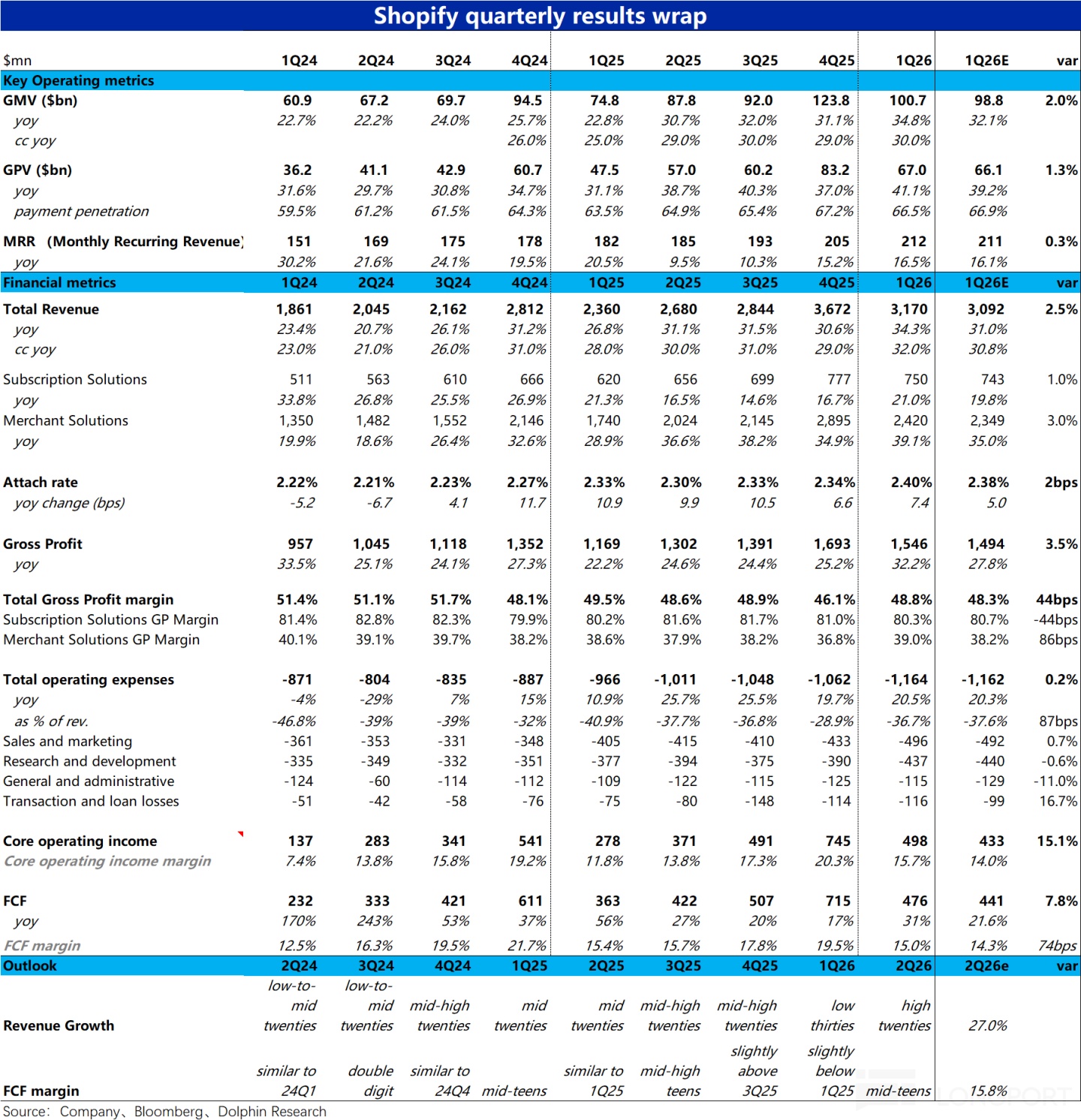
US/EU AI-driven e-comm mini-cap leader --$Shopify (SHOP.US) reported Q2 2026 on Aug 5 (US). Pre-mkt, the stock spiked nearly 30%. Such a blowout move begs the question: how strong were the numbers? Overall, both top-line and profit growth this quarter and the guide for next quarter beat across the board. Whether the rally is justified is another debate, but the print itself was spotless. Details below:
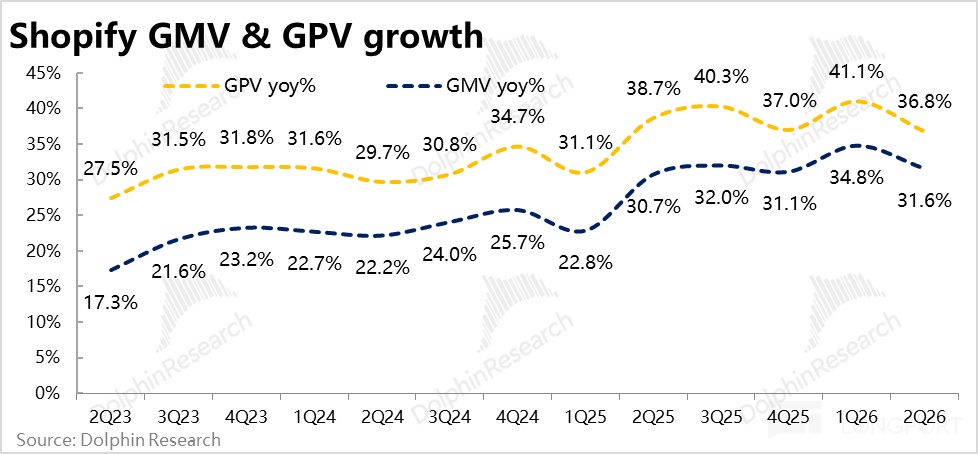
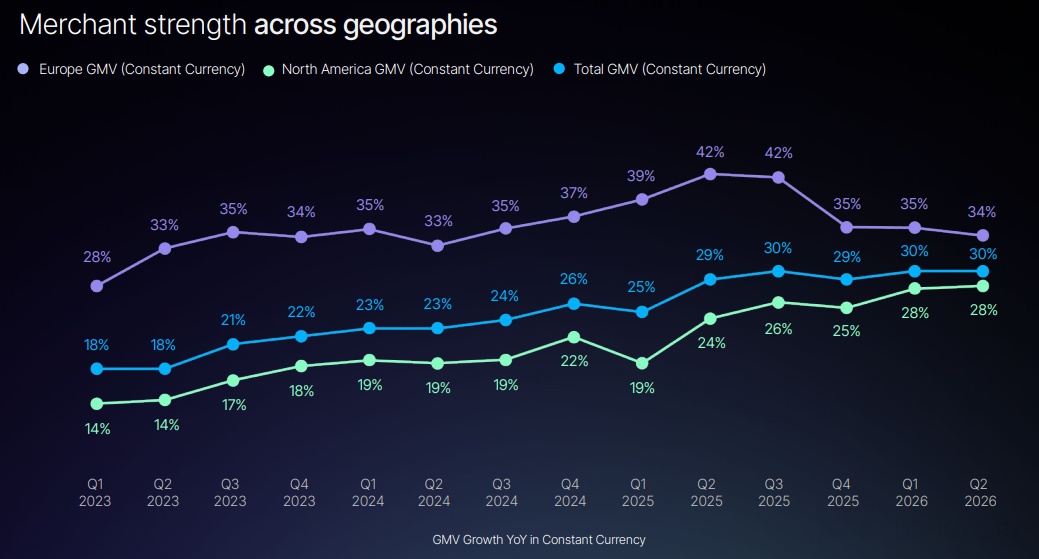
1) The source of all beats — powerful GMV growth: At the core, the single driver behind the strength was actual GMV up 31.6% YoY, far above the sell-side’s ~27.6%. Even the more bullish buyside was at ~29–30%, so this was a clean beat.
At first glance, headline growth looked slower QoQ. Ex-FX, GMV growth held around 30%, broadly in line with recent quarters, and Shopify’s GMV had already re-accelerated to 30%+ starting in Q2 last year.
In other words, the surprise came from the market expecting mean reversion after a full year at ~30% growth. Instead, growth kept sprinting on a high base.
Mgmt previously said growth was driven by Intl (mainly Europe). In the last two quarters, Intl slowed visibly, while North America re-accelerated and took the baton, keeping overall GMV in high gear.
Qualitatively on the call, Avg. sales per existing merchant rose, and large enterprises with $25mn+ annual sales were key drivers.
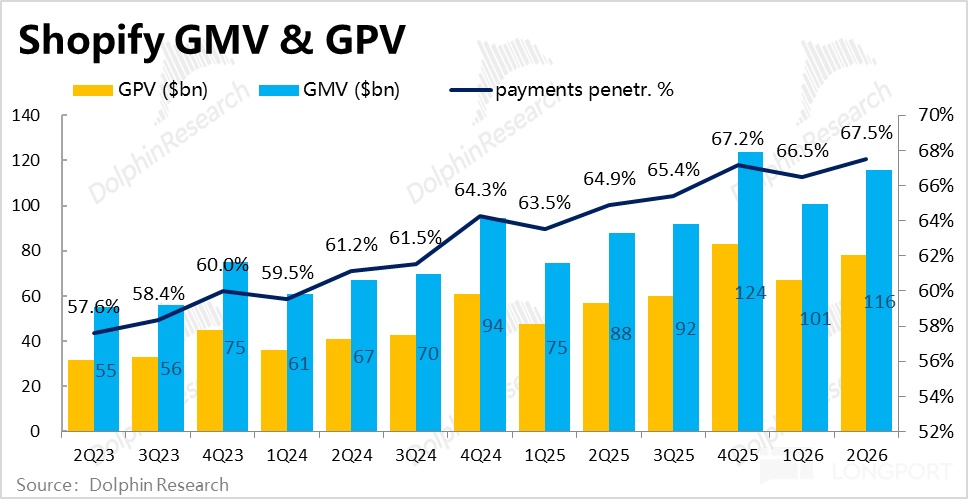
2) Dual amplification from payment penetration and monetization: On top of strong GMV, Shop Pay penetration as a % of GMV continued higher, up ~1ppt QoQ, lifting processed payments by ~37% — the first amplifier.
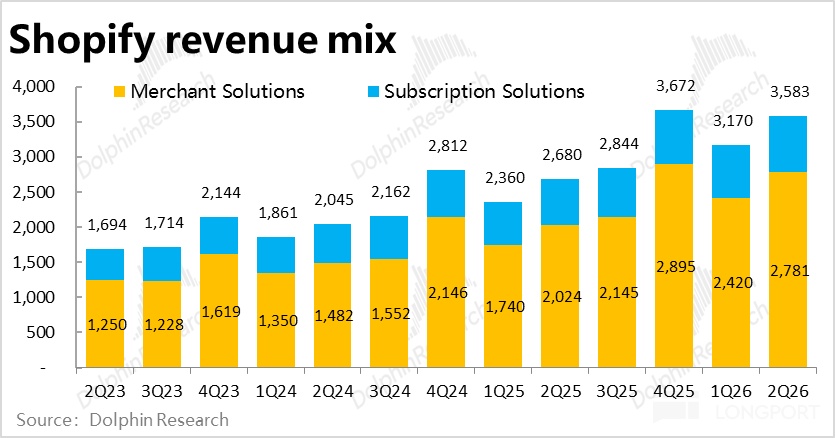
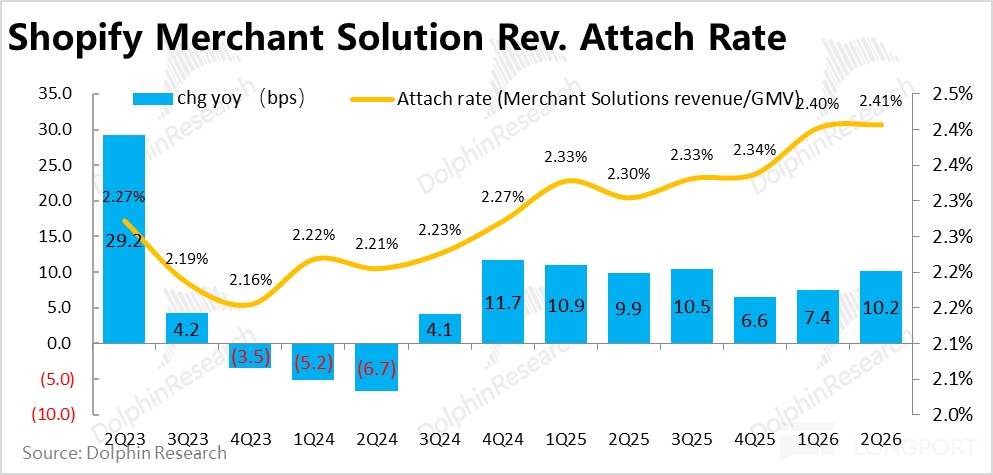
The second amplifier came from a higher Merchant Solutions monetization rate, at 2.41% of GMV this quarter, up 10bps+ YoY and the highest in three quarters. Per the call, the uptick was driven by higher partner revenue share and tailwinds in financial services (e.g., working-capital loans).
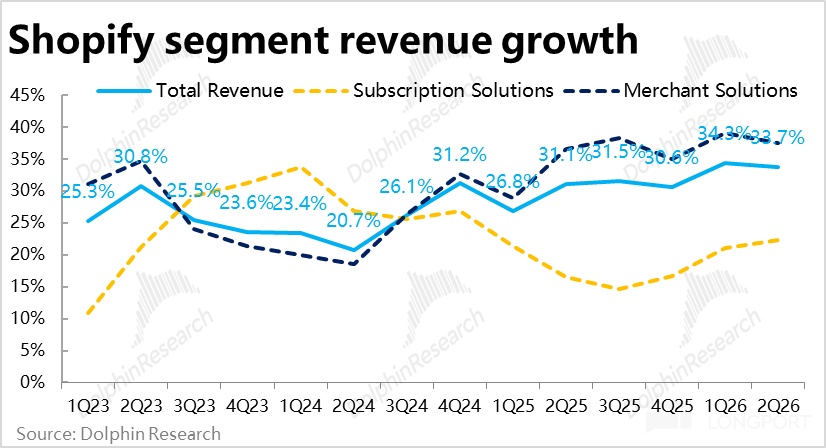
Together, Merchant Solutions revenue rose 37%+ YoY. That outpaced consensus by ~4.5ppt.
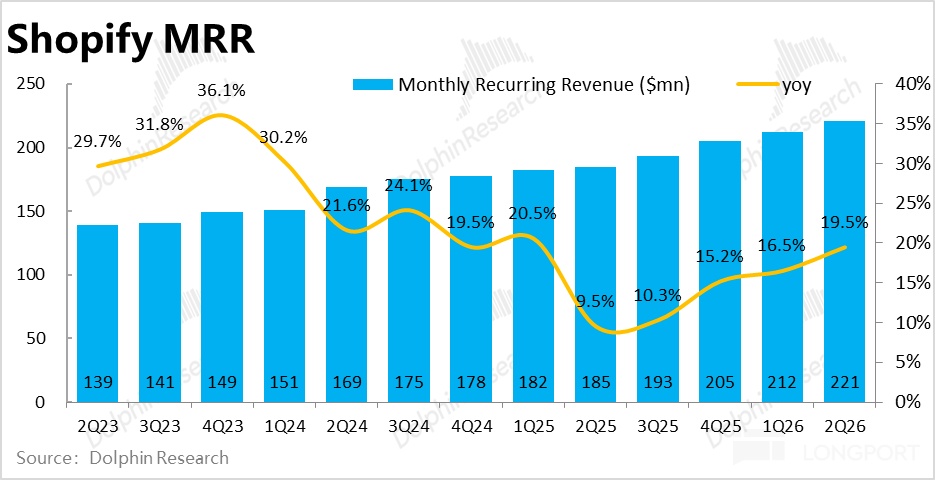
3) MRR continues to recover: By contrast, Subscriptions was less flashy but improving. The key metric, MRR reached $221mn, up 19.5% YoY, beating by nearly 1ppt.
As the prior ‘free/discounted’ trials roll off (Q2 last year was the trough), MRR growth is normalizing. Subscription revenue grew 22%, a ~1.5ppt beat.
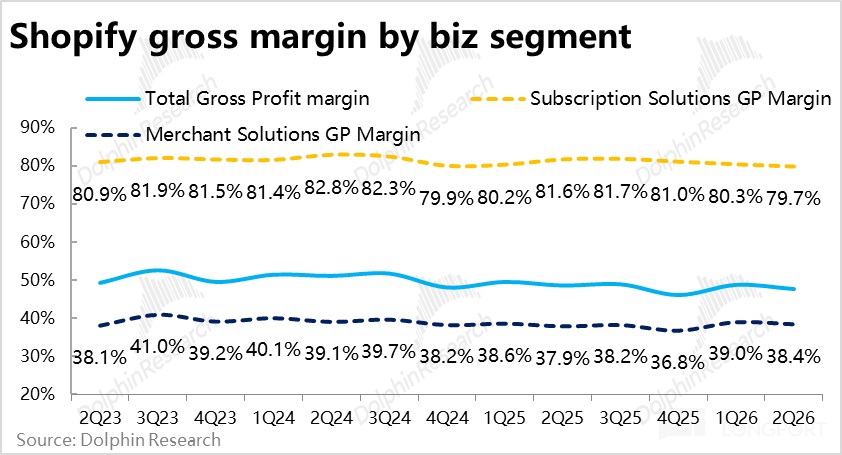
4) GPM merely met the bar: Versus the growth strength, total GPM was 47.7%, exactly in line with the sell-side. It compressed ~90bps YoY, which is not great.
By segment, Subscriptions was the drag, with GPM down ~190bps YoY and well below expectations. The driver was the newly launched Sidekick AI service, offered free to merchants but incurring sizable compute costs, which weigh on margins.
With higher payment penetration and monetization, Merchant Solutions GPM beat, up ~50bps YoY and ~75bps above the sell-side.
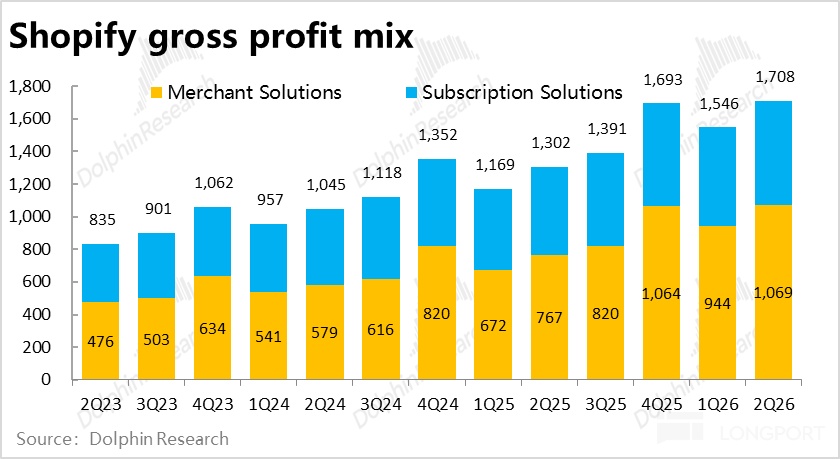
Net-net, the sharper drop in Subscriptions GPM and rising mix of lower-margin Merchant Solutions kept total GPM soft. GP rose ~31% YoY, below revenue growth.
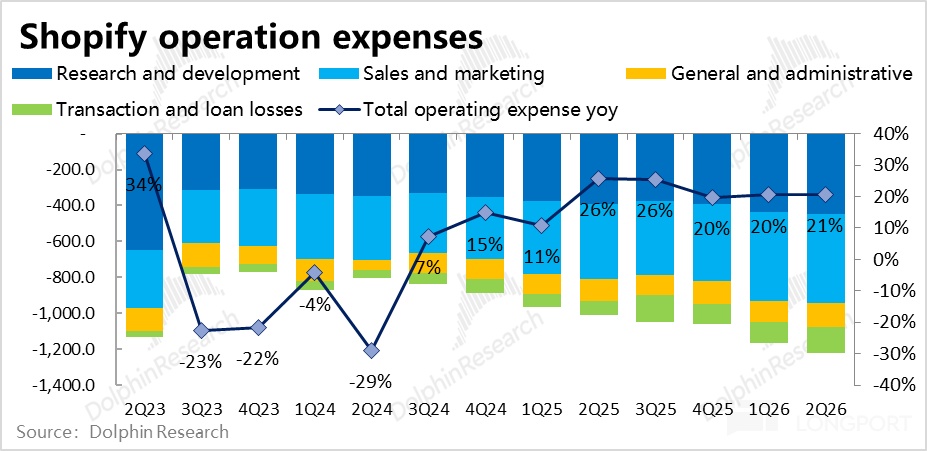
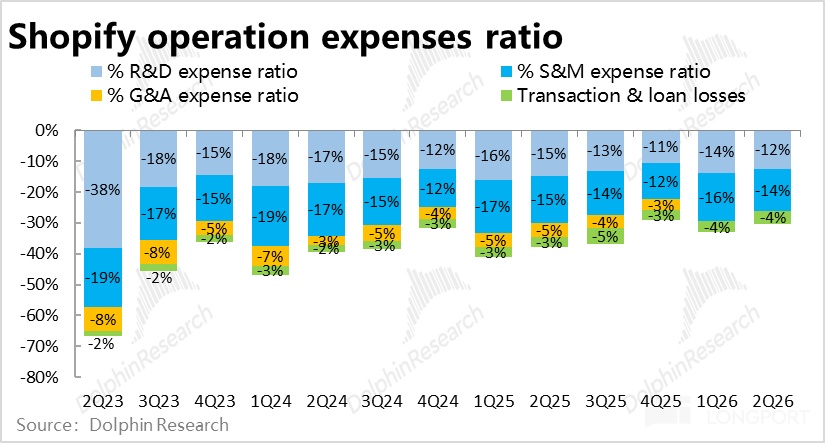
5) Opex in line with expectations: On costs, total opex was ~$1.22bn, exactly matching the sell-side. No upside surprise here.
Trend-wise, opex rose only 20.5% YoY, well below revenue and GP growth (opex ratio diluted by faster revenue), translating into margin expansion.
Specifically, marketing grew ~20% YoY, similar to overall. R&D and G&A rose low-teens, but transaction losses remained the main drag, up a hefty 76% YoY this quarter.
As the business scales (especially financial services), bad-debt expense has grown quickly for two years, but the absolute level is still just over $100mn, so the overall impact is limited. Per mgmt, roughly three-quarters of new credit losses are from lending, and one-quarter from higher payment volumes.
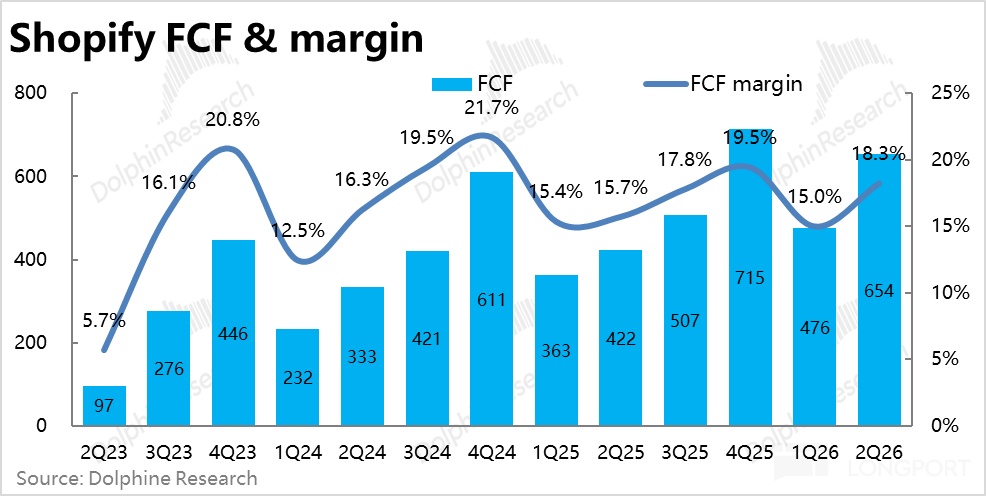
6) Profit leverage keeps releasing: As noted, neither GPM nor opex beat materially; all the upside came from strong GMV and revenue. Thanks to base effects, FCF margin reached ~18% vs. 15.7% a year ago, driving FCF up 55% YoY, well ahead of the ~30% the market expected.
Bottom line, growth and profitability both came in strong and beat clearly this quarter. Results were robust across both fronts.
Dolphin Research view:
1) No misses on the quarter, and guidance is clean
In short, while GPM and opex did not shine, the spotlight on 30%+ GMV overwhelmed any blemishes. 30%+ revenue growth with 50%+ profit growth should silence doubts about Shopify’s investment case on fundamentals.
On top of that, the Q3 guide strengthened this stance. Mgmt guided low-30%+ revenue growth, vs. sub-27% on the Street, implying no visible decel next quarter.
FCF margin guided at 16–20%+ (likely >20%), above this quarter’s 18%. The sell-side was at 18% for Q3.
GP is guided to grow mid-to-high 20% YoY, down from ~30% this quarter, implying more margin pressure ahead (same drivers as this quarter, just more pronounced).
However, with opex guided to 33–34% of revenue, well below ~37% last year, stronger opex leverage should lift cash margins despite GPM pressure.
Overall, Q3 should still deliver fast revenue growth with rising margins. The positive two-pronged trend remains intact.
2) Investment case & recent developments — AI narrative flips
Despite strong prints, the prior narrative was not favorable. While the stock rebounded >20% off the lows, it is still >30% below last year’s high, reflecting the shift Dolphin Research flagged last quarter: as AI monetization pivots from 2C to coding/workflow automation (2B), enthusiasm for agentic commerce has faded, and execution has lagged.
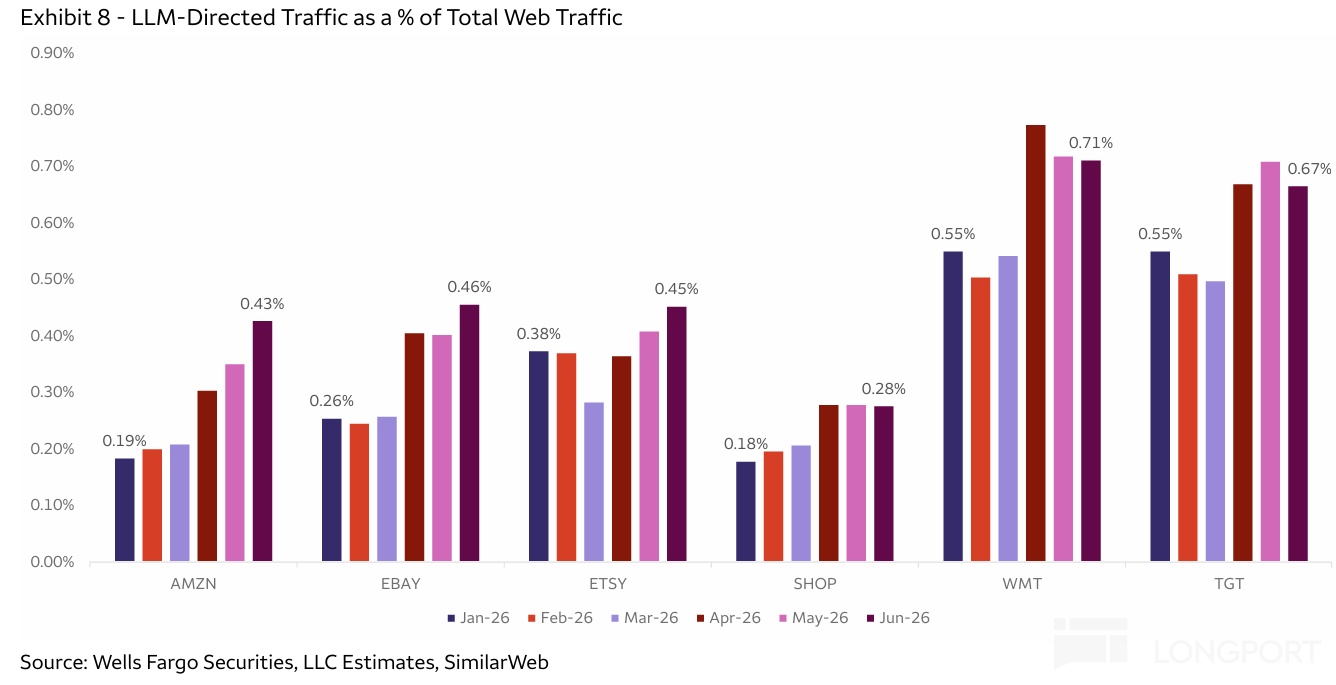
a. Recent checks suggest LLM agents are contributing limited e-comm traffic in both share and growth. Per SimilarWeb, max web traffic share directly from LLMs is ~0.7%, Shopify is <0.3% and has barely improved in three months.
As a result, the agentic commerce upside case is largely broken for now.
b. The ROI debate on Shopify’s AI spend: With AI focus shifting to enterprise cost-out/efficiency, Shopify has been pushing Sidekick — a merchant-facing AI agent that analyzes biz data, edits storefronts, and generates content.
The key concern: Sidekick is free for all subscription tiers (with token limits), so it brings little incremental revenue but incurs rising compute costs as usage grows, making ROI hard to justify.
Initial estimates from foreign brokers put incremental annual cost at tens of millions of dollars, dragging Subscriptions GPM by ~1–2%, and similar on total profit.
This already showed up in the quarter, and the impact looks worse than prior estimates.
3) Offense and defense around traffic acquisition
c. Meta’s potential threat: Another overhang is Meta stepping up e-comm pilots since Jun, launching the Meta Business Agent Platform. On the user side, it helps discovery within WhatsApp/Instagram; on the merchant side, the agent supports auto-replies and auto-briefs.
For now, this is still about customer management/acquisition and doesn’t cover Shopify’s core modules like store building/management and online payments, so near-term direct impact on Shopify should be limited.
Long-only funds worry Meta (and Google, etc.) could expand from user acquisition into store-building, order mgmt, and payments, directly competing with Shopify. That is the longer-term risk.
Dolphin Research thinks Meta is unlikely to dive into the niche of store-building per se. The real issue is Shopify lacks an owned traffic-acquisition engine, and merchants rely on Meta and Google. Thus, if those platforms decide to compete head-on, Shopify risks a ‘downward-dimension’ challenge.
d. Shopify Campaigns: Likely in response to competition and the lack of owned traffic, Shopify is now aggressively pushing its ads biz.
It uses the Shop App (originally for order tracking) as the traffic entry point. The model offers targeted discounts to drive conversion, and fees are charged only post-conversion.
Recent checks indicate this is still very early. Shop App’s organic traffic is limited and not comparable to Facebook, Google, or TikTok, so Campaigns currently does little for net-new user acquisition and mostly re-activates existing Shopify users to lift purchase frequency.
Overall, it is hard to call whether Shop App can become a closed-loop e-comm entry in the near term. Strategically, though, it is the right move: building a traffic entry lowers dependence on external platforms (mitigating the Meta risk) and addresses monetization by adding ads, not just payments. If successful, revenue and profit could scale to multiples of today’s base.
4) The only and biggest issue remains valuation
On fundamentals, the company is near flawless, and the hot print makes small logical gaps easy to ignore. Yet valuation is the real issue.
Even after the pullback, by our math, 2026 P/FCF is still ~66x, and assuming another 35% FCF growth in 2027, it only falls to ~49x.
From a momentum perspective, if one accepts this as ‘fair,’ continued beats could justify further upside. That is the bull case.
Key charts:
I. GMV & GPV
II. MRR
III. Revenue growth
IV. Gross margin
V. Opex & profit
<End>
Past Dolphin Research on [Shopify]:
Earnings reviews:
May 6, 2026 review: ‘Shopify: As agentic e-comm fades, is the payments leader swimming naked?’
May 6, 2026 call ‘Shopify (Trans): Agentic commerce will not bypass Shopify’
Feb 12, 2026 call ‘Shopify (Trans): Still monetizing mainly via payments under the agent model’
Feb 12, 2026 review ‘Shopify: Solid results yet a plunge — is the agentic model panacea or poison?’
Nov 5, 2025 call ‘Shopify (Trans): Positive on enterprise and AI in e-comm’
Nov 5, 2025 review ‘Shopify: Imperfect means inadequate — original sin of a rich multiple?’
Aug 7, 2025 review ‘Shopify: As long as growth explodes, other issues fade’
Aug 7, 2025 call ‘Shopify (Trans): Strong Europe and North America drove the GMV beat’
May 9, 2025 review ‘Shopify: Tariff sword hanging — small merchants most exposed?’
May 9, 2025 call ‘Shopify (Trans): No tariff impact seen in May’
Risk disclosure and disclaimer: Dolphin Research disclaimer and general disclosure


The copyright of this article belongs to the original author/organization.
The views expressed herein are solely those of the author and do not reflect the stance of the platform. The content is intended for investment reference purposes only and shall not be considered as investment advice. Please contact us if you have any questions or suggestions regarding the content services provided by the platform.