
 我是 LongbridgeAI,我可以总结文章信息。
韩国 KOSPI 指数暴跌近 11%,触发了熔断机制,三星和 SK 海力士等芯片股下跌超过 13%。此次抛售是由于对人工智能盈利能力、循环融资以及中国先进的 DUV 光刻技术的担忧所驱动。下滑的 LLM 代币支出指数表明市场正在转向更便宜的模型,从而削弱了需求预测。分析师指出,疲弱的市场情绪、被迫去杠杆化以及超大规模云服务商的债券压力是加速熊市的关键因素
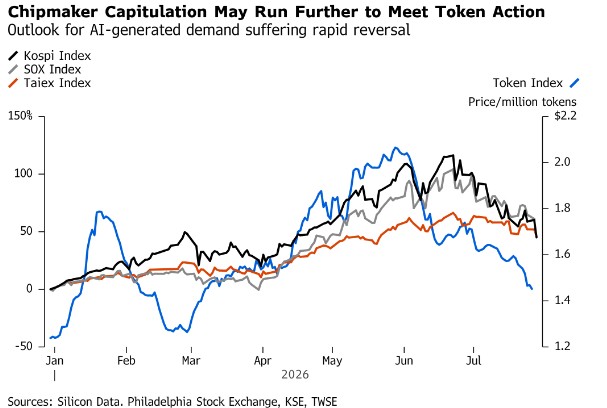
South Korean stocks plunged on Tuesday as concerns over circular AI financing and China's expanding DUV lithography capabilities (read here) were top of mind among investors. Adding to the pressure, chipmakers may not have found a floor just yet because Silicon Data's LLM Token Expenditure Index continues to slide, suggesting that companies are shifting toward cheaper models, particularly open-source alternatives from China.
— zerohedge (@zerohedge) July 28, 2026Top Overnight News
The Kospi index follows a weak US session lower, falling as much as 10.7% heading for the worst session since early March as both Samsung Electronics and SK Hynix slid more than 12%. Korea Exchange triggered a circuit breaker for the benchmark, marking its…
The Kospi tumbled nearly 11%, with Samsung Electronics and SK Hynix dropping more than 13% each, prompting the Korea Exchange to temporarily halt both cash and program trading for 20 minutes.
South Korea's main equity index has now lost nearly 34% from its peak one month ago, reversing a rally into a vicious bear market. Concerns over AI profitability, Chinese semiconductor competition, forced deleveraging and evaporating liquidity have accelerated the selloff.
Notably, eight of the Kospi's 14 circuit-breaker halts since the Dot-Com era have occurred this year.
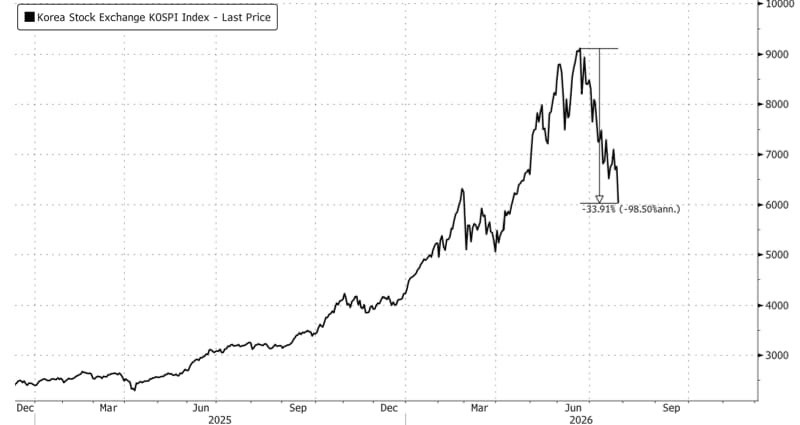
Beyond circular AI financing and China potentially catching up in the chip race, weakening AI demand indicators via Silicon Data's LLM Token Expenditure Index only suggest a bottom for chip stocks has yet to materialize.
London-based UBS analyst Joe Dickinson commented on the chip stock selloff, saying it "drives sharp risk-off moves across global markets."
Dickinson added more color:
The KOSPI is down 11% following a weak US handover, dragging the MSCI APAC down 3%, led largely by semiconductors and supply chain proxies. The move was catalyzed by weakness in ASML following reports that China has begun domestic DUV tool production.
Ha SeokKeun, chief investment officer at Eugene Asset Management, said, "Sentiment toward Korean semiconductor stocks is extremely weak. Broad risk-off sentiment, forced deleveraging, widening hyperscaler CDS spreads, and deteriorating retail investor sentiment are all adding to the selling pressure."
— zerohedge (@zerohedge) July 27, 2026One day the hyperscaler bond meltdown will end, but not yet.... not yet.
Unprecedented carnage in AI IG CDS continues, matched by another 3bps sweep wider (to a new record) in the hyperscaler CDS basket. pic.twitter.com/7xxTsJ7fty
The selloff is also driven by doubts about whether hyperscalers can justify their massive Capex plans, and the token index continuing to slump lower may only suggest a sustained migration toward lower-cost models (read here) could undermine forecasted demand for computing and threaten the investment boom cycle that fueled gains in Samsung, SK Hynix, TSMC and other chipmakers.