

After a 74% Rally, What Kind of Report Card Does Intel Need to Turn In Tonight?

Year to date, Intel (INTC.US) has climbed from around $38 to $68.50, a new all-time closing high — a 74% rally. After the bell on April 23, it releases Q1 earnings. The options market is pricing a ±10% move. This doesn't look like a "slow company." This looks like a company whose story has been running faster than its numbers.
Starting with the punchline: the stock has front-run the fundamentals
As of the most recent trading session, Intel is quoted at $66.05 a share, just a step below the all-time closing high of $68.50 set on April 16. The 52-week range is $18.97 to $70.33 — you read that right, a year ago this company was worth less than twenty bucks a share.
Where did the 74% come from? Run through it quickly and you'll see: almost everything that has moved INTC in 2026 is narrative, not earnings:
- January: Q4 2025 modestly beat; non-GAAP EPS $0.15 on $13.7B in revenue
- March: New CEO Lip-Bu Tan completed his first year at the helm, with 18A yields "rising 7-8 percentage points a month"
- Early April: Elon Musk publicly confirmed Tesla's Terafab project will use Intel's 14A process — the first publicly named major customer win for Intel Foundry
What's the cost of a narrative-driven rally? The cost is that the moment the numbers fail to follow, the bounce becomes a backlash. Tonight's print is the moment the fundamentals are asked to catch up with the story.
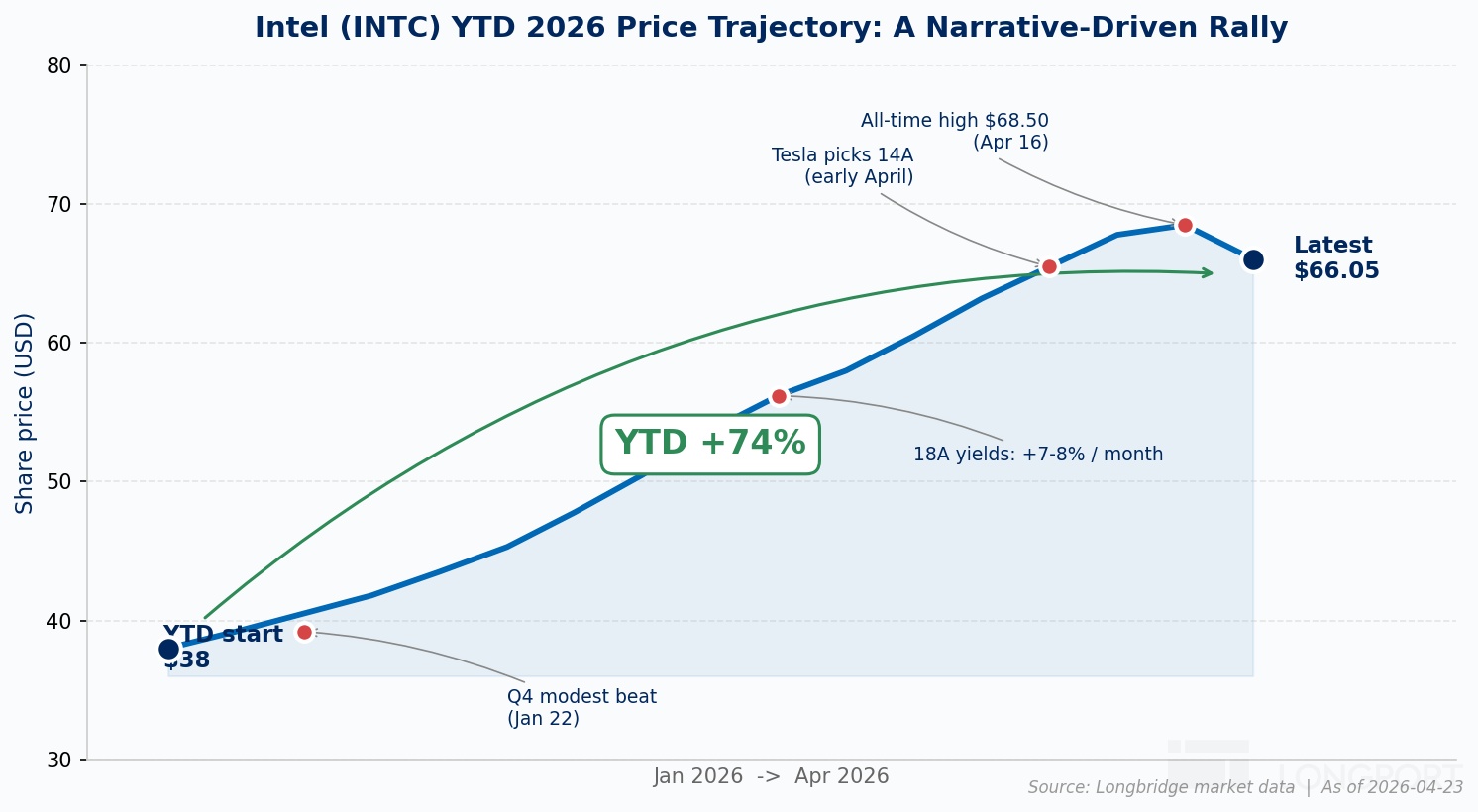
Figure 1: INTC's rally this year has been stacked almost entirely on "narrative milestones"
What the last report card actually looked like
To size up the difficulty of Q1, you first have to review Q4.
In Q4 2025, Intel posted $13.7B in revenue, down 4% YoY but $300M ahead of the $13.4B Street consensus. The segment mix was strikingly divergent:
- Data Center & AI (DCAI): $4.7B, up 8.9% YoY and 15% sequentially — the division's strongest QoQ print of the decade
- Client Computing (CCG, i.e. the PC chips): $8.2B, down 6.8% YoY — a year ago this line was $8.8B
- Intel Foundry: $4.5B in revenue, but an operating loss of $2.5B
- All Other: $574M
Non-GAAP EPS was $0.15; on a GAAP basis, Intel posted a $600M net loss, or -$0.12 per share.
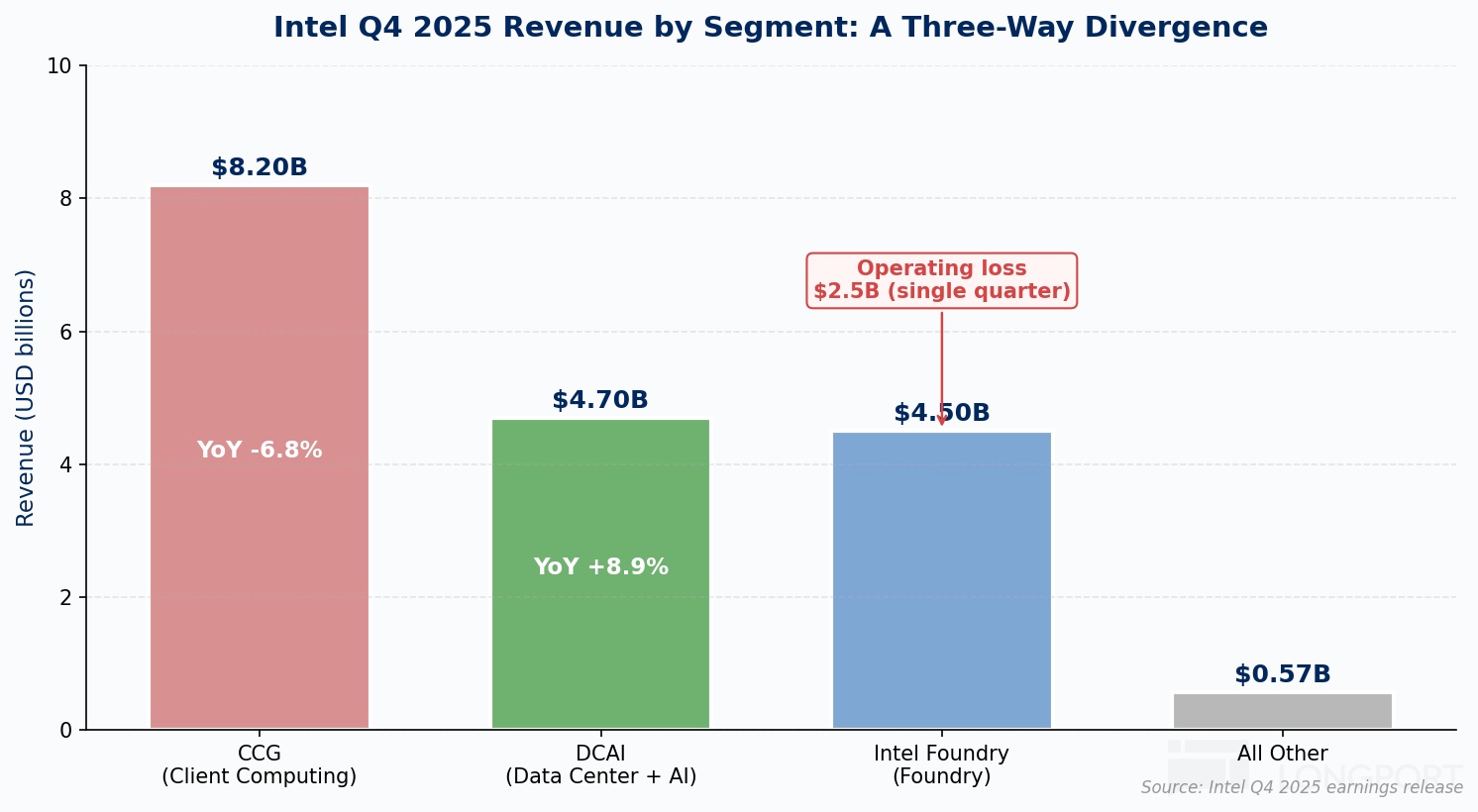
Figure 2: One quarter, one company, three business lines — three directions
Put plainly, the Q4 story was this: DCAI is recovering on one side, PC is still bleeding on the other, and Foundry in the middle is burning cash until its eyes are red.
Across all of 2025, Intel Foundry's operating losses were $2.32B, $3.2B, $2.3B, and $2.51B across the four quarters — more than $10 billion in total. This isn't a "business that's losing money." This is a business that needs someone to find it another ten billion dollars just to keep losing at the same pace. That's precisely why, in tonight's print, nobody really cares whether total revenue lands at $12.4B or $12.2B. Everyone's watching the same line — has the Foundry loss started to narrow?
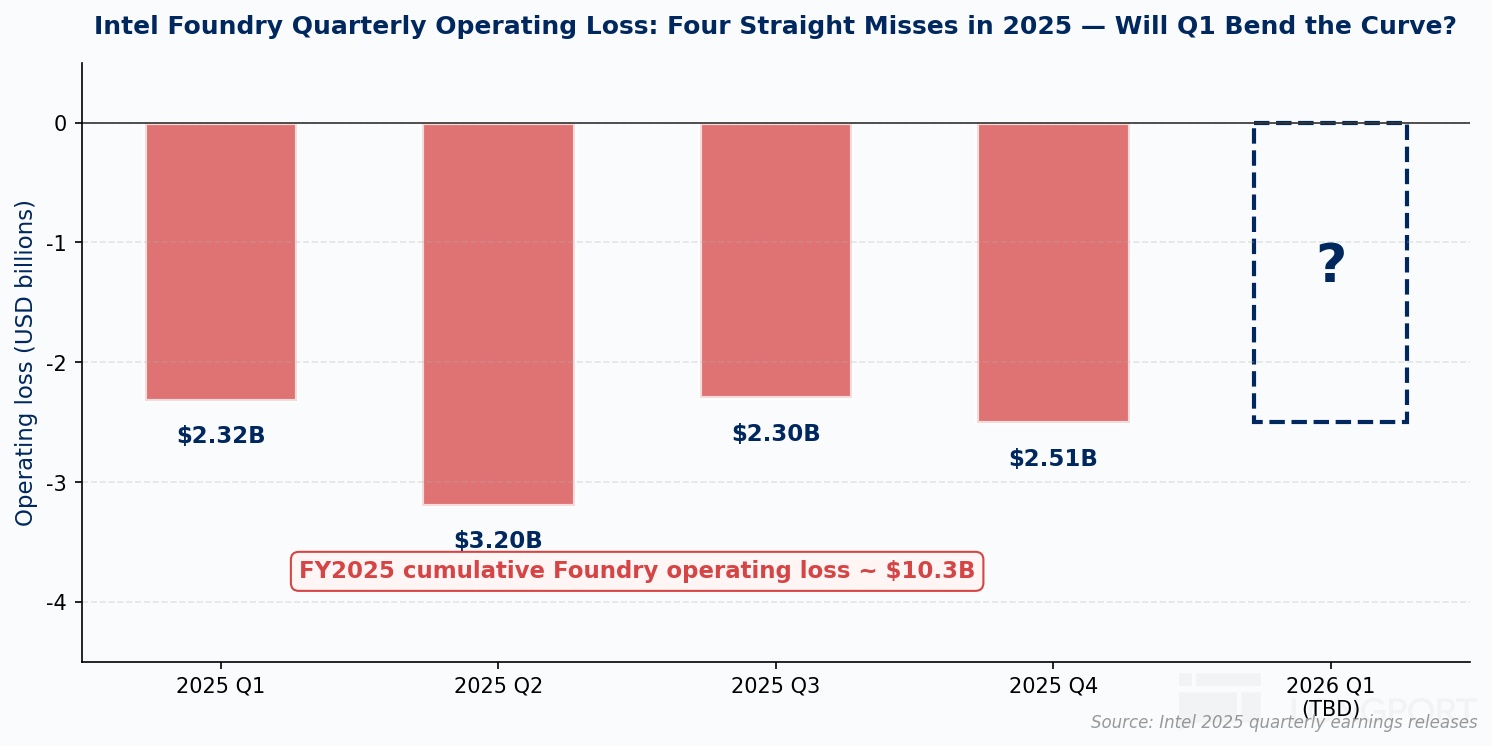
Figure 3: Four straight losing quarters. The market is waiting for an inflection
Three Q1 tests — every one of them has a trap
Intel's own Q1 guide is $11.7B to $12.7B, midpoint $12.2B. The Street consensus sits at $12.4B in revenue and $0.02 in EPS. Management is calling for ~34.5% non-GAAP gross margin.
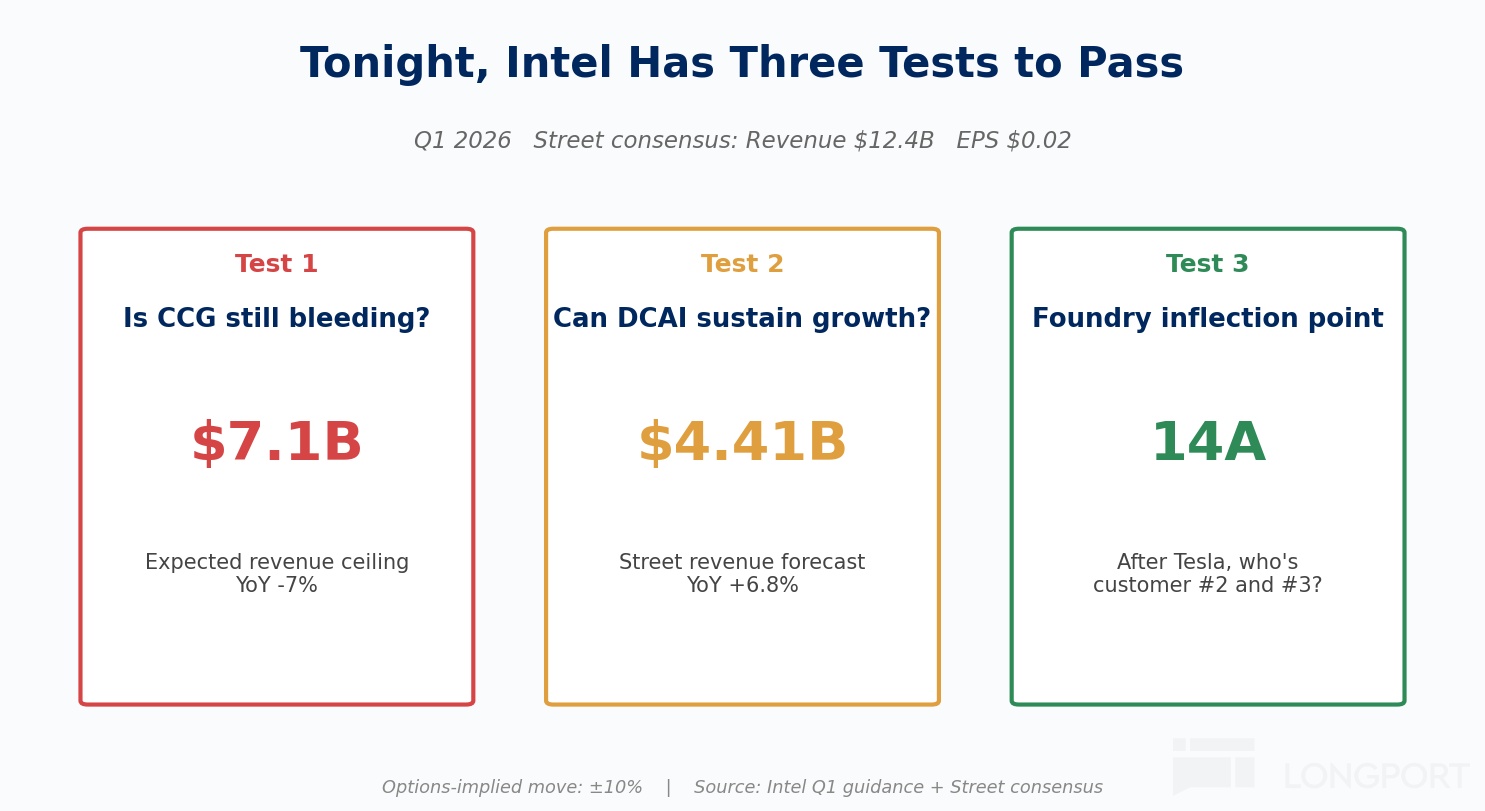
Figure 4: Three questions for Q1. Miss any one of them and the stock moves
That looks like "basically breakeven but not a disaster." But zoom into the three segments and each one has a different trap.
Test 1: Will CCG keep bleeding?
Management signaled earlier that Q1 CCG revenue would "decline more noticeably" — internal wafer capacity is being reallocated to serve the server end market first. Translation: PC is stepping aside on purpose. Sell-side numbers put Q1 CCG capped around $7.1B, down roughly 7% YoY. The problem is, "stepping aside" and "can't sell it" look identical on the income statement. If CCG prints below that number, the market won't give Intel the benefit of "we made room."
Test 2: Can DCAI's sequential growth carry on?
That 15% QoQ jump in Q4 looked great, but there were two reasons behind it: first, tight PC-chip capacity got redirected to server parts; second, customers pulled forward AI server upgrades. Both have a whiff of being one-offs. The Street has Q1 DCAI at $4.41B, up roughly 6.8% YoY — slower than Q4's 8.9%. Miss even 6.8%, and the "AI-driven server CPU recovery" script has to be rewritten.
Test 3: Where's the inflection point on Foundry losses?
This is the heaviest of the three questions. Foundry was still losing $2.5B in Q4. On the Q4 call, management hinted that Foundry supply constraints would ease starting in Q2 and that 18A per-wafer pricing would improve. Translate that and you get: "Give us one more quarter, the numbers will look better."
My read is that the real answer to this question isn't actually in the Q1 P&L. It's in two data points: first, how far 18A yields have actually climbed; second, who else is on the 14A customer list besides Tesla. Neither number will show up on the earnings front page — but both will surface in the analyst Q&A.
14A is the real valuation anchor
Do the back-of-the-envelope in about 10 seconds:
If Intel Foundry can actually make "third-party foundry" work, then it's the next TSMC in embryo — only a handful of companies globally can do this business, and the one furthest ahead (TSMC) is already worth more than $1 trillion.
If it doesn't work, it's a $10-billion-a-year burden — and assets like that usually carry negative value.
Between those two scenarios is an entire order of magnitude. And the switch that moves Intel from "burden" to "embryo" is called — how many external 14A customers are on the list.
What we know today: Tesla is the first publicly confirmed customer; the company itself says it has two "prospective customers" at the 0.5 PDK sampling stage, and the window for firm commitments opens in the second half of 2026. In other words, you won't hear a definitive answer tonight, but you will hear the tone of the answer — whether Lip-Bu Tan stays vague on 14A customers or finally starts putting numbers next to the names.
An analogy: a foundry's customer commitments are like a restaurant booking a private table — the closer you are to locking in, the more specific the menu gets. If management is still at "we're in deep conversations with several major customers," that probably means the deal isn't done.
The fastest part of a rally is usually the part that has already priced in the good news
This is the one thing worth reminding yourself of tonight.
The last four months of INTC narrative have all sat on the bullish side: Lip-Bu Tan's restructuring, the 18A yield curve, the Tesla endorsement, Panther Lake about to ramp. All of that is real — and it's the fuel that took the stock from 38 to 68.
But when a stock climbs 74% in four months, it doesn't mean "the future will be better." It means "the market is already paying for the better future."
After tonight, there are roughly three scripts:
Script A: Three-for-three — DCAI keeps growing, CCG declines in line with guidance, Foundry losses narrow meaningfully, and 14A shows real customer progress. The stock runs further, cleanly through $70. This is the smoothest path.
Script B: Two-for-three — say DCAI beats and Foundry losses stabilize, but the 14A customer list stays fuzzy. Sideways, consolidation, wait for Hot Chips in June and the Q2 report. This is what I think is the highest-probability case.
Script C: A clear miss on any single test — especially widening Foundry losses or CCG dropping more than guidance implied. The ±10% implied move gets spent to the downside.
Dates to circle after tonight
If you own this stock or are thinking about going long/short, here are the time markers worth putting in red:
- Tonight's conference call (5:00 AM Beijing time, April 24): Listen for Foundry segment losses and Lip-Bu Tan's latest tone on 14A customers
- H2 2026: The commitment window for 14A customers — the company's own self-imposed deadline
- Hot Chips 2026 (August): Panther Lake's technical details and customer ecosystem disclosures
- Q2 earnings (late July 2026): Whether Foundry losses narrow sequentially in a visible way
One last thing. The four most expensive words in investing, as always, are — "this time is different." Intel's 74% rally is basically the market betting that this time is, in fact, different. Tonight is when the biggest chip in that wager settles on the table.
Whatever the outcome, tonight's print isn't the final chapter. It just pushes a stock that's been running on story back toward where the data is supposed to sit.
本文版權歸屬原作者/機構所有。
當前內容僅代表作者觀點,與本平台立場無關。內容僅供投資者參考,亦不構成任何投資建議。如對本平台提供的內容服務有任何疑問或建議,請聯絡我們。
